Rituals, History, and the Paris 2024 Olympics

The Opening Ceremonies of the Paris 2024 Olympics were certainly impressive and have attracted sustained interest from cultural historians, political historians, sports historians, and literary scholars in French and Francophone studies.

Trisha Urmi Banerjee and Nathaniel Zetter (University of Cambridge) published an op-ed in the Washington Post, analyzing the ways in which the Opening Ceremonies at the Paris 2024 Olympics disrupted Olympic rituals that stem from Nazi propaganda during the Berlin 1936 Olympics.

Banerjee and Zetter argue: “Few recall that many of the Olympic traditions we consider timeless — including the torch relay — are Nazi inventions. Adolf Hitler hadn’t wanted to host the Games; why dent his country’s economy to risk German athletes being outperformed by “non-Aryan” competitors? But Joseph Goebbels convinced him of the Games’ propaganda potential. Hosting and broadcasting a spectacular Olympics would prove the new regime’s stability and showcase German supremacy on a world stage.”

The op-ed emphasizes that “many of the rituals the Nazi propagandists developed with these objectives in mind were used again and again in Olympic ceremonies after World War II. Paris 2024’s Opening and Closing Ceremonies challenged this legacy with new styles of anti-fascist performance. Whether the organizers were conscious of it or not, the resulting spectacle disrupted the enduring legacy of fascist propaganda.”

The full op-ed is available at the Washington Post website.

Posted in Cultural History, European History, European Studies, History in the Media, History of Race and Racism, Museums and Historical Memory, Political Culture, World History | Tagged , , , , , , , , , | Leave a comment

French History at the Paris 2024 Olympics

The dramatic opening ceremony of the Paris 2024 Olympics featured French history and culture in a series of tableaux vivants and performances that referenced early modern French theater and court culture.

Several of my colleagues in early modern French history and literature have posted analyses of the opening ceremony at the Early Modern France website. Therese Banks, Katherine Ibbett, Ellen McClure, Anna Rosensweig, Marine Roussillon, and Thibaut Maus de Rolley each contributed essays on aspects of the opening ceremony’s constructions of French historical memory. 

“Approximately an hour and twenty minutes into the Opening Ceremony of the Paris 2024 Olympics, the masked character guiding viewers through the spectacle runs behind the clock of the Musée d’Orsay. In the glow of the clockface, our guide turns the lever of a conveniently placed time machine from “au-delà du futur” back to the “passé.” A tribute to Georges Méliès unfurls. If Méliès’s early nineteenth century is the “past,” would the French Revolution—so heavily brought into the present throughout the ceremony—be the time machine’s “passé lointain”? Where does that leave Molière’s Les Amants magnifiques (1670), pulled off the shelves of the Bibliothèque Richelieu in the infamous “ménage à trois” scene? Or the jardins de Versailles-turned-skatepark divertissement on the Seine?”

The analyses of the Paris 2024 Olympics opening ceremony are available at the Early Modern France website.

Posted in Contemporary France, Cultural History, Early Modern Europe, Early Modern France, Early Modern World, European History, European Studies, French History, French Revolution and Napoleon, History in the Media, Museums and Historical Memory, Women and Gender History | Tagged , , , , , , , , , | Leave a comment

The Appian Way and World Heritage Politics

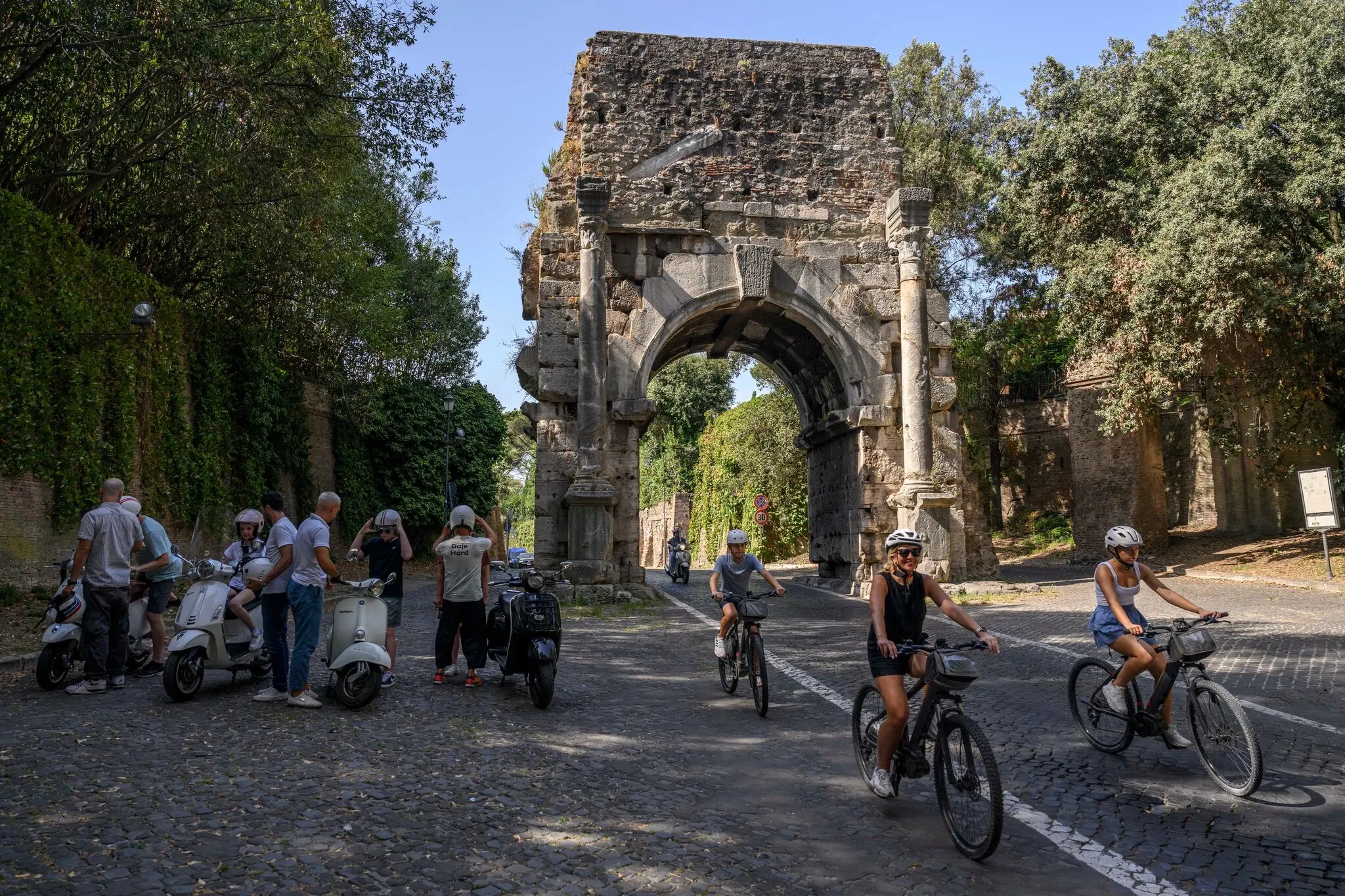
The Appian Way is often considered the world’s first highway, and now it is officially listed as a UNESCO World Heritage Site.

The New York Times reports: “Known as the “regina viarum,” or the queen of roads, the Appia was built by the Romans starting in 312 B.C. to allow them to move efficiently and to conquer the south of what is modern-day Italy. Finished about 400 years later and extending to Brindisi, the road became an important trade route and an example of the excellence of Roman engineering. Many sections are still used today, running through fields, sheep tracks and towns. Some sections still have the original ancient cobblestones. Others have been paved over, including a long, straight tract of road, about 25 pine-tree-lined miles that run from near Cisterna to the coast, that was used to break 20th century speed records.”

Yet, not all the sections of the Appian Way have been included in the UNESCO listing, prompting disappointment in some Italian communities.

The New York Times reports on the controversy.

Students in HIST 110 History of the Western World I and graduate students working on historical memory of the ancient world will be interested in this article.

Posted in Ancient History, European History, European Studies, History of the Western World, Italian History, Museums and Historical Memory, World History | Tagged , , , , , , , | Leave a comment

Teaching Western History

I am teaching HIST 110 History of the Western World I this fall semester at Northern Illinois and am once again revamping the readings.

I have decided to go with a new interpretive essay, Josephine Quinn’s How the World Made the West (2024), as the core reading for the course.

This work questions the idea of the West from various perspectives and provides a metahistorical approach to the history of the ancient and medieval worlds.

We’ll see what the undergraduate students think of this work as we move through the history of the West and the World….

Posted in Ancient History, European History, Historiography and Social Theory, History of the Western World, Idea of Europe, Medieval History, Mediterranean World, Northern Illinois University, The Past Alive: Teaching History, Undergraduate Work in History, World History | Tagged , , , , , , | Leave a comment

Douglass Day Workshop

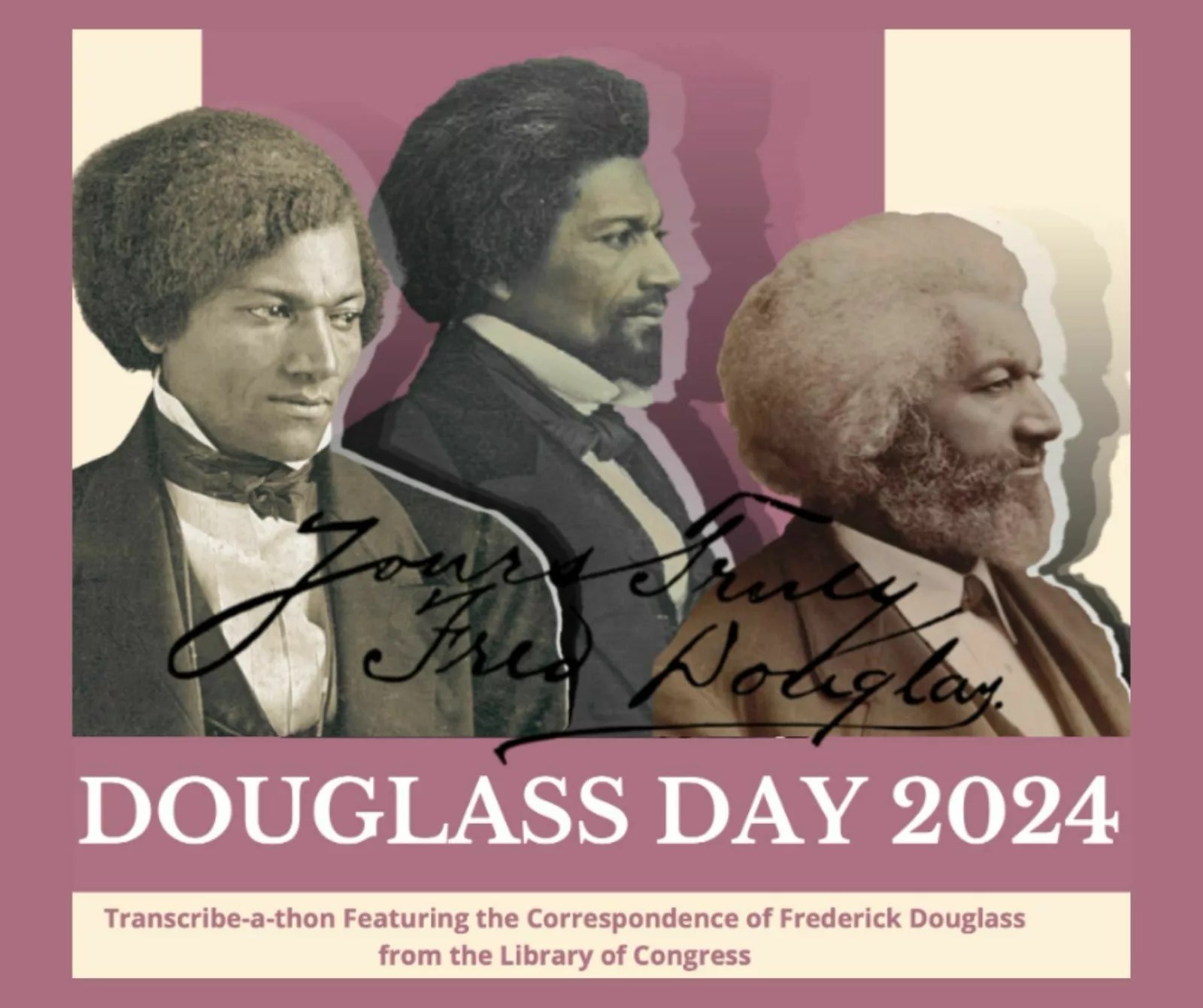
The Newberry Library in Chicago is hosting a Digital Humanities workshop on Frederick Douglass during Black History Month.

Undergraduate and graduate students in History at Northern Illinois University may be interested in participating in this event.

Here is the announcement from the Newberry Library:

Join us for Douglass Day 2024!

The Newberry Library and the Center for Textual Studies and Digital Humanities (CTSDH) at Loyola University invite you to a birthday party for Frederick Douglass. Although Douglass never knew his birthdate, he chose to celebrate every year on February 14. Please join us in observing this date by creating Black history together.

Simultaneously with volunteers around the world, we’ll participate in a transcribe-a-thon, using By the People, a crowdsourcing website from the Library of Congress, to improve access to the correspondence of Frederick Douglass. We’ll also be streaming music and presentations from the Douglass Day organizers, and exhibiting Black history items from the Newberry’s collections.

No transcribing experience is necessary! Everyone is welcome. You can choose to drop in for a bit or stay for the whole session.

Cost and Registration

This event is free and open to all. No advance registration required. Remember to bring your own laptop!

For more information see the Newberry Library website.

Posted in Digital Humanities, History of Slavery, Human Rights, Manuscript Studies, United States History and Society | Tagged , , , , | Leave a comment

French Colonial History Online Workshops

The French Colonial Historical Society is organizing two online workshops on using documentary sources at the Archives Nationales d’Outre-Mer (ANOM) in France.

For additional information or to register, see the French Colonial Historical Society website.

Here is the announcement from ANOM:

Any graduate students at Northern Illinois University who are interested in participating in these workshops should contact me.

Posted in Archival Research, Contemporary France, Digital Humanities, Early Modern Europe, Early Modern France, Early Modern World, Empires and Imperialism, European History, French Empire, French History, Graduate Work in History, History of Race and Racism, History of Violence, Manuscript Studies, World History | Leave a comment

Beyond the Battlefield Released

My latest essay has been published in the collective volume on Beyond the Battlefield Reconsidering Warfare in Early Modern Europe, ed. Tryntje Helfferich and Howard Louthan (London: Routledge, 2023), which is scheduled to be released today (22 December 2023).

My contribution is entitled, “Troubles Concerning Religion: Causes, Parties, and Armed Conflict in the French Wars of Religion.”

The book description indicates: “This volume draws together an international team of scholars to explore the experience and significance of early modern European continental warfare from an interdisciplinary perspective.

“Individual essays add to the lively fields of War and Society and the New Military History by combining the history of war with political and diplomatic history, the history of religion, social history, economic history, the history of ideas, the history of emotions, environmental history, art history, musicology, and the history of science and medicine. The contributors address how warfare was entwined with European learning, culture, and the arts, but also examine the ties between warfare and ideas or ideologies, and offer new ways of thinking about the costs and consequences of war. In addition to its interdisciplinarity, the volume is distinctive in including chapters focused not only on Western and Central Europe but also the often-ignored European peripheries, such as the Baltics and the Russian frontier, Scandinavia, and the Habsburg-Ottoman borderlands of Southeastern Europe. As a whole, the volume offers readers interesting alternatives and threads for reconsidering the place and meaning of warfare within the larger history of early modern continental Europe.

“This book will be valuable for general readers, undergraduate and graduate students, and scholars interested in military, early modern, and European history.”

For more information on the book, see Routledge’s website.

Posted in Civil Conflict, Civilians and Refugees in War, Early Modern Europe, Early Modern France, Early Modern World, European History, European Wars of Religion, French Wars of Religion, History of Violence, Reformation History, Renaissance Art and History, War, Culture, and Society, Warfare in the Early Modern World | Tagged , , , , | Leave a comment

Digital Mapping and Pre-Modern Violence

Digital mapping projects are investigating episodes of violence in pre-modern societies in new ways.

Interpersonal violence often erupted in pre-modern societies. Recent studies of late medieval England recount murders in urban centers: “A spice merchant stabbed by a fruit seller over a longstanding feud. A street musician murdered for playing music too loudly after dusk. A deadly quarrel among servants of the Queen of England. And who killed the innkeeper with a sword after a fight?”

Medieval Murder Maps is a digital humanities project based at Cambridge University in the United Kingdom. The New York Times reports on this digital mapping project that investigates murders in medieval England: “These homicide cases, discovered by historians in centuries-old records, may be long closed. But fans of true crime and history can now peruse them in an interactive medieval murder map released in September by University of Cambridge researchers.”

According to The New York Times, “Users can click through the back stories of more than 300 murders in the English cities of London, York and Oxford. Entries are searchable by gender, day of the week and even weapon (pole-axe or crossbow?).”

This digital mapping project lies at the intersection of the fields of Digital Humanities and Violence Studies.

The New York Times reports on digital mapping and violence studies. The Medieval Murder Maps website publishes digital maps on murders in medieval England.

Posted in Cultural History, Digital Humanities, European History, History of Violence, Manuscript Studies, Material Culture, Medieval History, Urban History | Leave a comment

Natalie Zemon Davis and Early Modern History

I deeply saddened to learn today that renowned early modern historian Natalie Zemon Davis has died.

Natalie Zemon Davis was a brilliant historian of early modern French, European, Mediterranean, and global history. Natalie’s essays on unruly women, women’s honor, gender distinctions, religious riots, and print culture were transformative when they were published and they are still taught in graduate programs. The article on “rites of violence” is one of the most important works on the French Wars of Religion and in the broader interdisciplinary field of violence studies.

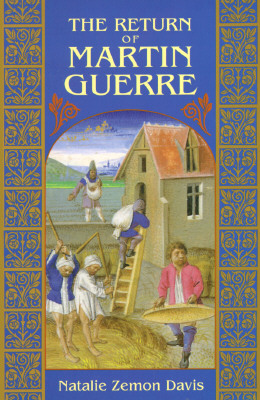
The Return of Martin Guerre is simply one of the most influential microhistories ever written and an amazing book to teach with undergraduate and graduate students.

Natalie did innovative research in women’s history, gender history, microhistory, cultural history, history of the book, Renaissance studies, Reformation studies, and film history. Few scholars do such groundbreaking research across so many distinct fields using interdisciplinary methodologies so effectively.

Natalie was also a generous scholar and a real mentor. She always sat at the front of the room during conference sessions and when discussion opened, she would immediately raised her hand to offer an enthusiastic, but probing question. I am sure that her loss will be a real shock to many who have worked closely with her. 

I had emailed with Natalie recently, but had not seen her in person in several years.

I am glad that I had a chance to take a graduate seminar with Natalie when she served as a visiting professor at the University of Illinois at Urbana-Champaign and later got other opportunities to collaborate with her at workshops and conferences over the years.

I will always remember Natalie’s warmth and joy, especially from her fabulous 90th birthday celebration in Toronto during the Renaissance Society of America conference.

Posted in Cultural History, Early Modern Europe, Early Modern France, Early Modern World, European History, French History, French Wars of Religion, History of the Book, Languedoc and Southern France, Mediterranean World, Rare Books and Pamphlets, Reformation History, Religious Violence, Women and Gender History, World History | Leave a comment

NIU Book Lab and Printing Presses

We are launching an exciting new project at Northern Illinois University to create a NIU Book Lab, which will focus on the history of the book, printing presses, and print culture!

The Northern Illinois University Libraries have created a crowdfunding project to restore the vintage printing presses at NIU, so that our students can engage in their own projects using printing technologies and learn about the history of the book.

The Printing Revolution (c.1450-1550), Renaissance printing, early modern news, religious pamphlets, political pamphlets, and prints are major components of my undergraduate courses on HIST 420 The Renaissance, HIST 414 European Wars of Religion, HIST 422 Early Modern Europe, and HIST 423 French Revolution and Napoleon. My honors and graduate teaching also deals significantly with print cultures and history of the book.

Many undergraduate and graduate students in History do research projects using woodblock prints, engravings, political pamphlets, religious pamphlets, treatises, and other rare printed works from the early modern period. So, a Book Lab would serve these students’ research projects and contribute to the development of their research skills.

These skills are important for historical research, museum studies, archival practices, library and information sciences, and related fields.

Please consider donating to help us “start the presses”!

The NIU Book Lab crowdfunding website has more information about this campaign.

Posted in Archival Research, Cartographic History, Cultural History, Early Modern Europe, Early Modern France, Early Modern World, European History, European Wars of Religion, French Revolution and Napoleon, French Wars of Religion, History of the Book, Information Management, Material Culture, Mediterranean World, Museums and Historical Memory, Northern Illinois University, Political Culture, Public History, Rare Books and Pamphlets, Reformation History, Renaissance Art and History, Undergraduate Work in History, World History | Leave a comment