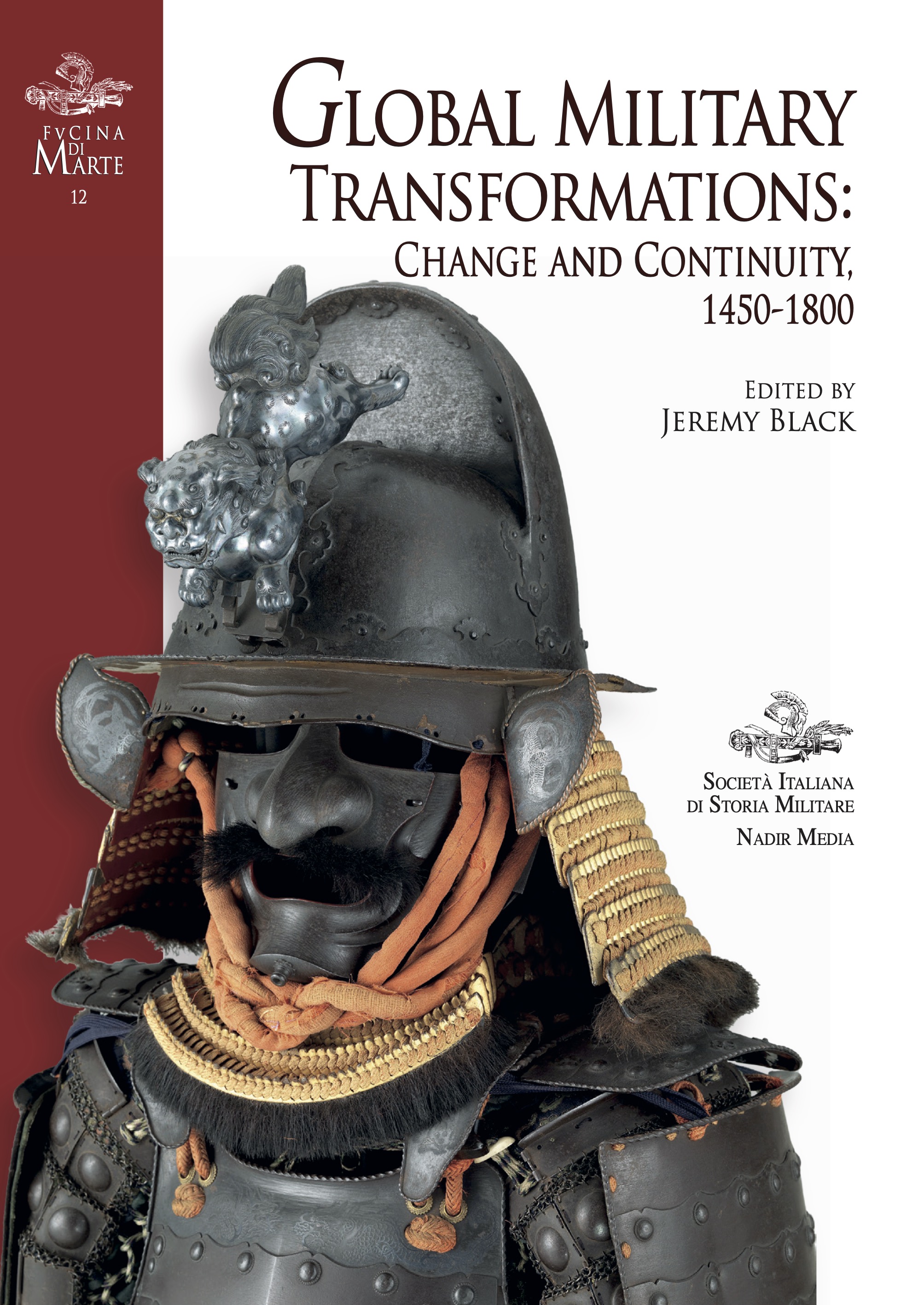
I am happy to report that Jeremy Black, ed., Global Military Transformations: Change and Continuity, 1450-1800 (Rome: Società Italiana di Storia Militare, 2023), has been published.
This edited volume provides global perspectives on the Military Revolution Debate, with chapters considering new research on early modern war, culture, and society from different geographic regions and chronological periods.
I contributed a chapter on “Early Modern France and the Military Revolution” to this collective volume.
This volume is in the Fucina di Marte series of the Società Italiana di Storia Militare (SISM), and more information on the volume will soon be available at the SISM website.
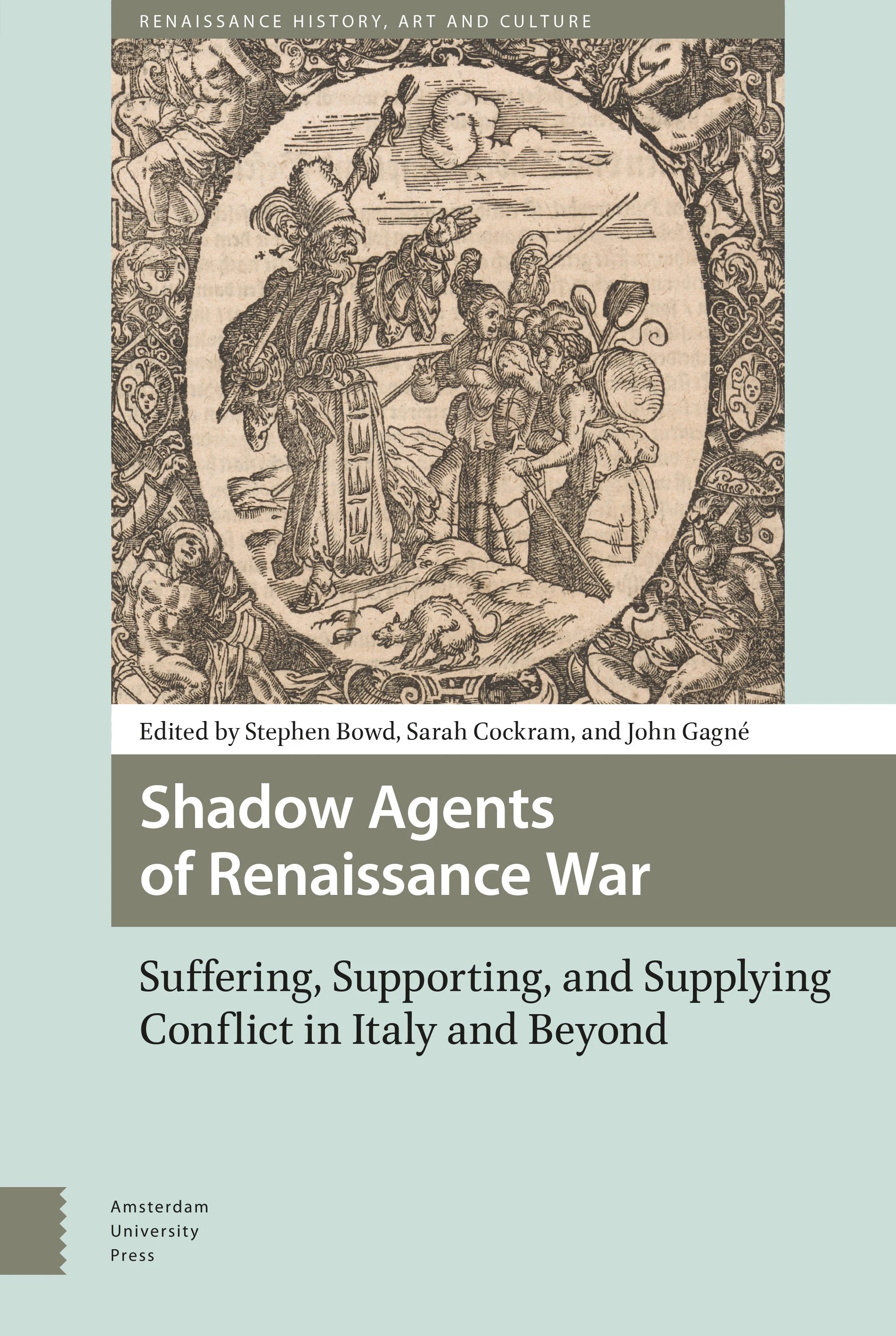
I am happy to report that Shadow Agents of Renaissance War: Suffering, Supporting, and Supplying Conflict in Italy and Beyond has been published by Amsterdam University Press.
This new collective volume (edited by Stephen Bowd, Sarah Cockram, and John Gagné) includes my contribution on “Delivering Arms: Noblewomen, Artillery, and the Gendering of Violence during the French Wars of Religion.”
The book description reads: “Who were the shadow agents of Renaissance war? In this pioneering collection of essays scholars use new archival evidence and other sources, including literature, artworks, and other non-textual material, to uncover those men, women, children and other animals who sustained war by means of their preparatory, auxiliary, infrastructural, or supplementary labour. These shadow agents worked in the zone between visibility and invisibility, often moving between civilians and soldiers, and their labour was frequently forced. This volume engages with a range of important debates including: the relationship between war and state formation; the ‘military revolution’ or transformation of early modern military force; the nature of human and non-human agency; gender and war; civilian protection and expulsion; and espionage and diplomacy. The focus of the volume is on Italy, but it includes studies of France and England, and the editors place these themes in a broader European context with the aim of supporting and stimulating research in this field.”
Thanks to Stephen, Sarah, and John for all their editorial work on the volume!
The Leibniz Institute of European History in Mainz, Germany, is offering two postdoctoral fellowships in early modern European religious history.
This would be a fantastic opportunity for a recent Ph.D. in early modern history!
Here is the position description from the Leibniz Institute of European History:
The Leibniz Institute of European History (IEG) in Mainz is a research institute within the Leibniz Association. It conducts and facilitates research on the historical foundations of Europe in the modern period and deals with current developments in the digital humanities (https://www.ieg-mainz.de/en).
The IEG invites applications for two full-time
postdoctoral positions (research associates) (f, m, d)
in Early Modern European Religious History
at the earliest possible date for the duration of five years. The salary accords to German pay grade TV-L EG 13.
Job profile
Successful candidates pursue an individual research project in the field of European religious history of the early modern period. We particularly welcome comparative and cross-border perspectives on religion as a domain of knowledge and interaction, including its connections to the non-European world. The candidates’ research activities and publications are expected to contribute to the over-arching intellectual and methodological discussions of the IEG community and to broaden its evolving research profile. In addition, they act as mentors for international (doctoral) research fellows, organise academic events and work towards consolidating the IEG’s international network.
For more information, see the full position announcement on H-Net.
The Center for Renaissance Studies at the Newberry Library is offering a seminar on Digital Humanities and Premodern Studies: An Introduction.
The Center for Renaissance Studies indicates that “this course introduces the methods, approaches, uses, and challenges of digital humanities with respect to the study of medieval and early modern cultures.”
The seminar will be held weekly on Thursdays, from 5 January 2023 to 9 March 2023 from 1:00 pm – 4:00 pm at the Newberry Library in Chicago.
Here is a course description for the seminar:
“This course will introduce you to methods, approaches, uses, and challenges of digital humanities with respect to the study of the premodern world. We will discuss the ways in which digital humanities shape premodern studies, consider the advantages and disadvantages in the increasing use of digital tools in the classroom, and learn the ins and outs of digital projects from the scholars creating them.
“We will also familiarize ourselves with some basic tools, approaches, and platforms available for the creation of digital resources, and learn how to use them by engaging with medieval and early modern materials from the Newberry’s collections.
“This seminar will take place in-person at the Newberry Library, but some virtual participation may be possible.”
The deadline for applications is 8 November 2022.
For registration information, see the seminar page on the Newberry Library website.
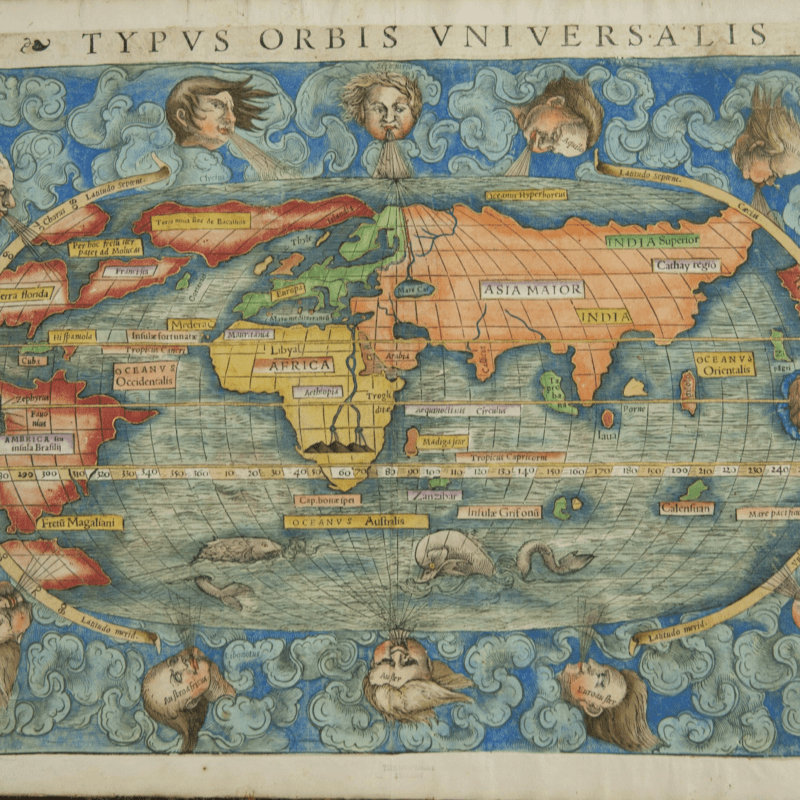
The Newberry Library in Chicago has truly impressive cartographic collections and also hosts the Hermon Dunlop Smith Center for the History of Cartography. The Smith Center holds a major annual lecture series on the history of cartography at the Newberry Library and this year’s lectures will be held soon.
Here is the announcement from the Hermon Dunlap Smith Center for the History of Cartography:
The Hermon Dunlap Smith Center for the History of Cartography is pleased to announce that the 21st Kenneth Nebenzahl, Jr., Lectures in the History of Cartography will be held at the Newberry Library on Friday and Saturday, November 4-5, 2022. This year’s series, Mapping as Performance, considers the many ways people map through action in space. In the past fifteen years a number of scholars in a variety of fields have examined how performances, ranging from on-stage to the movements of travelers, should be seen as forms of mapping. Literary scholars, anthropologists, art historians, geographers, practicing cartographers, and scholars of the performative arts all have invoked the concept, but for different ends determined in large measure by their own disciplinary orientations and interests. In Mapping as Performance, we will bring together scholars from several fields to encourage an interdisciplinary dialogue about the concept.
This year’s lectures will feature papers and performances organized in four topical sessions on Friday, November 4 and Saturday Morning, November 5:
Surveying as Performance
Performing Space, Place, and History in Indigenous North America
Mapping Dance
Travel As Mapping
The 21st Kenneth Nebenzahl, Jr. Lectures will now be livestreamed via Zoom for those unable to attend in person. We still ask that everyone who wishes to attend please register using the link below. You will receive a link to the Zoom after your registration is complete.
For more information, see the website for Mapping as Performance or the main website of the Hermon Dunlap Smith Center for the History of Cartography.
This is an opportunity for graduate students in Renaissance history, art history, literature, musicology, religious studies, and related fields to see graduate students’ research presentations on a range of Renaissance Studies topics and to interact with peers from other graduate programs.
The Society for Military History is soliciting nominations for the Vandervort Prizes, which recognize outstanding articles on the history of war and society.
Here is the call for nominations from the Society for Military History:
Vandervort Prize Nominations
The Vandervort Prizes recognize outstanding journal articles that contribute to the field of military history.
The Vandervort Prizes honor the JMH’s longtime editor, the late Dr. Bruce Vandervort. A prize is awarded to at least two of the best articles published in The Journal of Military History during the previous calendar year, as well as up to two articles published outside of the journal.
All articles published in The Journal of Military History are automatically eligible for the Vandervort Prizes.
The selection committee is seeking nominations of outstanding articles published in other journals. These should be articles published in peer-reviewed academic journals, in English, with a publication date of 2022. The journal itself need not focus on military history, as we are seeking to recognize scholarship that shows the intellectual breadth of our discipline.
Self-nominations are permitted. One nomination per individual, please.
To nominate an article for consideration, please submit a copy of the article (preferably as a PDF) and complete citation information to Dr. Adam R. Seipp (aseipp@tamu.edu) by January 17, 2023.
Archaeologists and scientists are discovering new information about the soldiers and conflicts of the past through battlefield archaeology.
Recent digs have uncovered the grave of Richard III from the Wars of the Roses (1455-1487) and mass graves from battles of the Thirty Years War (1618-1648).
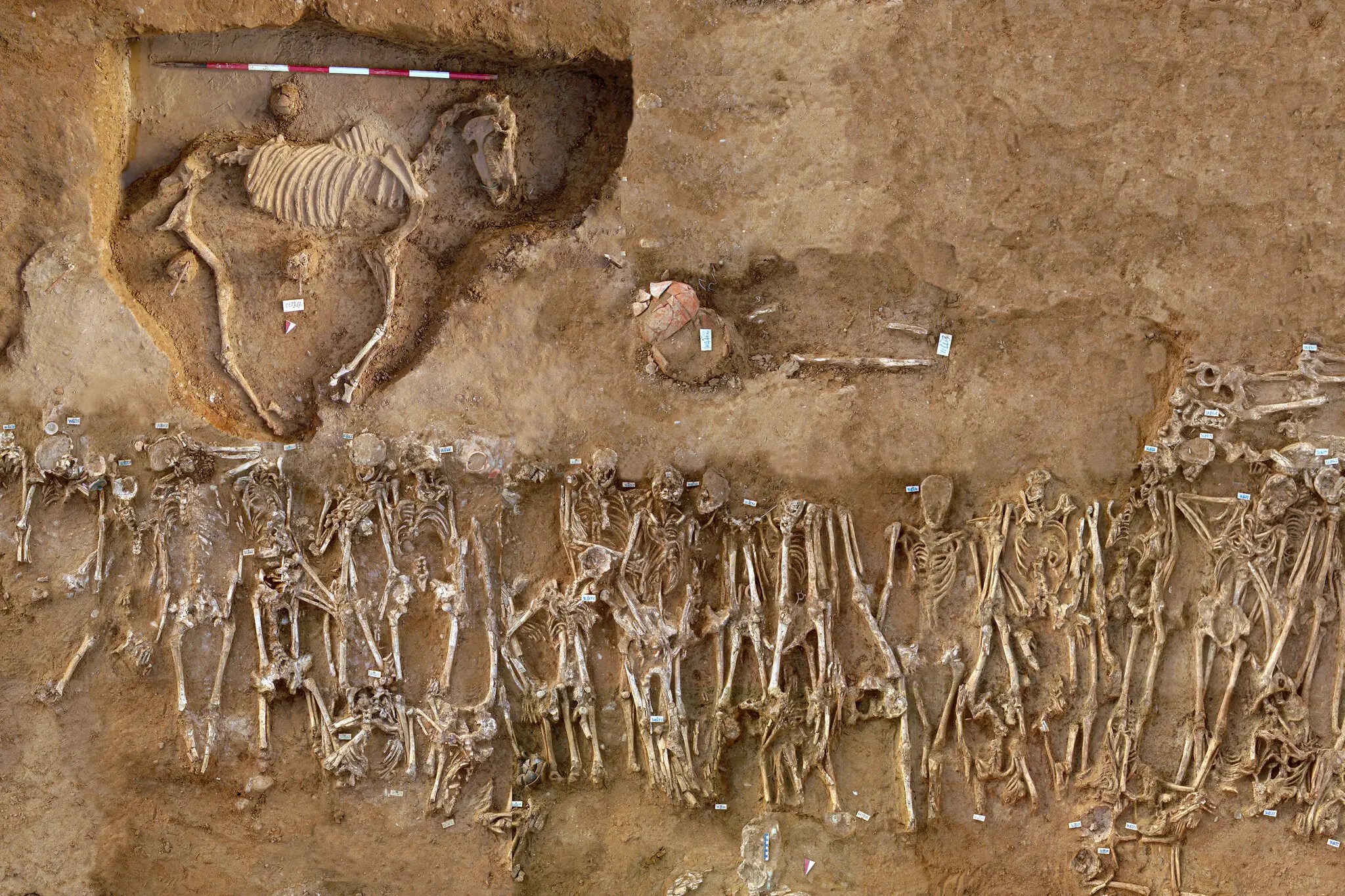
A newly published article in Proceedings of the National Academy of Sciences offers fresh archaeological evidence from the battlefield of Himera (Sicily) on mercenaries’ involvement in ancient Greek warfare.
Mass Grave from the Site of the Second Battle of Himera, 409 BCE. Photo: The New York Times
The New York Times reports on the battlefield archaeology in Sicily and the analysis of soldiers’ remains from the site of the battlefield at Himera: “Neither Herodotus nor Diodorus Siculus mentioned mercenaries in their reports of the first Battle of Himera, a fierce struggle in 480 B.C. in which the Greeks from various Sicilian cities united to beat back a Carthaginian invasion. Mercenaries were considered the antithesis of the Homeric hero.”
“‘Being a wage earner had some negative connotations — avarice, corruption, shifting allegiance, the downfall of civilized society,’ said Laurie Reitsema, an anthropologist at the University of Georgia. “In this light, it is unsurprising if ancient authors would choose to embellish the Greeks for Greeks aspect of the battles, rather than admitting they had to pay for it.'”
“But research published on Monday in the Proceedings of the National Academy of Sciences suggests that the ancestry of the troops defending Himera was not as strictly Greek as historical accounts of the time would have it.”
The Humanities Research Institute at the University of Illinois at Urbana-Champaign is offering a Mellon Post-Doctoral Fellowship in Humanities as Social Practice during academic year 2023-2024.
Recent Ph.D.s in History and the Humanities are encouraged to apply for this post-doctoral fellowship.
Here is the call for applications from H-Net:
The Humanities Research Institute (HRI) at the University of Illinois Urbana-Champaign (UIUC), supported by a grant from the Mellon Foundation, seeks to hire a Post-Doctoral Fellow for a one-year appointment commencing Fall 2023.
The Humanities as Social Practice draw on interdisciplinary arenas of inquiry that have direct impact on contemporary issues. When the humanities are conceived of as a social practice, they have the capacity to move between the academy that nurtures them as fields of study and the communities, local and global, they both seek to serve and must be accountable to, especially in a public research university. As form of “public humanities,” this practice is collaborative and cross-disciplinary, drawing on a range of methodologies and seeks to recognize academic knowledge-making beyond the walls of the university. Through its social practices, the humanities have the capacity to challenge hierarchies of knowing and expertise, in part by engaging audiences and communities beyond campus, in part by embedding reciprocal partnerships in all aspects of research, pedagogy, and public engagement. Practices rooted in critical humanities training are attentive to social differences and disparities, aiming to re-center the human condition and collective community needs in an increasingly tech-driven world.
The Mellon Post-Doctoral Fellow in Humanities as Social Practice will spend the one-year term in residence at UIUC, participating in the yearlong HRI Fellows Seminar and in the variety of publicly engaged humanities work ongoing at HRI and on campus. The Fellow will pursue a project rooted in participatory community-based research and designed to amplify what the humanities as a social practice can and should look like, both in their field(s) and in the larger ecosystem of campus and local communities. They will be required to make a public presentation of their work and run a workshop for graduate students interested in developing pathways to the humanities as a social practice in their own work in the spring semester of 2024.
The search is open to scholars in all humanities disciplines, including the humanities-inflected social sciences, whose research interests lie in the area of community-based social justice and human rights. Areas of interest include, but are not limited to, community-based research in racial, im/migrant, and/or gender justice; public health; environmental justice; Indigenous sovereignty; and disability studies.
The fellowship carries a $60,000 annual stipend, a $6,000 research account, a modest moving allowance, and a comprehensive benefits package. To be eligible, applicants should have received their Ph.D. in a humanities discipline between January 1, 2021 and no later than July 31, 2023.
Application Deadline: November 28, 2022
Detailed eligibility requirements and application guidelines can be found at http://go.illinois.edu/postdoc. The University of Illinois conducts criminal background checks on all job candidates upon acceptance of a contingent offer. The University of Illinois is an Equal Opportunity, Affirmative Action employer. Minorities, women, veterans and individuals with disabilities are encouraged to apply.
The submission period opens October 1, 2022. Applications must be submitted through the online application system. No paper or e-mailed applications (or letters of support) will be accepted. Please do not contact HRI about the viability of your project. The selection committee cannot vet the appropriateness of proposals in advance. Careful reading of the application guidelines should answer most questions. Please limit queries to general questions about the fellowship opportunity and/or difficulties with the application system. The volume of applications HRI receives prevents us from commenting on the status of individual applications. Receipt of applications will be acknowledged via auto-generated email, once an applicant has clicked “submit.” Please note that active submission is necessary; uploading all requisite application materials does not, unto itself, constitute submission.
For more information, see the full call for applications on H-Net.
The International Security Studies Program at Yale University is seeking a postdoctoral associate in Maritime and Naval Studies.
This is a great opportunity for a recent Ph.D. in Maritime and/or Naval History. Any recent Ph.D.s from the Department of History at Northern Illinois University or colleagues from other programs in early modern studies should feel free to contact me for advice on applying for this position.
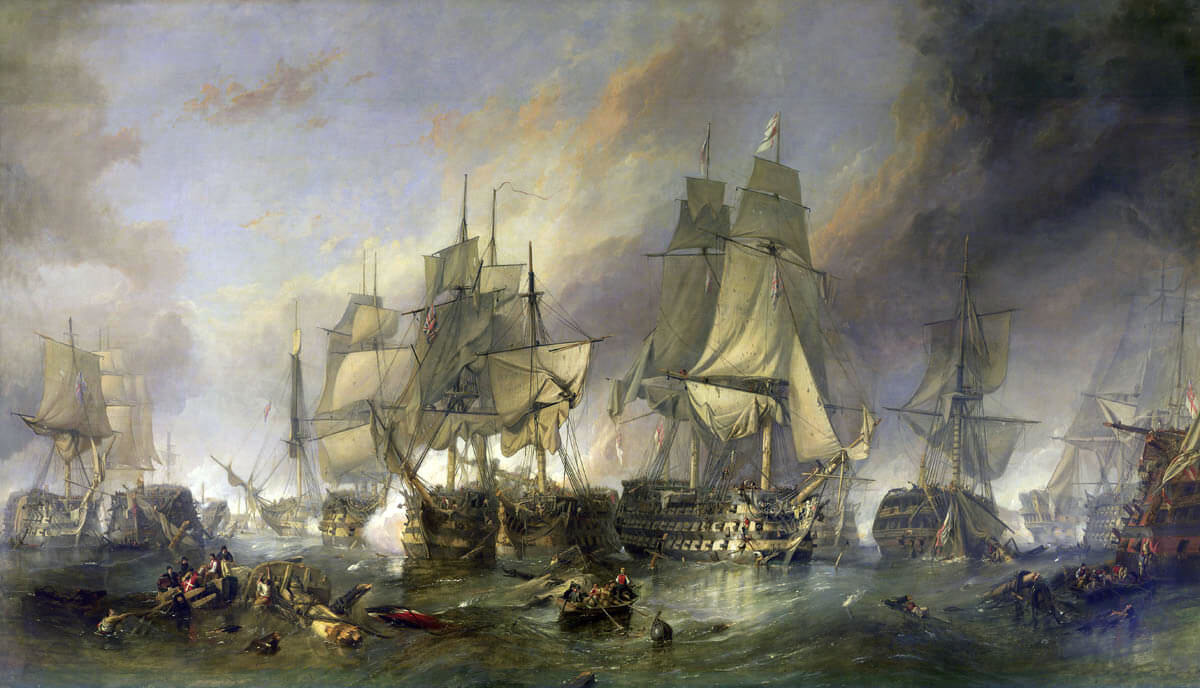
Clarkson Frederick Stanfield, The Battle of Trafalgar, 21 October 1805 (1836)
Here is the announcement from Yale University:
Maritime and Naval Studies Program Postdoctoral Associate
International Security Studies, Jackson School of Global Affairs, Yale University
The Maritime and Naval Studies Program, directed by Paul Kennedy, the J. Richardson Dilworth Professor of History and Global Affairs, will award one postdoctoral associate position, funded for one year with the possibility of renewal for a second year, starting in January 2023. The Maritime and Naval Postdoctoral Associate must have completed their Ph.D. degree in a relevant field to begin the fellowship.
The Maritime and Naval Postdoctoral Associate is expected to use the time to conduct original research and write manuscripts for publication, focused on analysis of naval and maritime history that informs today’s most pressing international political-military challenges. The Maritime and Naval Studies Postdoctoral Associate Fellowship will be awarded to a candidate who is conducting outstanding research and who would benefit from engagement with the intellectual resources of the Yale community, alongside other postdoctoral associates, pre-doctoral associates, and Yale faculty in history, political science, and other disciplines.
Working with the leadership of International Security Studies, the Associate will also assist in the development of a series of lectures, conferences, and other symposia that advance the field of maritime and naval studies and its significance to global affairs. Roughly half of the Associate’s time will be devoted to program development; the other half to their own scholarship.
The Associate will participate regularly in research colloquia on campus and will be granted opportunities to present their work. In consultation with the program director, the Associate may also teach course(s), if desired. The Associate is expected to be in residence through the duration of their fellowship and contribute to the intellectual life of International Security Studies at the Jackson School of Global Affairs. The Associate will have the use of an office on Yale’s campus.
Salary: A minimum of $56,448, depending on experience.
A complete application includes:
C.V.
1000-word statement including the research proposal and any other relevant experience
Three letters of recommendation
Two writing samples, e.g., dissertation chapters or journal articles
Equal Employment Opportunity Statement
Yale University is an Affirmative Action/Equal Opportunity employer. Yale values diversity among its students, staff, and faculty and strongly welcomes applications from women, persons with disabilities, protected veterans, and underrepresented minorities.
For more information, see the full position announcement on H-Net.







 Brian Sandberg: Historical Perspectives