Word and Image in Print and Digital Archives

The Center for Renaissance Studies at the Newberry Library will be offering a research methods workshop on Word and Image in Print and Digital Archives this Fall on Friday 15 October 2021.

Graduate students in History and the Humanities at Northern Illinois University may be interested in this methods workshop.

Here (below) is the announcement from the Center for Renaissance Studies. Note that the registration deadline is 1 June 2021.
Word and Image in Print and Digital Archives

Led by Jennifer Waldron (University of Pittsburgh) and James A. Knapp (Loyola University Chicago

Friday, October 15, 2021
9:30 am – 4:30 pm

Registration Deadline: June 1, 2021  

This research methods workshop takes a long view of the effects of technological change on word-image relations. Beginning with the print resources of the Newberry, we will ask the following questions: How were particular methods of visual and verbal representation key to the organization of knowledge in the early modern period? How did the spatial and temporal affordances of maps, atlases, and historical timelines contribute to emerging views of the “globe”? We will then turn to several of the most important digital archives for early modern studies, including “Digital Newberry.” How have digital tools altered the affordances of image-based archives? How has the reproduction and circulation of words and images shifted in relation to digital searchability, addressability, and information architecture? Finally, participants will be introduced to the process of publishing their archival research from the Newberry using digital tools relevant to work in public humanities, such as Omeka and Timeline JS. Participants will be encouraged to use these tools to produce a publishable timeline, digital archive, or story from the Newberry archive that will be shared on the Center for Renaissance Studies’s consortium blog: CRS Stories

For more information about the workshop, including a link to the registration form, visit our calendar page here: https://www.newberry.org/10152021-word-and-image-print-and-digital-archives

Posted in Archival Research, Cartographic History, Cultural History, Digital Humanities, Early Modern Europe, Early Modern World, European History, Graduate Work in History, Historiography and Social Theory, Humanities Education, Lectures and Seminars, Reformation History, Renaissance Art and History | Leave a comment

Remembering the Tulsa Race Massacre of 1921

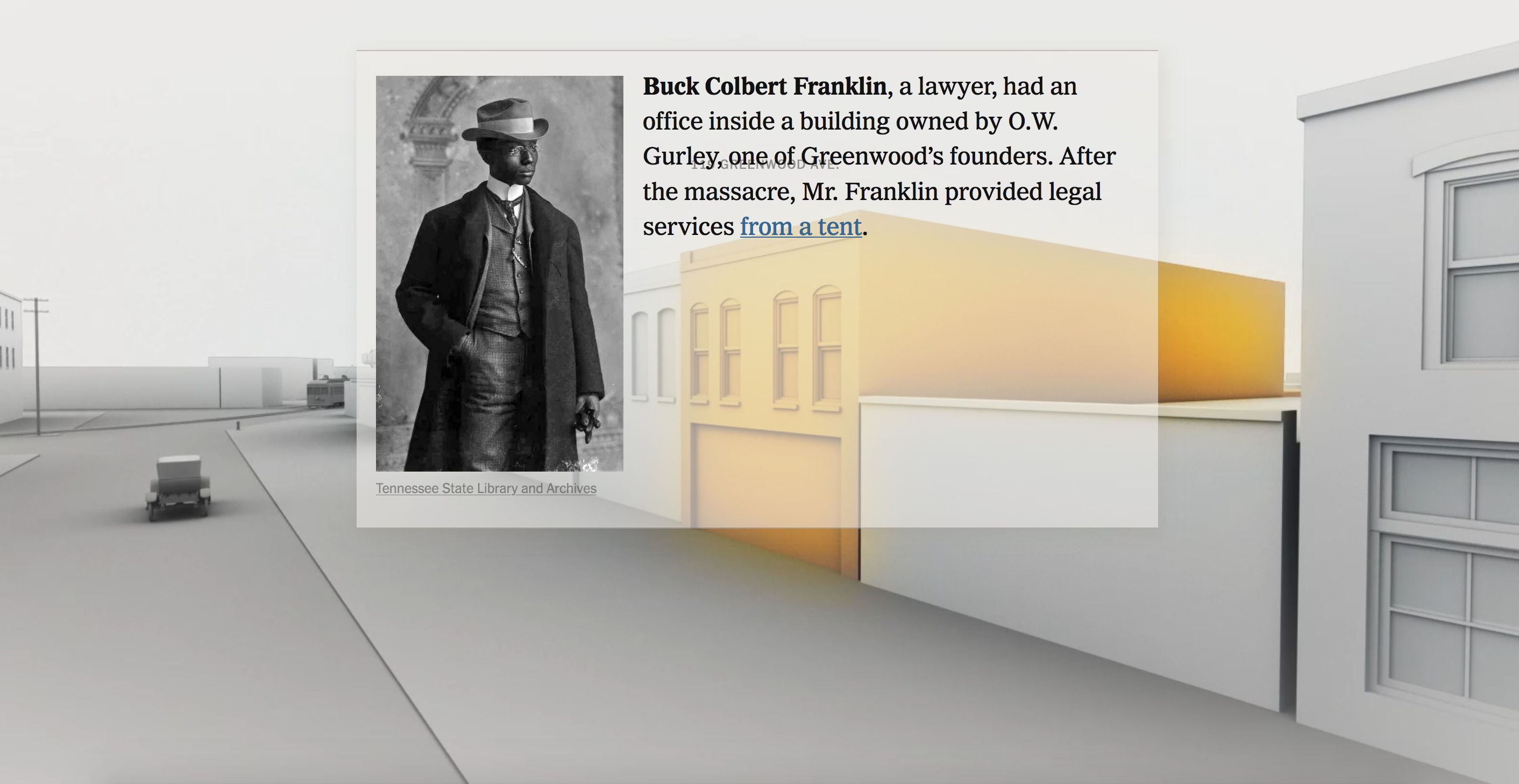
The New York Times has published an interactive reconstruction of the predominantly African American neighborhood of Greenwood and mapped the brutal violence of the armed White crowd that destroyed it during the Tulsa Race Massacre of 1921.

This is a powerful use of Digital Humanities techniques to reconstruct a community that was destroyed by racial violence. The article accompanying the model has a full discussion of the methodologies utilized in creating this multilayered reconstruction of the thriving African American neighborhood of Greenwood before and during the Tulsa Race Massacre.

On 31 May 1921, racial tensions in Tulsa led to a riot in the downtown area. An organized crowd of White militants attacked African Americans who were downtown and then marched to Greenwood—shooting Black residents, looting belongings, and burning buildings in a massacre that lasted two days.

The New York Times describes the horrifying violence against African Americans and the destruction of their neighborhood: “The numbers presented a staggering portrait of loss: 35 blocks burned to the ground; as many as 300 dead; hundreds injured; 8,000 to 10,000 left homeless; more than 1,470 homes burned or looted; and eventually, 6,000 detained in internment camps.”

The interactive model provides detailed digital mapping and modeling to reconstruct the businesses and residences along Greenwood Avenue and the lives of Black entrepreneurs, workers, and residents of the neighborhood. The model incorporates photos, textual evidence, and census data to provide a rich description of some of the Black victims and survivors of the massacre.

Historians of African American studies, violence studies, crowd studies, urban history, and Digital Humanities will be interested in this model. University professors and high school teachers who offer courses on United States History, History of Race and Racism, Civil Conflict, Political Violence, Genocides, Massacres, Digital Humanities, and other subjects may consider using this model with their students.

The interactive model of Greenwood is available on The New York Times website as “What the Tulsa Race Massacre Destroyed,” New York Times, 24 May 2021. The 1921 Tulsa Race Massacre Centennial Commission has information on commemorations this year.

For further reading on the Tulsa Race Massacre and racial violence in early twentieth-century United States, see:

Ellsworth, Scott. Death in a Promised Land: The Tulsa Race Riot of 1921. Baton Rouge, LA: Louisiana State University Press, 1982.

Franklin, John Hope and Scott Ellsworth, eds. The Tulsa Race Riot: A Scientific, Historical and Legal Analysis. Oklahoma City, OK: Tulsa Race Riot Commission, 2000.

Halliburton, R, Jr. The Tulsa Race War of 1921. San Francisco, CA: R and E Research Associates, 1975.

Krugler, David F. 1919, The Year of Racial Violence: How African Americans Fought Back. Cambridge: Cambridge University Press, 2015.

“Tulsa Race Riot: A Report by the Oklahoma Commission to Study the Tulsa Race Riot of 1921.” Oklahoma Commission to the Study of the Tulsa Race Riot of 1921, February 28, 2001.

Posted in Atrocities, Cartographic History, Civil Conflict, Civilians and Refugees in War, Crowd Studies, Cultural History, Digital Humanities, History in the Media, History of Race and Racism, History of Violence, Human Rights, Museums and Historical Memory, United States History and Society, Urban History | Leave a comment

Gruen Prize for Graduate Essays in Ancient History

The Society for Classical Studies is offering a prize for the best graduate research paper on multiculturalism in the ancient Mediterranean.

A number of graduate students at Northern Illinois University work on ancient, late antique, and early medieval history. Some of the graduate students in my recent HIST 790 Research Seminar on Religious Politics and Sectarian Violence may be interested in applying for this prize. Any NIU students who wish to apply for this prize should feel free to contact me for assistance in preparing their submissions.

Here is the call for submissions for the Gruen Prize from the Society for Classical Studies:

On behalf of the Society for Classical Studies (SCS), the Erich S. Gruen Prize Committee invites all graduate students in North America to enter the second annual competition for the best graduate research paper on multiculturalism in the ancient Mediterranean. This year the prize will be a cash award of $500. 

The prize is intended to honor Erich S. Gruen, renowned ancient historian and long-time Gladys Rehard Wood Professor of History and Classics at the University of California, Berkeley. Professor Gruen was born in Vienna in 1935 and came to the United States in 1939. One of the most respected and beloved scholars in the field, he has made lasting contributions to our understanding of ethnicity, identity, and exchange in the multicultural ancient Mediterranean world. Professor Gruen has served on the dissertation committees of over one hundred Ph.D. students, and he continues to correspond with and support them long after graduation, as scholars and as people. He also touches the lives of countless other scholars across the world through his tireless traveling, mentorship, and service to the profession, including as president of the American Philological Association (now the Society for Classical Studies) in 1992. 

In honor of all these achievements and with the help of his former students, the SCS Board has set up an award in order to celebrate Professor Gruen’s continuing contributions to the field. We therefore invite high-quality papers treating any aspect of race, ethnicity, or cultural exchange as it pertains to the ancient Mediterranean by any student currently enrolled in a North American graduate program, regardless of citizenship or immigration status. A Prize Committee has been charged with selecting the most original and well-argued research paper to receive a cash award and public recognition by SCS. Membership in SCS and/or attendance at the annual meeting are not expected or required of any applicant.

The 2021 Gruen Prize Competition Guidelines

The deadline for submissions is October 8, 2021. Essays must be work that can stand alone without requiring summaries of omitted sections. They should not exceed the length of 30 pages, including notes but excluding bibliography and illustrations or figures. Text must be double-spaced in 12-point font with 1-inch margins; notes may be single-spaced and must be displayed as footnotes. Authors must remove their names from essays. Electronic submission via Google form is required unless prior arrangements have been made for good reason with the committee. Essays should be submitted in PDF format by direct upload using the Google form found here.

The Gruen Prize is intended to encourage new avenues of intellectual development and the graduate-level mentorship that supports and nurtures it. Submissions should therefore not be previously published, in full or in part, and authors who already have Ph.D. in hand by October 8, 2021, are ineligible. SCS reserves the right not to confer the prize in any year in which no suitable candidate is found. The winner of the 2021 Gruen Prize will be selected by a jury.  Please direct to both Nandini Pandey (nandini.pandey@wisc.edu) and Kristen Seaman (kseaman@uoregon.edu) remaining questions regarding eligibility, requirements, submission, or other matters.

For more information, see the Society for Classical Studies website.

Posted in Ancient History, European History, Graduate Work in History, Grants and Fellowships, History of the Western World, Mediterranean World, World History | Leave a comment

Kress Fellowships at the Medici Archive Project

The Medici Archive Project in Florence, Italy, is offering two Samuel H. Kress Fellowships for graduate students interested in pursuing archival research at the Archivio di Stato di Firenze and other Florentine archives.

These fellowships offer American graduate students a great opportunity for on-site training and practice in archival methods, manuscript studies, and paleography.

Graduate students in Renaissance Art History, Renaissance Italian History, Early Modern European History, Early Modern Mediterranean Studies, and Renaissance Studies may be interested in this opportunity.

Graduate students at Northern Illinois University and other universities affiliated with the Center for Renaissance Studies at the Newberry Library should contact their professors for advice on applications.

The Medici Archive Project is a research institute that promotes interdisciplinary Renaissance studies in Florence and worldwide. The Medici Archive Project has created online platforms for Renaissance archival collections in the Archivio di Stato di Firenze and sponsored various Digital Humanities projects. The Project also publishes a book series and hosts seminars, lectures, and conferences in interdisciplinary Renaissance studies.

Here is the Medici Archive Project’s call for applications:

Thanks to the continued support of the Samuel H. Kress Foundation, The Medici Archive Project is offering two fellowships for graduate and pre-doctoral students to undertake specialized archival research on-site at the Archivio di Stato as well as other archival collections housed in Florence and across Tuscany. These fellowships are especially aimed to provide graduate students in art and architectural history with the opportunity to examine original source materials, receive scholarly guidance from MAP Staff, present their findings at MAP-sponsored conferences and workshops, and enroll in MAP’s Paleography and Archival Studies Seminar.

Both fellowships must take place within a period of no less than three months from 23 August 2021 to 23 December 2021. The stipend is USD 8,000. Fellows will be responsible for their travel and accommodations in Florence. Eligible candidates must either have American citizenship or be enrolled in graduate programs at universities in the United States.

There is no application form for this fellowship. Instead, suitable candidates are invited to send via email to education@medici.org, the following documents in a single PDF by 15 June 2021:

  1. A cover letter.
  2. A short essay (no more than two pages) on how the candidate’s topic will benefit from archival research.
  3. A curriculum vitae.
  4. The name and email address of a scholar in the field, preferably the candidate’s supervisor, who can comment on the applicant’s qualifications and the merits of the research proposal (please do not include letters of recommendation with the application).

To apply for these fellowships, the following material should be sent electronically to education@medici.org. Please do not include supplementary material (publications, papers, syllabi, etc.). All materials must be submitted in English. For further information, contact education@medici.org.

Posted in Archival Research, Art History, Digital Humanities, Early Modern Europe, Early Modern World, European History, Graduate Work in History, Grants and Fellowships, Italian History, Manuscript Studies, Mediterranean World, Reformation History, Renaissance Art and History | Leave a comment

Europe Day 2021

Europeans are celebrating Europe Day today, 9 May 2021. Europe Day is an annual holiday in the European Union.

A Conference on the Future of Europe is coordinated to coincide with Europe Day this year. The conference organizers explain that “The Conference on the Future of Europe is a unique and timely opportunity for European citizens to debate on Europe’s challenges and priorities. No matter where you are from or what you do, this is the place to think about what future you want for the European Union. The European Parliament, the Council and the European Commission have committed to listen to Europeans and to follow up, within their sphere of competences, on the recommendations made.”

Euronews explains the significance of Europe Day: “The date marks the anniversary of the Schuman Declaration, which proposed the creation of a European Coal and Steel Community, the forerunner to the European Union. Europe Day intends to ‘celebrate peace, solidarity, diversity and unity in Europe,’ according to EU institutions. But it is also an opportunity for European citizens to find out more about what the EU does and to debate the issues that will shape its future.”

The Schuman Declaration arguably laid the political and economic groundwork for the European Union, which emerged later. European Union politicians and historians consider Robert Schuman one of the key architects of European integration. The Schuman Declaration has thus become integral to the historical narrative of the European Union’s formation.

Euronews summarizes the significance of the Schuman Declaration: “In a historic speech in Paris in 1950, Robert Schuman, who was France’s foreign minister at the time, set out his idea for a new form of political cooperation in Europe, which would make war between Europe’s nations unthinkable. Schuman proposed that the community’s founding members – France, Germany, Italy, the Netherlands, Belgium and Luxembourg – would pool their coal and steel resources and create a common market by lifting import and export duties. The idea was partly economic: Schuman’s proposal came just five years after World War II that left the continent devastated. But it was also political. The idea was that by merging the economic interests of France and Germany together, it would reduce the risk of conflict in the future.”

Celebrations of Europe Day are being held online this year, due to the ongoing Covid-19 pandemic. A Music Europe Day is being broadcast online.

Posted in Conferences, European History, European Union, French History, Human Rights, Idea of Europe, Museums and Historical Memory, Strategy and International Politics | Leave a comment

Celebrations of Victory in Europe Day

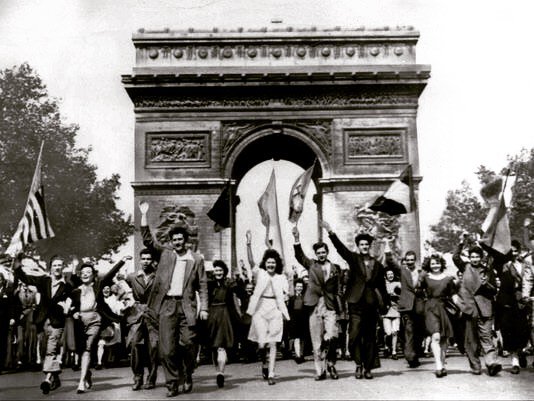
Today, Europeans are celebrating the anniversary of the end of the Second World War in Europe and the collapse of the Nazi regime in Germany. The surrender of Nazi Germany on 8 May 1945 prompted spontaneous celebrations by Allied troops and war-weary Europeans.

Civilians in the United States, United Kingdom, Soviet Union, and other Allied nations took to the streets to celebrate Victory in Europe Day (VE Day). The Second World War would continue for several more months in Asia and the Pacific, but the fighting in Europe was over.

Today, governments and heads of state across Europe are celebrating Victory in Europe Day once again, as are leaders of the Allied powers that triumphed over Nazi Germany and Fascist Italy in 1945. The celebrations have been rather muted this year, due to the ongoing novel coronavirus pandemic. VE Day celebration organizers in 2020 also had to cope with coronavirus restrictions and lockdowns, but were able to commemorate the 75th anniversary of the end of the Second World War.

The public celebration of VE Day is more complicated in reunified Germany, despite its status as arguably leading power of the European Union.

“Victory in Europe Day, the anniversary of Nazi Germany’s military capitulation to the Allies on May 8, 1945, is an occasion of unreserved celebration across much of the continent, observed with colorful parades and national holidays. For Germans, it is understandably fraught. For a long time, the anniversary was largely defined in Germany by ambivalence. How, after all, could the vanquished celebrate their surrender? Now Germans are increasingly grappling with a thornier question: How could they not?”

Euronews reports on the celebrations of Victory in Europe Day. The Telegraph reports on the history of VE Day celebrations in the United Kingdom. Stars and Stripes reports on celebrations in the United States. The New York Times reports on commemorations in Germany.

Posted in Civilians and Refugees in War, European History, European Union, French History, Museums and Historical Memory, Paris History, Political Culture, War and Society, War, Culture, and Society | Leave a comment

Research Position in War Studies

King’s College London is offering a position as Research Associate in the Department of War Studies.

The short description of the position reads: “The post holder will work alongside the Research and Knowledge Transfer Manager of the Centre for Science and Security Studies to support and coordinate aspects of research and knowledge transfer in the field of non-proliferation, with an emphasis on nuclear politics, safeguards, illicit trade and technology transfer controls (i.e. preventing the transfer of proliferation-sensitive technologies to proliferator organisations). The role will also involve the provision of reasonable support and subject matter expertise to others in the Centre and wider Department of War Studies, and benefit from exposure to a range of research activities across both groupings. This will include a combination of project coordination, research and knowledge transfer work tied to a number of different government-funded projects.”

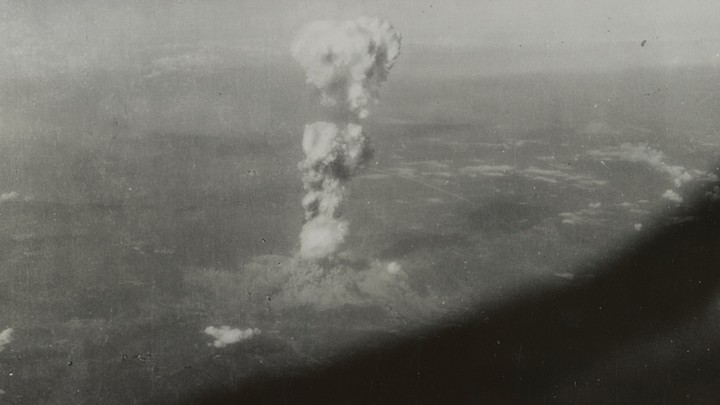
Atomic Bombing of Hiroshima, 1945.

Recent M.A.s and Ph.D. candidates in History at Northern Illinois University may be interested in this research opportunity.

For a full position description, see the job ad.

For more information, see the King’s College London website.

Posted in Arms Control, History of Violence, Jobs and Positions, Strategy and International Politics, War and Society, War, Culture, and Society | Leave a comment

The Politics of Commemorating Napoleon

Commemorations of the Bicentennial of the death of Napoléon Bonaparte this year have become the latest battleground in France’s ongoing “culture wars.”

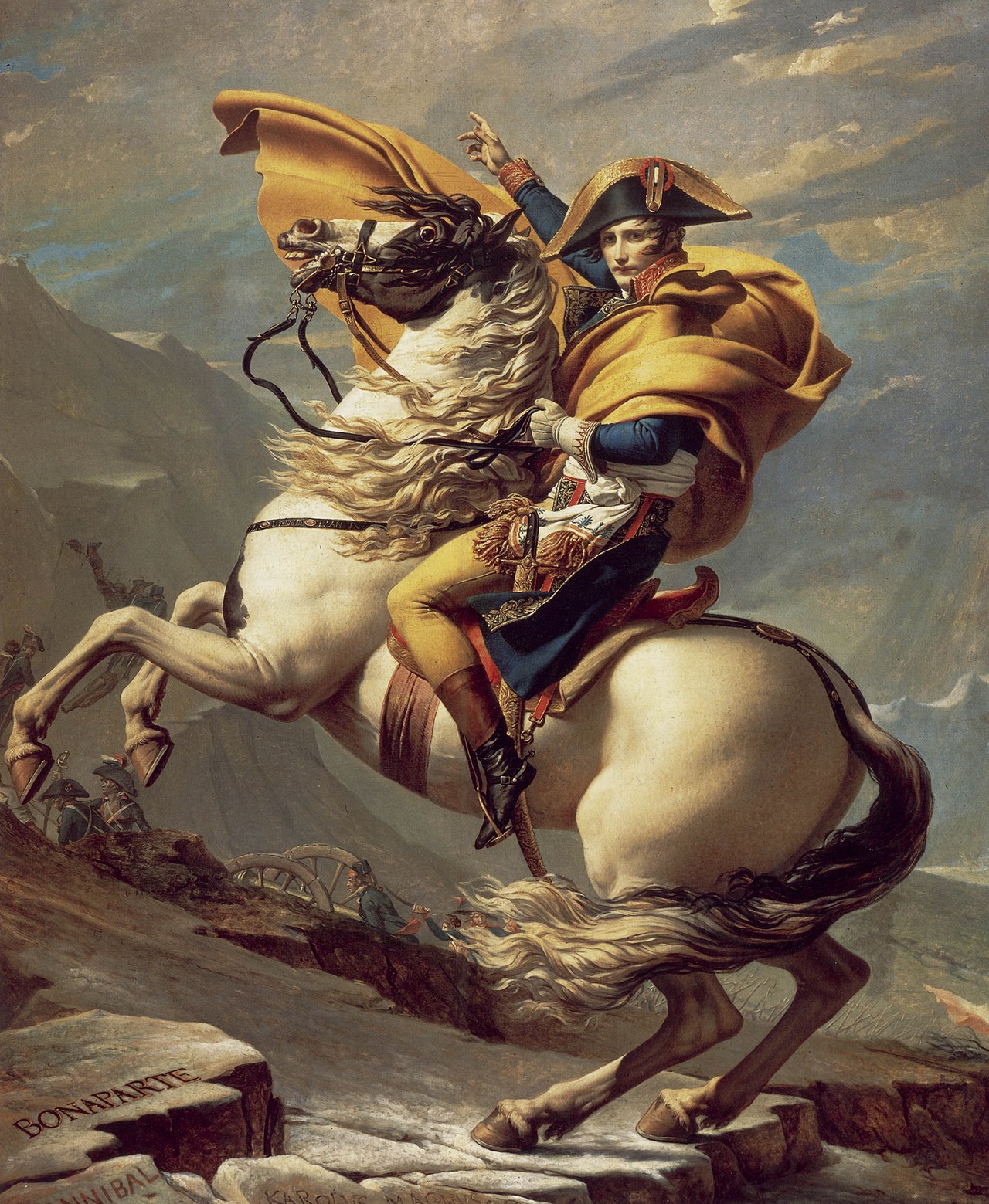
The figure of Napoléon remains powerful in French popular culture through television series, documentaries, films, and video games.

The historical memory of Napoléon is prominent in French political culture, since politicians and journalists often evoke his legacies in policy debates and electoral campaigns.

Napoléon’s image is especially popular in far-right politics in France, but with notable variations. Some monarchists celebrate Napoléon for his restoration of law and order following the chaos of the French Revolution (1789-1799), while others deplore his dictatorial rule and usurpation of royal political culture. Bonapartists, military supporters, and neo-imperialists celebrate Napoléon’s conquests and empire-building (1798-1814) as the beginning of France’s imperial project. Neo-fascists extol Napoléon’s authoritarian First Empire and its centralized approaches to policing and administration.

Politicians of center and left-wing parties tend to have more ambivalent or outright negative views of Napoléon as an authoritarian politician and military dictator who committed political crimes, human rights violations, and war crimes in France, Europe, and the Caribbean.

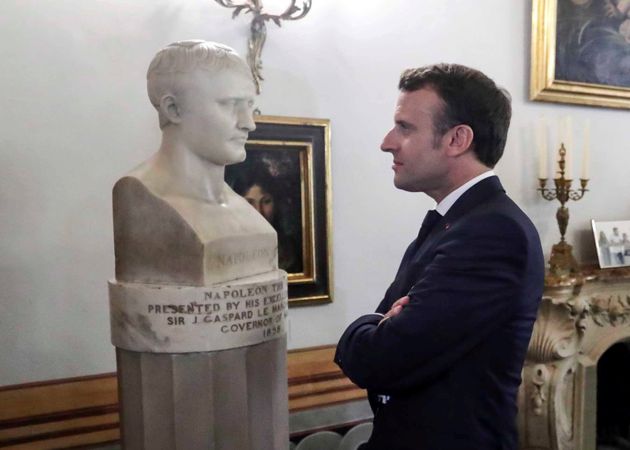
So, it is perplexing that French President Emmanuel Macron has chosen to celebrate the 200th anniversary of Napoléon’s death in a very public way.

President Emmanuel Macron views a bust of Napoléon I in Malta.

New York Times columnist Roger Cohen observes that “Jacques Chirac couldn’t stand him. Nicolas Sarkozy kept his distance. François Hollande shunned him. But on the 200th anniversary this week of Napoleon Bonaparte’s death, Emmanuel Macron has chosen to do what most recent presidents of France have avoided: honor the man who in 1799 destroyed the nascent French Republic in a putsch. By choosing to lay a wreath Wednesday at Napoleon’s tomb under the golden dome of Les Invalides, Mr. Macron is stepping into the heart of France’s culture wars. Napoleon, always a contested figure, has become a Rorschach test for the French at a moment of tense cultural confrontation.”

Roger Cohen’s column on “France Battles Over Whether to Cancel or Celebrate Napoleon,” is in The New York Times.

A previous post on 2021: The Year of Napoleon on this blog earlier this spring discussed the growing political debate in France over Napoléon’s legacy.

Le Monde reports on the bicentennial of Napoléon’s death. France 24 has a series of articles and videos on the bicentennial. BBC News has published an article on “Napoleon’s Incendiary Legacy Divides France 200 Years On.”

Posted in Early Modern Europe, Early Modern World, Empires and Imperialism, European History, French History, French Revolution and Napoleon, History of Violence, Museums and Historical Memory, Strategy and International Politics, War and Society, War, Culture, and Society, Warfare in the Early Modern World | Leave a comment

Texas Legislators Exert Influence over Social Science Teaching

Conservative legislators in Texas are waging a new fight in the so-called “culture wars” over historical memory and public education in the State of Texas.

Jim Grossman, Executive Director of the American Historical Association, writes: “The Texas legislature is scheduled to vote today on ‘An Act relating to the social studies curriculum in public schools.’ AHA members will no doubt be pleased to see a state legislature taking an interest in social studies education; we are well aware that in part because history is tested less regularly than some other subjects it often receives fewer resources and less classroom time.”

Politicians and educators have repeatedly battled over the Texas state standards for history and social science education in public schools for decades. Recently, some Texas Republicans have been pushing for an “1836 project” to promote a patriotic (and conservative) vision of Texas history. The Texas legislative initiative is part of a broader movement by conservatives against curricula that incorporate multicultural perspectives, critical race theories, and anti-racist stances.

University of Texas at Austin

The Texas debate thus fits into a broader national debate over historical memory and public education. Jim Grossman explains that “unfortunately this legislation is part of a national agenda to diminish the quality of history instruction in the United States. Legislators in Idaho, Iowa, Louisiana, Missouri, New Hampshire, Oklahoma, Rhode Island, and West Virginia have introduced bills that generally purport to protect academic freedom and eliminate discrimination but actually make it difficult for teachers to discuss racism and other structures of inequality important to our nation’s history. A careful reading of much of this legislation indicates that teachers would be taking a serious risk if their class took a deep dive into the AHA’s Statement on the History of Racist Violence in the United States, endorsed by 97 scholarly organizations.”

Conservatives across the United States have been vocal in their opposition to the inclusion of anti-racist perspectives on American history, especially through the 1619 Project, published by The New York Times.

The American Historical Association (AHA) has expressed concerns about conservative legislation that seeks to impose curricula on history teachers nationwide. Conservative legislators are seeking to constrict the ability of trained high school and middle school history and social science teachers to do their jobs professionally.

Grossman emphasizes that “nearly all of these bills seek to eliminate ‘divisive concepts’ from classrooms, drawing directly on a tendentious 2020 executive order that the AHA declared‘ neither necessary nor useful.’ The goal clearly is to heal division by denying its history, to inculcate patriotism by celebrating the nation’s past rather than understanding it. We stand by our vigorous insistence on teaching the complex textures of that history, rather than whitewashing it.”

The AHA Statement on the History of Racist Violence in the United States asserts that: “Division has a history, both in the United States and across the world. Denying this history cannot erase it. Rather than banning the ‘divisive concepts’ from any educational venue—whether a classroom, a museum, a national park, or a workplace training session—historians seek to draw public attention to these concepts so that they can be discussed, debated, and ultimately challenged. Unity is not achieved by pushing division under the rug; it can be won even in the face of difference.”

The Dallas Morning News reports on the debates over history and social science teaching in Texas. The AHA Statement on the History of Racist Violence in the United States is available on the website of the American Historical Association.

Posted in Education Policy, History in the Media, History of Race and Racism, Human Rights, Humanities Education, Political Culture, The Past Alive: Teaching History, United States History and Society | Leave a comment

New Research at Cahokia Mounds Site in Illinois

New archaeological excavations at Cahokia, Illinois, have been investigating evidence of deforestation and flooding at the site of a major indigenous urban center.

The New York Times reports that “A thousand years ago, a city rose on the banks of the Mississippi River, near what eventually became the city of St. Louis. Sprawling over miles of rich farms, public plazas and earthen mounds, the city — known today as Cahokia — was a thriving hub of immigrants, lavish feasting and religious ceremony. At its peak in the 1100s, Cahokia housed 20,000 people, greater than contemporaneous Paris. By 1350, Cahokia had largely been abandoned, and why people left the city is one of the greatest mysteries of North American archaeology.”

The medieval history of urban development in North America is not well known, but we are finding out more about the Mississippian peoples and their cities, thanks to research at the Cahokia site.

“Recent excavations at Cahokia led by Caitlin Rankin, an archaeologist at the University of Illinois at Urbana-Champaign, show that there is no evidence at the site of human-caused erosion or flooding in the city,” according to The New York Times.

History students at Northern Illinois University should visit this important historic site, which is located only a few hours’ drive away from campus. The remaining mounds are pretty impressive!

The New York Times article is available on its website. For further information, see the Cahokia Mounds Museum and Interpretive Center.

Posted in Cultural History, Environmental History, Illinois History and Society, Material Culture, Medieval History, Museums and Historical Memory, United States History and Society, Urban History, World History | Leave a comment