Burial Politics and Intolerance in France

briansandberg's avatarCluster for the Study of Religious Violence

Burial politics and intolerance seem to have been involved in an incident concerning the burial of a Roma (gypsy) baby during the holidays in France. The mayor of the town of Champlan, where the baby lived and died, allegedly refused her family the right to bury her in the local cemetery.

Cemetiere-Wissous

According to the BBC, “The girl was born in mid-October and died on 26 December of sudden infant death syndrome. The conservative mayor of Champlan, Christian Leclerc, was reported to have refused to bury her. He was quoted by Le Parisien newspaper as justifying the decision by saying that his town was running out of burial space and that ‘priority is given to those who pay local taxes.'”

Champlan-mairie

The refusal to allow the Roma girl to be buried in Champlan has led to outrage by many French people and a political scandal for the mayor of Champlan. Several…

View original post 219 more words

Posted in Uncategorized | Leave a comment

French Legion d’honneur and Economic Crisis

The French Legion d’honneur (Legion of Honor), which was created by Napoléon I, periodically creates controversy. The famed Legion d’honneur is granted for military and civil service to the French nation, but the honor has a long and complex history. The website of the Legion d’honneur indicates that “La Légion d’honneur compte 92.000 membres. Chaque année environ 3.000 personnes sont distinguées, un tiers à titre militaire, deux tiers à titre civil.”

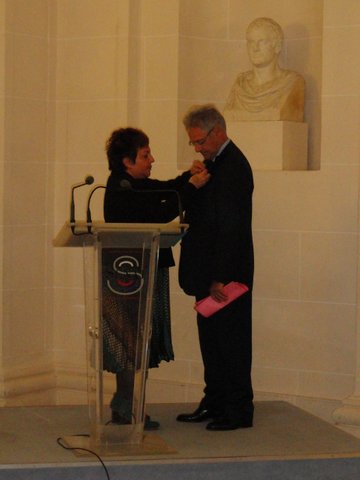
I recently attended a ceremony at the Sénat de France, in the Palais de Luxembourg, for Professor Denis Crouzet’s induction into the Legion d’honneur by Sénateur Esther Benbassa, who presented the award. Crouzet is the pre-eminent historian of the French Wars of Religion (1562-1629), and numerous early modern French historians attended the ceremony on 8 December 2014.

CrouzetBenbassa-legion

That the attendees included Emmanuel Le Roy Ladurie, Robert Descimon, Mark Greengrass, Guy LeThiec, Sylvie Daubresse, Jean-Marie LeGall, Nicolas LeRoux, and many other early modern French historians indicates how important this award is for French academics.  The Legion d’honneur represents the highest possible recognition of  academic and public service for French professors and civil servants.

Since this ceremony, the Legion d’honneur has been in the news because of a new controversy, however. The economist Thomas Piketty, author of the non-fiction best-seller, Capital in the Twenty-First Century, has refused to accept the award of the Legion d’honneur.

Thomas Piketty is quoted as saying that he refused the Legion d’honneur because he does not think that it is “the government’s role to decide who is honorable.”

The New York Times reports that: “The Legion of Honor, which was created by Napoleon Bonaparte, has a history of controversy. Several notable French citizens, including Claude Monet, Simone de Beauvoir and Jean-Paul Sartre, have rejected it for various reasons, including not wanting to be linked to the government of the day. Mr. Sartre also refused the Nobel Prize for Literature. And there is a tradition of Britons like the singer David Bowie rejecting royal honors.”

Franco-American political relations and economic situations may affect differing perceptions of the Legion d’honneur. Piketty’s refusal must sting for President François Hollande’s government, amid the continuing economic crisis and slow recovery in France. Le Monde reports that “Le refus par Thomas Piketty de recevoir la Légion d’honneur, pour laquelle il avait été proposé dans la promotion du 1er janvier, a suscité des réactions aigres-douces de la part de plusieurs membres du gouvernement.” This refusal suggests both the continuing importance of the Legion d’honneur and its implication in economic and educational policy-making and politics, both within France and in international contexts.

The Legion d’honneur website provides information on the award and the organization. The Sénateur Esther Benbassa’s website posted photos of Denis Crouzet’s induction ceremony.  The New York Times and Le Monde report on Thomas Piketty’s refusal of the award.

Posted in Careers in History, Early Modern Europe, Education Policy, European History, European Union, French History, French Wars of Religion, Humanities Education, Political Culture | Leave a comment

American Historical Association 2015

The American Historical Association 2015 Annual Meeting opens in New York City today.  Thousands of professors, instructors, independent researchers, research librarians, and graduate students in history will be attending the largest historical conference in North America over the next several days.

AHA-logo

This massive conference hosts hundreds of sessions in which historians will be presenting or discussing new research, historiographical reflections, methodological approaches, pedagogical techniques, curricular reforms, public history projects, and digital humanities work. Every field of historical research from antiquity to the contemporary world will be represented at the conference.

To see what is going on at the conference, see the Program of the AHA 2015 Annual Meeting.

In celebration of the opening of the 2015 AHA, here is an important op-ed by James R. Grossman, the executive director of the AHA, from this past fall:

The New York Times published Grossman’s op-ed.

Posted in Conferences, Graduate Work in History, Historiography and Social Theory, History in the Media, The Past Alive: Teaching History | Leave a comment

Hitler’s House and Austrian Historical Memory

Hitler’s birthplace is stirring fresh controversy in Austria. Adolf Hitler was born in the small northern Austrian town of Braunau am Inn in 1889.

Hitlers left Braunau am Inn when Adolf was only three years old, so his connection to the town is very limited. But, he did briefly visit Braunau am Inn on his way to Vienna in 1938 during the Nazi Annexation of Austria.

The house where Hitler was born is still privately owned, but has been rented out by the Austrian government to avoid having the house used as a shrine by neo-Nazi groups. The future of Hitler’s birthplace is now uncertain, leading to somewhat nervous discussions of possible solutions.

This historical site definitely raises numerous problematic issues of historical memory and commemoration.

The BBC reports on Hitler’s birthplace online.

Posted in European History, History in the Media, Museums and Historical Memory, Strategy and International Politics, War, Culture, and Society | Leave a comment

Islamic Radicalism or Mental Instability?

A driver deliberately drove his car into pedestrians in Dijon, France, injuring at least eleven people. The driver aggressively swerved into pedestrians at five different locations in the city on the evening of Sunday 21 December.

Witnesses reported that the driver cried “Allah Akbar” (God is Great) and claimed to have acted in the name of the children of Palestine, according to French police.

Dijon-attacks

The news coverage of these attacks varies widely however.

In an article entitled, “Un déséquilibré renverse onze piétons à Dijon,” Le Monde presents the attacks as being carried out by “un automobiliste, probablement déséquilibré.” The reporter for Le Monde cites a source involved with the police investigation who indicates that « l’homme, né en 1974, présente le profil d’un déséquilibré et serait suivi en hôpital psychiatrique ».

The French media presents this attack as an act of violence by a mentally ill man who was already well known to police for his erratic behavior in Dijon.

BBC begins its report, entitled “France Dijon: Driver Targets City Pedestrians,” differently, emphasizing Islamic motivations, rather than mental stability in its lead: “A driver shouting the Islamic phrase ‘God is great’ in Arabic has run down pedestrians in Dijon, France, injuring 11, two seriously, French media say.” The BBC does provide some balance, clarifying that the attacker “is said to be ‘apparently imbalanced’ and to have spent time in a psychiatric hospital.”

But, then the BBC immediately pivots to discuss a completely unrelated case in another French city: “French police shot dead a man on Saturday after he attacked them with a knife, also shouting ‘God is great.'” The BBC report goes on to link the violence in Dijon to Islamic terrorist attacks.  The BBC reports: “France has the largest number of Muslims in western Europe – estimated at between five and six million. There have been a number of ‘lone wolf’ attacks by Islamists in recent years.”

The New York Times report, entitled “France: Driver Goes on Rampage, Feeding Fears,” leads off in a alarmist tone: “A driver deliberately slammed his car into crowds around the city of Dijon in eastern France on Sunday, raising concerns at a time when Islamic extremists are calling for attacks in France.” The use of “rampage” in the article’s title also references the potential for mass violence, since the term is often used in reports on mass shootings in the United States.

Like the BBC, the New York Times quickly moves on to tie the driver’s violence to terrorism: “The Islamic State group and other terrorist organizations have repeatedly called for attacks against France, notably because of the French military’s participation in U.S.-led airstrikes in Iraq. Some extremists have specifically suggested that anyone angry at the French government could use weapons easily at hand — such as cars or knives — to stage ‘lone wolf’ attacks.”

The motives for the driver’s attack remain uncertain. The New York Times points out that French officials have not confirmed even the initial witness testimony: “Police union official Michel Bonnet said on BFM television that some witnesses apparently heard the driver say ‘Allahu Akbar,’ or ‘God Is Great,’ and refer to the ‘children of Palestine.’ But the Interior Ministry would not confirm that.”

The editorial stances of these three major newspapers reveal different assumptions about the relationships between religion and violence. Although all three reports indicate the lack of detailed information regarding the driver’s motives in the Dijon attacks, they frame the story with established frameworks based in their own reporting patterns. Le Monde emphasizes the problem of mental illness, the BBC stresses the threat of “lone wolf” Islamic radicalism, while the New York Times implies the menace of an Islamic terrorist organization’s inspiration for the attacks.

Given the uncertainty on the Dijon driver’s motives, these differences may suggest broader patterns of reporting or editing in these news publications.

Le Monde, the BBC, and the New York Times report on the Dijon attacks.

Posted in French History, History of Violence, Political Culture, Religious Politics, Religious Violence | 1 Comment

Norton Anthology of World Religions Reviewed

briansandberg's avatarCluster for the Study of Religious Violence

Karen Armstrong reviews The Norton Anthology of World Religions in the New York Times.

“At a time when religious faith is coming under intense scrutiny, The Norton Anthology of World Religions is presenting a documentary history of six major faiths with sufficient editorial explanation to make their major texts intelligible across the barriers of time and space,” Karen Armstrong explains. “This second volume in the series is a textual overview of the three monotheisms — Judaism, Christianity and Islam — from the early scriptures to contemporary writings.”

TorahQuranGospel

Armstrong presents the volume’s approaches, concluding that “at a time when religion is often regarded as inherently violent, the anthology reminds us that it has also been a force for peace. … But, alas, religiously articulated violence is now a fact of life.”

Karen Armstrong’s review is published in the New York Times online.

View original post

Posted in Uncategorized | Leave a comment

Torture and Secrecy

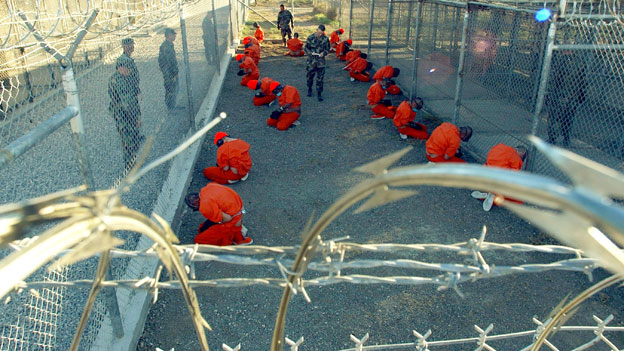
The Central Intelligence Agency (CIA) tortured detainees.  CIA agents and interrogators used a variety of brutal and inhumane methods to torture terrorism suspects during repeated coercive interrogations.

Those are the findings of the U.S. Senate Select Committee on Intelligence’s Committee Study of the Central Intelligence Agency’s Detention and Interrogation Program, which was partially declassified and released this week.

News media have provided extensive coverage of the U.S. Senate report and reactions to it by politicians and CIA officials.

GuantanamoBay

One of the best succinct analyses of the significance of the report so far is by Frank Foley, who is a Lecturer in the War Studies Department at King’s College London and the author of Countering Terrorism in Britain and France.

“Following publication of the Senate report,” Foley notes, “there have been calls for the prosecution of Bush administration officials involved in the CIA’s interrogation programme. This would send the strongest possible warning signal to any future US government considering re-authorising such techniques.”

Foley argues that “even short of that, the revelations and public debate on the CIA’s interrogation programme may yet prove to be a powerful deterrent. A fundamental underpinning of the post-9/11 interrogations was a belief among security officials that their brutal treatment of detainees would remain largely secret.”

The BBC published the analysis of the U.S. Senate report on CIA torture. Historians of violence and warfare will want to read the complete Executive Summary of the report, available online.

Posted in Atrocities, Civilians and Refugees in War, Culture, History of Violence, Strategy and International Politics, Terrorism, War and Society | Leave a comment

Digital Mapping of Shipwrecks

The City of Rio de Janeiro has been located near the Golden Gate into San Francisco Bay. NOAA researchers recently utilized sonor mapping techniques to survey the ocean floor around the entry to the San Francisco Bay, finding the site of this famous shipwreck.

According to Wired, “At 5:30 am on February 22, 1901, the iron-hulled City of Rio de Janeiro, enveloped in fog, hit the rocks of Fort Point just within the Golden Gate. Water flooded the bulkheads, sinking the ship within 10 minutes and killing 128 of the 210 passengers aboard, most of them Chinese and Japanese emigrants. Captain William Ward, who died, and Pilot Frederick Jordan, who lived, were found guilty of gross negligence because they never should have attempted to enter San Francisco Bay.”

SanFranciscoBay-shipwrecks

The digital survey has produced detailed maps, locating several major shipwrecks in the area.

Wired reports on the digital mapping project.

Historians working with digital humanities projects and transoceanic history will be interested in the potential of the mapping techniques used by the NOAA team.


Posted in Digital Humanities, Globalization, History in the Media, Maritime History | Leave a comment

History of Globalization

The history of globalization is “hot,” having emerged as a major field of historical studies since the 1990s.

“Why is globalization ‘hot’ now and what does it portend for the study of history?” asks Lynn Hunt, Professor of History at UCLA and author of numerous books on the French Revolution, cultural history, and historiography. Hunt is the author of a new book on Writing History in the Global Era (W.W. Norton, 2014).

Hunt-Writing-cover

Hunt argues that “Globalization – defined most succinctly as the interconnection and interdependence of places far distant from each other — did not abruptly attract attention in the 1990s because it only started then or took a fundamentally different shape at that moment. What did happen was the collapse of the Soviet Union and the end of the Cold War. Globalization filled the ideological vacuum created by the end of the Cold War division between capitalism and communism.”

Many scholars would agree that the concept of “globalization” has become more than simply a buzzword, but definitions of globalization vary widely, especially if one considers various disciplinary methods and interdisciplinary approaches.

Hunt concludes that “now that a clearer view of globalization in that period is emerging, it is time for historians to think more systematically about how the parts fit together, that is, about whether there is a metanarrative of globalization to be told that has a basis in historical research.”

Early modern historians are indeed embracing the concept of globalization and tracing the deep historical roots of globalizing processes. Competing historical approach to globalization have emerged, including world history, economic history, diasporic history, comparative history, connected history, and environmental history.

I am particularly interested in the development of the field of early modern globalization studies, since I am currently revising a book manuscript on War and Conflict in the Early Modern World, 1500-1700, which is an synthetic essay on armed conflict and organized violence in global perspective. I have also taught graduate seminars on Early Modern Globalization and Religious Violence in Global Perspective that deal significantly with early modern globalization.

Some of the major new books on the history of early modern globalization include:

Hopkins, A. G. Globalization in World History. New York: Norton, 2002.

Osterhammel, Jürgen, and Niels P. Petersson. Globalization: a Short History. Princeton, N.J.: Princeton University Press, 2005.

Parker, Charles H. Global Interactions in the Early Modern Age, 1400-1800. Cambridge: Cambridge University Press, 2010.

Parker, Geoffrey. Global Crisis: War, Climate and Catastrophe in the Seventeenth Century. New Haven, Conn: Yale Univ Pr, 2013.

Richards, John F. The Unending Frontier An Environmental History of the Early Modern World. Berkeley: University of California Press, 2003.

Hunt’s article on “Is Globalization the New Paradigm for History?” is published online by History News Network.

Posted in Current Research, Early Modern Europe, Early Modern World, Empires and Imperialism, French History, French Revolution and Napoleon, Globalization, Historiography and Social Theory, History of Violence, War, Culture, and Society, Warfare in the Early Modern World | Leave a comment

Bans on Atheists in Public Office

briansandberg's avatarCluster for the Study of Religious Violence

More than 50 years after the United States Supreme Court ruled that states could not use a “religious test” for officials, bans on atheists serving in public office remain in many states.

According to the New York Times, “Maryland and six other states still have articles in their constitutions saying people who do not believe in God are not eligible to hold public office. Maryland’s Constitution still says belief in God is a requirement even for jurors and witnesses.”

It may seem surprising that such blatant discrimination based on religious beliefs and positions could remain in key legal documents in the United States. Indeed, Article VI of The Constitution of the United States of a provision that “no religious Test shall ever be required as a Qualification to any Office or public Trust under the United States.” This statement was upheld in the most relevant US Supreme Court case, the 1961…

View original post 274 more words

Posted in Uncategorized | Leave a comment