Studying Shakespeare in Venice

The Shylock Project

Fondazione Giorgio Cini
Venice, 15 June – 11 July 2015

FondazioneCini

An intensive four-week course of study exploring the text and contexts of Shakespeare’s The Merchant of Venice.

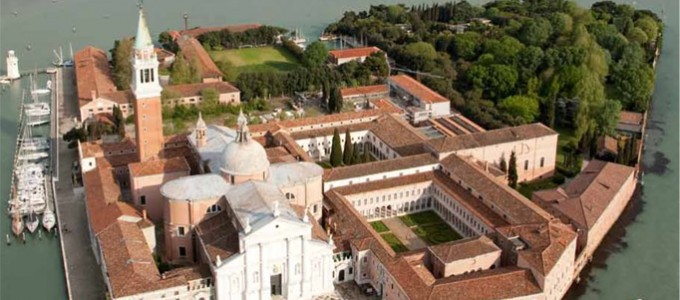
A rich program of lectures and creative workshops by leading scholars, actors, and musicians held in the beautiful San Giorgio monastery will be complemented by theatre performances and excursions to the Jewish Ghetto and other Venetian sites.

A unique full-immersion experience aimed at creating the first historical production of the play in the Ghetto of Venice in the year of its quincentennial (1516-2016).

Application deadline
15 February 2015

See the Fondazione Giorgio Cini website for its Summer School on Shakespeare in Venice.

Posted in Early Modern Europe, Early Modern World, European History, Graduate Work in History, Italian History, Lectures and Seminars, Mediterranean World, Renaissance Art and History, Study Abroad | Leave a comment

PhD Studies in Renaissance History

PhD funding opportunities in Renaissance Studies

Are you thinking of pursuing a PhD in Renaissance Studies / the Classical Tradition (including Neo-Latin literature and Renaissance art)?

The Centre for the Study of the Renaissance at the University of Warwick invites applications for the university’s annual funding competition for doctoral students, which is now open (to start in October 2015).

Outstanding candidates may be eligible to compete for Chancellor’s scholarships (overseas applicants), CADRE scholarships (home/EU PhD applicants in the Arts), or Wolfson scholarships (students embarking on PhD studies in History, Literature and Languages). The application deadline for this year’s competition is 11:59pm (GMT) on Monday 12th January 2015. For more details on these and other funding schemes (including some funding for Master’s degrees), see http://www2.warwick.ac.uk/services/academicoffice/gsp/scholarship/typesoffunding/

We offer our graduate students a buoyant research culture with researchers of national and international renown. The University of Warwick itself has been declared University of the Year 2015 by the Times and Sunday Times newspapers, and has risen two places to eighth in the UK in the two newspapers’ overall University league table. For more information on staff research specialisms, see http://www2.warwick.ac.uk/fac/arts/ren/about_us/centrestaff/academicstaff

Applicants who are interested in postgraduate study in the Centre are advised to contact our Director of Graduate Studies (DGS), Christiania Whitehead (c.a.whitehead@warwick.ac.uk) as early as possible.

Undergraduate and M.A. students in Renaissance History at Northern Illinois University may be interested in this announcement.

Posted in Cultural History, Early Modern Europe, Early Modern World, European History, Graduate Work in History, Renaissance Art and History | Leave a comment

(Re)Discovering Medieval Cities

Digital scanning and mapping techniques are being used to (re)discover archaeological sites around the world.

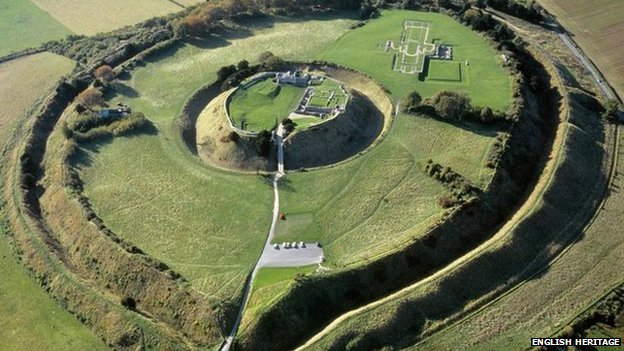
One of the latest digital mapping project involves the city of Salisbury in England. The medieval city there was located at a site called Old Sarum, about two miles from the modern city of Salisbury.

The site of Old Sarum appears today as a ruined hilltop bailey.

OldSarum-today

With new research tools, a very different understanding of Old Sarum emerges.

“A detailed plan of a medieval city has been produced by experts without any digging at the site,” according to the BBC. “The latest scanning techniques were used to uncover a network of buildings at the 11th Century Old Sarum near Salisbury in Wiltshire. The results include a series of large structures, possibly defences, with open areas of ground behind possibly for mustering resources or people.”

OldSarum

Digital mapping projects like this are changing our understandings of archaeological sites, archaeological methods, urban history, and the history of war, culture, and society.

The BBC reports on the mapping of Old Sarum.

Posted in Digital Humanities, European Union, History in the Media, Museums and Historical Memory, War, Culture, and Society | Leave a comment

First World War Posters in Chicago

The University of Chicago Library has organized an exhibition of posters from the First World War to commemorate the centennial of the outbreak of the war in 1914. The exhibition is entitled “En Guerre: French Illustrators and World War I,” curated by Neil Harris, professor of history, and  Teri Edelstein, professor of art history.

Charlotte Schaller. En guerre! Paris: Berger-Levrault, [1914]

According to the Chicago Reader : “The vast majority of the pieces on display are executed in the popular styles of the 1910s, familiar from advertisements, magazine illustrations, and children’s books, and the full-color works appear almost, well, cheerful. It’s an interesting contrast to the more famous images of the war, the black-and-white photos of muddy soldiers in trenches and exhausted Red Cross volunteers.”

The Chicago Reader reports on the exhibit. Students and researchers working on French history and the history of war, culture, and society will be interested in this exhibition.


Posted in Art History, Empires and Imperialism, European History, French History, History in the Media, History of Violence, Museums and Historical Memory, Political Culture, War, Culture, and Society | Leave a comment

Privacy Concerns about MOOCs

Massive Open Online Courses (MOOCs) are already being used in high schools and middle schools in the United States. Many professors and teachers have serious concerns about the pedagogical value of these courses. Now, some MOOCs are raising new privacy concerns among students and parents.

Students in MOOCs often submit personal data and educational work that can be harvested, stored, and used by MOOC providers. Since these courses are often developed by or in partnership with private corporations, the storing and use of students’ information and work is worrisome.

An article by Caitlin Emma on “Online Education Run Amok?” delves into these privacy concerns and their political ramifications. According to Emma, “The people behind the online courses say the metrics they collect will help them better understand not just what students learn, but also how they learn. Less clear is the extent to which providers might profit from the information in other ways, be it by selling the data to other organizations or mining it themselves for marketing gold.”

Politico reports on the privacy concerns about MOOCs.

Posted in Digital Humanities, Education Policy, Humanities Education, Information Management, Undergraduate Work in History | Leave a comment

Digital Mapping of Stonehenge

The Stonehenge Hidden Landscape Project is conducting a massive digital mapping effort to construct an archaeological study of Stonehenge and nearby ritual sites.

Stonehenge-digitalmap

This major Digital Humanities (DH) project is sponsored by the University of Birmingham and the Ludwig Boltzmann Institute for Archaeological Prospection and Virtual Archaeology. Project members have conducted digital mapping of Stonehenge and the surrounding area using “magnetometer measurements and ground penetrating radar surveys.”

Similar methods are being used currently to construct digital maps of First World War trench systems.

The Stonehenge Hidden Landscape Project has now released their initial findings, which have been featured in a BBC Two documentary.

The Stonehenge Hidden Landscape Project website has detailed information and links. Researchers and students working on DH projects and GIS mapping techniques will be interested in this project.

Posted in Digital Humanities, European History, History in the Media | Leave a comment

Civilian Casualties in Drone Attacks

Drone attacks by the United States have killed hundreds of civilians, according to a new study by the human-rights organization Reprieve.

The Guardian reports that: “Reprieve, sifting through reports compiled by the Bureau of Investigative Journalism, examined cases in which specific people were targeted by drones multiple times. Their data, shared with the Guardian, raises questions about the accuracy of US intelligence guiding strikes that US officials describe using words like ‘clinical’ and ‘precise.'”

Drones-graffiti

In studying the multiple drone attacks on 41 specific targets, Reprieve found that “Attempts to kill 41 men resulted in the deaths of an estimated 1,147 people, as of 24 November,” according to The Guardian. This data confirms previous reports of the shocking level of “collateral damage” being inflicted by U.S. drone strikes.

The lead research for the Reprieve study concludes that “Drone strikes have been sold to the American public on the claim that they’re ‘precise’. But they are only as precise as the intelligence that feeds them.”

The Guardian reports on the U.S. drone attacks.


Posted in Atrocities, Civilians and Refugees in War, History of Violence, Human Rights, Strategy and International Politics, Terrorism, War, Culture, and Society | Leave a comment

The Value of a Shared Education

A new article on “The Value of a Shared Education” reflects on the importance of a common Gen Ed curriculum in higher eduation.

Judith Shapiro, former President of Barnard College, writes: “If we look at curricula, we see a trend toward proliferation. Courses and programs are constantly being added, while almost nothing goes away. Faculty members have felt a need, or desire, to have their teaching reflect the increasing accumulation of knowledge—in established fields, in relatively new fields, and in the interdisciplinary spaces between fields. This has led to a growing proportion of relatively narrow, specialized courses, creating a powerful centrifugal effect on the undergraduate academic experience.”

Curricular reforms are rather frequent on most college campuses, but they often involve tinkering with or adding to the Gen Ed core rather than reconceptualizing the common educational experience for undergraduate students.

Some recent curricular reforms have been grappling with digital research and teaching methods, prompting debates about how to incorporate digital approaches into new curricula.

My own university, Northern Illinois University, is currently going through a curricular reform process.  So, this article may be of interest to NIU students and faculty members.

Judith Shapiro, “The Value of a Shared Education” appears in The Chronicle of Higher Education.

Posted in Digital Humanities, Education Policy, Humanities Education, Information Management, Undergraduate Work in History | Leave a comment

Digital Humanities Position in Military History

Rowan Technology Solutions, LLC is looking to hire a talented, creative, and agile historian to partner with the United States Military Academy, Department of History building innovative digital learning products. The selected candidate will be responsible for creating experiences that not only capture and maintain the learner’s interest, but that also helps to create efficient learning. By creating a dynamic and compelling experience through the integration of several mediums (specifically text, maps, images, animation, video, and audio), the historian will capture the general and specific educational ideas concerning the teaching of military history, especially for the West Point History of Warfare, a 71 chapter, million word interactive, enhanced eBook.

The selected candidate will join an interdisciplinary team that integrates maps, written chapter text, graphic images and video into an interactive learning experience. The historian will work directly with the interdisciplinary team’s designers and cartographers as well as the Department of History at West Point and other customers. Historians are expected to provide both directed research and creative input for the final product, including all historical content requirements.

Minimum requirements include an MA in history or museum studies, with a preference towards the history of the Second World War and/or 20th Century military history. Preference will be given to candidates who hold doctoral degrees or who have completed their doctoral coursework.

A letter of application, C.V., a short writing sample, and two letters of recommendation will be requested from applicants considered for this position.

The candidate should have extensive knowledge of Microsoft Word, Excel, and PowerPoint; additionally, experience working with iBooks Author and Keynote is highly desirable.

Competitive candidates must have extensive knowledge of and demonstrated experience in researching and writing military history (operational military history would be valuable). Experience in traditional book design and publication would be especially useful as well.

Salary:  A highly competitive compensation package based on experience and demonstrated capability.

Location:  United States Military Academy at West Point, NY

For more information, see the full ad at H-Net.

Posted in Academic Publishing, Careers in History, Digital Humanities, Graduate Work in History, Grants and Fellowships, History of Violence, Museums and Historical Memory, War, Culture, and Society | Leave a comment

Graduate Fellowship in Paris

2015-16 École Nationale des Chartes Fellowship

Application deadline: December 1, 2014

Find instructions and application forms here: http://www.newberry.org/long-term-fellowships. The Project Abstract and Project Description should provide specific reference to the applicant’s need for the training available at the École and how it will contribute to the dissertation or future projects. Applicants for this fellowship may disregard the question in the application instructions about use of Newberry materials.

Established in 1979, this fellowship provides auditor tuition and a portion of living expenses, for up to one term, for a graduate student in a PhD program at a U.S. or Canadian university to study at the École Nationale des Chartes in Paris (http://www.enc.sorbonne.fr/). The École is the oldest institution in Europe specializing in the archival sciences, including paleography, codicology, bibliography, diplomatics, textual editing, and the history of the book.

Preference is given to students attending member institutions of the Center for Renaissance Studies consortium (http://www.newberry.org/center-renaissance-studies-consortium-members). It is strongly recommended that the recipient be in residence at the École during the fall semester. Applications are especially encouraged from students who are in the research stage of their dissertation work.

Faculty and graduate students at member institutions of the Center for Renaissance Studies consortium (such as Northern Illinois University) may be eligible to apply for travel funding to attend this program (http://www.newberry.org/newberry-renaissance-consortium-grants).

Posted in Archival Research, European History, French History, Graduate Work in History, Grants and Fellowships, Paris History | Leave a comment