Oral History of the Troubles in Belfast

briansandberg's avatarCluster for the Study of Religious Violence

The Belfast Project was an oral history project launched by Boston College to collect personal testimonies of people involved in paramilitary violence in the Troubles of Northern Ireland in the late 1960s and 1970s.

The oral history testimonies collected by the Belfast Project were highly sensitive and eventually were subpeoned by law enforcement authorities for use in prosecutions.

The resulting lawsuits unraveled the entire oral history project.

An article in the Chronicle of Higher Education asserts that “What is clear is that in Belfast the past lives on. The investigations into Jean McConville’s death and others who disappeared during the Troubles are mired in political infighting. Giant murals celebrating the martyrdom of fighters on both sides are daily reminders to passing shoppers of what was sacrificed. The so-called peace walls, a series of metal, concrete, and barbed-wire barriers erected during the Troubles to provide buffers between Protestant and Catholic neighborhoods…

View original post 53 more words

Posted in Uncategorized | Leave a comment

American Wars in Film

War films, especially those produced in Hollywood, tend to focus on American experiences of wars. War films of the Second World War and Vietnam War have long dominated the American film industry’s considerations of historical conflicts.

Depictions of American wars in film remain popular with viewing audiences in the United States, as a new crop of war films dealing with the Iraq and Afghan Wars show. Blockbuster films such as Green Zone, Hurt Locker, and Lone Survivor attract large audiences.

A sign of the public interest in war films is a new listing of the best and worst American war films published by Popular Mechanics online.

BlackhawkDown

See the Popular Mechanics story online.

Posted in Historical Film, War in Film, War, Culture, and Society | Leave a comment

Air in Enlightenment Europe

renaissance_header_blue

The Newberry Center for Renaissance Studies presents:

Eighteenth-Century Seminar
Tobias Menely, Miami University
“History’s Atmosphere: The Matter of Air in the Enlightenment”

Saturday, February 22, 2014, 2:00 pm

For a lecture description, see: http://www.newberry.org/02222014-tobias-menely

The paper for this seminar will be precirculated to registrants as it becomes available.

A reception will follow the lecture.

Those who attend are also welcome to join Tobias Menely and the organizers for dinner. If interested, please contact Lisa Freeman by email: lfreeman@uic.edu

This program is free and open to the public, but space is limited and registration in advance is required by 10 am Friday, February 21.

Please forward this message to others who may be interested. Download a printable PDF flyer to post and distribute.

Keep up with the Center for Renaissance Studies by following our blog: http://www.newberry.org/center-renaissance-studies-blog

Faculty and graduate students at member institutions of the Center for Renaissance Studies consortium may be eligible to apply for travel funding to attend this program (http://www.newberry.org/newberry-renaissance-consortium-grants).

Posted in Early Modern Europe, Early Modern World, European History, French History, History of Science, Lectures and Seminars | 1 Comment

The Value of an Undergraduate Education

Numerous aphorisms and proverbs tout the transformatory power of education, and especially higher education.

Recent articles in the news media and blogosphere have questioned the value of an undergraduate education, however, citing tuition costs and student debts. Some pundits have claimed that an undergraduate degree is simply not worth its cost anymore.

Most professors and students in the humanities would challenge the notion that education can be valued in purely monetary terms.

Nonetheless, people who do want to assess education in financial terms now have some new tools.

Business Insider has created a list of the Top 25 Underrated Colleges in America. This list compares the US News and World Report rankings of colleges and universities (at the undergraduate level) with graduates’ mid-career salary data from those institutions.

My own university, Northern Illinois University, came in at #24 on the list of the Top 25 Underrated Colleges in America.

NIU-Altgeld Hall

According to Business Insider, the average mid-career salary of NIU graduates is $78,300.

As a public state university, NIU offers an impressive array of undergraduate degrees at affordable tuition rates.

NIU’s annual undergraduate tuition and fees for 2013-2014 (based on a full load of 12 credit hours per semester) is a still affordable $10,481.84. Many NIU students qualify for scholarships, Pell Grants, Illinois MAP Grants, and other financial aid packages that significantly defray the cost of their education.

Undergraduate education at NIU remains an excellent value, even before taking into account insights and intellectual growth that cannot be monetized.

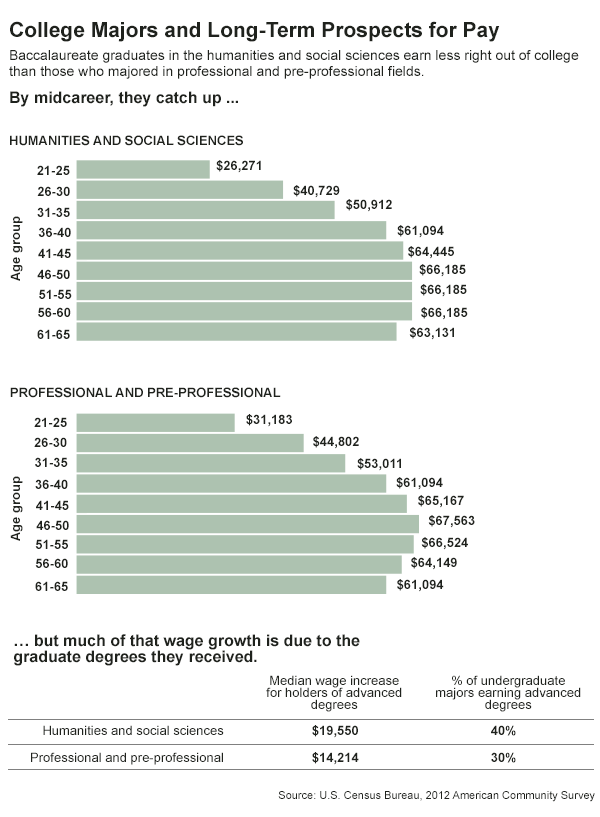
See the story at the Business Insider online. To see how graduates with majors in the liberal arts have fared nationally in their career salaries, see an article in the Chronicle of Higher Education. A chart from this article presents the findings on liberal arts graduates’ salaries over time:

Humanities-wages

For a debate over how to assess college performance and the value of education, see another piece in the Chronicle of Higher Education.

Posted in Careers in History, Education Policy, Humanities Education, Northern Illinois University, Undergraduate Work in History | Leave a comment

Newberry Research Methods Workshop

Application deadline: Monday, January 27

Research Methods Workshop for Early Career Graduate Students

Music and Travel, 1500 – 1700
Directed by Carla Zecher, Director, Newberry Center for Renaissance Studies, and Newberry Curator of Music
Meets 9 am to 5 pm Friday, March 7

http://www.newberry.org/03072014-march-2014-research-methods-workshop-early-career-graduate-students

No language prerequisites.

See the link above for the workshop description and eligibility and application information. Please forward this message to others who may be interested.

Graduate students at member institutions of the Center for Renaissance Studies consortium may be eligible to apply for travel funding to attend this program: http://www.newberry.org/newberry-renaissance-consortium-grants.

Posted in Archival Research, Early Modern Europe, Early Modern World, European History, Graduate Work in History, Lectures and Seminars, Music History, Noble Culture and History of Elites, Renaissance Art and History | Leave a comment

Fellowship in Italian History

Lauro De Bosis Fellowship 2014-2015, Cambridge MA

Harvard University, Cambridge, MA
Application deadline: Feb 14, 2014

The Committee for the Lauro De Bosis Lectureship in the History of
Italian Civilization at Harvard University seeks candidates who
attained their Ph.D. (or equivalent) within the past ten years
(December 2003 or after), for a postdoctoral fellowship in any aspect
of Italian culture, history, and society, to be held during the
academic year 2014-2015. The fellowship may be one or two semesters
in length, depending on the proposed research project; it carries a
stipend of $25,000 for one semester and $50,000 for two semesters.
The recipient of the fellowship will be expected to be in residence in
Cambridge for the entire period of her or his appointment, and to use
the resources of the University to pursue a project with a substantial
Italian component. He or she will also have the opportunity to teach
a course or organize a workshop at Harvard, and will be expected to
make a seminar presentation of his or her work.

Applicants should submit a 1000-word English-language description of
their project, a curriculum vitae, and two letters of recommendation
(sent separately by the recommenders) by e-mail to Sarah Axelrod at
ldebosis@fas.harvard.edu. All applications should include a facing
page including the following information: the candidate’s name,
current affiliation, mailing address, telephone, e-mail coordinates,
the title of the proposal, the month and year the Ph.D. degree (or
equivalent) was obtained, the name of the institution that granted the
degree, and the names and e-mail addresses of the recommenders. All
queries regarding the fellowship should be sent via e-mail to the
following address: ldebosis@fas.harvard.edu.

Harvard University is an equal opportunity/affirmative action
employer. Applications from women and minorities are strongly
encouraged.

Extended Deadline:
APPLICATION DEADLINE: All applications must be received by Friday,
February 14, 2014.

Posted in Early Modern Europe, European History, Grants and Fellowships, Italian History, Mediterranean World, Renaissance Art and History | Leave a comment

The Western Mediterranean and the World

Teófilo Ruiz, “The Western Mediterranean and the World”

FROM THE WESTERN MEDITERRANEAN TO THE ATLANTIC,  CA. 1300 – 1650

Friday, February 7
4:30 pm – 6:00 pm

University of Chicago

Classics Building, Room 110
1010 East 59th Street
Chicago, Illinois 60637

Co-hosted by the Medieval Studies Workshop and the Western Mediterranean Culture Workshop.

Light reception to follow the lecture

In this lecture, I would like to explore the complex reasons which led to a shift from the Mediterranean to the Atlantic. I contend that the opening of the Atlantic for exploration and the encounter with the New World, although having an impact on Mediterranean societies, was not the sole determinant for the slow demise of the former sea as the center of European civilization.

Teófilo F. Ruiz is an internationally recognized historian whose work focuses on medieval Spain and Europe. A student of Joseph R. Strayer, Ruiz received his Ph.D. from Princeton in 1974 and has taught at Brooklyn College, the CUNY Graduate Center, the University of Michigan, the Ecole des hautes Etudes en Sicences Sociales, and Princeton–as the 250th Anniversary Visiting Professor for Distinguished Teaching. Ruiz is currently a Professor of History at UCLA where he has taught since July 1998. In February 2012, President Barack Obama awarded Ruiz the 2011 National Humanities Medal at the White House. A scholar of the social and cultural (popular culture) of late medieval and early modern Castile, Ruiz has published many books as well as dozens of articles.


Posted in Atlantic World, Early Modern Europe, Early Modern World, European History, Globalization, Historiography and Social Theory, Lectures and Seminars, Maritime History, Mediterranean World | 1 Comment

Gender and Violence

briansandberg's avatarCluster for the Study of Religious Violence

A new issue of the Journal of International Affairs, entitled “The Gender Issue: Beyond Exclusion,” focuses on gender issues in global societies, including conflict zones.

An article by Christine Chinkin and Mary Kaldor examines “Gender and the New Wars.”  Contributions on “comfort women” in Japan and “girl power” also deal with dimensions of gender and violence. Other articles in this issue consider gender gaps, pay inequities, women’s work, and women’s land rights.

NIU students examining religious violence, civil conflict, gender history may be interested in this special issue.

The print issue of the journal has already been released and the electronic version should soon be available.

See the website for the Journal of International Affairs or your local university library to access the issue: Journal of International Affairs 67:1 (Fall/Winter 2013).

View original post

Posted in Uncategorized | Leave a comment

Taliban Attack on Taverna Restaurant in Kabul

briansandberg's avatarCluster for the Study of Religious Violence

The Taliban launched a well-coordinated attack on the Taverna di Liban restaurant, which is located in one of the most secure neighborhoods in Kabul, Afghanistan. Foreign nationals and aid workers have reportedly been principal clients of the restaurant, which had led to the Taverna di Liban being targeted by the Taliban.

TavernaAttack-Kabul-2014

The owner of the Taverna di Liban, Kamal Hamade, “made the best chocolate cake in Kabul, the best Lebanese food and, he thought, the best evacuation plan,” according to the BBC’s Lyse Doucet, who has dined at the restaurant and interviewed Hamade. “But the plan wasn’t good enough to save him and others who died with him when the Taliban attacked his Taverna du Liban restaurant tucked away in a quiet street of one of the Afghan capital’s oldest neighbourhoods. But his safety measures did save many lives.”

The attack on the Taverna di Liban began when an attacker blew…

View original post 163 more words

Posted in Civilians and Refugees in War, Religious Violence, Terrorism | Leave a comment

Hitchcock’s Documentary on the Holocaust

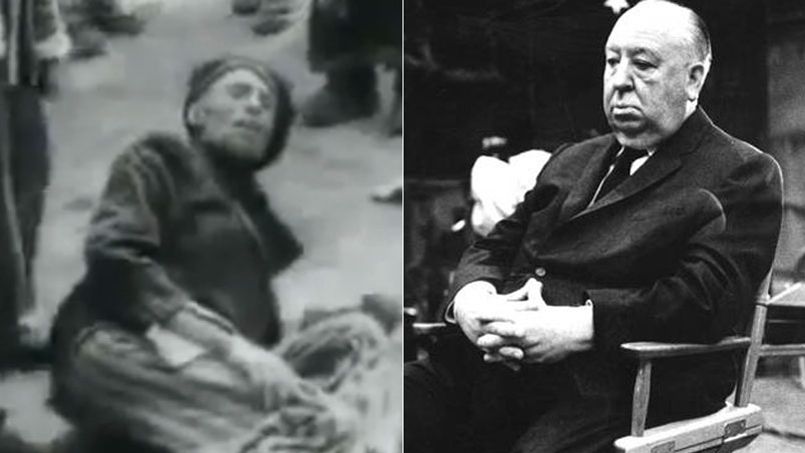
Director Alfred Hitchcock made a documentary, entitled Memory of the Camps, on the Holocaust in 1945. Hitchcock used the rushes of the British military film crews that had filmed the liberation of concentration camps, such as Bergen-Belsen, that year.

Hitchcock-MemoryoftheCamps

The documentary has recently been restored by the Imperial War Museum and will be screened in 2015 as part of the commemoration of the end of the Second World War.

In the meantime, the video of the restored film is available online on YouTube.

Le Figaro reports on the Hitchcock documentary.

Posted in Atrocities, Historical Film, History in the Media, History of Violence, War in Film, War, Culture, and Society | Leave a comment