Marx and Engels in Hell

briansandberg's avatarCluster for the Study of Religious Violence

For centuries, Christian churches have depicted elaborate scenes of the Last Judgment and the punishments of the damned in Hell. Many Catholic and Orthodox churches devote an entire wall to painted or frescoed portrayals of the torments of Hell.

In medieval and renaissance paintings of Hell, the damned are usually identified by their worldly occupations: farmers, soldiers, prostitutes, priests, bishops, or kings. These poor souls are tortured by devils and demons according to the specific sins they have committed: lust, gluttony, avarice, sloth, wrath, envy, and pride. These portrayals could be  terrifying, whimsical, or bizarre—consider the late fifteenth-century paintings by Hieronymus Bosch. Paintings could also be controversial, since painters could make allusions to contemporary political and social situations in their rendering of the damned.

Depictions of Hell still have the power to stir debate.

TitoMarxEngelsinHell

According to the BBC: “A church in Montenegro has sparked controversy by displaying a fresco…

View original post 115 more words

Posted in Uncategorized | Leave a comment

Mediterranean Minorities

The Mediterranean Seminar/University of California Multi-Campus Research Project and the departments of Comparative and World Literature, History, Jewish Studies, and the Spanish Program of the Department of Foreign Languages and Literatures at San Francisco State University invite participants to a two-day, two-part event on Medieval and Early Modern Minorities in the Mediterranean, to be held on 7 & 8 March 2014 at San Francisco State University, San Francisco, CA. Participants from the broadest range of relevant disciplines are welcome and encouraged to register.

Mediterranean Minorities – Symposium
Friday, 7 March, 10am—5:30pm
Humanities Bldg, Rm 587
A one-day symposium consisting of three round table discussions:
1)  Opportunity
2)  Assimilation and Exchange
3) Vulnerability
featuring:
Fred Astren (Jewish Studies, San Francisco State)
Jeremy Brown (Hebrew and Judaic Studies, New York University)
Brian Catlos (Religious Studies, CU Boulder/ Humanities, University of California, Santa Cruz)
Tom Dandelet (History, University of California at Berkeley)
John Dagenais (Spanish and Portuguese, UCLA)
Federica Francesconi (Jewish Studies, University of Oregon)
Paolo Girardelli (History, Boğaziçi University)
Mike Hammer (Spanish, San Francisco State)
Joshua Holo (Hebrew Union College-Jewish Institute of Religion)
Slobodan Dan Paich (Artship Foundation, San Francisco CA)
Jonathan Ray (Jewish Studies, Georgetown University)
Jarbel Rodriguez (History, San Francisco State)
Stefan Stantchev (History, Arizona State University)
David Wacks (Romance Languages, University of Oregon)
Valerie Wilhite (Romance Languages, University of Oregon)
Megan Williams (History, San Francisco State)

Mediterranean Minorities – Workshop
Saturday, 8 March, 9:30am—5:15pm
Humanities Bldg, Rm 587
A workshop consisting of three pre-circulated papers and a talk by our featured scholar:
Papers:
• “Do Mediterranean Studies Speak to Latin American Colonial Studies? A Suspected German Lutheran Conquers A Suspected “Morisco”in the Canaries Before Taking On the New World”
Giovanna Montenegro (Comparative Literature, University of California, Davis);
• “Alexandria ad Aegyptum”
Dan Selden (Literature, University of Californi,a Santa Cruz)
• Being Different in the Medieval Middle East? The Poet’s Story”
Jocelyn Sharlet (Comparative Literature, University of California, Davis)

Featured scholar:
Stephen Humphreys (History, University of California Santa Barbara):
“Adapting to the Infidel: the Christian Communities of Syria in the Early Islamic Period”

Full program for conference and workshop available soon at http://mediterraneanseminar.ihr.ucsc.edu/overview/.

All interested graduate students and scholars are welcome. Both events are free but pre-registration is required; attendance is limited so please register soon. UC-and SFSU-affiliated scholars may register immediately, non-UC scholars on or after February 7. Lunch will be provided on both days for attendees who register prior to February 26.

To register for the workshop and/or conference and receive the workshop papers, please contact Courtney Mahaney (cmahaney@ucsc.edu) at the University of California, Santa Cruz. UC-affiliated faculty and graduate students will be eligible for up to $350 for travel expenses; non-UC participants may apply but support will granted as available (contingent on availability and attendance at both events).

The Mediterranean Seminar is an interdisciplinary scholarly forum, the aim of which is to promote collaborative research and the development of the field of Mediterranean Studies. The UC Mediterranean Studies Multi-Campus Research Project is funded by the UC Office of the President and is administered by the Institute for Humanities Research at the University of California, Santa Cruz.

To join the Mediterranean Seminar, send your name, professional status, affiliation and fields of interest to mailbox@mediterraneanseminar.org.

Posted in Conferences, Early Modern Europe, Early Modern World, European History, Maritime History, Mediterranean World | Leave a comment

A Crusading Banquet

briansandberg's avatarCluster for the Study of Religious Violence

The Newberry Consort

Feast of the Pheasant,February 7 through 9

FeastofthePheasant-1454
In February 1454, Philip the Good, Duke of Burgundy, threw a lavish party to promote a crusade against the Turks, who had taken possession of Constantinople the previous year. Although the crusade never took place, the banquet was a day to remember.

Contemporary accounts describe in detail the amazing entertainments they enjoyed (including elephants, backward-marching horses, and musicians enclosed in enormous pastries!) as well as the music they heard.

The Consort will perform the program from the banquet, with music by Guillaume Dufay, Gilles Binchois and others, with a projected backdrop of illustrations and supertitle translations.

For ticket information, see http://newberryconsort.org/2013-2014/series-2-feast-of-the-pheasant/. Student tickets, with valid student ID, will be available at the door for $5.00 (cash only).

Friday, February 7, Ruggles Hall, The Newberry Library, 8:00pm /pre-concert lecture at 7:00 pm
Saturday, February 8, Lutkin Hall, Northwestern University…

View original post 71 more words

Posted in Uncategorized | Leave a comment

Art Museum Summer Internships and Fellowships

Summer 2014 Internships

Internships and fellowships at the MFAH are defined by the supervisors to meet the challenges of ongoing and/or time-sensitive projects. For example, in the curatorial department, an intern or fellow may engage in research about artists and works of art to enhance collection records, or assist with an upcoming exhibition; in the education department, an intern may develop resources or assist with programs for a specific audience (families, teachers, etc.).

When reviewing the current internships and fellowships listed below, carefully consider which opportunity best matches your personal and professional goals.

Please click the links below to download the complete description in PDF format.
To read a PDF file, you will need Adobe Reader, a free download by clicking here.

Summer 2014 Internships

Summer 2014 Fellowships

Summer 2014 Application Deadline: Monday, March 3, 6 pm. Late submissions, with a detailed explanation, will be considered only under special circumstances.

Top


How to Apply

The MFAH is dedicated to a culturally diverse internship group and encourages students from all backgrounds to apply.

► Please review the internship program overview and eligibility guidelines before applying.

What to Send
The summer 2014 intern/fellow application must be accompanied by the following documents:

    1. Résumé not to exceed 2 pages (1-inch margins, 12-point type) including:
      • Contact information (permanent and school addresses, telephone numbers, e-mail)
      • Academic information (grade level, major, awards, and honors)
      • Employment history


    1. Personal Essay (minimum 1000 words; maximum 2500 words) describing how you envision the internship or fellowship will contribute to your accomplishment of educational and/or professional goals.


    1. Writing Sample relevant to the internship/fellowship for which you are applying; i.e., for a curatorial position, an essay; for education, perhaps a lesson plan.


  1. Letter of Reference from a faculty member with whom you have studied.

How to Submit

  • Combine Application, Résumé, Personal Essay, and Writing Sample in ONE Microsoft Word file and send to interns@mfah.org. Do not submit a PDF or additional information (cover letter, transcripts, etc.).
  • The Letter of Reference should be on college/university letterhead and come directly from applicant’s current professor by e-mail to interns@mfah.org with applicant’s name in the title of the message.
  • Applicants will receive confirmation once ALL materials are received.

Summer 2014 Application Deadline: Monday, March 3, 6 pm. Late submissions, with a detailed explanation, will be considered only under special circumstances.

Questions? E-mail interns@mfah.org

For more information see the MFA Houston website.


Posted in Contemporary Art, Graduate Work in History, Grants and Fellowships, Museums and Historical Memory, Undergraduate Work in History | Leave a comment

American Historical Review Book Review Editor

American Historical Review

Position Opening: Reviews Editor

We are looking to fill the position of Reviews Editor at the American Historical Review, which has been the journal of record for the historical profession in the United States for more than one hundred years and is one of the most prestigious scholarly journals in the world. The Reviews Editor independently manages all aspects of the book review sections for the five annual issues of the journal, working closely with seven editorial assistants (all graduate students at Indiana University) to commission approximately 200 book reviews for each issue. The Reviews Editor then copyedits the reviews in Microsoft Word, working closely with the editorial assistants and reviewers in the process; categorizes the reviews and compiles them in appropriate order to create the book review section for each issue; and proofreads the typeset review sections. Other responsibilities include training and supervising the editorial assistants in duties such as selecting reviewers for books, working with faculty consultants, doing preliminary copyediting, checking facts, and proofreading the edited reviews before they are sent to the reviewers;  recording and monitoring the progress of reviews in our in-house database; establishing, implementing, and enforcing policies for the book review section; and preempting and/or solving problems relating to the editorial phase of the book review section. The job requires occasional travel to vendor locations to resolve problems and implement changes and to represent the AHR at professional meetings.

The successful candidate should have at least a bachelor’s degree; an advanced degree in history is strongly preferred.  Scholarly editing experience in the field of history or the equivalent is required, as well as comprehensive publishing experience or the equivalent. Strong editorial skills and advanced knowledge of Microsoft Word are obviously a must, as is the ability to use a database. Reading knowledge of one or more foreign languages is highly desired. In addition, good interpersonal skills are essential for this job because of the frequent interaction with reviewers, authors, press personnel, and in-house staff.

For further information and application process:  https://jobs.iu.edu/joblisting/index.cfm?jlnum=10233&search=2

Posted in Academic Publishing, Careers in History, Graduate Work in History, Undergraduate Work in History | Leave a comment

New Findings on the Black Death

Recent DNA research on plague victims has led to new findings on the Black Death, published yesterday at the Lancet online.

According to the BBC, “A team has compared the genomes of the Justinian Plague and the Black Death to find that both were caused by distinct strains of the bacterium Yersinia Pestis.”

BlackDeathvictim

Hendrik Poinar, a researcher at McMaster University in Canada, argues that “the major implication is that this is a disease that can continue to emerge and cause nasty epidemics and so one should be constantly looking for the sourcing spots to where they came from.”

Poinar explains that Yersinia Pestis has evolved through history. It has “‘boomed and gone bust’ over time by generating novel mutations as rodents become immune to it.”

See the Lancet online first service (subscription or library access required) for the research article. The BBC and the Independent both report on the new research.

Posted in Environmental History, European History, History of Medicine, History of Science, Mediterranean World | Leave a comment

French Revolution Digital Archive

Stanford University’s French Revolution Digital Archive is accessible online.

FrenchRevolutionDigital

According to the archive’s website: “The French Revolution Digital Archive (FRDA) is a multi-year collaboration of the Stanford University Libraries and the Bibliothèque nationale de France (BnF) to produce a digital version of the key research sources of the French Revolution and make them available to the international scholarly community. The archive is based around two main resources, the Archives parlementaires and a vast corpus of images first brought together in 1989 and known as the Images de la Revolution française.”

See the French Revolution Digital Archive website.

Posted in Archival Research, Digital Humanities, Early Modern Europe, European History, French History, French Revolution and Napoleon, History in the Media, Paris History, Revolts and Revolutions, Warfare in the Early Modern World | Leave a comment

Commemorations of Tipu Sultan

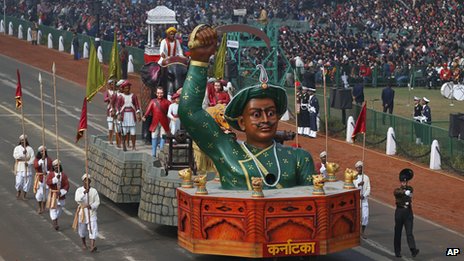
Annual celebrations of Republic Day in India this past weekend included controversial commemorations of Tipu Sultan, an Indian ruler who fought British imperial encroachment in the eighteenth century.

TipuSultan

The BBC reports that “Since the country’s annual Republic Day celebrations on Sunday, Tipu Sultan has been trending on Twitter in India, with more than 10,000 tweets and a heated debate about how he should be remembered. It was sparked by a Republic Day parade float from Karnataka – the modern state which includes his old kingdom – which featured a large sculpture of Tipu Sultan brandishing his trademark sword, together with his other trademark – a tiger.”

Tipu Sultan remains a controversial figure—celebrated by some Indians for opposing British rule, but vilified by others as a brutal ruler. Some Hindu nationalists seem to have adopted the latter interpretation because of Tipu Sultan’s Muslim identity.

The BBC reports on the commemorations of Tipu Sultan online.

Historians of empires and violence in the early modern world may be interested in this story.

Posted in Early Modern World, Empires and Imperialism, Globalization, Museums and Historical Memory, Noble Culture and History of Elites, Religious Politics, War, Culture, and Society, Warfare in the Early Modern World | Leave a comment

Protests Over “Gender Theory” in France

Some French parents have pulled their children out of elementary school over the supposed threat posed by “gender theory” to their children’s well being.

According to Le Monde: “des dizaines de parents ont retiré, lundi 27 janvier, leurs enfants de l’école pour protester contre « l’enseignement obligatoire de la théorie du genre » dès la primaire.”

enfants-theoriegenre

Various conspiracy theories apparently claim that the French educational system is engaging in a propaganda campaign to brainwash French children and subject them to a dangerous “ideology” of gender identity and sexual liberation.

Le Monde reports on the protests over gender in France, pointing out the confusion between gender studies (a field of research and study) and a purported gender “ideology.” This debate seems to have arisen due to some serious misconceptions about various gendered political positions, which have been misrepresented by conspiracy theorists.

The article in Le Monde states that: “Ce climat d’hystérie autour des questions d’égalité hommes-femmes ou de lutte contre l’homophobie débouche sur des phénomènes assez dramatiques, comme cette vague de SMS appelant les parents à retirer leurs enfants des écoles un jour donné pour dénoncer cet « enseignement obligatoire » du « genre ».”

Posted in Education Policy, French History, Human Rights, Humanities Education, Religious Politics, Women and Gender History | Leave a comment

Rethinking Community College Education

“More than half of community-college students never earn a degree. Here’s how to fix that.” So opens a provocative article recently published in The Atlantic.

The article follows the studies of Daquan McGee, who earned an Associate’s degree in two and a half years at Borough of Manhattan Community College through its Accelerated Study in Associate Programs (ASAP).

According to The Atlantic: “at a moment when proponents of ‘disruptive’ technology are promising a transformation of higher education, ASAP offers a different path, based on the premise that disruptions on the way to degrees are exactly what students at lower-tier schools need to avoid. If America is serious about being an opportunity society, Daquan McGee and students like him deserve the advantages of the old, steady way of going to college.”

The Atlantic reports on the ASAP model of community college education.

Posted in Education Policy, Humanities Education | Leave a comment