Commemorating JFK’s Assassination

Historians have been absorbed with questions of historical memory and commemoration over the past two decades. Historian Pierre Nora’s influential analysis of history and memory has spawned an entire subfield of historical studies of commemoration.

Commemorating historical episodes of violence such as the Holocaust and the dropping of the atomic bombs have been especially controversial.
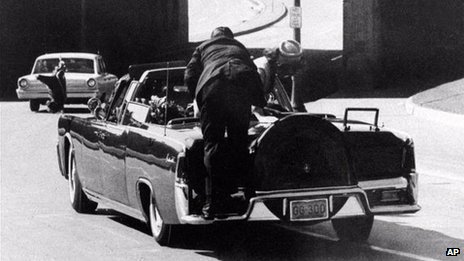
JFKassassination

Today, on the 50th anniversary of the assassination of President John F. Kennedy, historians and journalists are grappling with the difficulties of commemorating an act of political violence.
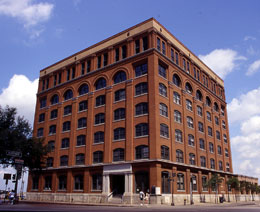
TexasSchoolBookDepository

The Sixth Floor Museum at Dealey Plaza in Dallas, Texas, offers a permanent collection and temporary exhibits on President Kennedy and the assassination at the site Lee Harvey Oswald used as his firing platform.
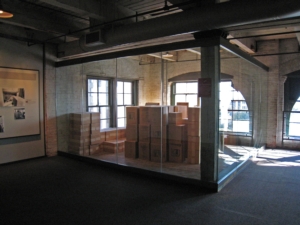
SixthFloorMuseum

The BBC provides an essay on the museum and current attempts to commemorate the 1963 assassination. The Washington Post has published a series of commemorative stories, videos, and photo galleries.
Posted in Historical Film, History in the Media, History of Violence, Museums and Historical Memory, Political Culture | Leave a comment

Conference on René Allio and Historical Film

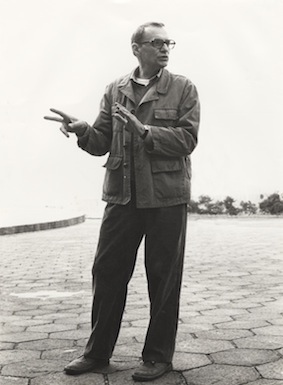
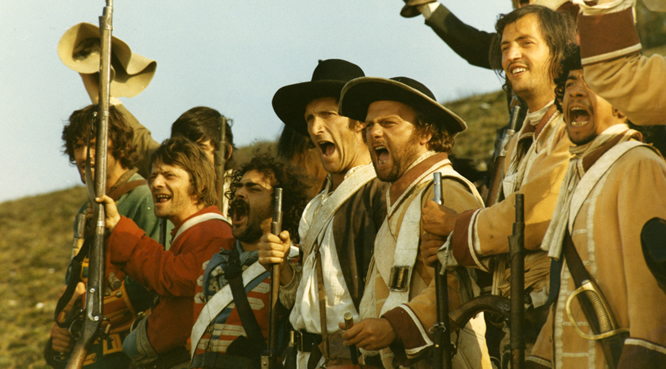
René Allio was one of the most important French directors of historical film in the 1960s and 1970s. Most of Allio’s films focused on historical subjects by depicting historical events, people, or sites. The director is most remembered for his films Les Camisards and Moi, Pierre Rivière. Today, Allio is relatively unappreciated by film historians and fans, largely because of the unavailability or poor condition of copies of his films.

ReneAllio

I participated in a conference on Les Histoires de René Allio in Paris last week (14-16 November 2013). The conference was organized by the Université de Paris I (Panthéon-Sorbonne) and held at the Institut Nationale de l’Histoire de l’Art (INHA). The conference and a linked exhibition at the Muséum Nationale de l’Histoire Naturelle aim to renew interest in the figure of René Allio through interdisciplinary study of his cinematic and artistic work.

The conference included presentations by historians, film historians, art historians, legal historians, literary scholars, actors, and filmmakers focusing on various aspects of Allio’s historical films and artistic work.

I presented a paper on ” Les sources iconographiques dans Les Camisards de René Allio : religion et résistance en Languedoc.”

LesCamisards-battle

The press release for the conference is available online.

Posted in Conferences, Early Modern Europe, Early Modern World, European History, French History, Historical Film, History in the Media, Revolts and Revolutions, War in Film | Leave a comment

Nelson, Navy, Nation

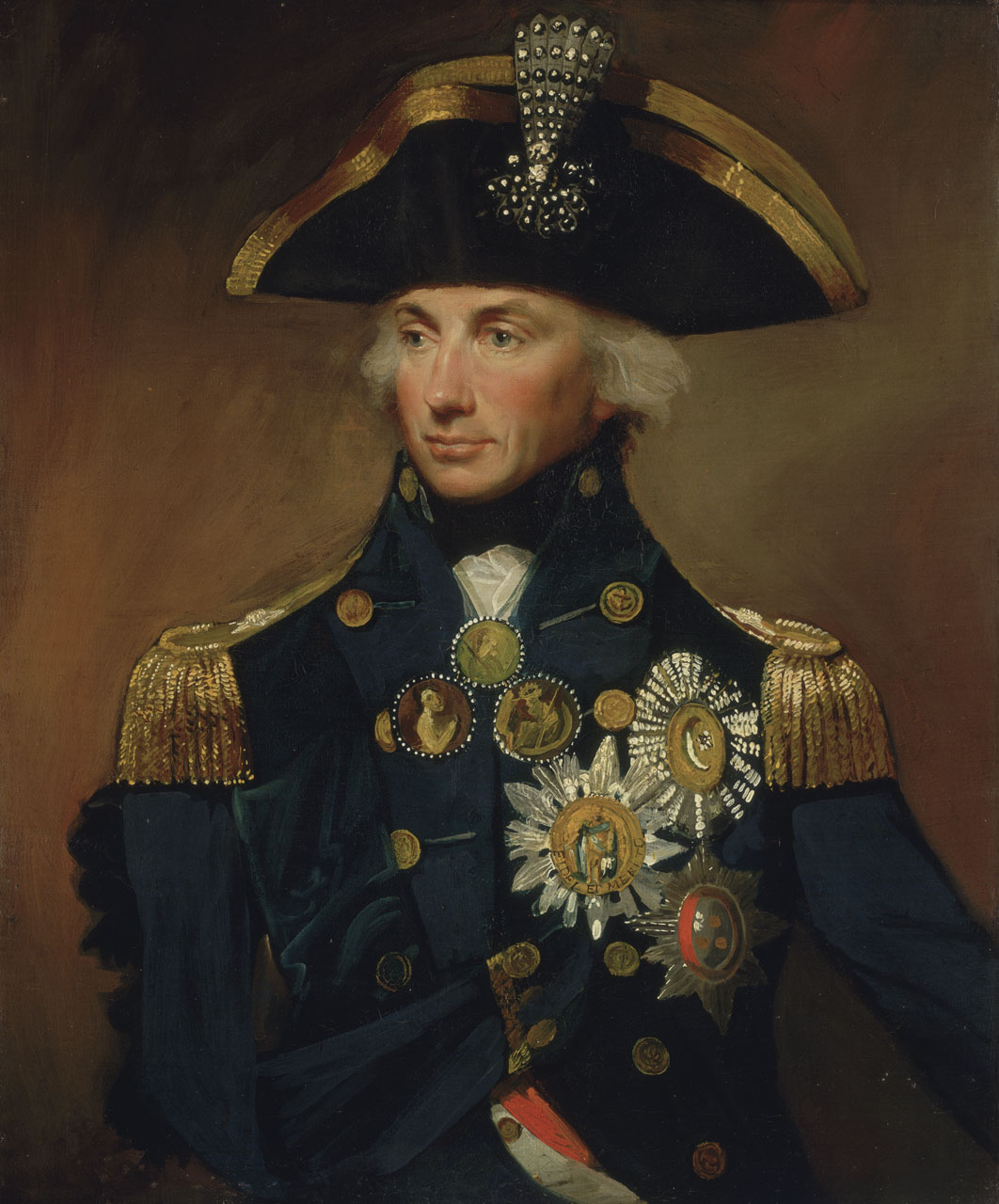
Britain’s National Maritime Museum recently opened a new permanent gallery on “Nelson, Navy, Nation: The Story of the Royal Navy and the British People, 1688-1815.”

Abbott-Nelson

The National Maritime Museum explains: “From bustling dockyards to ferocious sea battles, the gallery brings to life the tumultuous 18th century, exploring how the Royal Navy shaped everyday lives as it became a central part of society and turned sea-faring heroes into national celebrities.”

“Journeying from the Glorious Revolution of 1688 to the defeat of Napoleon in 1815, Nelson, Navy, Nation brings together over 250 star objects from the Museum’s collections, from the sailor’s shoes worn to impress on shore leave and love tokens sent to sweethearts, to a fiendish seven-barrelled volley gun and an amputation knife and bullet forceps. Discover what made men join up, how they lived and what kept them in line; and how the Navy loomed large in all areas of the popular imagination, from caricatures to keepsakes and collectables.”

Dighton-FallofNelson

“Showcasing Admiral Lord Nelson’s iconic uniform and personal items as well as weird and wonderful Nelson memorabilia, the gallery considers the legendary national hero within the context of his day, making sense of his achievements and dazzling celebrity while telling a wider story about British society.”

“Taking in sailors as well as Admirals, landlubbers as well as seadogs, women as well as men and ordinary life as well as the heat of battle, follow the story of the early days of a national institution which in turn shaped the story of how British people saw themselves, and their place in the world.”

The National Maritime Museum website provides information on the new gallery.

Posted in Early Modern Europe, Early Modern World, Empires and Imperialism, French History, French Revolution and Napoleon, Maritime History, Museums and Historical Memory, War, Culture, and Society, Warfare in the Early Modern World | Leave a comment

Sixteenth Century Studies Conference

I participated in the 2013 Sixteenth Century Society and Conference (SCSC) in San Juan, Puerto Rico, last weekend. The stunning bastioned fortifications of San Juan provided a fantastic setting for a conference on early modern history.

El-Morro-Puerto-Rico

I presented a paper on the “Massacre of the Innocents: Gender and Martyrdom in the French Wars of Religion,” in panel 20 on Gender and the Wars of Religion in France, along with Amanda Eurich, who organized the session and gave a paper on “The Woman behind Jean de Coras: Jacquette de Bussy and the Role of Women in the French Wars of Religion.”

I also chaired panel 153 on Early Modern Political Gestures and commented on the papers by Cassandra Auble, Jonathan Vallerius, and Matthew Vester.

I also attended sessions 23, 104, 127, and 230, as well as panel-hopping between sessions 250 and 252.

The conference was fabulous, with numerous sessions on early modern French, Italian, and Mediterranean history. I absorbed the latest research on women in the French Wars of Religion, perceptions of natural disasters, understandings of blushing, commemorations of the English Civil Wars, French siege narratives, Huguenot identities, confessional boundaries, political gestures, Italian religious heterodoxy, and early football (soccer) in Florence.

The sessions were generally well attended, despite the temptations of Puerto Rico, in part because the coastal location allowed for spending ample time at the beach in the early mornings and late afternoons, before and after the conference sessions.

I was able to visit Viejo San Juan (Old San Juan), the bastioned fortifications, the art museums, and the Condado and Santurce neighborhoods.

The 2013 SCSC conference program is available online. The SCSC website provides additional information on early modern historical research and resources.

Posted in Conferences, Early Modern Europe, Early Modern World, European History, European Wars of Religion, French Wars of Religion, Gender and Warfare, History of Violence, Reformation History, Renaissance Art and History, War, Culture, and Society, Warfare in the Early Modern World, Women and Gender History | Leave a comment

Black Flag: Pirate History and Video Gaming

Pirate mania continues.  Following the creation of Talk Like a Pirate Day and the Pirates of the Caribbean movies, the Assassin’s Creed video games franchise has now shifted into the piracy business.

AC4-pirates

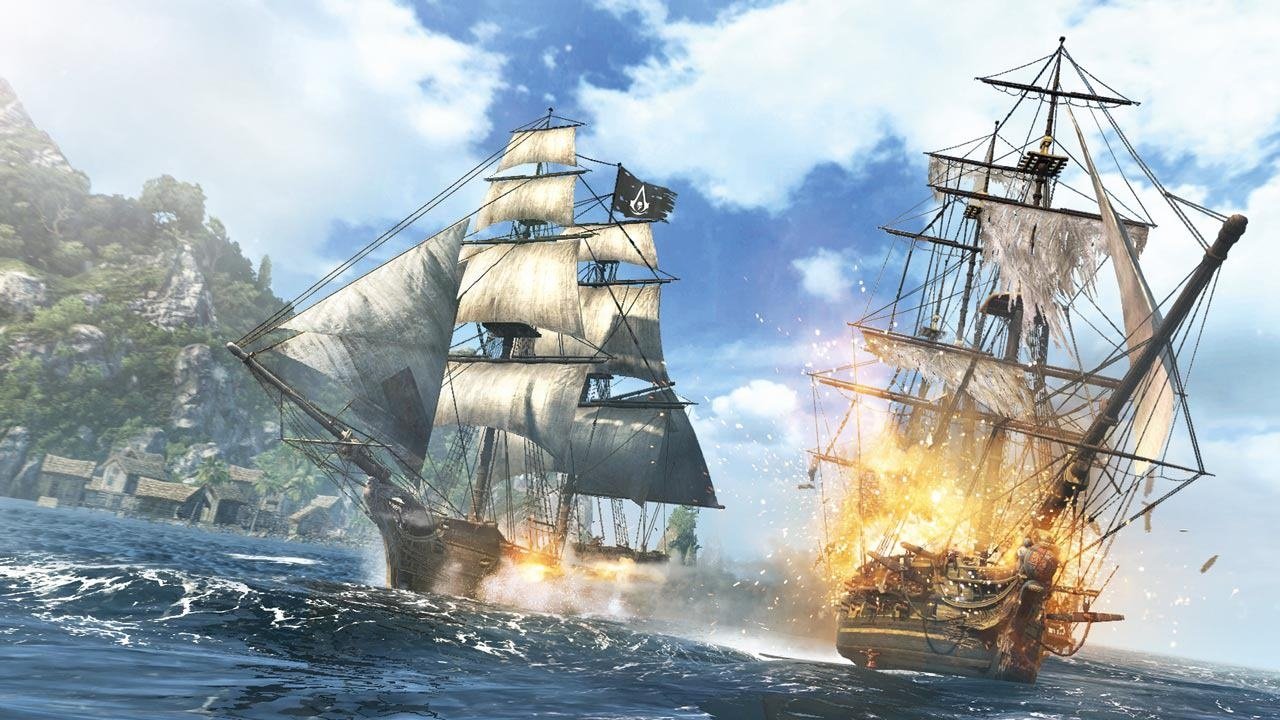
Assassin’s Creed 4: Black Flag is the latest installment of this popular video game series. Set around in the early modern Caribbean in 1715, the video game focuses on

According to the review in the New York Times, “The pirate adventure Assassin’s Creed IV: Black Flag is nearly as long and almost as beautiful as an actual vacation to the tropics.”

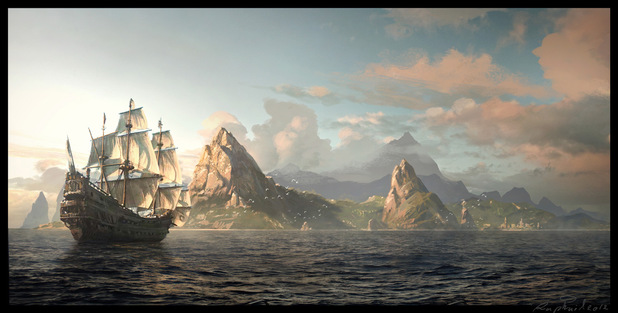
The review explains that “virtual travelers may explore a period-precise Havana and Kingston, Jamaica; visit Nassau, the Bahamas, and Tulum, Mexico; and sail to dozens of islands. They may see churches, slip through plantations, kill British and Spanish authorities (to a pirate, they’re all bad) and take to the high seas to plunder a galleon, harpoon a whale or follow a treasure map to a buried chest.”

The reviewer raves that: “No moment in this huge game is more satisfying than the successful sinking, on a stormy sea, of a convoy led by a massive British man-of-war. It’s fun to be a pirate.”

AC4-ships

The game apparently offers a stunning visual setting that effectively reconstructs the look of the early eighteenth-century Caribbean.  But, the reviewer points out, “Assassin’s Creed games have long mixed their historical fiction with some Dan Brown-style “Da Vinci Code” paranoia.”

AC4-island

Northern Illinois University students in HIST 111 Western Civilization, 1500-1815 will be interested in this story, since we are discussing the slave trade and piracy in the early modern Atlantic world.

The New York Times reviews Assassin’s Creed 4: Black Flag, which has just been released.

Posted in Atlantic World, Digital Humanities, Early Modern Europe, Early Modern World, Empires and Imperialism, European History, History in the Media, History of Violence, Information Management, Piracy, War, Culture, and Society, Warfare in the Early Modern World | Leave a comment

Big Data is Bullshit

Harper Reed, who was Chief Technology Officer for the 2012 Obama re-election campaign, participated in a conference on Building a Smarter University: Big Data, Innovation, and Ingenuity at the State University of New York (SUNY) this week, giving a keynote address.

“Big Data is bullshit,” Reed exclaimed.

HarperReed

The Chronicle of Higher Education reports that: “Mr. Reed is generally bullish on the power of data. He took the audience through a litany of ways in which President Obama used data to win re-election, such as scraping supporters’ Facebook information to blast out personalized email messages.”

“But, with apologies to the technology companies sponsoring the SUNY event, Mr. Reed skewered their industry’s promotion of the buzzwords ‘Big Data,'” according to The Chronicle of Higher Education.

“The ‘big’ there is purely marketing,” Mr. Reed reportedly said. “This is all fear … This is about you buying big expensive servers and whatnot.”

Reed’s criticism exposes the big money interests promoting the SUNY conference and other higher education “reform” initiatives across the nation. The SUNY conference website announces that its sponsors include Xerox, EMC2, McGraw Hill Education, TIAA CREF, CISCO, ING, and IBM.

Those of us working in the digital humanities need to consider carefully what approaches to database construction, data mining, and data usage fit with the principles and standards of academic research. Otherwise, we risk allowing big education and technology corporations to drive the agenda of digital humanities, technology-assisted learning, and higher education in general.

The Chronicle of Higher Education reports on Harper Reed’s keynote address. Mother Jones reports on Reed’s use of data mining in the Obama campaign.

Note: I was unable to attend the SUNY conference, but I hope to find out more about the presentations as they get posted on the conference website.

Posted in Digital Humanities, History in the Media, Humanities Education, Information Management | 2 Comments

Reparations to Caribbean Nations for Slavery

Some European nations are considering offering reparations for their involvement in the Trans-Atlantic slave trade and Caribbean plantation slavery during the early modern period.

Dubois-illustration

Sir Hilary Beckles, a historian and university president in Barbados, and Jamaican historian Verene Shepherd have helped to organize a Caribbean movement to obtain reparations for slavery in the region.

The Caribbean Community (Caricom), composed of 15 member states, is pushing for “Britain, France and the Netherlands to pay an undefined amount of reparations for slavery and the slave trade,” according to historian Laurent Dubois. “The group plans to file suit in national courts; if that fails, it will go to the International Court of Justice.”

Laurent Dubois, who is a prominent historian of the Haitian Revolution, published an op-ed in the New York Times this week about the new reparations movement, emphasizing that “in Barbados and throughout the Caribbean, slavery remains a vivid and potent metaphor, and a cultivated memory.”

“In 2001 France decreed slavery a ‘crime against humanity,’ and the U.S. Congress formally apologized in 2008 for the ‘enslavement and racial segregation of African Americans,'” Dubois indicates. “But only reparations can reverse the long-term harm.”

Students in HIST 111 Western Civilization, 1500-1815 at Northern Illinois University will be interested in this op-ed since we are currently discussing Robert Harms, The Diligent: A Voyage through the Worlds of the Slave Trade.

Posted in Atlantic World, Early Modern Europe, Early Modern World, Empires and Imperialism, European History, European Union, French History, French Revolution and Napoleon, History of Violence, Human Rights | Leave a comment

Graduate Fellowships at the Medici Archive Project

The Medici Archive Project is offering graduate fellowships.

See the announcement below:

SAMUEL FREEMAN CHARITABLE TRUST
Five Short-Term Graduate Fellowships (2014)

The Medici Granducal Archive (Mediceo del Principato), comprising over four million letters dating between 1537-1743, provides the most complete record of any princely regime in early modern Italy as well as an extraordinarily rich historical reservoir of European history. This collection offers an incomparable panorama of human history, expressed through the words of the people most immediately involved, opening new windows onto the political, diplomatic, gastronomic, economic, artistic, scientific, military and medical culture of early modern Tuscany and Europe.
The Medici Archive Project (MAP) wishes to provide graduate and doctoral students from diverse disciplines with the opportunity to have exposure to original source materials and training in their use. For this reason MAP is offering five short-term fellowships sponsored by the SAMUEL FREEMAN CHARITABLE TRUST (SFCF) for graduate students in any field of the humanities or social sciences who are in the early stages of their dissertation work. The SFCF fellowships have been developed to enable students working on their dissertations to conduct primary research using the Mediceo del Principato and other collections housed in the Archivio di Stato in Florence.
This scholarly residence will be of considerable benefit in helping the students to gain the necessary skills, experience and confidence to continue independent academic research in the later stages of their graduate trajectory. While undertaking primary research for their dissertation in the Florentine state archives, the Fellows will benefit from the supervision of the MAP Staff, academics drawn from a variety of disciplines who are experts in archival research, paleography and the digital humanities. The Fellows will also have the opportunity to expand their academic networks through contact with the many international scholars who regularly visit and collaborate with MAP. Finally, Fellows will be enrolled in the annual MAP Archival Studies Seminar.
The fellowships last for an uninterrupted period of two-and-a-half months, taking place at any point between 1 January 2014 and 15 July 2014. The SFCT Fellows will undertake their dissertation research on-site in the Archivio di Stato.
The candidates will have the following qualifications: a completed M.Phil (or equivalent) in any field of early modern humanities and fluency in English and Italian. Preference will be given to those applicants whose dissertation topic is immediately relevant to the content of these archives.
The stipend is $5,000 plus an allowance for travel expenses. To apply for this fellowship, the following material should be sent electronically to Elena Brizio (ebrizio@medici.org):

1) A copy of the candidate’s dissertation proposal (or a final draft).
2) A short essay (two pages maximum) on how a candidate’s topic will benefit from archival research.
3) A complete and up-to-date curriculum vitae.
4) The name and email address of one scholar, preferably the candidate’s supervisor, who can comment on the applicant’s qualifications and the merits of the research proposal (please do not include letters of recommendation with the application).

The application deadline is: 15 December 2013 at noon.
Please note:
1) All materials submitted by the applicant should be in English.
2) All materials should be in a single .pdf file.
3) Please do not include supplementary material (publications, papers, etc.).

FOR FURTHER INFORMATION CONTACT:
Dr. Elena Brizio
Vice Director
The Medici Archive Project
ebrizio@medici.org

Posted in Digital Humanities, Early Modern Europe, Early Modern World, European History, Graduate Work in History, Grants and Fellowships, Italian History, Renaissance Art and History | Leave a comment

Re-enactment of the Battle of Leipzig

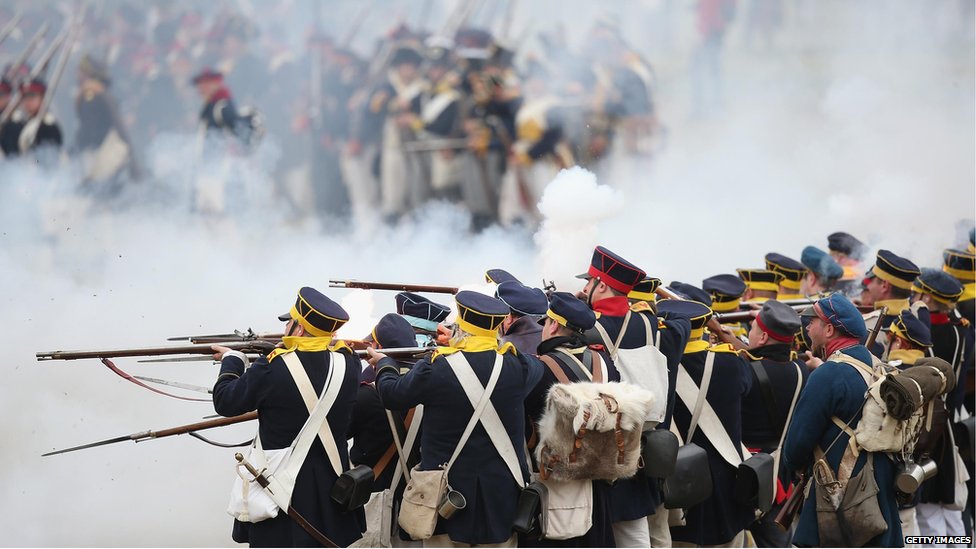
Some 6,000 historical re-enactors took over the battlefield of Leipzig in Germany this past week to commemorate the bicentennial of the 1813 battle in which Prussian, Austrian, Russian, and allied forces defeated the imperial army of Napoleon. The clash became known as the “battle of the Nations” and has been celebrated by some German nationalists as the basis of modern German patriotism.

Leipziginfantry

According to the BBC, “Tens of thousands of spectators are attending the reconstruction, described as a ‘reconciliation.’ However, Church leaders object to the battle being turned into a game.”

The BBC reports on the re-enactment of Leipzig and provides pictures.

Posted in Early Modern Europe, French History, French Revolution and Napoleon | Leave a comment

A CEO’s Advice: Study History

So you want to be a CEO? Study History.

That’s the advice of a former CEO of the Seagram Corporation. Edgar M. Bronfman studied History at Williams College and McGill University before launching a career in business.

Bronfman argues that Liberal Arts degrees provide an excellent training for future business leaders: “My advice, however, is simple, but well-considered: Get a liberal arts degree. In my experience, a liberal arts degree is the most important factor in forming individuals into interesting and interested people who can determine their own paths through the future.”

Inside Higher Ed published Bronfman’s essay online.

Posted in Uncategorized | Leave a comment