War and Disease

Disease almost always accompanies warfare. Historians of the European Wars of Religion, the Napoleonic Wars, and the First World War have studied the connections between warfare and epidemic disease in great detail.

The Syrian Civil War is now producing a health crisis in Syria. Polio seems to have re-emerged in the country amidst the ongoing fighting.

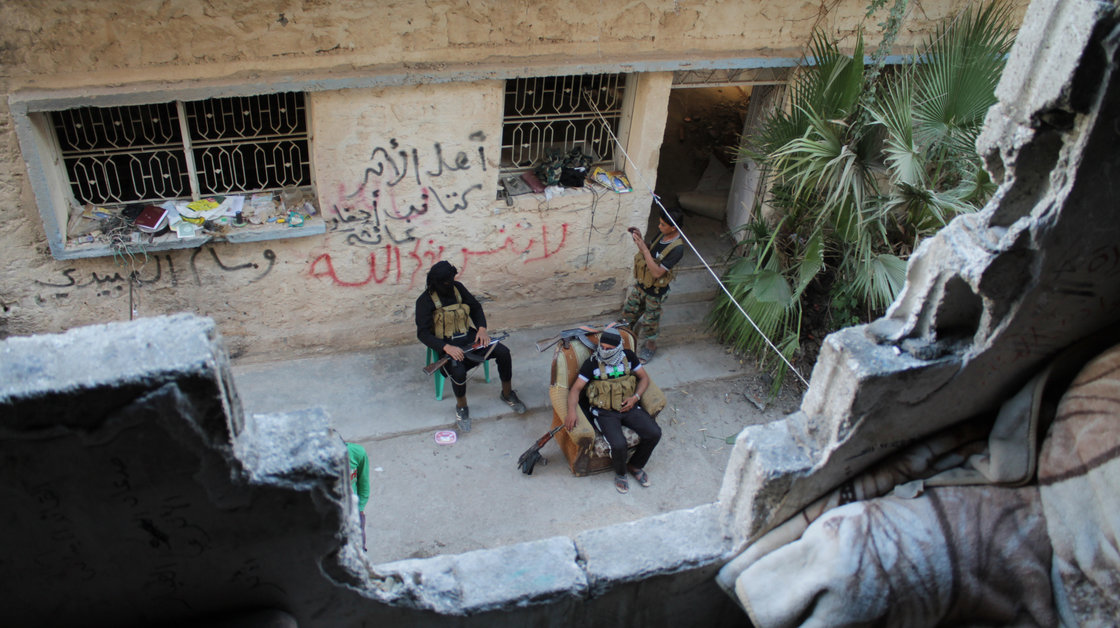
Syrianoppositionfighters

NPR reports that “The World Health Organization is investigating a cluster of possible polio cases in an eastern province of Syria. If the cases are confirmed, they’d be the first ones in the war-torn nation in more than a decade. The country eliminated polio in 1999.”

NPR reports on polio in Syria.

Posted in Civil Conflict, Civilians and Refugees in War, History of Medicine, History of Science, History of Violence, Human Rights, War, Culture, and Society | Leave a comment

A Botched Hanging and the History of Executions

A convicted drug smuggler is facing a second execution in Iran, after surviving his first execution.

The BBC reports that “the condemned man, named as Alireza M, was found alive in a morgue after being hanged at a jail in the north-eastern city of Bojnord last week. He is now being nursed to recovery in preparation for his repeat execution.”

IranianGallows

Alireza “was left to hang for 12 minutes, after which a doctor declared him dead,” according to the BBC. “But when the prisoner’s family went to collect his body from the prison morgue the next day, they found he was still breathing.”

Amnesty International has called on the Iranian government to halt the second execution, calling it inhumane punishment.

Students in my HIST 111 Western Civilization 1500-1800 course will be interested in this story, since botched executions figured significantly in one of the books we discussed this semester. Joel F. Harrington, The Faithful Executioner: Life and Death, Honor and Shame in the Turbulent Sixteenth Century (New York: Farrar, Strauss and Giroux, 2013), presents a microhistory of a Nuremberg executioner, Franz Schmidt, in the late sixteenth and early seventeenth centuries. Although Franz strove to uphold his community’s ideals of justice through his professional conduct and moral behavior, several of the executions he performed were botched, with horrifying results. The book raises important questions about the death penalty and its application in the early modern period, as well as today.

BBC reports on the botched execution and the condemned Iranian man.

Posted in Early Modern Europe, Early Modern World, European History, European Wars of Religion, History of Violence, Human Rights | 2 Comments

Another Disaster in the Central Mediterranean

Another boat filled with at least 200 African migrants has wrecked in the central Mediterranean, this time off the island of Malta. At least 33 people are reported dead in this latest tragedy. Maltese forces rescued 147 migrants by boat and helicopter, and Italian forces have also saved some of the migrants.

Malta-rescue

The Prime Minister of Malta accused the European Union of inaction, stating that: “I don’t know how many more people need to die at sea before something gets done. … As things stand we are building a cemetery within our Mediterranean Sea.”

The BBC reports on the boat capsize off Malta.

This boat wreck follows on the recent disaster off the nearby island of Lampedusa. See my recent post on that wreck.

Posted in European History, European Union, Human Rights, Italian History, Maritime History, Mediterranean World | Leave a comment

Tragic Boat Wreck off Lampedusa

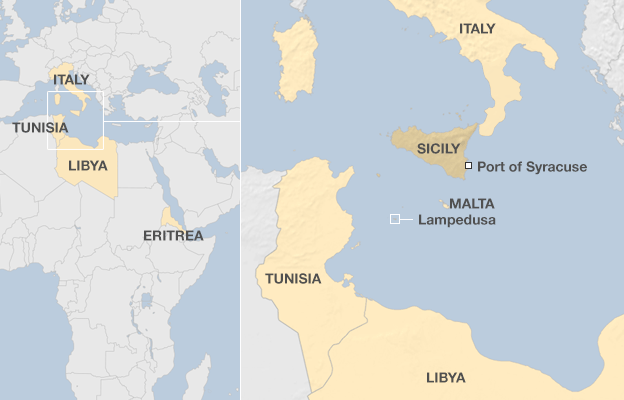
A week ago, a boat carrying African migrants heading for Sicily wrecked off the small island of Lampedusa in the central Mediterranean. The boat, apparently carrying more than 500 people, became disabled and then began to capsize merely 800 meters from shore. When a fire broke out on board, many of the migrants jumped into the sea.

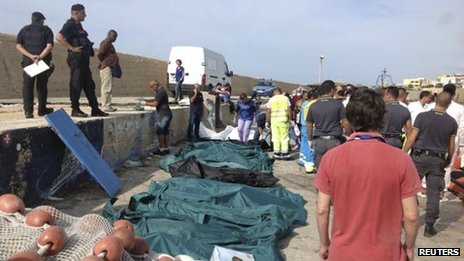
Lampedusa-victims

Local fishermen and the Italian Coast Guard rescued 155 migrants off Lampedusa, but 311 people died in the shipwreck. Another 50 or more passengers are still missing, according to the latest report from the BBC.

The BBC reported the wreck on 3 October and subsequently on the rescue and recovery operations of the Italian Coast Guard and other forces. Bodies have been laid out in Lampedusa, amid local anger at Italian officials, as the BBC reports.

Lampedusa-Mediterranean-map

This disaster demonstrates once again the human rights debacle in the Mediterranean. Desperate Africans are taking enormous risks to reach European shores, despite or because of European policies. The BBC reports on the failure of European migrant policies in the Mediterranean, which have been accused of violating human rights statutes.

Posted in European History, European Union, Human Rights, Italian History, Maritime History, Mediterranean World | Leave a comment

Preaching and Snake-Handling

briansandberg's avatarCluster for the Study of Religious Violence

Pentacostal Christian churches in the Appalachian Mountains are known for their snake-handling preachers and congregants.

Snake-HandlingPreachers

Several famous anthropological and sociological studies have been done on the Appalachian Pentacostals and their devotional practices.

A new National Geographic documentary will explore the religious world of Pentacostal faith.

NPR reports on the snake-handling preachers.

View original post

Posted in Uncategorized | Leave a comment

Journal of Religion and Violence Special Issue

briansandberg's avatarCluster for the Study of Religious Violence

The Journal of Religion and Violence recently published a special issue on René Girard’s mimetic theory.

Here is the table of contents:

1:2 – Table of Contents

SPECIAL ISSUE: René Girard’s Mimetic Theory and its Contribution to the Study of Religion and Violence

Introduction, Wilhelm Guggenberger and Wolfgang Palaver

Religion and Violence: A Girardian Overview, Nikolaus Wandinger

René Girard and Raymund Schwager on Religion, Violence, and Sacrifice: New Insights from Their Correspondence, Mathias Moosbrugger

Taming Violence, Wilhelm Guggenberger

Terrorism versus Non-Violent Resistance, Wolfgang Palaver

The Power of the Zealots: Religion, Violence, and International Relations, Jodok Troy

Modernity as Revelation: René Girard’s Imagination of the Worst, Stephen L. Gardner

For more information, see the Journal of Religion and Violencewebsite.

View original post

Posted in Uncategorized | Leave a comment

The Politics of Ark Building

briansandberg's avatarCluster for the Study of Religious Violence

Replicas of Noah’s Ark are being built in various locations around the world. The ark-building movement is related to a particular form of Christian politics and Creationism.

NoahsArk-Netherlands

The Creation Museum in Kentucky is building an ark as part of its Creationist theme park. “The museum has raised more than half the money needed for its $24.5 million Ark Encounter project,” according to NPR. “The Creation Museum’s mission is to show the feasibility of biblical stories. So with the Ark Encounter, they’re also setting out to show what day-to-day life would have been like for Noah.”

Another ark theme park, the Hidden Ark, is being built in Florida.

Meanwhile, arks have already been built in China and Europe. Johan Huibers constructed a 450-foot long ark recently in the Netherlands.  NPR reports that “a hundred thousand people have come to see Huibers’ ark. His goal is to spread his faith, but…

View original post 96 more words

Posted in Uncategorized | Leave a comment

Twilight of Berlusconi?

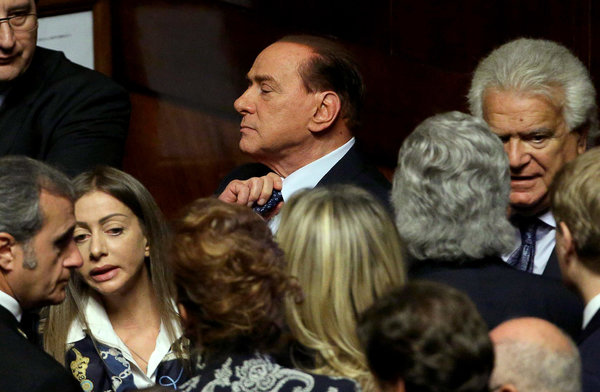
Silvio Berlusconi tried, but failed, to topple the coalition government of Italy this week. A threatened mutiny in his own party forced him to reverse his position and back the government of Enrico Letta during a vote of confidence on Wednesday 2 October.

Berlusconi-failure

According to the New York Times, “Mr. Berlusconi’s attempt to bring down the government was intended to resuscitate his endangered political career as he faces a pending prison sentence, analysts say. Instead, it fractured his center-right movement in Italy, which was threatened with a wave of defections. Standing in the Senate, Mr. Berlusconi, 77, was forced to reverse himself and pledge his party’s support for the same government that he had failed to topple.”

Roberto D’Alimonte, a political analyst, commented that: “We are seeing the long twilight of the Berlusconi era.” Certainly, many Italian citizens and people throughout Europe  hope that this prediction is correct.

The New York Times, Corriere della Sera, and La Repubblica report on Berlusconi’s failed political maneuver.

Posted in European History, European Union, Italian History, Political Culture | Leave a comment

NIU Joins Council for European Studies

Northern Illinois University recently joined the Council for European Studies.

“Northern Illinois University has been approved for membership to the Council for European Studies (CES) Academic Consortium, an international coalition of universities, centers and other organizations dedicated to furthering the study of Europe,” according to NIU Today.

“U.S. institutions that are counted among the CES members consist primarily of elite private or state flagships universities. In Illinois, only two other public institutions – the University of Illinois at Urbana-Champaign and University of Illinois at Chicago – are among the council’s current 84 members.”

NIU’s membership in the CES should present NIU faculty, graduate students, and undergraduate students with new possibilities for collaborative research and study abroad.

Mary Quinlan, professor of Art History at NIU, led the initiative to join the CES.

NIU Today reports on NIU’s membership in the CES.

Posted in European History, European Union, Graduate Work in History, Northern Illinois University, Study Abroad, Undergraduate Work in History | Leave a comment

Changing Organization of Al-Shabab

briansandberg's avatarCluster for the Study of Religious Violence

The al-Shabab organization has clearly been evolving over the past months, perhaps leading to its spectacular attack on Westgate Mall in Nairobi, Kenya, last week.

Westgate Mall-destroyed

Analysts who study terrorist organizations and religious violence have been tracking the changing profile of al-Shabab. Ahmed Abdi Godane seems to have taken control of the al-Shabab in June 2013 in a move that has been described as a “coup” by some.

A number of leaders and long-time members of al-Shabab were ousted from the organization during the summer and had to flee for their lives. Sheikh Hassan Dahir Aweys, a spiritual leader of al-Shabab, fled and was arrested by government troops in Somalia. Abu Mansoor al-Amriki (the American) and another former al-Shabab leader were later killed by al-Shabab militants.

Bruce Hoffman, professor at Georgetown University and an expert on terrorism, was interviewed by NPR on the attack at Westgate Mall. Hoffman argues that al-Shabab…

View original post 66 more words

Posted in Civil Conflict, Civilians and Refugees in War, History of Violence, Religious Politics, Religious Violence, Terrorism, War, Culture, and Society | Leave a comment