Plagiarism and Politics

Acts of plagiarism often have significant costs, especially in the fields of politics and higher education. Numerous high-profile cases of plagiarism have led to the resignations of politicians, government ministers, educational administrators, university presidents, and other officials over the past decade.

Germanminister-Schavan

The latest example is Annette Schavan, who recently resigned as Minister of Education in Germany after serious accusations of plagiarism in her doctoral thesis surfaced. The university that originally granted her doctorate investigated the allegations and has rescinded the degree. Schavan denies having plagiarized and is planning to sue her university.

This is a second ministerial resignation over plagiarism in the government of Angela Merkel. Karl-Theodor zu Guttenberg had to resign his post as Minister of Defense in Germany in 2011 over accusations of plagiarism.

The BBC reports on the Schavan case.


Posted in Academic Publishing, Education Policy, European History, European Union, Humanities Education, Noble Culture and History of Elites | Leave a comment

Sherman Prize for Undergraduates

2013 Edwin H. Sherman Family Prize

for Undergraduate Scholarship in Force and Diplomacy

Temple University’s Center for the Study of Force and Diplomacy (http://www.temple.edu) is delighted once again to solicit submissions for its annual Edwin H. Sherman Family Prize for Undergraduate Scholarship in Force and Diplomacy. The recipient of the Sherman Prize will receive a $1,000 award along with a certificate.
Any paper written by an undergraduate student in the 2012 calendar year, submitted by either the student or a faculty member at the student’s college or university, is eligible. The paper must address an issue, contemporary or historical, that demonstrates the intersection of force and diplomacy in international affairs. Although electronic submissions are preferred, hard-copy submissions will be accepted.

Papers must be emailed or postmarked no later than Friday, March 8, 2012.

Please address electronic submissions and all questions to: David A. Guba, Jr.

David A. Guba, Jr.
Davis Fellow, CENFAD
Center for the Study of Force and Diplomacy
Temple University, Department of History
913 Gladfelter Hall, 1115 W. Berks Street
Philadelphia, Pennsylvania 19122
Tel: (215) 204-7466
email:tuc70342@temple.edu


Posted in Arms Control, History of Violence, Political Culture, Strategy and International Politics, Undergraduate Work in History, War, Culture, and Society | Leave a comment

Knights of Malta Celebrate 900th Anniversary

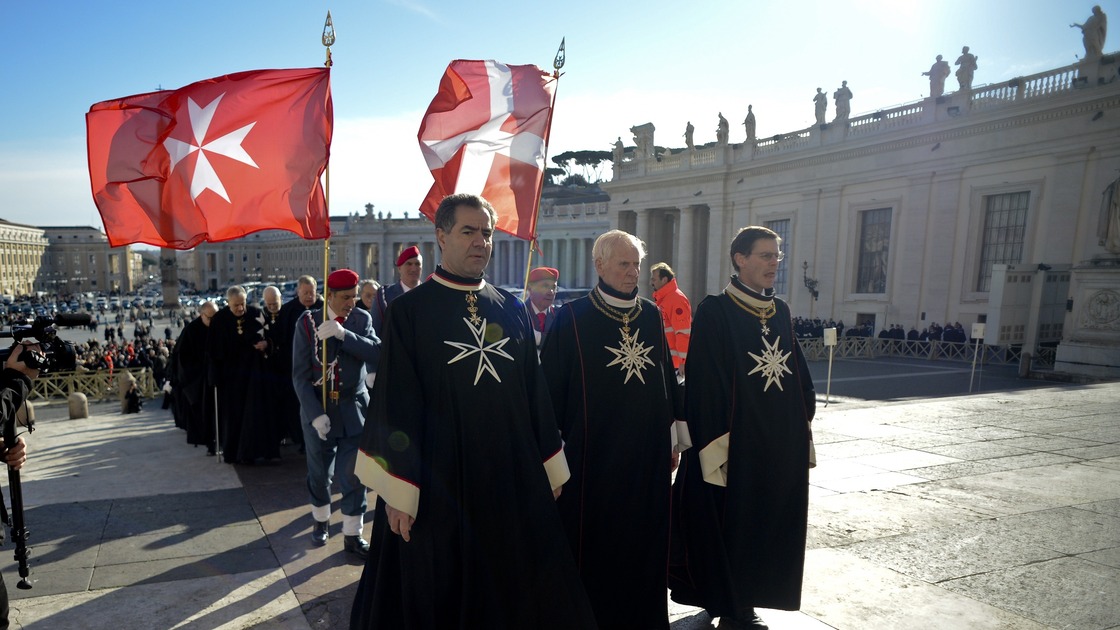
The Order of Saint John of Jerusalem, also known as the Knights of Malta, is celebrating its 900th anniversary.

KnightsofMalta900

The Order of Saint John of Jerusalem was founded as a crusading Christian military order in the 11th century and transformed its mission several times over the intervening centuries. This military order engaged in holy war against the Saracens and later the Ottoman Turks in the Levant and across the Mediterranean. The Order has successively been based in Jerusalem, Cyprus, Rhodes, Malta, and now Rome.

The Knights of Malta held a procession in the Vatican City today and attended mass at Saint Peter’s Basilica.

NPR reports on the celebrations in the Vatican City.

Students in HIST 414 European Wars of Religion, 1520-1660 and HIST 458 Mediterranean World, 1450-1750 will be interested in this story.


Posted in Early Modern Europe, Early Modern World, European History, European Wars of Religion, History in the Media, History of Violence, Maritime History, Mediterranean World, Noble Culture and History of Elites, Religious Violence, Renaissance Art and History, War, Culture, and Society, Warfare in the Early Modern World | Leave a comment

Misreported Data in College Rankings

Many students and their parents choose prospective colleges based on college rankings, such as the U.S. News and World Report rankings. College rankings are published each year to much fanfare. Most colleges and universities participate in surveys that produce the rankings, and they later trumpet favorable ratings of their overall institutions or of specific departments and programs.

University and college professors have long been skeptical about the rankings, especially ones produced by media companies such as U.S. News.

A new report throws further doubt on the usefulness of college rankings. The Washington Post article provides evidence that some colleges have deliberately misreported data in order bolster their rankings.

We can expect to see more of this sort of revelation in the future.


Posted in Education Policy, Humanities Education | Leave a comment

Unearthing Richard III

A team of archaeologists and other scientists exhumed bones from underneath a Leicester parking lot last fall and have been conducting tests on them over the past several months. Now, they report that the bones are probably those of King Richard III of England, who was killed at the battle of Bosworth Field in 1485.

The skeleton of Richard III is seen in a trench at the Grey Friars excavation site in Leicester

The death of Richard III at Bosworth Field allowed the Tudors to take control of the English throne and effectively brought the Wars of the Roses to the end.

The Guardian reports on the scientists’ methods, which included DNA testing and forensic analysis. The Washington Post reports on the findings.

richardiii042way

This sort of history-as-CSI project has become increasingly popular recently.


Posted in Civil Conflict, Early Modern Europe, History in the Media, History of Medicine, History of Science, History of Violence, Renaissance Art and History, Uncategorized, War, Culture, and Society, Warfare in the Early Modern World | Leave a comment

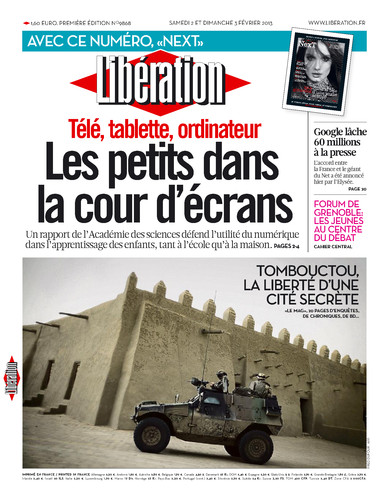
French and Malian Troops take Timbuktu

French and Malian forces entered Timbuktu on 28 February after Islamist and Tuareg militants fled from the city they had seized months before. French forces secured the airport, then the city itself. Reuters reported on the French and Malian drive into Timbuktu.

liberation-timbouctou

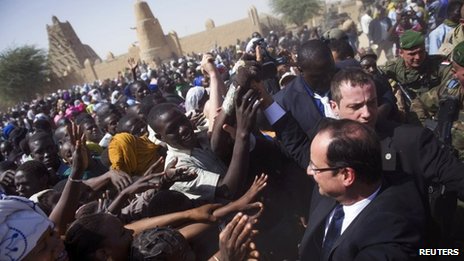
President François Hollande flew to Timbuktu to celebrate its liberation in an emotional visit.

hollandeintimbuktu

Less than a week after their dramatic arrival in Timbuktu, French troops are already preparing to transfer control over to Malian forces and to depart the city. Meanwhile there are signs of guerrilla fighting breaking out in some regions. The Washington Post reports on French plans to withdraw.

Strategists are considering how to secure the Malian government and establish stability throughout the nation. Libération offers analysis of Mali’s history of instability and weak state development. BBC analyzes potential French strategic approaches to dealing with Tuareg rebellion in northern Mali.

Posted in Civil Conflict, Civilians and Refugees in War, French History, History of Violence, Human Rights, Strategy and International Politics, Uncategorized, War, Culture, and Society | Leave a comment

Preserving Timbuktu’s Cultural Heritage

Timbuktu has been an important center of Islamic learning, scientific research, and legal scholarship for centuries. The city’s medieval manuscript collections are regarded as some of the best in the Islamic world. Because of its libraries and architectural sites, Timbuktu is recognized as a World Heritage site by UNESCO.

AhmedBabaInstitute-manuscriptsIslamist and Tuareg militants targeted Sufi tombs and other heterodox religious sites for destruction during their recent occupation of Timbuktu.

As French and Malian forces approached Timbuktu last week, reports circulated of  militants burning manuscripts. Many observers feared that the famous manuscript collections might be completely destroyed.

Now we know that although some destruction did occur, most of Timbuktu’s manuscripts have survived. “When the moment of danger came,” according to the New York Times, “Ali Imam Ben Essayouti knew just what to do. The delicate, unbound parchment manuscripts in the 14th-century mosque he leads had already survived hundreds of years in the storied city of Timbuktu. He was not about to allow its latest invaders, Tuareg nationalist rebels and Islamic extremists from across the region, to destroy them now. So he gingerly bundled the 8,000 volumes in sackcloth, carefully stacked them in crates, then quietly moved them to a bunker in an undisclosed location.” The New York Times reports on the hiding of the manuscripts.

The close call for the Timbuktu manuscripts is a reminder of how important humanities digitization projects are for the preservation of historic archival collections.


Posted in Archival Research, Civil Conflict, Civilians and Refugees in War, Digital Humanities, Early Modern World, History of the Book, History of Violence, Mediterranean World, Museums and Historical Memory, War, Culture, and Society | Leave a comment

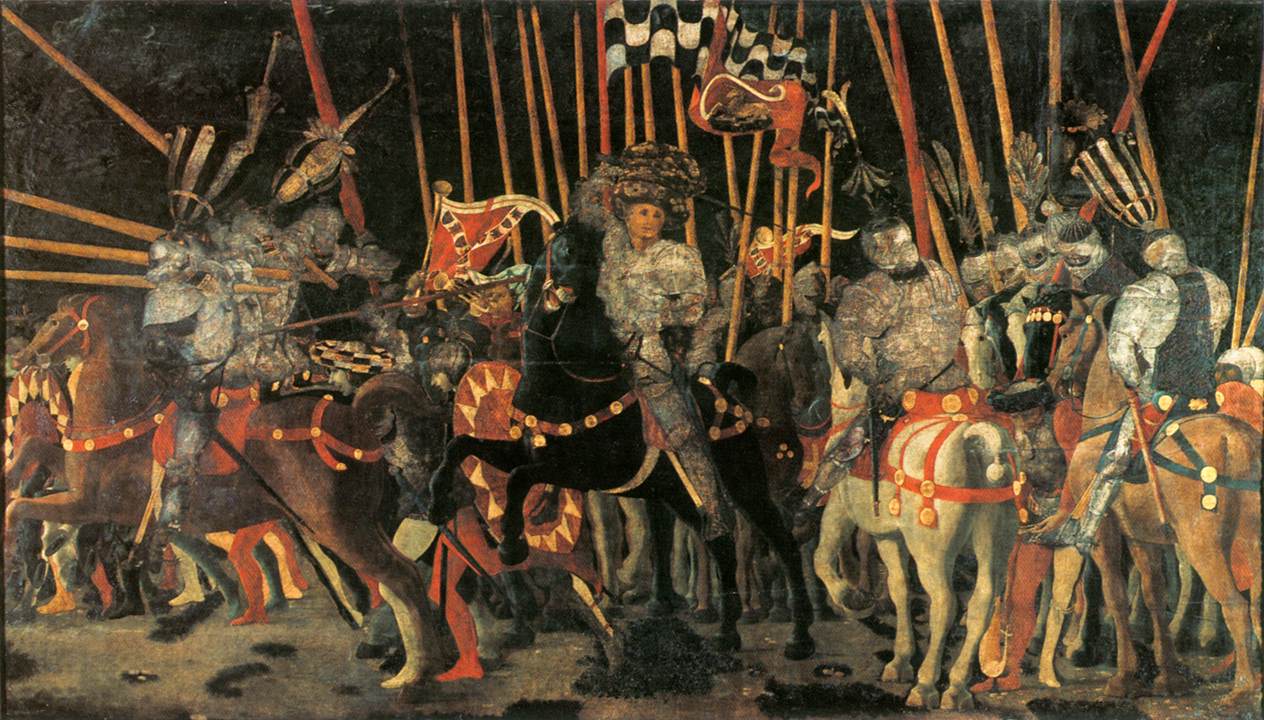
Representing Battle

Images of battle are present in all periods of art history, but serious analyses of representations of battle are relatively new. Some of the best scholarly work so far examines battle imagery in the early modern period.

battledesanromano

Historian Peter Paret’s Imagined Battles (1997) offers an interesting discussion of depictions of battle. Numerous art historical studies have considered Jacques Callot’s battle scenes and depictions of the miseries of war. A new interdisciplinary collective volume on Beholding Violence in Medieval and Early Modern Europe, ed. Allie Terry-Fritsch and Erin Felicia Labbie (2012) examines ways of visualizing battles in the broader context of witnessing violence. My chapter in this volume examines how early modern Europeans experienced and observed siege warfare.

A conference entitled Représenter la bataille was recently held at the Musée du Louvre in Paris on the problem of how battle has been represented throughout history. The sessions focused on the example of the Chanson de Roland and its imagery of battle.

Unfortunately, my research sabbatical in Paris wrapped up just a few weeks before this conference, so I was unable to attend.

The Louvre website presents a conference program and description.


Posted in Art History, Early Modern Europe, Early Modern World, History of Violence, Renaissance Art and History, War, Culture, and Society, Warfare in the Early Modern World | Leave a comment

Gun Makers Appeal to Children

Gun makers in the United States regularly appeal to American children through advertising campaigns and promotions.

gun-makers-children

An article by Jordan Weissmann in the Atlantic discusses the importance of gun purchases by hunters in the United States. Weissmann points out that “although they’ve been overshadowed a bit by handgun buyers in recent years, public data suggest that hunters are the backbone of U.S. firearms sales. According IBISWorld, American civilians purchase roughly $7 billion worth of guns and ammunition annually. And although their analysis doesn’t separate money spent by sportsmen from purchases by doomsday preppers, the U.S. Fish and Wildlife Service estimates that hunters alone alone spent around $4.3 billion on guns and ammo in 2011.”

Weissmann demonstrates the declining interest in hunting in the United States and the corresponding aging of the hunting population. “In short,” he argues, “when we talk about hunting, we’re talking about a pastime responsible for more than half of retail gun sales. And over the past 20 years, hunting has not fared well. Although their numbers have risen since hitting a trough in 2006, there are around 300,000 fewer Americans stalking deer, cramming themselves into duck blinds, and gunning down turkeys than in 1991, according to the Fish and Wildlife Service. As a result, hunters have fallen from more than 7 percent of the population to a bit under 6 percent.”

According to Weissmann, gun manufacturers need to make guns and hunting more popular in order recruit a new generation of domestic customers for their weapons.

This sort of research needs to be compared with data on gun manufacturers’ sales of weapons to civilians abroad, as well as to military organizations.


Posted in Arms Control, History of Violence, War, Culture, and Society | Leave a comment

Medici Archive Project Online Paleography Course 2013

MAP Online Paleography Course 2013

bia-announcement

For the fourth consecutive year, the Medici Archive Project will offer a 12-week
Online Paleography Course. The course is designed to furnish participants with
basic skills for reading historical manuscript materials from the late 15th- 17thcentury
Tuscany. This course also offers a general introduction to the nature of
Italian archives. From personal letters to the inventories and wills, the digitized
documents used to train the course’s participants in paleographic skills will also
expose them to a wide range of document types useful for scholarly research.

Enrollment will be limited to 20 students. Priority will be given to graduate
students, post-graduate scholars, and professionals with relevant scholarly
interests. Basic knowledge of Italian is required. The course is taught in English.
The online course will be held from Monday, September 23 to Friday, December
13, 2013.

The tuition for this course is US $ 500, payable by PayPal upon acceptance.
To apply, send: 1. A brief letter of introduction explaining the motivation for
taking the course. 2. A curriculum vitae that details linguistic aptitude and (if
applicable) archival experience.

All materials should be sent to Dr. Elena Brizio, ebrizio@medici.org by September
1, 2013.


Posted in Archival Research, Conferences, Digital Humanities, Early Modern Europe, European History, Graduate Work in History, Grants and Fellowships, Italian History, Reformation History, Renaissance Art and History | Leave a comment