The Legacy of Martin Luther King, Jr.

Today is both Martin Luther King, Jr., Day and Barack Obama’s Second Inauguration.

inauguration

So, it seems the ideal time to reassess the historical legacy of MLK.  The History News Network regroups a series of articles and essays on Martin Luther King, Jr., and his continuing significance.
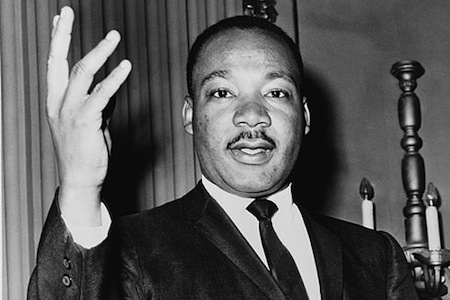
MartinLutherKingJr

Martin Luther King, Jr., played a crucial role as a leader in the Civil Rights movement of the 1950s and 1960s, successfully pushing for abolition of Jim Crow Laws, as well as passage of the Civil Rights Act of 1964 and the Voting Rights Act of 1964. His speeches galvanized a generation of Civil Rights activists and demanded the attention of the entire American people. The Civil Rights movement brought about significant political and cultural changes in the United States that arguably constituted a social revolution.

Since King’s tragic death in 1968, his ideas and methods of nonviolent protest have gained an even broader audience of citizens and activists pushing for democratic reforms and human rights legislation around the world.

News organizations are rightly highlighting the links between Martin Luther King and President Obama today, but they often see very different connections. The AP reports on the Inauguration. Eugene Robinson offers an opinion piece on “The Black President No Longer” in the Washington Post. The Washington Post offers a series of surprising facts about MLK, as well as an editorial and a report on how MLK Day was celebrated in Washington, DC. Tavis Smiley provides his perspective on the Inauguration at CBS.

Historian Clayborne Carson (Stanford University) offers an interview on MLK’s legacy.

NPR provides analysis and commentary on President Obama’s Inaugural Address. A panel of commentators at the Guardian provide reactions from the U.K. to President Obama’s Inaugural Address and the Inauguration Day ceremonies.

Posted in Comparative Revolutions, Globalization, History of Violence, Human Rights, Political Culture, Revolts and Revolutions, Uncategorized | Leave a comment

Astronomy and Climate History

A new study by a team of astronomers suggests that a powerful gamma-ray burst hit the earth in the year 774 or 775.

gamma-rayburst

The impact of this eighth-century burst, which apparently stemmed from a collision of two neutron stars, was likely marginal. Researchers have detected trace evidence of the burst from tree ring and ice core samples. But, a similar burst today could potentially cause serious damage to electronic grids and earth’s atmosphere.

This sort of finding is a good example of the growing body of collaborative research between scientists and historians on long-term climate history and environmental history. Much of this research is focused on the medieval and early modern world, which have significant textual, visual, and physical evidence available for analysis.

The BBC reports on the astronomers’ study.

Posted in Early Modern Europe, Early Modern World, Environmental History, History of Science | Leave a comment

French Way of War

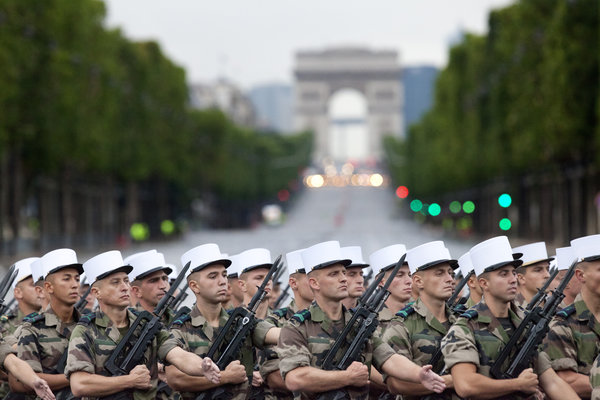
The French intervention in Mali against Islamist militant groups has drawn worldwide attention to French military forces and their capabilities.

frenchforeignlegion

French politicians seem concerned to maintain an independent foreign policy that is distinct from NATO and European Union international politics. The current President François Hollande and previous President Nicolas Sarkozy both have launched military interventions into African civil conflicts. French international relations is articulated simultaneously in European, Mediterranean, and world contexts through its diplomatic and military initiatives. France invests heavily in its arms industries and military organizations, which allow it to conduct a diverse range of deployments and interventions.

Stephen Erlanger, Paris Bureau Chief of the New York Times, provides analysis in a piece entitled, “The French Way of War,” in the Sunday Review of the New York Times online.

Historians of French war and society will want to consider Erlanger’s assessment of the French armed forces, as well as his use of the concept of “ways of war.”

The phrase “way of war” has become very popular among historians of war and society and military pundits, in part due to the success of Russell F. Weigley’s classic study, The American Way of War (1973; reprint, Bloomington, IN: Indiana University Press, 1977).

Brian McAllister Linn reassessed the concept in Journal of Military History 66 (April 2002), which also published a reply by Russell F. Weigley. A roundtable on “comparative ways of war” was published in Historically Speaking 11: 5 (November 2010).  A recent article in Small Wars Journal revisits the debate over an “American way of war.”


Posted in Arms Control, Civil Conflict, European History, European Union, French History, Strategy and International Politics, Terrorism, War, Culture, and Society | Leave a comment

Medici Archive Project Fellowships

The Medici Granducal Archive (Mediceo del Principato), comprising over four-million letters dating between 1537-1743, provides the most complete record of any princely regime in early modern Italy as well as an extraordinarily rich historical reservoir of European history. This collection offers an incomparable panorama of human history, expressed through the words of the people most immediately involved, opening new windows onto the political, diplomatic, gastronomic, economic, artistic, scientific, military and medical culture of early modern Tuscany and Europe.
The Medici Archive Project (MAP) (www.medici.org) believes that it is imperative to provide graduate and doctoral students from diverse disciplines with the opportunity to have exposure to original source materials and training in their use. For this reason MAP is offering three short-term fellowships sponsored by the SAMUEL FREEMAN CHARITABLE TRUST (SFCT) for graduate students in any field of the humanities or social sciences who are in the early stages of their dissertation work. The SFCT fellowships have been developed to enable students working on their dissertations to conduct primary research using the Mediceo del Principato and other collections housed in the Archivio di Stato in Florence.
This scholarly residence will be of considerable benefit in helping the students to gain the necessary skills, experience and confidence to continue independent academic research in the later stages of their graduate trajectory. Fellowship recipients will attend the annual MAP Archival Studies Seminar.
While undertaking primary research for their dissertation in the Florentine state archives the Fellows will benefit from the supervision of the MAP Staff, academics drawn from a variety of disciplines, who are experts in archival research, paleography and the digital humanities. The Fellows will also have the opportunity to expand their academic networks through contact with the many international scholars who regularly visit and collaborate with MAP.
The fellowships last for a period of two-and-a-half months to be carried out continuously during the period between 1 April 2013 and 15 July 2013. The SFCT Fellows will undertake their dissertation research on-site in the Archivio di Stato, Florence.
The candidates will have the following qualifications: a completed M.Phil (or equivalent) in any field of early modern humanities and fluency in English and Italian. Preference will be given to those applicants whose dissertation topic is immediately relevant to the content of these archives. The stipend is $5,000 plus an allowance for travel expenses. To apply for this fellowship, the following material should be sent electronically to Elena Brizio (ebrizio@medici.org):

1) A copy of the candidate’s dissertation proposal (or a final draft)
2) A short essay (two pages maximum) on how a candidate’s topic may benefit from archival research.
3) A complete and up-to-date curriculum vitae.
4) The name and email contact details of one scholar, preferably the candidate’s supervisor, who can comment on the applicant’s qualifications and the merits of the research proposal (please do not include letters of recommendation with the application).

The application deadline is: 13 March 2013 at noon.
Further information:
1) All materials submitted by the applicant should be in English.
2) All materials should be in a single pdf file.
3) Please do not include supplementary material (publications, papers, syllabi, etc.).

FOR FURTHER INFORMATION CONTACT:
Dr. Elena Brizio
Vice Director
The Medici Archive Project
ebrizio@medici.org


Posted in Archival Research, Digital Humanities, Early Modern Europe, Early Modern World, Graduate Work in History, Grants and Fellowships, Italian History, Renaissance Art and History, Study Abroad | Leave a comment

Newtown Massacre Viewed From Europe

A month after the Newtown massacre, people around the world are remembering the victims and attempting to understand the mass killing. Having recently returned from a research trip to Europe, I thought that an examination of European perceptions of the Newtown massacre could be useful at this point.

The Newtown massacre in December 2012 horrified, but fascinated European audiences. The mass killing confirmed European stereotypes about American society as a particularly violent one. European media follow news from the United States closely and routinely report on major developments in American politics and society, but this story seems to have particularly touched a nerve in European audiences. A month after the shooting rampage, European media continue to report on the killings and the ensuing debate in the United States over gun control.

ventedarmes

European reporting on the massacre has often focused on a supposedly violent American character, inversing the triumphalist claims of American exceptionalism. A particularly American culture of violence, including seemingly unlimited acceptance of guns, seems responsible for the Newtown massacre in much of the European press. A Repubblica article discusses the culture of violence. American gun violence is typically characterized as irrational and American attitudes on guns are often presented as insane. Le Monde ran a story on “L’Amérique face à sa folie des armes” after the Newtown massacre.

The sheer number of mass killings and shooting rampages in the United States shocks European journalists and audiences. An article in Libération seeks to explain mass killings to French readers. Of course, there have been mass killings in Europe in recent memory, such as the Cumbria mass shooting in Britain, the horrifying Utoya massacre in Norway in 2011, the shooting spree in southern France in March 2012. Few European publications seem to have focused on comparisons between the Newtown massacre and these mass shooting incidents, however.

European media have reported extensively on the numerous shooting sprees and would-be rampages across the United States in the past month since the Newtown massacre, including the assassination of firefighters in New York state, the multiple murders in Aurora, and the killings in rural Pennsylvania. Repubblica reported on a teenager who took a gun to school in Utah and on a shooting in Las Vegas. Le Monde highlighted the differences between the mass shooting in Newtown and the nearly contemporaneous mass stabbing of children in China, where no victims were killed.

bushmasterrifle

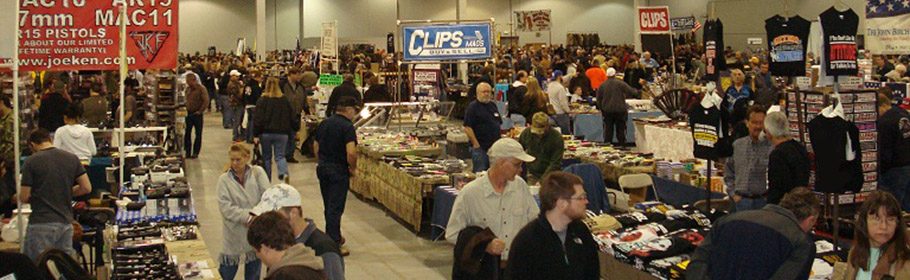
The proliferation of firearms figures prominently in European reporting on violence in America. A Le Monde article focuses on the diffusion of arms in the United States and a BBC story provides detailed statistics on arms ownership and gun violence. Libération reports polls showing that a majority of Americans favor curbing arms proliferation through gun control measures. Numerous stories have discussed the growth in arms sales since President Obama’s election, and especially following the Newtown massacre. Many of these stories have stressed the booming business at gun shows, as in a Le Monde story entitled, “Ambiance familiale et frénésie d’achat au « gun show ».”

gunshows

Most European media deplore the pro-gun attitudes of American citizens and the lack of action by American lawmakers to institute gun control measures. The Economist published a piece on the American people’s failure to act.

European news media have highlighted the power of the National Rifle Association as explaining American inaction on gun violence. Le Monde reports on the political influence of the NRA and the Great America news blog at Libération also focuses on the NRA. The Independent accused the NRA of hypocrisy for trying to shift the blame for the Newtown massacre from assault rifles to Hollywood.

Some of the European stories, such as one by Le Monde, point to gun buyback programs as a potential method of reducing the number of firearms in circulation in the United States.

Posted in Arms Control, European History, European Union, French History, History of Violence, Political Culture | 1 Comment

French Air Power in Mali

The French military intervention in Mali is only a few days old, but already French air power is having an impact. According to the French Defense Minister, Rafale and Mirage fighter-bombers have flown a number of sorties over Mali, bombing targets in Goa and across the rebel-held territories in northern Mali. The French military intervention is apparently rapidly expanding in scope and scale, according to the Washington Post and other news sources.

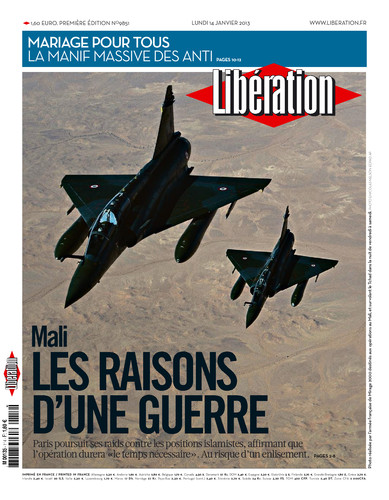
Not surprisingly, news media have focused on the demonstrations of French air power. The front page of the center-left newspaper Libération provides a good example of this pattern:

liberation-raisonsduneguerre

The initial stages of the French bombing campaign have already resulted in civilian casualties, as well as rebel deaths. The Guardian and Human Rights Watch report on civilian casualties. The intervention is not exclusively an air campaign, however, since French troops have landed in the capital of Bamako and a column of French tanks has been sighted on the ground.

Meanwhile, Islamist militant groups have launched a counter-attack on the ground, retaking the town of Diabaly, according to reports today by Le Monde and the BBC. Malian militant groups have also threatened to retaliate with international terrorist attacks on French soil, according to France 24. A series of cyber attacks has already been launched on French diplomatic and media sites, according to Le Monde.

The French government has promised a short, limited intervention. The BBC reports on French President François Hollande’s statements and the aims discussed by the French military. But, the Guardian provides criticism of the justifications for military intervention and a Le Monde piece questions whether or not the intervention is legal under international law. Curiously, Algeria has decided to approve French intervention in Mali and is allowing French Air Force to fly through its air space to reach Mali, according to a report in Libération.

Posted in Civil Conflict, Civilians and Refugees in War, European History, European Union, French History, History of Violence, Mediterranean World, Political Culture, Strategy and International Politics, Terrorism, War, Culture, and Society | Leave a comment

Early Modern Jewish Studies Fellowship

The Medici Archive Project in Florence, Italy, is offering a postdoctoral fellowship in early modern Jewish studies.

The position description reads:

“The letters in the Medici Granducal Archive (Mediceo del Principato) constitute an impressive historical reservoir of Jewish history. The content of this vast collection—over six thousand volumes—opens new windows onto cross-sections of Jewish culture in early modern Italy and Europe. Only in recent years have historians of various humanist disciplines begun to assess this vast body of information. The great majority of these documents have yet to be explored. It is for this reason that the Medici Archive Project (www.medici.org) is offering an eleven-month fellowship (1 September 2013 – 1 August 2014) for conducting research on the history of Jews and Jewish culture, to be carried out on-site at the Archivio di Stato in Florence, working on the Mediceo del Principato. The selected candidate will be responsible for organizing, editing and preparing for on-line publication the copious archival material on Jewish culture gathered by Medici Archive Project research team and staff since 2000.”

Qualifications:

“Applicants should have all of the following qualifications: a completed Ph.D. in any field of Renaissance or early modern Jewish studies; fluency in English and Italian (a knowledge of Hebrew and Latin is desirable); substantial research experience with original documentary material; commitment to a scholarly career involving archival research; significant publication record in the field of Renaissance or early modern Jewish studies.”

Stipend:

“The stipend is $43,000 plus an allowance for travel expenses, and may be renewed for a second year, pending available funds.”

To apply, see the full advertisement for the fellowship is available at H-Net.

Posted in Archival Research, Digital Humanities, European History, Grants and Fellowships, Humanities Education, Italian History, Reformation History, Renaissance Art and History, Study Abroad | Leave a comment

Job Opportunity in Northern Illinois: Historian at Rock Island

The United States Army Sustainment Command at Rock Island, Illinois, is currently searching for a full-time Historian (a civilian position).

Here is a link to the job description:

https://www.usajobs.gov/GetJob/ViewDetails/334842700

Senior History majors, recent graduates, and Master’s students at Northern Illinois University may want to consider applying for this position in the region.

The United States Armed Forces and other U.S. government agencies employ historians to assess the past activities of their institutions and to maintain their archival records. This is just one of the potential career opportunities in Public History available to History majors and minors.

Humanities training in historical research, intensive reading, document analysis, textual criticism, and information management make History majors ideal candidates for many jobs beyond teaching.


Posted in Careers in History, Humanities Education, Museums and Historical Memory, Northern Illinois University, Undergraduate Work in History, War, Culture, and Society | Leave a comment

World War II Exhibit and Viewer Identification

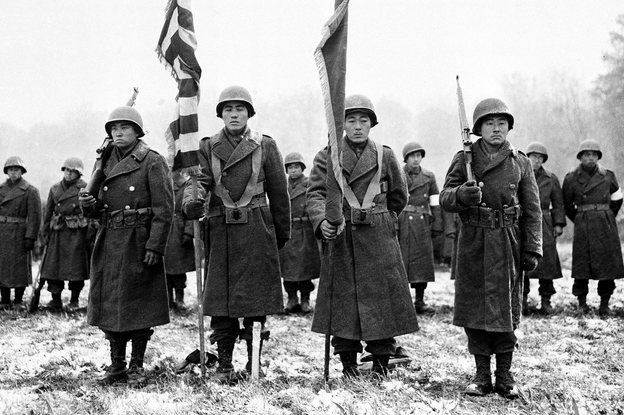
A new exhibit is opening at the National World War II Museum in New Orleans this weekend, featuring a more direct approach to reach its museum audience. The new wing attempts to engage museum visitors by prompting viewer identification with individuals who experienced specific episodes of the Second World War.

japanese-american-soldiers

Techniques of viewer identification invite each museum-goer to consider the perspective of an individual while viewing an exhibit. The National Holocaust Museum in Washington, D.C., distributes small information cards to each visitor with a photo and brief biography of a Holocaust victim in order for viewers to consider this individual’s experience within the broader nightmare of the Nazi state and its extermination programs.

NPR reports on the new exhibit at the museum. I have not yet been able to visit the National World War II Museum, so I cannot assess its use of viewer identification. I am troubled that the techniques described by NPR seems to be restricted to showing American perspectives of the conflict, however. Teaching the history of the Second World War requires a multiplicity of non-American perspectives to avoid serious distortion, I would argue. Offering Japanese-American points-of-view on the war is not the same as offering Japanese perspectives. Does the museum offer British, German, Russian, Western European, Eastern European, Jewish, Chinese, Australian, Indian, or Oceanian perspectives?

That the new wing is entitled “US Freedom Pavilion: The Boeing Center” does not bode well for presenting a sophisticated historical view of the Second World War.

The association of Stephen Ambrose with the project of the National World War II Museum’s work is unfortunate. Ambrose, a former professor at the University of New Orleans who is now deceased, helped launch the New Orleans-based museum and served as its President. Ambrose was accused of serial and rampant plagiarism in 2002 in one of the most famous modern cases of plagiarism and academic dishonesty.

The National World War II Museum should think about how to disassociate itself from Stephen Ambrose’s influence and approaches.

Read about Stephen Ambrose in a separate post at this site.

Posted in Academic Publishing, Historical Film, Museums and Historical Memory, Strategy and International Politics, War in Film, War, Culture, and Society | 1 Comment

Plagiarism and Patriotism

This weekend, a new exhibit is opening at the National World War II Museum in New Orleans. The opening prompts a reflection on one of the founders of that museum and its former President, historian Stephen E. Ambrose.

Ambrose was a best-selling author of books on Dwight D. Eisenhower and on American military history who advanced an overtly nationalist and politicized view of American history. He became famous as a historical consultant for Saving Private Ryan and the television adaptation of his Band of Brothers, as well as a television commentator on military affairs. His books celebrated American infantry soldiers as well as the United States Army, cementing the popular image of the Second World War as “the Good War.”

Fred Barnes’s review of Ambrose’s The Wild Blue, published in the Weekly Standard, broke the news about Ambrose’s plagiarism in 2002. Ambrose was accused of intentional and serial plagiarism of other historians’ research and writing. PBS reported on the Ambrose case, while Slate and Forbes condemned Ambrose’s plagiarism when allegations first surfaced. The History News Network published a detailed article in 2010 on how the Ambrose plagiarism story gradually developed.

ambrose-The Wild Blue

Despite the massive evidence of Ambrose’s plagiarism, he was never punished. The American Historical Association, the national organization of professional historians, does define plagiarism, but has abandoned adjudicating plagiarism cases. Ambrose’s publishers continue to profit from publishing and distributing his popular books, without editing them to quote the passages that he lifted from other authors. The National Endowment for the Humanities, which awarded Ambrose one of its prestigious National Humanities Medals in 1998, has never rescinded the medal and still lists his award statement on the NEH website.

Ambrose has also been accused of outright invention of source material. The New Yorker reported in 2010 on Ambrose’s fabricated interviews of Dwight D. Eisenhower used in his biography of the general. Eisenhower’s son has defended Ambrose, but historians are appropriately troubled by Ambrose’s sloppy or invented interview transcripts. The History News Network published a series of stories on the accusations in 2010.

While the accusations of source fabrication are shocking, the connection of plagiarism with a political agenda should be considered in detail. After all, Stephen Ambrose was cherry-picking juicy passages of text written by others in order to concoct a particular version of history. CBS reported in 2002 that Ambrose was working on a book on “his own transformation from a left-wing demonstrator to a super patriot,” eventually published as To America: Personal Reflections of an Historian. This memoir has been perversely recommended as a historical text on some home schooling websites.

Clearly, Ambrose had a blatantly patriotic agenda to enshrine his vision of World War II as the “Good War” in most of his books, questioning their utility and relevance for historians and history students. As a history professor, I would never recommend an Ambrose book or adopt one in any of my courses.

Surely, the National World War II Museum, a museum dedicated to presenting the complex history of the war and educating the public, must want to avoid replicating Ambrose’s blindly patriotic historical vision in its exhibitions.

Read more about the new exhibit at the National World War II Museum in a separate post.

Posted in Academic Publishing, Education Policy, Historical Film, Historiography and Social Theory, Humanities Education, Museums and Historical Memory, Political Culture, Strategy and International Politics, Uncategorized, War in Film, War, Culture, and Society, Writing Methods | 1 Comment