French Military Intervention in Mali

French President François Hollande has launched a military intervention into war-torn Mali, where a civil war has been raging for months. The French Prime Minister Jean-Marc Ayrault explained the rationale for the French intervention, claiming that military action is justified “pour stopper la menace terroriste.”

hollande-enguerre

Le Monde reports on President Hollande’s decision to intervene and the reaction of the French public.

Islamist militant groups have conquered large portions of northern Mali and have taken control of Timbuktu. African states and organizations have backed the legitimate Malian government and supported its operations against the Islamist militants, which it regards as rebels.

mali-map

French special forces have already conducted raids against Islamist forces within Mali and have supported Malian troops on the ground. Malian government forces have reported retaken the strategically important town of Konna. One French helicopter pilot was killed in the initial attacks, according to French Ministry of Defense.

gazelle-helicopter

French troops have also been deployed in the capital, Bamako. The French Minister of Defense declared that the French forces are in the capital “pour contribuer à la protection de Bamako et pour assurer la sécurité de nos ressortissants.”

frenchsoldiers

Le Monde reports on the French operations in Mali. Another Le Monde article provides background on the current civil war in Mali. The BBC and the Washington Post provide reporting on the operations in English.

French special forces have also reportedly carried out a raid in Somalia in order to liberate a French military intelligence officer held hostage there since 2009. Reports are still sketchy on this raid, however.

Historians and political scientists interested in French war and society will want to follow the developing news on the French intervention in Africa. The military intervention has implications for French and European Union politics, Franco-African relations, and Mediterranean exchanges. France has long maintained neo-colonial relationships with West Africa and this intervention will raise new questions about whether or not French forces can operate effectively in Mali. The intervention aims to stabilize the Mali government and state security, raising new questions about state development processes and state-building efforts in West Africa.

Update: The French Air Force has launched air strikes on rebel military forces and supply bases in and around Gao, according to a report on 13 January by the BBC. The French military intervention in Mali seems to be expanding rapidly.


Posted in Civil Conflict, Empires and Imperialism, European Union, French History, History of Violence, Mediterranean World, Political Culture, State Development Theory, Strategy and International Politics, Terrorism, Uncategorized, War, Culture, and Society | Leave a comment

Decline in Enrollments at Public Universities

Student enrollments continue to decline at public universities nationwide. For several years, state universities and colleges have been grappling with declining enrollments.

uiuc-quad

A new report by Reuters indicates that “Tuition will likely decline this fiscal year in a record 15 percent of U.S. public universities, while schools expecting growth anticipate the lowest increases in over a decade, Moody’s Investors Services said on Thursday.”

Moody’s regularly studies higher education finances and issues credit ratings for universities and colleges. The current study concluded: “Moody’s found that a third of universities expect net tuition revenue to either decline or grow at a rate below inflation in fiscal year 2013. In all, 17% of both private and public universities are expecting declines in net tuition revenue, while another 16% are expecting percent increases that are less than the rate of inflation.”

My own university, Northern Illinois University, and other state universities are especially concerned by the projections of declining enrollments. NIU has already experienced several years of declining enrollments, presumably due to the pressures that students and their families are feeling due to the 2008 financial collapse, the foreclosure crisis, and the high unemployment rates.

Over the past generation, state legislatures have reduced their financial support of higher education, leaving many state universities and colleges more dependent on student tuition than before. So, just as American students and their families are being financially squeezed more than at any point in 50 years, educational institutions are being forced to make massive cutbacks or raise tuition rates.

For the Moody’s Investors Service report, see Moody’s website.

The Reuters article was republished in the Chicago Tribune online, along with this photo of the Quad at the University of Illinois at Urbana-Champaign.

For readers interested in tuition and university finances, I have written several previous posts in my website’s sections on Education Policy, Humanities Education, and Undergraduate Work in History with links to recent studies on those issues. Prospective undergraduate students, current students, and their families—especially in Illinois—may want to follow up on these links.

Posted in Education Policy, Humanities Education, Northern Illinois University, Undergraduate Work in History | Leave a comment

Renaissance Academies as Social Networks

The academies of Renaissance Italy are being compared with internet social networks, such as Facebook. A major collaborative research project on The Italian Academies 1525-1700:The First Intellectual Networks of Early Modern Europe, is producing new findings on the complex world of academies in Renaissance Italy. The researchers have launched a website on Italian Academies to present their findings on social interactions among academy members during the Renaissance.

barbieri-anelante

The team has also created an online Database of Italian Academies at the British Library with information on Renaissance academies and their members. The website for the database claims that: “The British Library holds some of the finest collections outside Italy of publications produced by Italian Academies and their members. Much of this material is catalogued in ways which have not permitted easy access by scholars working on a particular Academy or on Academies in general. The creation of a Themed Collection of data relating to Academies aims to open up the Library’s holdings to new research on the Italian learned Academies of the late Renaissance and early modern periods and their relationship to book production, printing and publishing in this period.” The Database of Italian Academies is searchable by people, subjects, and images.

The Italian newspaper La Repubblica reports on the new research. [Thanks to my colleague Monica Azzolini (University of Edinburgh) for this reference.]

Digital Humanities projects such as the The Italian Academies 1525-1700, The Medici Archive Project, The 1641 Depositions, Gallica, and Europeana are radically changing how Renaissance and early modern scholars conduct research.

Posted in Archival Research, Digital Humanities, Early Modern Europe, Early Modern World, European History, Italian History, Renaissance Art and History | 2 Comments

Political Assassinations in Paris

Three Kurdish women were murdered in Paris yesterday in the offices of the Kurdish Institute. The women were all political activists affiliated with the PKK, a Kurdish nationalist group active in Turkey and Iraq. Sakine Cansiz, one of the co-founders of the PKK, was among the dead.

kurdishwomen

No motive has yet been established, but the killings seem to have been targeted political assassinations and the French Interior Minister called the killings “executions.” PKK nationalists have carried out armed attacks and bombings against Turkish forces, causing them to be labelled a terrorist group by some nations.

Parisians are shocked by that the assassinations were carried out in the French capital, in the 10th arrondissement, close to the center of the city. Le Monde writes that “La nouvelle a provoqué une onde de choc en France, où les assassinats politiques de ce type sont rares, mais aussi en Turquie où l’événement fait la ‘une.'”

Pro-PKK Turkish activists have periodically held rallies in Paris—often calling for the release of the imprisoned Abdullah Öcalan, co-founder of the PKK along with the slain Sakine Cansiz. I witnessed one of these rallies in the place de la Bastille during my recent sabbatical research in Paris.

This story raises a number of questions about broader political issues and historical contexts: PKK organization, ethno-nationalist movements, Turkish nationalism, Ottoman legacies, post-colonial arrangements, political violence, targeted assassinations, European Union politics, Parisian activism, and gender and violence.

Le Monde reports on the killings in Paris and on the investigation, as does Libération. The BBC and the Washington Post provide reporting on the murders in English. Le Monde also has video of a Kurdish rally in Paris following news of the assassinations.

Posted in European Union, French History, Gender and Warfare, History of Violence, Human Rights, Paris History, Strategy and International Politics, Terrorism, Women and Gender History | Leave a comment

History of the Book Lecture

The Newberry Library’s Center for Renaissance Studies is hosting the annual History of the Book Lecture.

Jeffrey Masten (Northwestern University), “Toward Queerer Book History”

History of the Book Lecture

Newberry Library, Towner Fellows Lounge, Friday, 11 January 11 2013 at 2 pm

The Center for Renaissance Studies offers this description of the lecture:

“How can the history of the book engage more fully with recent developments in the history of Renaissance sexualities? Professor Masten will consider a range of examples to think about same-sex male eroticism in and around early printed books, from the perspective of production as well as reception. What meanings emerge from historiated capitals, so-called “children initials”?  Where might we look for signs of “queer readerships” in early modern books? How are the critical rhetorics of book history and textual criticism implicated in languages of sex and gender?”

Posted in Conferences, Early Modern Europe, Early Modern World, European History, History of the Book, Reformation History, Renaissance Art and History, Women and Gender History | Leave a comment

Early Modern Workshop

The Early Modern Workshop at the University of Chicago is having its first meeting of the year on Monday 7 January at 5:00pm in Pick 319.

Hunter Harris will present his paper “Bacon’s Rebellion, Colonial Policy, and the English Atlantic, 1676- 1688.”

Graduate students in History at Northern Illinois University may be interested in attending this workshop.


Posted in Early Modern Europe, European History, European Wars of Religion, History of Violence, Revolts and Revolutions, War, Culture, and Society, Warfare in the Early Modern World | Leave a comment

Forensic Science and French History

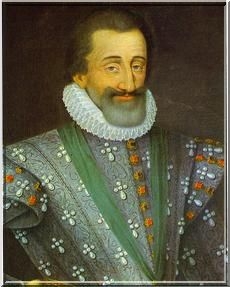
CSI (Crime Scene Investigation) meets French history. DNA testing is being used to examine historical evidence in new ways. A recent study brings techniques of forensic science to examine the alleged remains of French King Henri IV.

henriiv-portrait

Scientists studied an exhumed head and identified it as King Henri IV’s. They then compared DNA samples from the head with those from a handkerchief, supposedly soaked in the blood of King Louis XVI at his 1793 execution. The DNA from both samples shared traits that suggest that the samples are indeed related, according to the scientists.

Le Monde reports on this story in French, while the BBC provides a report in English.

The study’s results were published in an article in Forensic Science International.

Unfortunately, I will have to wait to evaluate the article, since my university’s library only gets access to this journal with a delay of several months.  This raises once again the issue of accessibility to academic research in the internet age.  For-profit database companies are strangling academic information diffusion by charging libraries exorbitant fees for subscriptions to their databases.

The online abstract from the article reads:

“A mummified head was identified in 2010 as belonging to Henri IV, King of France. A putative blood sample from the King Louis XVI preserved into a pyrographically decorated gourd was analyzed in 2011. Both kings are in a direct male-line descent, separated by seven generations. We have retrieved the hypervariable region 1 of the mitochondrial DNA as well as a partial Y-chromosome profile from Henri IV. Five STR loci match the alleles found in Louis XVI, while another locus shows an allele that is just one mutation step apart. Taking into consideration that the partial Y-chromosome profile is extremely rare in modern human databases, we concluded that both males could be paternally related. The likelihood ratio of the two samples belonging to males separated by seven generations (as opposed to unrelated males) was estimated as 246.3, with a 95% confidence interval between 44.2 and 9729. Historically speaking, this forensic DNA data would confirm the identity of the previous Louis XVI sample, and give another positive argument for the authenticity of the head of Henri IV.”

The usefulness of the research and evidence described in this abstract is unclear. It seems that the primary interest of these researchers is to prove the authenticity of the blood sample and the mummified head. If this is the goal, the research has little historical relevance and should be funded by the object’s owners.


Posted in Academic Publishing, Early Modern Europe, European History, European Wars of Religion, French History, French Revolution and Napoleon, French Wars of Religion, History of Medicine, History of Science, Noble Culture and History of Elites | Leave a comment

Sarkozy’s Maison de l’Histoire de France

The large-scale project to create a Maison de l’Histoire de France has been abandoned. Former French President Nicolas Sarkozy had proposed the cultural project and launched an initiative to create a new massive French historical museum. Sarkozy’s failed re-election bid and the Euro financial crisis both contributed to the recent decision of the government of François Hollande to abandon the Maison de l’Histoire de France project altogether.

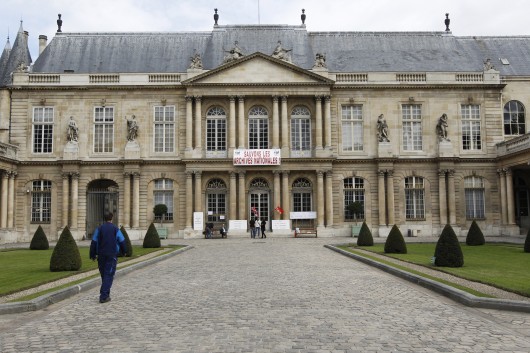
The Maison de l’Histoire de France was intended to regroup several existing museums, or parts of their collections, into a new museum that was to have been housed in the hôtel de Soubise, the current location of the Archives Nationales (AN). Archivists and staff from the AN organized a series of strikes against the Maison de l’Histoire de France during Sarkozy’s presidency.

archivesnationalesengreve

Many French historians and museologists complained that Sarkozy’s project had an overtly political agenda to present a right-wing vision of French history.

Le Monde reports on the end of the Maison de l’Histoire de France.

Posted in Uncategorized | Leave a comment

Notre Dame de Paris Celebrates 850th Anniversary

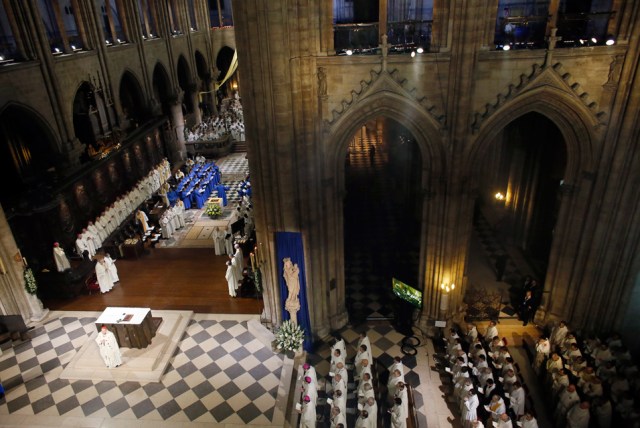
Église Notre Dame de Paris kicked off its 850th Anniversary celebration recently with a mass and procession. This is the first part of a year-long jubilee celebration of the construction of the church, which was begun in 1163 and continued into the fourteenth century.

NDP0024C

France 24 reports on the celebration in English.  Notre Dame cathedral has a website , entitled 850 ans de la cathédrale, on the jubilee celebrations which will continue throughout 2013.

notredame850

The Bibliothèque Mazarine at the Institut de France has an exhibition Les Livres de Notre-Dame, displaying books from the church.

Posted in Art History, Early Modern Europe, European History, French History, Paris History | Leave a comment

Reexamining the Thirty Years’ War

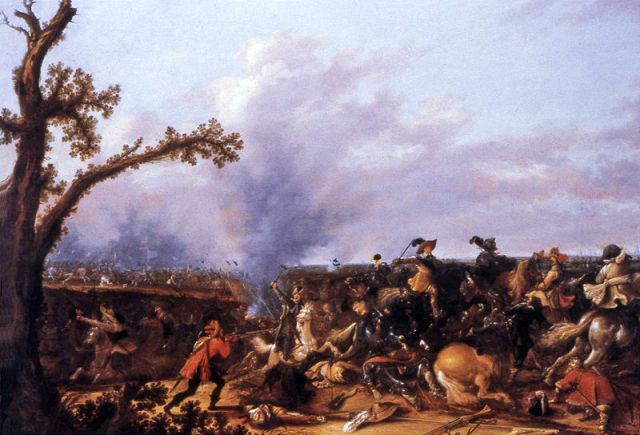
Professor Hervé Drévillon is presenting a public lecture in the series, Les Rendez-vous de l’Histoire : Faire campagne, de l’Antiquité à nos jours, sponsored by the École Militaire in Paris. Drévillon is the latest in a wave of historians to reexamine the prolonged violence of the Thirty Years’ War, a major conflict that devastated much of Germany and embroiled most European states in the mid-seventeenth century.

asselijn-lutzen

“Faire campagne pendant la guerre de Trente Ans”

Professeur Hervé Drévillon estprofesseur à l’Université Paris I et directeur du domaine “Histoire” à l’IRSEM

mardi 18 décembre 2012

Amphithéâtre Louis de 18h00 à 19h30
École Militaire, Paris

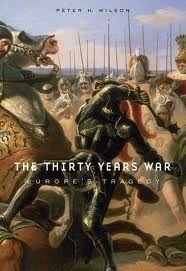
Historians interested in the European Wars of Religion may want to examine Hervé Drévillon’s books and articles, which treat aspects of seventeenth-century warfare and society. For those specifically intrigued by the Thirty Years’ War should read Peter Wilson’s The Thirty Years’ War: Europe’s Tragedy (2009).

wilson-thirtyyearswar-cover

Posted in Conferences, Early Modern Europe, European History, European Wars of Religion, History of Violence, War, Culture, and Society, Warfare in the Early Modern World | 1 Comment