GI Film Festival

The GI Film Festival will be held in Washington, DC next week, providing a venue for new war films.  The festival focuses especially on films presenting American soldiers’ perspectives on current and past wars.  Many of the films shown are independent films, including short films and documentaries.

The film festival’s directors are Brandon L. Millett and Army Reserve Maj. Laura Law-Millett, his wife.  According to the Washington Post: “We just had seen some films coming out that weren’t necessarily portraying GIs in the most favorable light,” Millett recalls. “We wanted to do something to address the situation. And we said, ‘We love movies, why not host a film festival?’ So that’s what we did.”

Historians and film scholars will question the choice of focusing so heavily on American perspectives on war, when multiple perspectives are crucial to understanding the complex experiences of warfare.

The Washington Post reports on the GI Film Festival.

NIU students in HIST 390 History and Film: War in Film will be interested in this article.
 

Posted in Historical Film, History in the Media, History of Violence, War in Film, War, Culture, and Society | Leave a comment

Basque Nationalism

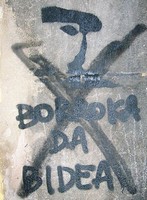
Basque nationalists have been seeking political recognition and cultural autonomy within France and Spain for decades.  Basque nationalist organizations, such as the ETA, have long sought outright independence through separatist violence, which has often been condemned as “terrorism” by the Spanish government.

Recent political shifts in Spain and France have led to changes in Basque nationalism, however.  The ETA separatists have pledged to end violence and several Basque nationalist parties now have political representation within Spain, leading to the possible end of civil conflict in the Basque region.

Meanwhile, mounting debts, economic weakness, and the Euro crisis have produced significant political changes within Spain. The Socialist François Hollande has just won the presidential election in France, promising changes in French politics and society.

Zoe Bray, who is an Assistant Professor at the Center for Basque Studies at the University of Nevada, Reno, has written a detailed analysis of the changing political landscape of Basque nationalism for World Politics Review.  Zoe is a friend and colleague of mine from the European University Institute in Florence, so I am pleased to read her most recent work.

Northern Illinois University students working on French and European history will be interested in Zoe Bray’s article.


Posted in Civil Conflict, European History, European Union, French History, History of Violence, Human Rights, Political Culture, Terrorism, War, Culture, and Society | Leave a comment

Human Trafficking in Europe

The European history of migration has yet to be written, but the European Union has undoubtedly created a new chapter in this complex history.  The Schengen Agreement has facilitated the free movement of peoples across borders between EU member nations and is one of the most popular aspects of the EU political structure.

Less well known is the massive increase in forced migration within the EU, as women and girls are trafficked and forced to work in the European sex industry.

Social scientists have been examining modern migration and human trafficking, but often using state-generated data. Historians are beginning to study the long-term history of migration (forced and voluntary) in new ways, so there should be new research emerging on patterns of European migration.

A new article in the EU Observer discusses the latest EU judicial report on human trafficking in Europe.

Posted in European History, European Union, Globalization, Human Rights, Women and Gender History | Leave a comment

Violence and Non-Violence in the Palestinian Conflict

Violence and non-violence have both been employed in the Palestianian conflict throughout all of the phases of the Palestinian struggle for national formation.

WBEZ’s Worldview interviews Wendy Pearlman, Assistant Professor of Political Science at Northwestern University and author of Violence, Nonviolence, and the Palestinian National Movement (Cambridge: Cambridge University Press, 2011).

Although Pearlman is a political scientist, she attempts to construct a historical analysis of violence in Palestine over the past century. Pearlman argues that Palestinians have historically utilized diverse political strategies that employ different mixtures of armed and unarmed resistance to Jewish nationalism and Israeli occupation.  Her study of non-violent resistance is relevant in analyzing the current wave of hunger strikes by Palestinians imprisoned in Israel.

Pearlman’s study also has broader implications for studying the history of violence beyond the Palestinian conflict.

Northern Illinois University students working on the history of violence, including those who have taken HIST 640 Religious Violence in Comparative Perspective will be interested in this interview and in Pearlman’s publications.

Update: NPR reports that non-violent protests such as hunger strikes are increasingly effective in the Palestinian conflict.

Posted in Civil Conflict, History of Violence, Political Culture, Religious Violence, Strategy and International Politics, War, Culture, and Society | Leave a comment

Anne Boleyn in Film

Anne Boleyn, and the Tudor English society that she lived in, continues to fascinate filmmakers and cinema audiences worldwide.

Anne was a key character in many historical films during the golden age of Hollywood. Films and television series on the Tudors have proliferated once again over the past decade.

Susan Bordo offers an analysis of portrayals of Anne Boleyn in film in the Chronicle of Higher Education. Her emphasis on “historical accuracy” and her conceptualization of “fact” and “fiction” are problematic, I think, but the article is interesting for its consideration of gender and representation in historical films depicting Tudor England.

Northern Illinois University students in HIST 390 History and Film and HIST 414 European Wars of Religion, 1520-1660 will be interested in this article, as well as Bordo’s forthcoming book.


Posted in Early Modern Europe, European History, European Wars of Religion, Historical Film, History in the Media, Noble Culture and History of Elites, Renaissance Art and History, Women and Gender History | Leave a comment

French and Greek Elections Shake up EU

This weekend’s French and Greek elections have shaken up European Union policy making, challenging the austerity measures that have been instituted in several EU member nations in an attempt to manage the Euro crisis.

NPR reports on the economic policy implications of the French and Greek elections.  NPR also has an article on the Greek elections.

Economist Paul Krugman argues in a New York Times op-ed that the elections should lead to a reversal in unproductive austerity policies across the EU.

Posted in European History, European Union, French History, Political Culture | Leave a comment

Hollande Wins French Presidency

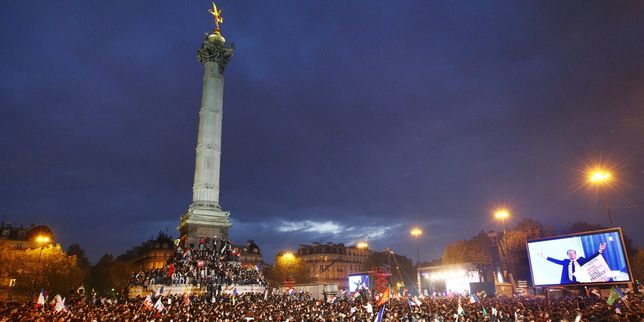
François Hollande has won the French Presidential Elections today, becoming the first Socialist President in France since François Mitterand stepped down in 1995. Hollande won by a narrow, but convincing margin: 51.7% to 48.3% (according to the latest results as reported by Le Monde). President Nicholas Sarkozy, who had sought reelection, has conceded defeat.

Hollande’s supporters celebrated in the streets and squares of Paris and across France.  Libération called the victory “a historic moment” in France’s history.

NPR reports on the election results in English, as does the BBC.

Meanwhile, The Independent reports on Sarkozy’s loss and the legacy of his presidency for the French nation.


Posted in European History, European Union, French History, Political Culture | Leave a comment

Swiss Guard Saved Rome

The legendary Swiss Guard of the Vatican is in the news today on the anniversary of the Sack of Rome of 1527.

NPR reports on the swearing in ceremonies of the Swiss Guard in Rome today.

Northern Illinois University students in HIST 420 The Renaissance and HIST 458 Mediterranean World, 1450-1750 will be interested in this article.


Posted in Early Modern Europe, European History, European Wars of Religion, History in the Media, Mediterranean World, Mercenaries, Renaissance Art and History, War, Culture, and Society, Warfare in the Early Modern World | Leave a comment

Hollande-Sarkozy Presidential Debate

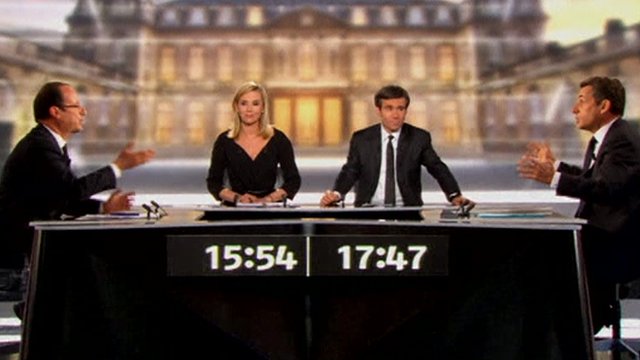
François Hollande and Nicolas Sarkozy squared off in a major presidential debate on French television this week, in preparation for this Sunday’s second round of the French presidential election.

Sarkozy, the incumbent president, has been trailing Hollande in the polls and desperately needed to win the debate decisively.

The debate certainly produced fireworks and verbal jabs between the two candidates, but most political commentators seem to feel that Sarkozy failed to land a knock-out blow. Indeed, despite the drama, the polls of French voters seem unchanged by the debate: Hollande is still leading at approximately 53% of the vote to Sarkozy’s 47%.

LeMonde and Libération both have coverage of the debate as well as the full video of the televised event.  The BBC and the New York Times provide reports in English.

NIU Students in HIST 311 Early Modern France and HIST 423 French Revolution and Napoleon will be interested in these reports.


Posted in European Union, French History, Political Culture | Leave a comment

Financial Cutbacks at European Universities

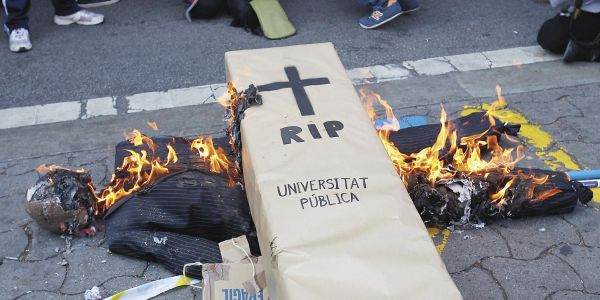
As European nations institute “austerity measures,” public universities are feeling the pain. For decades, European Union member states have promoted higher education as a right for all citizens. The Euro crisis and massive budget cuts are now threatening public higher education systems in many EU countries.

The implementation of “austerity measures” in Greece, Italy, Portugal, and Spain have already had a severe impact on public education in those countries. According to the Chronicle of Higher Education, “Institutions are trimming costs wherever they can. The University of Barcelona has eliminated budget allocations for the preservation of old books and manuscripts, although Adelaida Ferrer, the university’s head librarian, says she is able to authorize spending on a selective basis. Summer temperatures in Barcelona can reach the 90’s and, without proper care for the materials, the sweltering humidity can be especially damaging. In a cost-cutting measure, most of the university’s 16 libraries were closed over the Easter break, leaving only two open at a time, and subscriptions to some 500 of the library’s 15,000 publications have been canceled.”

Faculty salaries and work conditions have also suffered. The Chronicle of Higher Education reports: “António Costa Pinto, a political scientist and a research professor at Lisbon’s Institute of Social Sciences, says that throughout Portugal, professors have endured salary cuts amounting to 30 percent of their net income over the past two years. The country is quickly losing the ability to attract the best faculty and retain the best graduates, and he fears that it is falling into what he calls ‘a sort of third-world pattern.'”

The Chronicle of Higher Education reports on the financial cutbacks at European universities. The Chronicle of Higher Education may be accessed through databases at most university and public libraries.

Posted in Education Policy, Humanities Education, Information Management | Leave a comment