Attacks on Teachers

I enjoyed working with Chicago-area high school history teachers all this morning, discussing the European Wars of Religion.  During a coffee break and lunch break, I heard about their concerns about the current attacks on teachers and the teaching profession across the United States.

The Madison protests have certainly helped focus attention on the plight of teachers and other public workers who are being targeted for layoffs, cuts in benefits, and stripping of union rights.  Similar “reforms” and protests are now spreading to Indiana, Ohio, and other states.

The New York Times has a story today dealing directly with teachers’ sense of being under fire.

Posted in Education Policy | Leave a comment

Newberry Teachers’ Consortium

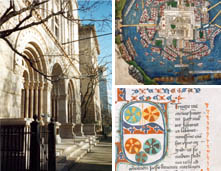
I was thrilled to lead a seminar today at the Newberry Library as part of the Newberry Teachers’ Consortium.  The NTC seminar series offers high school teachers a chance to work with university professors on specific topics of relevance for their classroom teaching.

My seminar explored the theme of “Reformers, Heretics, and Soldiers: European Wars of Religion, 1520s-1660s,” discussing religious violence through Andrew Cunningham and Ole Peter Grell’s notion of the period as “an apocalyptic age.”  We then focused on the experience of religious conflict during the French Wars of Religion, examining the Saint-Médard riots, massacre of Vassy, Saint Bartholomew’s Day Massacre, and the Edict of Nantes.

I thoroughly enjoyed working with a great group of high school teachers from the Chicago suburbs at this NTC seminar.

High school teachers in the Chicago and northern Illinois areas should check out the Newberry Library’s website for the NTC seminar schedule and for additional opportunities for teachers.


Posted in Early Modern Europe, European History, French Wars of Religion, Humanities Education, Religious Violence, The Past Alive: Teaching History, Warfare in the Early Modern World | 2 Comments

So you say you want a revolution?

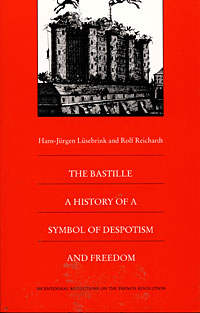
“To those who would change the world, the [French] Revolution still offers a script continuously elaborated and extended—in parliaments and prisons; in newspapers and manifestoes; in revolutions and repressions; in families, armies, and encounter groups. … To those who would interpret the world, it still presents the inexhaustible challenge of comprehending the nature of the extraordinary mutation that gave birth to the modern world.” — Keith Michael Baker and Steven Laurence Kaplan, “Editors’ Introduction,” in Hans-Jürgen Lüsebrink and Rolf Reichardt, The Bastille: A History of Symbol of Despotism and Freedom, trans. Norbert Schürer (Durham: Duke University Press, 1997), xiv.

This quote comes from our reading for this week’s graduate discussion in HIST 523 French Revolution and Napoleon.  See the book description at Duke University Press.

Posted in Comparative Revolutions, French Revolution and Napoleon | Leave a comment

Revisiting the Military-Industrial Complex

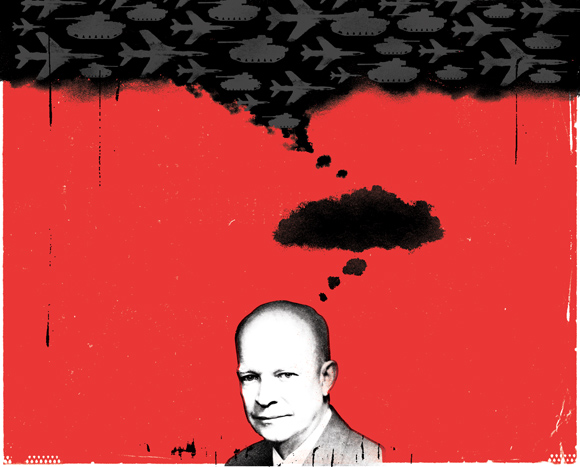
Andrew J. Bacevich has written a brilliant piece on the Military-Industrial Complex, setting Eisenhower’s famous Farewell Address into a broader perspective on “permanent war.”

Bacevich, a Professor of History at Boston University, has emerged as one of the most prominent voices for significant reform of military policies and budgets in the United States. He has also called for a thorough reconsideration of military strategies in Iraq and Afghanistan, advocating ending the counter-insurgency approach to warfare in those conflicts.

Read Bacevich’s article in The Atlantic (January/February 2011).

Posted in History of Violence, Uncategorized, War, Culture, and Society | Leave a comment

Declaring Rights

Some thoughts on human rights and political rights as I prepare for my HIST 423 French Revolution and Napoleon discussions this week on the constitutional guarantees debated and passed by the National Assembly in August and September 1789….

Consider the first three articles of the Declaration of the Rights of Man and Citizen (26 August 1789), here in a translation by historian Lynn Hunt:

1. Men are born free and remain equal in rights. Social distinctions can be based only on common utility.

2. The purpose of all political association is the preservation of the natural and imprescriptible rights of man. These rights are liberty, property, security, and resistance to oppression.

3. The principle of all sovereignty resides essentially in the nation. No body and no individual may exercise authority which does not emanate expressly from the nation. …

The concepts of freedom, equality, rights, political association, and sovereignty enunciated here seem very far indeed from those experienced in modern “democratic” societies.  In some ways rights have greatly expanded (note the male gendering of rights in this document), but other revolutionary concepts of rights have been discarded.  Are social distinctions really based on “common utility” today?  What is the status of the “public” in modern “democracies”?  Would modern political parties fit with revolutionaries notions of “political association”?  Do modern notions of popular sovereignty agree with the revolutionary concepts of sovereignty and authority?

Certainly, we would not want to return to eighteenth-century conceptions of human and political rights.  But, in this time of revolutions in the Arab world and popular demonstrations in Wisconsin, reconsidering the French Revolution’s debates over constitutional guarantees is useful.  After all, the French Revolution’s formulation of rights has influenced modern human rights (including the UN Universal Declaration of Human Rights) more than the American Bill of Rights.

An online version of the full text of the Declaration of the Rights of Man and the Citizen is available at the Center for History and the New Media’s site on Liberty, Equality, Fraternity.


Posted in Comparative Revolutions, French Revolution and Napoleon | Leave a comment

Should Guns be Allowed on Campuses?

A number of states are currently debating bills that would allow handguns to be carried on university campuses.

Professors and students at universities and colleges across the United States should be concerned about such proposed legislation.

The 14 February shootings at Northern Illinois University suggest the limited possibilities of such measures effectively responding to armed violence on university campuses.  Armed NIU police responded within minutes, but the shooter had already taken his own life.  Had the professor in the classroom been armed, would a shootout really have saved lives?  Or, would more students have been caught in a crossfire?

Some gun rights proponents in Illinois advocated legislation to allow handguns on campuses in the immediate aftermath of the NIU shootings, but no legislation has yet been passed here.

I believe that the vast majority of professors and students would feel less safe if handguns were permitted on university and college campuses.

Read about this issue at the New York Times.

Posted in Education Policy, History of Violence, Northern Illinois University | Leave a comment

Friendship in Renaissance Florence

I am enjoying reading Dale Kent, Friendship, Love, and Trust in Renaissance Florence (Cambridge, MA: Harvard University Press, 2009), in preparation for discussions with my HIST 420 The Renaissance students this week.

For a book description, see Amazon.com.


Posted in Current Research, Early Modern Europe, European History, Renaissance Art and History | Leave a comment

Careers for History Majors: A Panel Discussion

Careers for History Majors

A Panel Discussion Featuring NIU History Alumni


Wednesday 2 March, 12:30-2:00 p.m., Campus Life 100

Northern Illinois University

“Think teaching is all you can do with your history degree? Think again!”

Undergraduate students at Northern Illinois University will be especially interested in this upcoming discussion of career possibilities for history majors and minors.

For further information, see the website of the Department of History.

Posted in Humanities Education, Northern Illinois University | Leave a comment

Beware of For-Profit Education

For-profit education has grown exponentially over the past two decades, largely due to subsidies from taxpayers in the form of federal student loans.  In this time of budget cutting, federal dollars should no longer go to for-profit “educational” institutions.  Students who are thinking of taking courses or pursuing degrees should explore community colleges and public universities, which offer superior education and often at  lower prices.

Tom Harkin wrote this succinct, but powerful, critique of for-profit education last fall in Forbes.

Posted in Education Policy | Leave a comment

Attacks off Somalia and the History of Piracy

Another piracy attack off the coast of Somalia has resulted in renewed questions about the dynamics of modern piracy and possible approaches to curbing Somalian pirates’ activities.  Some are now advocating aggressive naval and military intervention by the United States and European nations, sometimes using historical allusions to the so-called Barbary Wars of the early 1800s to buttress their arguments.

Read more about this issue in the New York Times.


Posted in History in the Media, History of Violence, Piracy | Leave a comment