Russian military forces have launched a major invasion of Ukraine, escalating the civil conflict in eastern Ukraine into a broader Ukraine War. President Putin has made a televised announcement of a “special military operation” in Ukraine, effectively declaring war.
Russian forces have bombarded strategic sites in Ukraine, including airstrikes and/or missile strikes at Ukrainian airports and air bases. BBCNews reports that “Missile strikes and explosions have been reported in several parts of Ukraine, including Kyiv and Kharkiv.”
Russian airstrike at Chuguyev Airport, 24 February 2022. Photo: Agence France-Presse
These airstrikes seem to be supported by artillery bombardments in eastern Ukraine.
Meanwhile, Russian armed forces have crossed the Ukrainian border at multiple points. BBC News confirms that Russian military units have invaded Ukraine from their positions in Russia, Crimea, and Belarus.
The Medieval and Early Modern Studies Seminar at Montclair State University is hosting a lecture by Francesco Toto on “Rousseau and Revolution in the Second Discourse.”
Graduate students in pre-modern History at Northern Illinois University may be interested in this online lecture.
Here is the announcement from the Medieval and Early Modern Studies Seminar:
Montclair State University’s interdisciplinary Medieval and Early Modern Studies Seminar (MEMS) is pleased to announce a Zoom lecture on Wednesday, February 23 at 10am (EST)
Francesco Toto, Rousseau and Revolution in the Second Discourse
Wednesday, February 23, 10-11am, on Zoom at this link
Francesco Toto is Assistant Professor at the University Roma Tre, where he works in anthropological, ethical, and political thought. His research has been focused on Hobbes, Spinoza, Helvétius and Rousseau, but he has also been interested in other well-known (Adam Smith, Sade) and lesser-known (Jean Meslier, Dom Deschamps) authors. He is the author of two books, one on Spinoza (L’individualità dei corpi. Percorsi nell’ Etica di Spinoza, Milan, 2015), and one on Rousseau (L’origine e la storia. Il Discorso sull’ineguaglianza di Rousseau, Pisa, 2019); has published many articles and book chapters in Italian, French, English and Spanish; and has edited several books and journal issues. He is a member of the research group focused on the topic of “Compassion in Action: Theories of Sympathy and Construction of Otherness in the Long Eighteenth Century,” and co-directs the journal “Consecutio rerum” (www.consecutio.org).More information at the MEMS website.
The current Ukrainian Crisis is being analyzed by security studies and international relations analysts primarily through the lens of recent Russian History and Eastern European Studies (using area studies approaches).
War and Society Studies may offer some different perspectives on this crisis. By considering competing definitions of modern warfare and diverse examples of wars over a long time period, historians of War and Society can avoid simple analogies and develop more nuanced understandings of long-term developments in international relations and warfare.
Russian military exercises near the Ukrainian border, February 2022. Photo: Euronews.
I am encouraging Northern Illinois Univeristy undergraduate students in my current course, HIST 384 History of War since 1500, to consider how the history of war that we are studying in the course relate to the Ukrainian Crisis. Numerous aspects of modern warfare that we are examining are shaping the current crisis: nationalism, mobilization, conscription, barracks, civil-military relations, mass armies, partisan war, social terrorism, combined-arms tactics, logistical systems, war news, propaganda, limited war, and laws of war.
NIU Honors students who took my course last semester on HIST 399 Communal Conflict: Civil Wars in World History will be able to use their knowledge of Violence Studies and Comparative Civil Conflict to assess the developing Ukrainian Crisis. We studied civil conflict, religious conflict, colonial conflict, civil warfare, revolutionary war, nationalism, civil-military relations, separatism, paramilitaries, guerrilla warfare, ethnic conflict, atrocity, conflict resolution, and peacemaking.
NIU undergraduate students in my course on HIST 110 History of the Western World I are investigating the history of the concept of the West. The Ukrainian Crisis shows how the definitions of Europe and the West are still debated and contested. Can Ukraine be considered European? Some Ukrainians want their nation to join the European Union, while some ethnically Russian Ukrainians would rather join the Russian Federation. President Putin has challenged the sovereignty of Ukraine and even questioned whether it is a nation-state at all. Can the Russian Federation be considered part of the West? Ever since the reign of Peter the Great, Russian leaders have often asserted that Russia is part of Europe, but other European states have normally disputed such claims. The Ukrainian Crisis exposes the uncertain future of Ukraine and the idea of Europe, yet it has paradoxically renewed the sense of unity among members of the NATO alliance and of the European Union, arguably reinforcing the notion of the West.
I encourage my students to follow the developing Ukrainian Crisis and consider how their historical studies can provide different perspectives on current events.
Several major research institutes and think tanks offer analysis of current events through the lens of War and Society Studies, Peace and Conflict Studies, Violence Studies, International Relations Studies, and related methodologies:
Some journals of international relations provide analyses of current conflicts: Foreign Affairs, International Affairs (UK), and Le Monde diplomatique (France).
Several specialized news media services are providing in-depth reporting on the Ukrainian Crisis. On international relations and diplomacy, see especially: Foreign Policy.
Major newspapers and magazines with robust foreign affairs and current conflicts divisions offer in-depth reporting, including: Al Jazeera (Qatar), Atlantic, BBC (UK), Corriere della Sera (Italy), Democracy Now!, DW (Germany), The Economist (UK), Euronews (Europe), France 24 (France), Guardian (UK), Le Monde (France), Libération (France), Mother Jones, The New York Times, NPR, El Païs (Spain), Politico, Reuters (UK), Der Spiegel (Germany), and Washington Post.
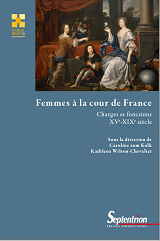
Tracy Adams has published a review of a collective volume on Femmes à la cour de France, edited by Caroline zum Kolk and Kathleen Wilson.
I was pleased to write an essay for this collective volume on noblewomen from the Montmorency family during the French Wars of Religion.
The full citation for the book is:
Caroline zum Kolk and Kathleen Wilson, eds., Femmes à la cour de France: Charges et fonctions (XVe – XIXe siècle). Lille: Presses Universitaires du Septentrion, 2018. 406 pp. Illustrations. € 32.00 (pb). ISBN 9782757423615.
Tracy Adams describes the historical context of women at the early modern French court: “During the last decades of the fifteenth century, the number of women at the French royal court began to increase, and female roles became more specialized and prestigious, with new opportunities for upward mobility. Entourages of richly appareled attendants came to form an essential component of the queen’s, and, therefore, the king’s, grandeur. The phenomena were not lost on contemporary observers, who expressed awe at the privileged positions and liberty of word and movement that female members of the court enjoyed.”
Adams also discusses the historical scholarship on royal and noblewomen at the French court: “As the editors of this volume note, a long and diverse historiography attests to a steady fascination for the queens, regents, and princesses who inhabited the great cours des dames, and a number of these familiar figures—Catherine de Médicis, Anne of Austria, Marie-Antoinette—make brief appearances here. However, they are not the main characters in the work under review. Instead, this study foregrounds the dames and demoiselles d’honneur (as several of the essays make clear, the names refer to very specific positions, so I leave them in the original), chambermaids, spouses of ministers, and relatives of the royal family who served them. In addition, rather than biographical narratives of these women, the essays offer analyses of their official tasks and duties, the better to understand how they fit into the larger court system. The volume therefore contributes to a still budding scholarship that takes the careers of female courtiers and the positions they occupied seriously, studies like Jan Hirschbiegel and Werner Paravicini’s 2007 collection, Das Frauenzimmer, and Nadine Akkerman and Birgit Houben’s The Politics of the Female Households from 2013.[1] Moreover, as the editors also note, in contrast with their Anglo and German counterparts, French historians did not begin to produce court studies until the first decade of this century. The sixteen essays collected in this volume, focusing on female courtiers at the French royal court, fill a significant gap.”
Northern Illinois University offers Undergraduate Research Funding to current undergraduate students through several different programs of the Office of Student Engagement and Experiential Learning. (OSEEL).
Many NIU History Majors and Minors have won funding in the past to support their research projects related to HIST 495 Senior Capstone and other History courses.
If you are interested in competing for undergraduate research funding, feel free to contact me via email to discuss your research project prior to submitting your application.
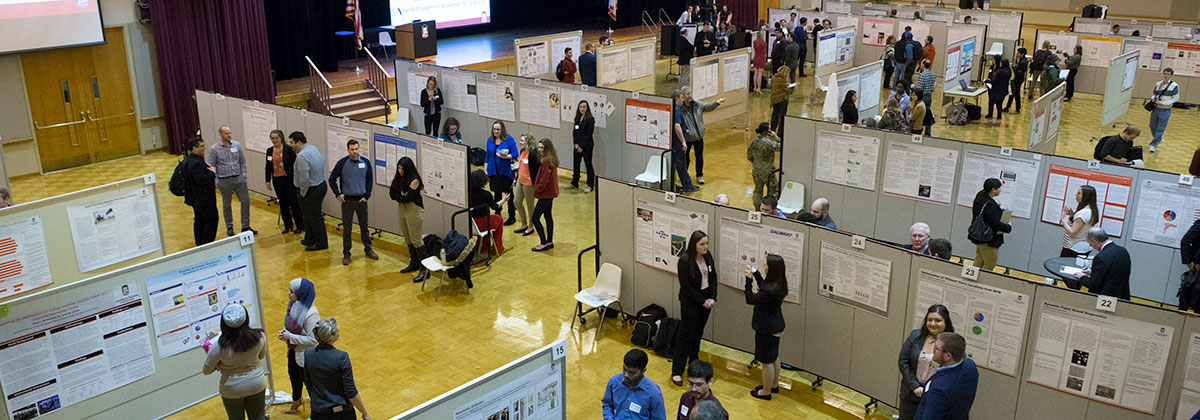
Conference on Undergraduate Research and Engagement, Northern Illinois University. Photo: Northern Illinois University
Funding for Summer/Fall 2022 Undergraduate Research Projects Available
Applications for the summer/fall 2022 Student Engagement Fund (SEF) and Research, Engagement and Academic Diversity (READ) Grant are currently being accepted and have a due date of Monday, March 21. SEF and READ support projects that consist of undergraduate students working on faculty-mentored research, community-based projects and projects focused on social justice and diversity. Student and faculty submissions are considered.
Recipients of the funds are provided financial support of up to $2,500 for research-related expenses including project supplies and conference registration (for the student). Additionally, students working on the project are eligible for up to $1,200 in compensation for their work as an undergraduate research assistant.
Open to all colleges. Visit OSEEL.niu.edu for more information and to apply.
The Smithsonian Institute is currently hiring a Supervisory Historian at the National Portrait Gallery in Washington, D.C.
The National Portrait Gallery provides a brief history: “The National Portrait Gallery was authorized and founded by Congress in 1962 with the mission to acquire and display portraits of individuals who have made significant contributions to the history, development, and culture of the people of the United States. Today, the Smithsonian’s National Portrait Gallery continues to narrate the multi-faceted and ever-changing story of America through the individuals who have shaped its culture. Through the visual arts, performing arts, and new media, the Portrait Gallery presents poets and presidents, visionaries and villains, actors and activists whose lives form our national identity.”
National Portrait Gallery, Washington, D.C.
The job description for the Supervisory Historian outlines the following duties:
Leads all historical research and interpretation; monitors the historical accuracy of the work produced by the History Department.
As a professional scholar, authors articles and books; responds to letters of inquiry on historical topics from the public, researchers, and scholars.
Oversees the evolution of America’s Presidents; develops special temporary exhibitions on American history, art, and biography; selects artworks to create educational and visually stimulating exhibitions.
The full job description is available online at USAJobs.gov.
I am happy to report that my review of Colin Rose’s A Renaissance of Violence: Homicide in Early Modern Italy has just been published on H-Italy.
“One of the most brazen murders in Bologna’s history occurred on September 8, 1652, when Giacinto Pungelli, a sotto-auditore (assistant judge) in the Tribunale del Torrone (Tribunal of the Tower), was gunned down as he left the church of the Celestine Convent following mass. The judges and notaries of the Tribunale del Torrone conducted an extensive investigation of this assassination of one of their own, interrogating ninety-seven witnesses and uncovering a conspiracy and a long-simmering vendetta. The trial records reveal that ‘Pungelli’s death was a flagrant attack on court authority, but it occurred in the context of partisan rivalry and anti-papal feeling’ (p. 185).”
“A Renaissance of Violence constructs an institutional history of the Tribunale del Torrone, a criminal court established by the Papal States to prosecute homicides and other serious crimes in the city and province of Bologna. …”
My full book review of Colin Rose’s A Renaissance of Violence is available as a .pdf file from H-Italy:
The Medici Archive Project is offering several new short-term fellowships for graduate students in art and architectural history to conduct archival research in Florence.
I previously served as a NEH Fellow with the Medici Archive Project and had an amazing experience doing collaborative research in the Archivio di Stato di Firenze with the Medici Archive Project.
Here is the announcement from the Medici Archive Project:
Thanks to the continued support of the Samuel H. Kress Foundation, The Medici Archive Project is offering two fellowships for graduate and pre-doctoral students to undertake specialized archival research on-site at the Archivio di Stato as well as other archival collections housed in Florence and across Tuscany.
These fellowships are especially aimed to provide graduate students in art and architectural history with the opportunity to examine original source materials, receive scholarly guidance from MAP Staff, present their findings at MAP-sponsored conferences and workshops, and enroll in MAP’s Paleography and Archival Studies Seminar.
Both fellowships must take place within a period of no less than three months from 15 May 2022 to 23 December 2022.
The stipend is USD 8,000. Fellows will be responsible for their travel and accommodations in Florence.
Eligible candidates must either have American citizenship or be enrolled in graduate programs at universities in the United States.
There is no application form for this fellowship.
Instead, suitable candidates are invited to send via email to education@medici.org, the following documents in a single PDF by 2 APRIL 2022:
1) A cover letter.
2) A short essay (no more than two pages) on how the candidate’s topic will benefit from archival research.
3) A curriculum vitae.
4) The name and email address of a scholar in the field, preferably the candidate’s supervisor, who can comment on the applicant’s qualifications and the merits of the research proposal (please do not include letters of recommendation with the application).
To apply for these fellowships, the following material should be sent electronically to education@medici.org.
Please do not include supplementary material (publications, papers, syllabi, etc.).
All materials must be submitted in English.
For further information, contact education@medici.org.
Premodern critical race studies is a rapidly expanding field within premodern studies. Many historians of the Medieval and Early Modern World are investigating the histories and languages of race and racism in premodern contexts.
The Center for Renaissance Studies is currently hiring a Postdoctoral Fellow in conjunction with its Seeing Race Before Race project.
Recent Ph.D.s in premodern History and related fields may be interested in applying for this postdoctoral fellowship.
Here is the announcement from the Center for Renaissance Studies at the Newberry Library:
The Newberry Center for Renaissance Studies seeks an early career scholar in Premodern Critical Race Studies to serve as a Public Humanities Postdoctoral Fellow for one year (with the possibility of renewal for a second year pending grant funding) to support Seeing Race Before Race, a multi-year project including an exhibition, public and scholarly programming, a publication, and digital initiatives. The Fellow will begin in Fall 2022, one year before the exhibition launches in Fall 2023.
The Public Humanities Fellow will be responsible for ensuring that all exhibition assets align with prevailing methods of premodern critical race studies. This position will assist in creating and editing exhibition texts; acting as the internal and external communications lead for the project; managing exhibition programming work; developing digital resources; and liaising with departments across the Newberry. The Fellow will report to the Director of the Center for Renaissance Studies.
This position requires a PhD in a humanities field related to medieval, early modern, colonial, Atlantic World, or Indigenous studies from 1100-1800, with expertise in critical race studies preferred. Preference may be given to candidates whose scholarly work or career has been focused on public history, museums, libraries, and archives.
Please email your cover letter, resume, and contact information for three references to Human Resources at jobs@newberry.org. In the email’s subject, please note the position you are applying to. Please combine all requested documents into a single PDF document and submit as an email attachment. For more information, please visit the Newberry’s Employment page here: https://www.newberry.org/employment
Applications will be reviewed beginning March 8, 2022, on a rolling basis, and the review will continue until the position is filled.
Please direct all questions about the position to renaissance@newberry.org
A Summer Skills Seminar on Reading Archival Latin is being organized by the Mediterranean Seminar for Summer 2022.
Graduate students and researchers interested in learning to read Latin manuscripts are encouraged to apply for this seminar.
The Mediterranean Seminar announcement reads:
The Summer Skills Seminar, “Reading Archival Latin” will be held via Zoom from Friday, 27 May, and Tuesday to Thursday, 31 May to 2 June 2022 from 10am to noon and 1–3pm MDT.
Course overview
The Archive of the Crown of Aragon (ACA) in Barcelona contains one of the largest and richest archival collections relating to medieval Europe, comprising hundreds of thousands of documents, most from the twelfth to fifteenth centuries, and including financial records, royal letters, administrative documents, trial records, treaties, and many other genres. The documentation can be used for a whole range of topics including social, economic, political, institutional, gender, diplomatic, cultural and religious history.
The territories of the Crown of Aragon included much of the Iberian Peninsula, parts of southern France, Sicily and southern Italy, parts of Tunisia and Greece, the Balearics, Sardinia and other Mediterranean islands. It had a large and diverse urban population, was highly integrated into Mediterranean and European trade systems, and had significant populations of Muslims and Jews. It developed one of the earliest and most robust chanceries of medieval Europe; the collections of which have weathered the vicissitudes of history all but intact. Much of the documentation has yet to be used by historians. The skills seminar will focus on the Latin-language documentation (from the eleventh to the mid-fourteenth centuries) in the archive’s collections.
This four-day intensive skills seminar will focus on a hands-on introduction to reading unedited Latin documents from a variety of the archive’s fonds and provide participants with an overview of the collections of the ACA, including access to online resources and reproductions.
Topics will include: manuscript abbreviations, dating systems, place and personal names, and research resources and techniques. As much as possible the content will be catered to participants’ interests and needs. Medievalists of all disciplines, graduate students, and qualified undergraduate students, as well as library and archival professionals are encouraged to apply.
The goal is to provides attendees with a solid preparation for conducting work remotely via the PARES web portal and on-site at the ACA. Participants will find the skills and techniques which the course focuses on useful not only at the Archive of the Crown but at other medieval archives across Spain and Europe.
This Summer Skills Seminar builds on the experience of earlier editions, which participants signaled as “transformative” in terms of their research, and which provided them with an opportunity to network and lay the foundations for future collaborations.










 Brian Sandberg: Historical Perspectives