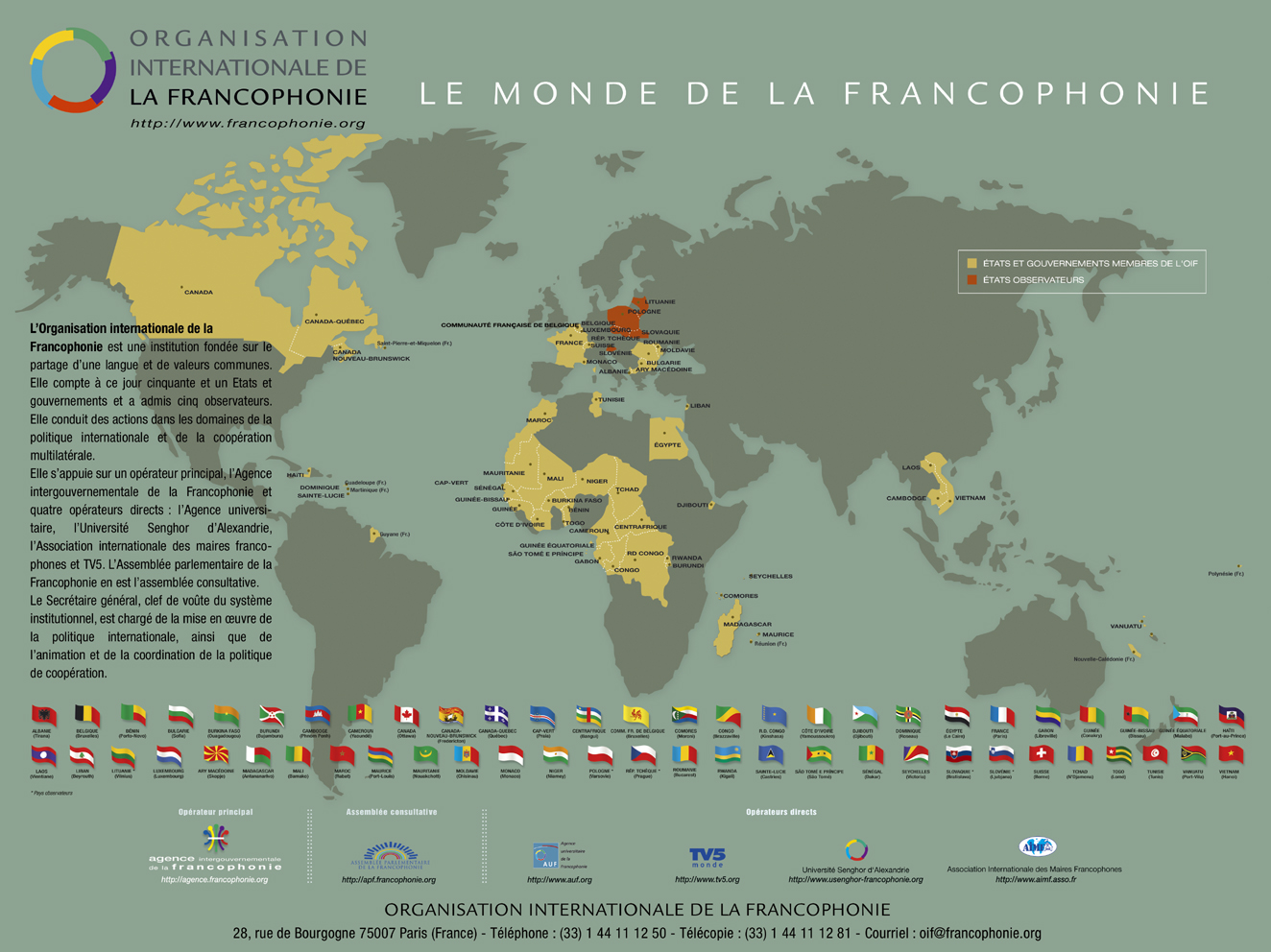
Undergraduate and graduate students interested in European history, Atlantic World history, African history, and World history may need to pursue French language studies.
Students at Northern Illinois University and in the Chicago area who are looking for French language classes may want to take online courses through the City Colleges of Chicago.
Truman College is offering synchronous online courses via Zoom during Spring 2022 and other colleges appear to be offering courses, too.
For more information, see the City Colleges of Chicago website or contact the French language faculty members.
The Center for Renaissance Studies at the Newberry Library will host a Summer Institute in Italian Paleography during Summer 2022.
This is a fantastic opportunity for graduate students who are interested in Renaissance studies, Italian history, and early modern European history.
Graduate students in History and World Languages and Cultures at Northern Illinois University should especially consider applying for this Summer Institute, since NIU is a member of the Center for Renaissance Studies Consortium.
Here is the announcement from the Center for Renaissance Studies:
Summer Institute in Italian Paleography
July 11-22, 2022 Newberry Library
Application Deadline: March 15, 2022
CRS is pleased to announce that applications are now being accepted for this two-week residential course, which will be directed by Maddalena Signorini, Università degli Studi di Roma “Tor Vergata.”
The course offers an intensive introduction to reading and transcription of handwritten Italian vernacular texts from the late medieval through the early modern periods. This graduate-level course is taught in Italian and requires advanced language skills.
While the emphasis is on building paleographical skills, the course also offers an overview of materials and techniques, and considers the history of scripts within the larger historical, literary, intellectual, and social contexts of Italy. Participants practice on a wide range of documents, including literary, personal, legal, notarial, official, and ecclesiastical works. The course provides insight into the systems of Italian archives and allows participants to work with inventories, letters, diaries, and other primary source materials from the Newberry Library.
The institute enrolls 15 participants by competitive application. We welcome applications from advanced graduate students and junior faculty from universities, from professional staff of libraries and museums, and from qualified independent scholars. First consideration will be given to applicants from Center for Renaissance Studies Consortium institutions.
The Detroit Institute of Arts is searching for a new Editor.
This job could be ideal for a candidate with a M.A. in History or Art History, specializing in Renaissance studies or other periods covered by the collections of the Detroit Institute of Arts (DIA).
The DIA describes the Editorial position: “Under the direction of the Director of Exhibitions, contributes to the long-range strategic planning of museum publications, manages museum-wide publication projects and edits high quality museum publications.”
Here is the full job announcement from the Detroit Institute of Arts:
Martin Luther King, Jr., commenting in 1963 on the “minority of misguided senators” who would use the filibuster to block voting rights legislation:
The Washington Post provides a brief analysis of King’s comments, which were given in a television interview on Press Conference U.S.A. During that interview, King was asked about John F. Kennedy’s proposed civil rights act.
In an extended response to a question about the civil rights bill, Martin Luther King, Jr. stated: “I think the tragedy is that we have a Congress with a Senate that has a minority of misguided senators who will use the filibuster to keep the majority of people from even voting. They won’t let the majority senators vote. And certainly they wouldn’t want the majority of people to vote, because they know they do not represent the majority of the American people. In fact, they represent, in their own states, a very small minority.”
As voting rights and the filibuster are once again connected in United States politics, it is a perfect time to revisit Martin Luther King’s perspective on the filibuster’s role in denying voting rights to African Americans and other groups who have been denied civil rights.
The Washington Post reports on Martin Luther King, Jr.’s comments and provides the video here:
The Center for Renaissance Studies is hosting an online discussion of Race in the Museum: Representing the Diversity of the Early Modern World.
This discussion will interest early modern scholars working in pre-modern race studies, early modern history, public history, and museum studies.
Here is the announcement from the Center for Renaissance Studies:
CRS is pleased to announce the next conversation in the Race in Dialogue series.
This session features curators Stephanie Schrader (J. Paul Getty Museum, Los Angeles) and Heather Hughes (Davis Museum, Wellesley College) in conversation about their own curatorial work that engages with Renaissance and Baroque materials representing people across the globe. What is the role of the curator, as both a scholar and public humanist, in the field of premodern critical race studies today? How do exhibitions today engage with different communities and audiences?
This program is a part of Race in Dialogue, a series of virtual conversations on medieval and early modern critical race studies and Indigenous studies. Each hour-long session will feature a conversation between scholars across professional generations about foundational works and the current state of the field.
The Renaissance Society of America is hosting an online lightening talk series on Rethinking the Renaissance Archive during Spring 2022.
This series is being organized by the RSA’s Graduate Student Advisory Committee. Here is their call for proposals:
The Renaissance Society of America’s Graduate Student Advisory Committee is pleased to announce that our Online Graduate Student Lightning Talk Series will continue in 2022. The first session will be held on Thursday, February 24.
This year’s theme is “Rethinking the Renaissance Archive.” We invite participants, from various disciplinary backgrounds, to think about the nature of the Renaissance archive. Specifically, what constitutes a Renaissance archive and how can it be reimagined to account for a broader variety of experiences, traditions, ideas, and practices across time and space?
Abstracts of 150 words are due by Sunday, January 16. Please submit your name, email address, affiliation, proposed title, and short abstract by clicking here and answering the questionnaire at the bottom of the page. Participants will be notified by Monday, January 24.
Lightning talks are concise oral presentations of five minutes, which may or may not include visual aids. Presentations could be based on:
• An argument from your work (BA/MA thesis, PhD dissertation, or article)
• Initial findings from side projects, or work in progress
• Archival findings
• Pedagogical questions
• Field/experience-based observations, and/or
• Any archive-related topic that might stimulate discussion.
This event is open to all graduate students but preference will be given to RSA graduate student members. Please email the RSA with questions.
Best of luck,
RSA Graduate Student Advisory Committee
Farah Bazzi Rachel Carlisle Bar Leshem Thomas Santa Maria Wenrui Zhao
The Ohio State University will be hosting a NEH Summer Seminar on Printing and the Book during the Reformation: 1450-1650, during Summer 2022.
This seminar is a great opportunity for university professors and independent researchers interested in the Reformation, print culture, history of the book, and early modern European history.
Here is the announcement from the National Endowment for the Humanities:
NEH Summer Seminar for College and University Teachers
Printing and the Book During the Reformation: 1450-1650
Please consider applying to the forthcoming National Endowment for the Humanities Summer Seminar for College and University Teachers on “Printing and the Book During the Reformation: 1450-1650.” The seminar will examine continuity and change in the production, dissemination, and reading of Western European books during the 200 years following the advent of printing with movable type. Seminar participants will consider the governing question of whether the advent of printing was a necessary precondition for the Protestant Reformation, and ways in which elements such as book layout, typography, illustration, and paratext (e.g., prefaces, glosses, and commentaries) shaped the responses of readers. Employing key methods of the History of the Book and the History of Reading, our investigation will consider how the physical nature of books affected ways in which readers understood and assimilated their intellectual contents. This program is geared to meet the needs of teacher-scholars interested in the literary, political, or cultural history of the Renaissance and/or Reformation, the History of the Book, the History of Reading, art history, women’s studies, religious studies, bibliography, print culture, library science (including rare book librarians), mass communication, literacy studies, and more.
This seminar will meet from 4 – 30 July 2022 at The Ohio State University in Columbus, OH. The Rare Books and Manuscripts Library at OSU preserves more than 3,500 books printed before 1650, with exceptional strengths in the British and Western European Reformations and early printing (including one hundred books printed before 1500). Named collections include the Harold J. Grimm Reformation Collection (which includes, among other treasures, more than 120 Luther sermons and treatises in Latin or German printed during his lifetime), the John Foxe and John Day collections (both among the finest in North America), and the James Stevens-Cox STC-sigla collection (mostly religious books so rare that the editors of the Short-title catalogue listed this as a named private collection).
Those eligible to apply include citizens of USA who are engaged in teaching at the college or university level and independent scholars who have received the terminal degree in their field (usually the Ph.D.). In addition, non-US citizens who have taught and lived in the USA for at least three years prior to March 2022 are eligible to apply. NEH will provide participants with a stipend of $3,450. Up to three spaces will be reserved for non tenure-track faculty.
The city of Chicago passed a tragic milestone recently, as the 800th person this year was killed.
According to WBEZ, “Chicago already has more than 800 homicide deaths in 2021, the most violent year in a quarter century, according to autopsy records from the Cook County medical examiner’s office. … The homicides, most carried out with guns, began to surge in the spring of 2020 after the pandemic’s arrival. The violence intensified after George Floyd’s killing by Minneapolis police. And it has not let up.”
The vast majority of the homicides in Chicago result from episodes of gun violence. Chicago’s trends in gun violence are not unique. Other cities in the United States have experienced a similar pattern of rising gun violence and homicide rates over the past two years.
The level of gun violence in the United States corresponds to levels of violence in many civil conflicts. Some scholars working on civil warfare have begun to assess violence within the United States through the lens of civil civil conflict. More on that in another post….
Dana Milbank explores this provocative question in an op-ed in the Washington Post.
The op-ed focuses on political science methods for considering how civil wars start: “Barbara F. Walter, a political science professor at the University of California at San Diego, serves on a CIA advisory panel called the Political Instability Task Force that monitors countries around the world and predicts which of them are most at risk of deteriorating into violence. By law, the task force can’t assess what’s happening within the United States, but Walter, a longtime friend who has spent her career studying conflicts in Syria, Lebanon, Northern Ireland, Sri Lanka, the Philippines, Rwanda, Angola, Nicaragua and elsewhere, applied the predictive techniques herself to this country.”
Storming of the U.S. Capitol, 6 January 2021.
After assessing the risk factors for the outbreak of civil warfare in the United States, Walter concludes that “we are closer to civil war than any of us would like to believe.”
Milbank discusses Walter’s findings: “She lays out the argument in detail in her must-read book, How Civil Wars Start, out in January. ‘No one wants to believe that their beloved democracy is in decline, or headed toward war,’ she writes. But, ‘if you were an analyst in a foreign country looking at events in America — the same way you’d look at events in Ukraine or the Ivory Coast or Venezuela — you would go down a checklist, assessing each of the conditions that make civil war likely. And what you would find is that the United States, a democracy founded more than two centuries ago, has entered very dangerous territory.'”
Dana Milbank’s op-ed is published on the Washington Post website.
Honors students at Northern Illinois who took my Honors Seminar, HIST 399 Communal Strife: Civil Wars in World History, will be interested in this op-ed and Barbara F. Walter’s forthcoming book.
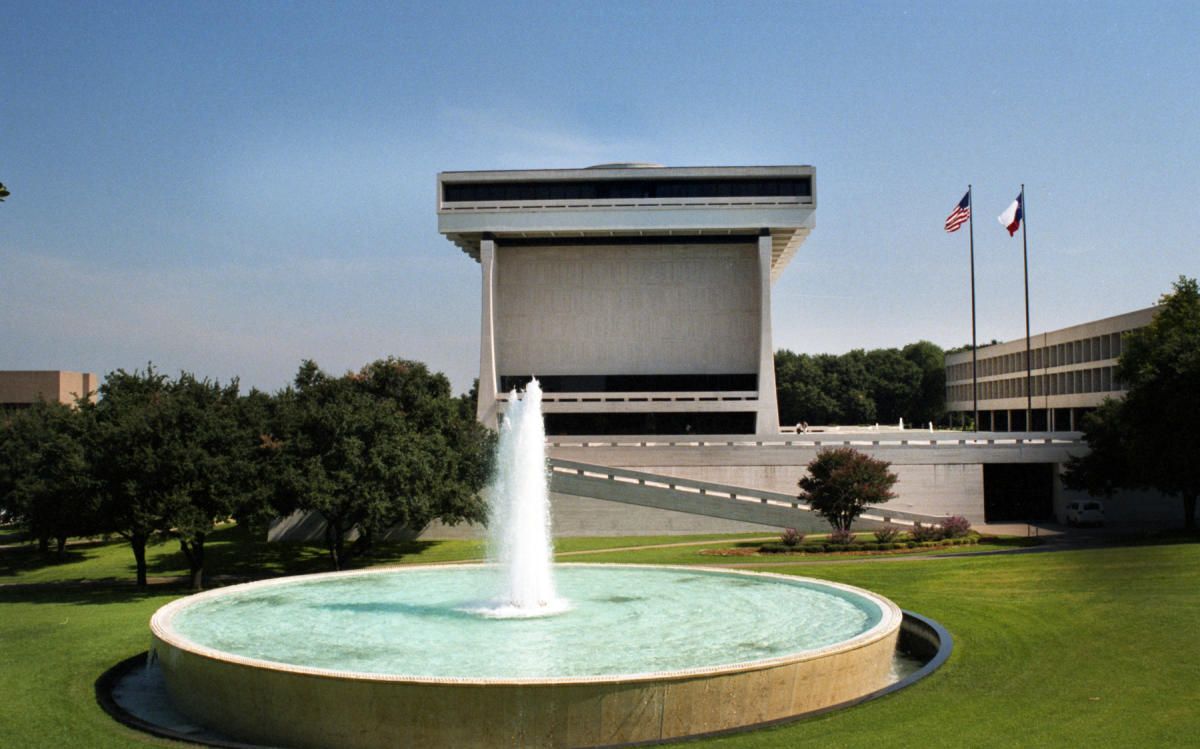
The National Archives and Records Administration is currently hiring an Education Specialist at the Lyndon Baines Johnson Presidential Library in Austin, Texas.
The NARA announcement indicates: “NARA has an open position for an Education Specialist at the Lyndon B. Johnson Presidential Library in Austin, TX. In this position, you will manage a variety of education programs. You will develop plans, policies, and procedures that will guide, govern, and promote activities. You will also develop and implement programs (conferences, seminars, workshops, etc.) for primary and secondary school groups visiting the facility from public, private, and home schools in Texas and nationwide.”
See the full job description at the USAJobs website.
Graduates of Northern Illinois University’s MA program in Public History or its PhD program in History may be interested applying for this position.





 Brian Sandberg: Historical Perspectives