The Naval History and Heritage Command in Washington, D.C., is currently conducting a search for a Historian to conduct research and writing in naval history.
This is a one-year (temporary) position that could provide great experience to a recent M.A. graduate or Ph.D. candidate in History.
The short job announcement reads: “The Histories Branch of Naval History & Heritage Command invites qualified candidates to apply for a 12-month Historian appointment at the GS-12 level beginning in January/February 2022. This position is located in Histories Branch’s Public History & Education Section. Applications will be accepted via USAJOBS until 11:59pm on 13 December.”
Any current or former graduate students in History at Northern Illinois University who are interested in applying to this or other positions should contact their professors for assistance with their job search.
In the aftermath of the Storming of the U.S. Capitol on 6 January 2021, historians of Whiteness and race relations in the United States have been working hard to interpret the violence of the Stop the Steal activists and broader neo-fascist militias that attacked the U.S. Congress.
Kathleen Belew, Professor of History at the University of Chicago, has been one of the most important scholars to consider the insurrection through an in-depth historical perspective.
Belew’s Bring the War Home: The White Power Movement and Paramilitary America (2018) is a key study of the diverse neo-Nazi and White Supremacist groups active in the United States since the Vietnam War. The book description on Harvard University Press’s website includes links to many of Belew’s media appearances.
When Northern Illinois University students in my course, HIST 399 Communal Strife: Civil Wars in Comparative Perspective, ask about the Storming of the U.S. Capitol, I point them to Kathleen Belew’s book, articles, and media interviews.
Belew recently appeared on the Ezra Klein Show. A podcast interview is available on The New York Times website. A New Yorkerarticle features Kathleen Belew’s work.
The Teaching Assistant Program in France is currently hiring teaching assistants to teach English in elementary and secondary schools in France during the 2022-2023 academic year.
The program’s website indicates that: “The Teaching Assistant Program in France (TAPIF) is the American cohort of the Programme des Assistants de langue en France, a program of France Éducation international. The recruiting and promotion of this program is managed by the Cultural Services of the French Embassy in the United States.The program’s goal is to strengthen English-language instruction in French schools by establishing a native speaker presence, while also providing American Francophiles with excellent teaching experience and first-hand knowledge of French language and culture.”
According to the TAPIF, “the program’s goal is to strengthen foreign-language instruction in French schools by establishing a native speaker presence, while also providing young educators around the world with initial international teaching experience and first-hand knowledge of French language and culture.”
These positions are great opportunities for students and recent graduates wishing to have a work abroad experience. Northern Illinois undergraduate students and recent graduates who are interested should contact me via email to discuss the applications process.
The call for applications is now open for the Chateaubriand Fellowships for doctoral research in France during the 2022-2023 academic year.
The Chateaubriand Fellowship Program presents the fellowships: “The Chateaubriand Fellowship is a grant offered by the Embassy of France in the United States. It supports outstanding PhD students from U.S. institutions who wish to conduct part of their doctoral research in France for a period ranging from 4 to 8/9 months. Chateaubriand fellows are selected through a merit-based competition, with expert evaluation in France and in the United States.”
Chateaubriand Fellowships are available in many fields of study. Here is the description of the Humanities and Social Science competition:
“The Chateaubriand Fellowship in Humanities and Social Sciences (HSS) is offered by the Cultural Services of the French Embassy. The HSS program targets outstanding PhD students enrolled in U.S. institutions who seek to engage in research in France in any discipline of the Humanities and Social Sciences. The HSS Chateaubriand program is supported by Campus France which provides assistance to fellows on site.”
Previous doctoral students in History at Northern Illinois University have held Chateaubriand Fellowships to conduct doctoral research in France. The Department of History at Northern Illinois University has strengths in French history, European history, and early modern world history.
Current doctoral students studying early modern France may contact me via email at Northern Illinois University for advice on applying for a Chateaubriand Fellowship and conducting archival research in France.
The horrific violence at Oxford High School in Oxford, Michigan, has forced many teachers and professors to reflect once again on the seemingly endless pattern of school shootings in the United States.
Northern Illinois University suffered its moment of infamy on Valentine’s Day 2008, when a former student entered a classroom in Cole Hall and opened fire on students in the auditorium. Five students were killed and twenty-one wounded in a five-minute rampage before the shooter committed suicide. Yet, NIU’s shooting quickly disappeared from the headlines, displaced by other on-campus shootings with more victims.
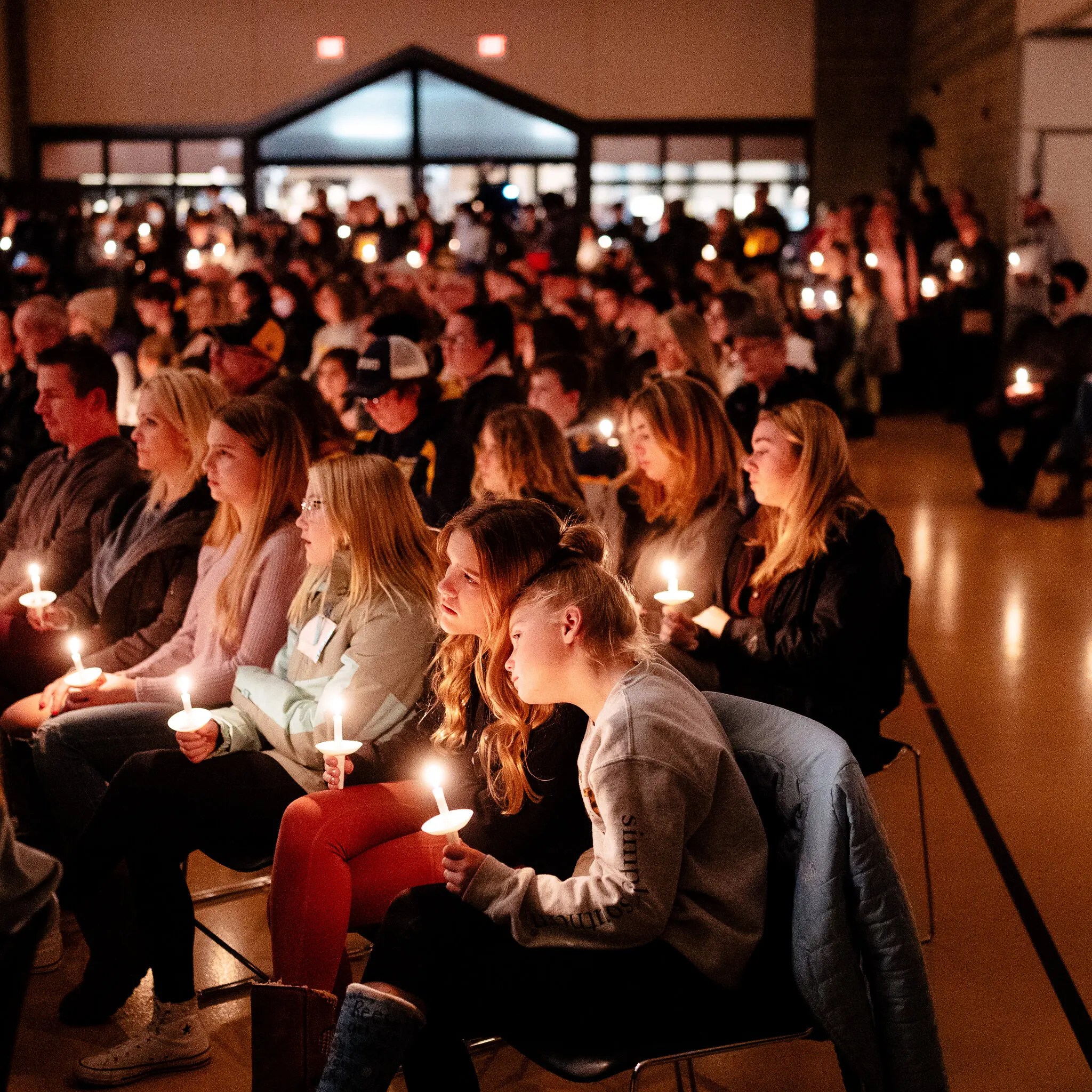
The Oxford High School shooting brought back a flood of memories of the shooting at NIU and its aftermath: sirens wailing, helicopters circling overhead, students and professors in lockdown, a cordoned off crime scene, dazed onlookers, candlelight vigils, and comfort dogs.
Vigil for victims of the school shooting at Oxford High School, 2021. Photo: The New York Times.
Sarah Lerner, a teacher at Marjory Stoneman Douglas High School in Parkland, Florida, is grappling with similar memories this week. Marjory Stoneman Douglas High School is the site of a notorious mass shooting rampage in 2018, one of the most deadly school shootings in the history of the United States.
Lerner has published an opinion essay on “Will My Students Ever Know a World Without School Shootings?” in The New York Times, raising critical questions about firearms in American society and the ways in which they threaten public safety and education. She writes: “After 20 years of teaching, I’m unclear about how teachers are supposed to continue teaching when so much more is being asked of us, often without training or the proper resources. We are expected to be mental health counselors, social workers, psychologists, security guards and so much more for our students. Just look more closely at what happened at Oxford High School.”
High school teachers and college professors across the United States are confronted with increasing challenges in teaching and mentoring students who are dealing with a public safety crisis and a pandemic simultaneously.
Many History students at Northern Illinois University aspire to be high school teachers, community college instructors, or college professors. Many of them serve as teaching assistants at regional high schools in order to attain their teacher licenses. Tragically, these young historians are having to confront the specter of school shootings, even as they learn the art of teaching.
Lerner concludes that “There is only so much that teachers can do in acting as a line of defense for their students.”
Sarah Lerner’s opinion essay, “Will My Students Ever Know a World Without School Shootings?” is published in The New York Times.
Rohingya refugees recently filed a class-action lawsuit against Meta, the parent company of Facebook, alleging that the social media company has assisted in perpetrating genocidal violence against the Rohingya in Myanmar.
The Washington Post reports that “Facebook failed to quickly stop the spread of hate speech and misinformation against the Rohingya people, in turn contributing to the persecution and alleged genocide of the minority community in Myanmar, according to a lawsuit filed Monday in a California court that asks for more than $150 billion in compensation.”
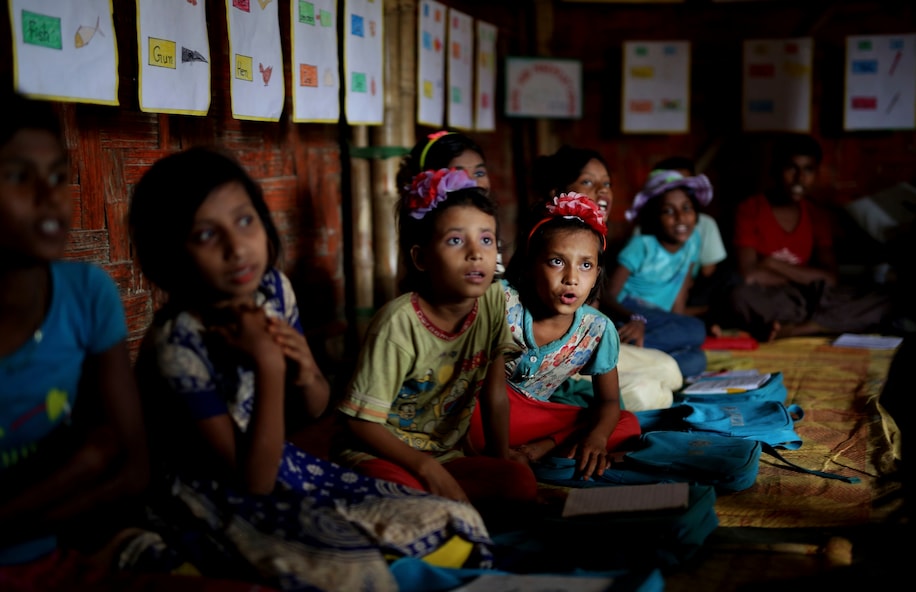
Rohingya refugees. Photo: Washington Post.
“The class-action lawsuit against Meta, Facebook’s parent company, was brought by a Rohingya woman in Illinois on behalf of the 10,000-plus Rohingya refugees who have resettled in the United States since 2012. It alleges that Facebook’s algorithm amplified hate speech and that it neglected to remove inflammatory content despite repeated warnings that such posts could foment ethnic violence.”
At least 1,000 Rohingya refugees have settled in the Chicago area. The Rohingya Culture Center of Chicago provides important resources for the Rohingya refugee community in Illinois. The Center’s website describes the plight of Rohingya refugees: “The United Nations lists the Rohingya Muslims of northwestern Burma (Myanmar) among the most persecuted people in the world. Burma’s 1982 Citizenship Law denied the ethnic minority Muslim group legal status, rendering them stateless, and denying them the right education, work, and travel. Since then, many of the Rohingya have been displaced by ethnic violence and have been forced to flee the persecution.The Rohingya Cultural Center was established in 2016, in Chicago’s West Ridge/West Rogers Park neighborhood, to serve the needs of the growing Rohingya refugee community. As many as 1000 Rohingya have been resettled in the Chicago since 2010.”
Northern Illinois University students taking HIST 399 Communal Strife: Civil Wars in Comparative Perspective, HIST 384 History of War since 1500, and various courses in Southeast Asian History will be interested in tracking this lawsuit.
NIU’s Center for Southeast Asian Studies promotes research, teaching, and engagement in Southeast Asian studies and regularly offers lectures and workshops on Southeast Asian history and culture. Professors and graduate students affiliated with the Center continue to follow the political situation in Myanmar closely.
Today, the United States is remembering the Japanese attack on Pearl Harbor on December 7, 1941. Concerns with historical memory and the disappearance of the World War II generation are apparent with this year’s commemoration of the 80th anniversary of the surprise attack and the United States’ entry into the Second World War.
Pearl Harbor, 7 December 1941. Photo: U.S. Navy, AP.
Even as the nation invokes historical memories of Pearl Harbor, it recognizes a certain closure. A program that has worked to identify victims of the attack using DNA techniques has also come to an end this week.
The New York Times reports: “As the nation observes the 80th anniversary of the attack that drew the United States into World War II, the military said this week that a six-year project to identify those killed on the Oklahoma had matched human remains from the ship with the names of 355 sailors and Marines.”
“Thirty-three of the ship’s crew members could not be identified by comparing remains with DNA samples from relatives or dental records as part of the project, which began in 2015 and which officials said had ended.”
The U.S. Navy’s Naval History and Heritage Command has an online reading room on the Pearl Harbor Attack. I am proud to say that Greg Bereiter who earned his Ph.D. at Northern Illinois University, is Branch Chief of the Histories Branch at the Naval History and Heritage Command.
Undergraduate students at Northern Illinois University will be examining the history of war and society with me in my upcoming class, HIST 384 History of War since 1500 during the Spring 2022 semester.
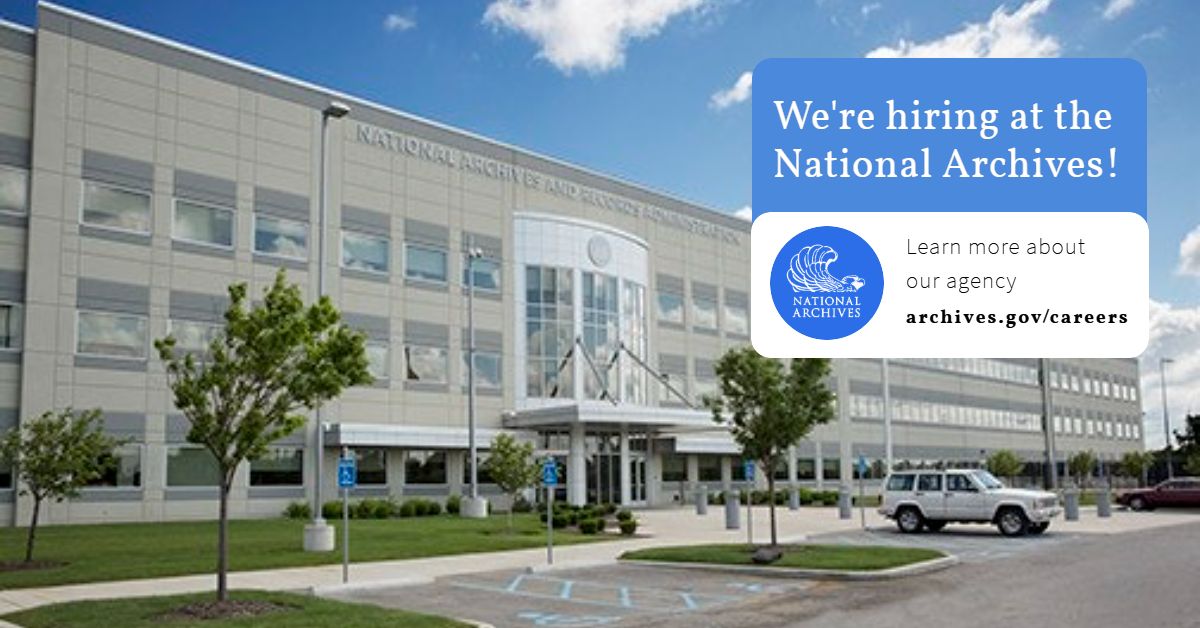
The National Archives and Records Administration has 35 archivist job openings at their location in Spanish Lake, MO.
The job announcement indicates: “This position is part of the National Archives and Records Administration. The purpose of this position is to serve as a member of one of the Reference Service teams, located within one of the Core Units, Military Personnel Records (MPR) Center, National Personnel Records Center (NPRC), National Archives and Records Administration (NARA).”
Northern Illinois University students and graduates in History may be interested in applying for a position with the National Archives and Records Administration.
Historical studies at NIU allow students to develop skills in archival studies, document analysis, and public history that prepare them for jobs in various research, archival administration, library science, information management, and administrative fields.
The full job description is available at the USAJobs website.
France constructed a vast empire in the Caribbean and North America during the early modern period, leaving lasting cultural influence in Francophone Haiti, Louisiana, and Quebec.
Often forgotten is the French imperial territory in the Illinois country and Mississippi valley.
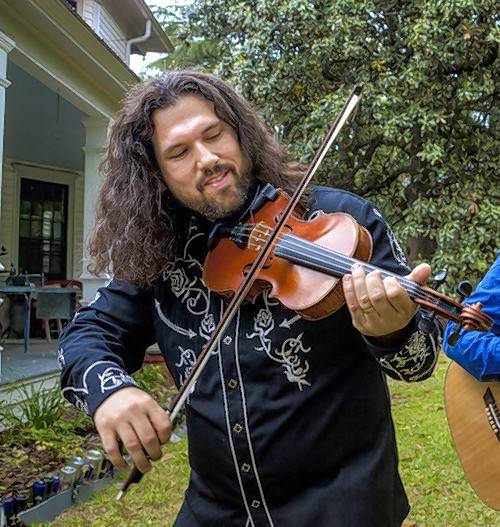
A musical and humanities program sponsored by Illinois Humanities is attempting to highlight Illinois Creoles and their Francophone culture.
Dennis Stroughmatt is serving as a Road Scholar with Illinois Humanities, presenting “Illinois Creoles, French Canadians, and Louisiana Cajuns: A Continental Story.” Stroughmatt promotes French speaking and singing in the Midwest region of the United States.
Dennis Stroughmatt
Illinois Humanities provides a description of the program: “New France once stretched from the St. Lawrence River of Canada to New Orleans, and within its’ territory lived a vast population of French colonists almost as diverse as they were strong. With the coming of new borders and the formation of new countries like Canada and The United States, these French founders would find themselves divided and even isolated. But their cultures have remained, still existing after two centuries of isolation.”
“This program will take audiences on a journey of discovery where they will hear the history of their arrival, the French dialects they still speak, and the unique music they still perform. And most important, through story and song, played on “Creole Fiddle,” audiences will have fun learning how the French of “The Illinois Country” serve almost as a time capsule for their cousins to the north and south. With a “dash” of Cajun and a “pinch” of Quebecois this program will show how Illinois Creole culture bridges the continental expanse from Canada to Louisiana.”
The Center for Renaissance Studies at the Newberry Library will be offering a NEH Summer Institute for faculty on Mapping the Early Modern World.
Here is the announcement from the Center for Renaissance Studies:
Mapping the Early Modern World
NEH Summer Institute July 18-August 12, 2022 Newberry Library
Application Deadline: March 1, 2022
CRS is pleased to announce a professional development institute for higher education faculty, led by CRS Director Lia Markey and James Akerman, Director of the Herman Dunlop Smith Center for the History of Cartography at the Newberry.
Co-organized by the Newberry Library’s Smith Center for the History of Cartography and its Center for Renaissance Studies, and supported by a grant from the National Endowment for the Humanities, this interdisciplinary institute is designed for non-specialists who have either worked with early modern maps in limited contexts, or who find themselves drawn to the subject for the first time. They will engage with the most recent scholarship, guided by faculty from multiple disciplines. The institute will be grounded in the Newberry’s remarkable collection of early modern cartographic resources and related materials, gaining insights into the complex contributions that the prolific archive of mapping made to transformations in the early modern world.






 Brian Sandberg: Historical Perspectives