I am pleased to see that Lael Weinberger has published a review of Samuel Moyn’s Humane: How the United States Abandoned Peace and Reinvented War (2021)!
Lael earned a MA in History at Northern Illinois University and then went on to pursue a JD and PhD in History at the University of Chicago. He is currently serving as Olin-Searle-Smith Fellow in Law at Harvard Law School.
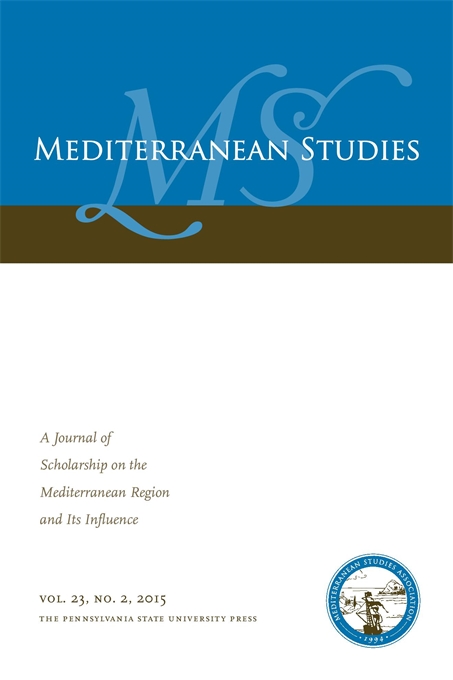
I am happy to report that my most recent article has just been published in Mediterranean Studies. It took a number of years to do the research, writing, rewriting, revisions, and editing to produce the article, but here (finally) it is:
Sandberg, Brian. “‘Moors Must Not Be Taken for Black’: Race, Conflict, and Cultural Translation in the Early Modern French Mediterranean.” Mediterranean Studies 29, no. 2 (2021): 182–212. https://doi.org/10.5325/mediterraneanstu.29.2.0182.
Mediterranean Studies is one of the premier academic journals on Mediterranean history and culture. Here is the journal’s mission statement:
“Mediterranean Studies focuses on the Mediterranean world over a broad chronological span—from Late Antiquity to the Enlightenment. The journal’s interdisciplinary approach includes work on the arts, religions, cultures, histories, and literatures of the Mediterranean world. Contributors come from a wide range of backgrounds, including archeology, English, Jewish studies, history, comparative literature, medieval studies, religion, and art history. Such varied and rich contributions make for vibrant conversations across several disciplines.”
The Center for Renaissance Studies at the Newberry Library is hosting a research methods workshop on Teaching the Early Modern Book: Ways of Seeing, Ways of Thinking.
This is a great opportunity for graduate students interested in the history of printing and cultural history in early modern Europe. Graduate students in History, English, Renaissance studies, and related fields at Northern Illinois University are eligible to seek funding to support their participation, since NIU is a member of the Center for Renaissance Studies Consortium.
Here is the announcement from the Center for Renaissance Studies:
Teaching the Early Modern Book: Ways of Seeing, Ways of Thinking
Research Methods Workshop Friday, February 11, 2022 Led by Michael F. Suarez, SJ (University of Virginia)
Application Deadline: November 1, 2021
Participants in this full-day workshop will learn through examples about the constituent elements of books and how to “read” their meanings and significance. They will also undertake a series of exercises—which they might make use of for their own courses and demonstrations—in bibliography, the formal analysis of printed artifacts (viz., format, edition, impression, issue, state, etc.) and in book history (viz., authorship, patronage, intellectual property, censorship, etc.).
We welcome applications from faculty and graduate students at any level. Priority will be given to applicants from Center for Renaissance Studies consortium institutions. For more information, including a link to submit an application, please visit the event calendar page here: https://www.newberry.org/02112022-teaching-early-modern-book-ways-seeing-ways-thinking
The Center for Renaissance Studies at the Newberry Library has extended the deadline for submissions to their graduate conference in premodern studies.
Graduate students in premodern studies at Northern Illinois University may want to consider submitting a proposal to this conference. NIU is a member of the Newberry Library Consortium, so graduate students can apply for funding to participate in conferences and workshops or to conduct research in Newberry Library collections.
Here is the announcement from the Center for Renaissance Studies at the Newberry Library:
The Center for Renaissance Studies at the Newberry Library is pleased to announce that submissions for our 2022 Multidisciplinary Graduate Conference in Premodern Studies are now open. This annual graduate student conference, organized and run by advanced doctoral students, has become a premier opportunity for emerging scholars to present papers, participate in discussions, and develop collaborations across all fields of medieval, Renaissance, and early modern studies. Participants from a wide variety of disciplines find a supportive and collegial forum for their work, meet future colleagues from other institutions and disciplines, and become familiar with the Newberry and its resources.
In 2022, the conference will adopt a hybrid (virtual and in-person) format. Graduate students may submit proposals for virtual workshops of pre-circulated papers or in-person panel presentations. We will also set aside some space for virtual panel presentations for those who cannot travel but prefer to present traditional papers. Participants may attend both the virtual and in-person portions of the conference, but may only present work at one session. We invite proposals for papers from students in masters or PhD programs on any humanities topic relating to material before 1800. We encourage submissions from disciplines as varied as the literature of any language, history, classics, anthropology, art history, music, comparative literature, theater arts, philosophy, political science, religious studies, transatlantic studies, disability studies, and manuscript studies. All papers must be in English.
The 2022 conference program will include virtual and in-person sessions relating to career diversity, professionalization, and rare book presentations in addition to the workshops and conference panels.
Please note that when submitting a proposal, you must indicate whether you are applying to a virtual workshop with pre-circulated materials (8-12 pages, due January 3, 2022) OR a traditional panel presentation (20-minute papers, primarily in person with some virtual sessions available). You are welcome to submit proposals for both a workshop and a panel presentation, but each proposal must be submitted separately, and you will only be able to present at ONE session.
Abstract submissions will be accepted online only. The extended deadline to submit an abstract through our online submission form is Friday, October 15, 2021 at 11:59pm Central Time.
I tuned in online this week for the launch of the ePublic of Letters lecture series, organized by Monique O’Connell and Brian Maxson.
Brian Maxson did a nice job of kicking off this new lecture series with a lecture on Vespasiano da Bisticci, Florentine bookseller and writer. The talk focused on Vespasiano’s Lives and its depiction of Florentine patricians and other contemporaries during the second half of the fifteenth century.
This lecture fit nicely with the current themes in my course on The Renaissance at Northern Illinois University, since my students have been discussing friendship, political patronage, betrayal, and exile in Renaissance Florence using Dale Kent’s Friendship, Love, and Trust in Renaissance Florence (Cambridge, MA: Harvard University Press, 2009). Vespasiano da Bisticci figures in Kent’s discussion of Cosimo il vecchio de’ Medici’s patronage networks.
Vespasiano da Bisticci, from Vita di Gianozzo Manetti, Add 9770, f.6r (vellum), British Library.
This lecture is also timely, since Ross King has just published a new popular history of the Renaissance focused on Vespasiano: Ross King, The Bookseller of Florence: The Story of Manuscripts that Illuminated the Renaissance (2021).
The British Library has manuscripts by Vespasiano da Bisticci, including some digitized sources. The University of Bologna hosts a digital humanities project on Vespasiano da Bisticci’s letters.
The ePublic of Letters group expects to launch a website soon.
Historians confront the complicated history of race and racism in the pre-modern, modern, and contemporary world.
Yet, historians and social science teachers in the United States are under attack by conservative politicians and political activists. Many conservative political groups have long sought to promote a “patriotic” interpretation of United States history that supports nationalism and sanitizes racial problems and conflicts within American society.
For decades, the “Culture Wars” have generated controversies over high school history teaching, history textbook approvals, statewide history curricula, and museum exhibits.
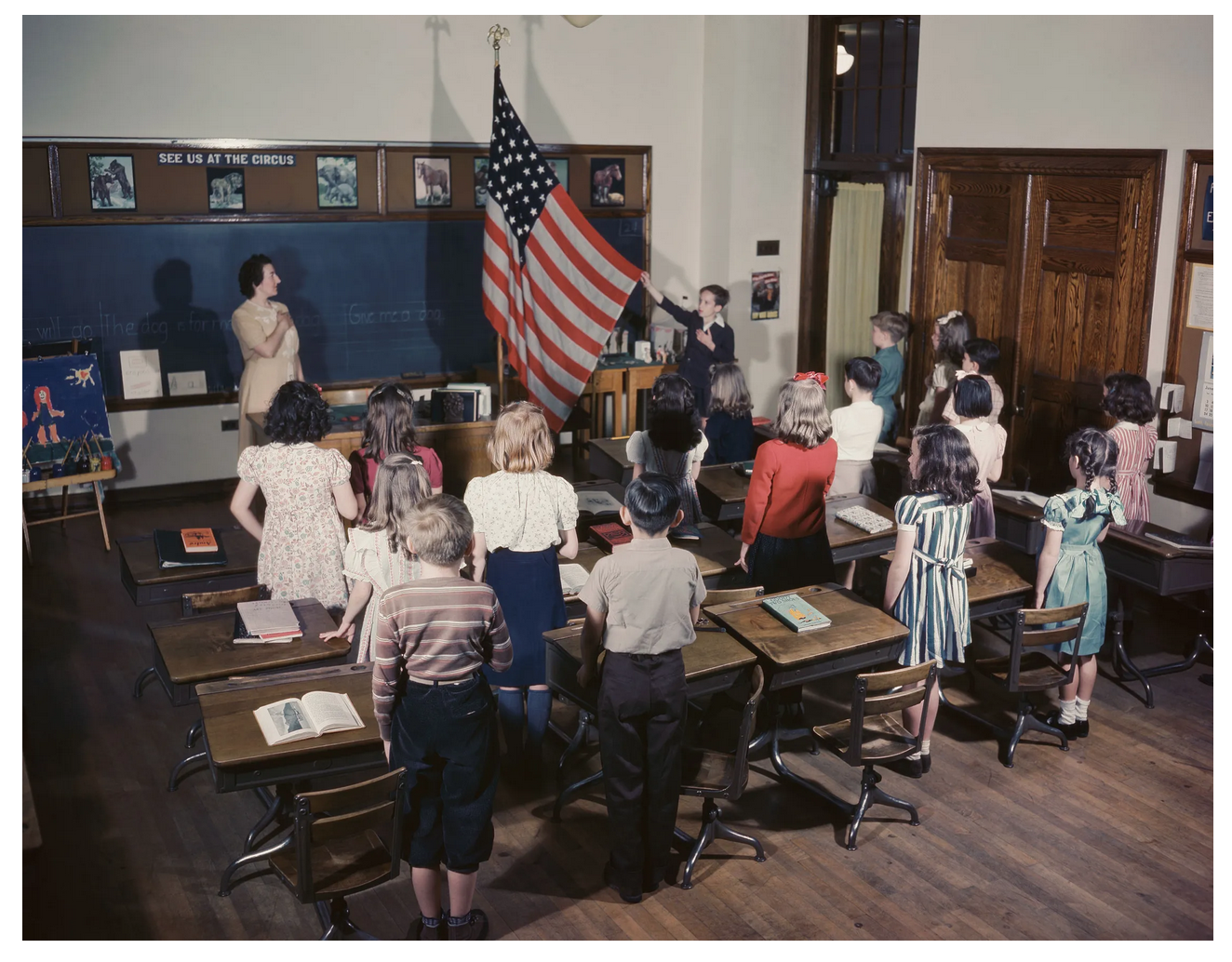
The recent Texas ban on teaching race in history classrooms is one of the latest rounds in the “Culture Wars.”
Elementary school classroom. Photo: The New Yorker
The American Association of University Professors (AAUP) is opposing the attempts by the Texas Attorney General to ban discussions of race and racism in classrooms.
The AAUP reports: “Last week the AAUP submitted a brief to Texas attorney general Ken Paxton strongly opposing recent political efforts to ban ideas from the classroom. The brief was filed in response to a recent request from State Rep. James White for an opinion on whether teaching about race and racism in America, including critical race theory (CRT), would violate the civil rights of Texans. This insidious political maneuver to ban discussion of racial inequality is part of a broader right wing assault on the ability to teach truthfully about the impact of racism on American history and society.”
The AAUP emphasizes that: “These attempts to limit classroom discussion stand in irreconcilable conflict with the principles of free inquiry, free thought, and free expression, which the AAUP has championed for more than a century. The AAUP’s brief underscores how these transparent attempts to dictate the education provided by faculty could undermine higher education, violate academic freedom, and result in censorship and indoctrination.”
The AAUP has also issued a statement on legislative attempts in multiple states to limit discussions of the history of race and racism.
The current controversy over teaching the history of race is simply the latest round in the “History Wars” in the United States. There have been parallel “History Wars” in Canada, Australia, United Kingdom, France, Japan, and many other nations on teaching of race, imperialism, and genocide in public high schools and universities. The debates over history teaching intersect with broader issues of public history and historical memory in the “Culture Wars.”
See my previous post on Historians’ responses to the controversy over Critical Race Theory.
For context on History and the broader “Culture Wars,” see the following works:
David W. Blight, “The Fog of History Wars,” The New Yorker, 9 June 2021.
Dane Kennedy, “The Imperial History Wars.” Journal of British Studies,54(1), (2015): 5-22.
Roger D. Launius, “Public History Wars, the ‘One Nation/One People’ Consensus, and the Continuing Search for a Usable Past,” OAH Magazine of History, Volume 27, Issue 1 (January 2013): 31–36.
Gary B. Nash, Charlotte Crabtree, and Ross E. Dunn, History on Trial: Culture Wars and the Teaching of the Past (Vintage Books, 2000).
Edward Tabor Linenthal and Tom Engelhardt, eds., History Wars: The Enola Gay and Other Battles for the American Past (New York: Metropolitan Books, 1996).
My students in HIST 420 The Renaissance at Northern Illinois University recently discussed the intellectual movement of Humanism in the Renaissance, focusing especially on the Humanists’ fascination with antiquities and their nostalgia for ancient Rome. Students read passages from Poggio Bracciolini, Bartolomeo Platina, and Lorenzo Valla and discussed humanists’ book collecting, the Vatican Library, the rebuilding of Rome under Pope Nicholas V in the mid-fifteenth century.
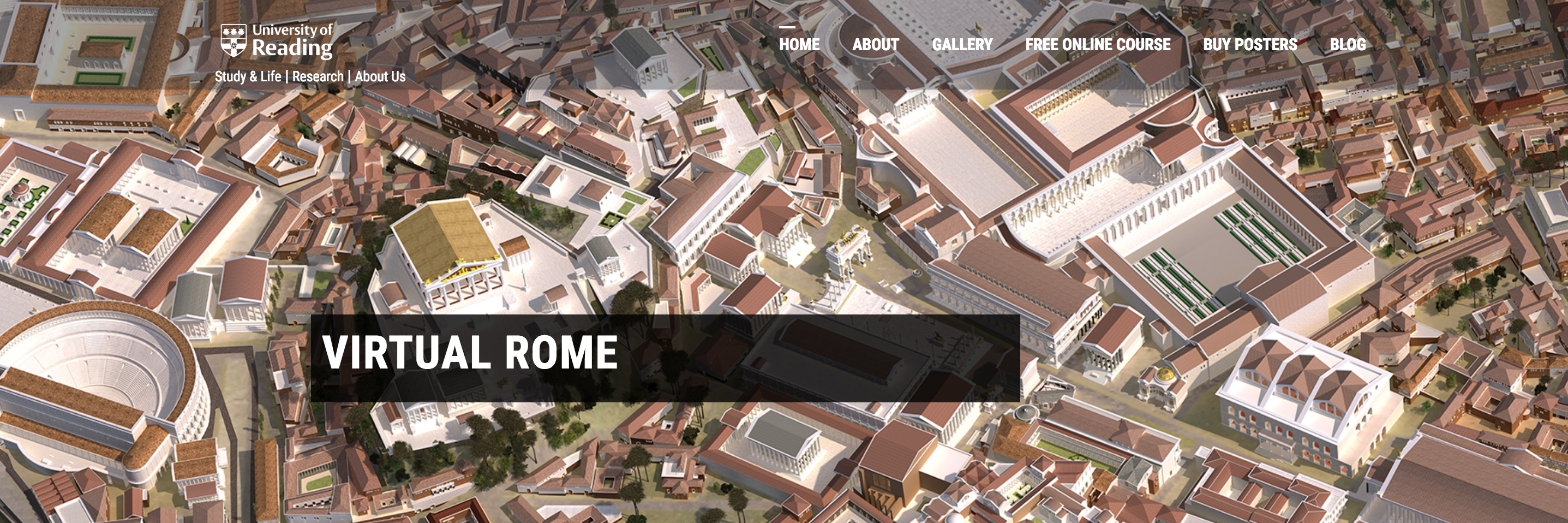
There are a number of virtual reality platforms for viewing the city of Rome at different points in history. Students may be interested in exploring the city of Rome virtually using one or more of the online platforms.
Virtual Rome project at the University of Reading
All of the virtual reality reconstructions of Rome are intriguing, but they also make choices in historical interpretation. Most of these virtual reality models have been created by commercial computer gaming companies or through partnerships with them. The commercial interests of the computer gaming and tourism industries clearly play a significant role in this form of public history and digital humanities.
There are free platforms and introductory trailers available at the following sites:
For a detailed study of city views, print culture, and tourism in Renaissance Rome, see: Rebecca Zorach, ed., The Virtual Tourist in Renaissance Rome: Printing and Collecting the Speculum Romanae Magnificentiae (Chicago, IL: University of Chicago Press, 2008). A book description is available at the University of Chicago Press website.
The Center for Renaissance Studies at the Newberry Library is offering a series of courses in paleography studies intended for graduate students in the humanities.
Paleography skills are vital for manuscript studies and archival work in the discipline of history, especially in premodern periods.
Graduate students in medieval and early modern history at Northern Illinois University may be interested in these courses. Northern Illinois University is a member of the Newberry Library Consortium, which means that NIU graduate students are eligible for funding for courses and events at the Newberry Library.
Here is the announcement from the Center for Renaissance Studies:
The Center for Renaissance Studies is pleased to announce that The University of Warwick’s Centre for the Study of the Renaissance is once again offering courses in Renaissance palaeography (this year with an emphasis on either English or Latin texts) aimed particularly at graduate students and early career researchers. It is also once again offering a two-term course on Latin for Research in the Humanities, open to post-beginners.
The courses meet exclusively online and are open for booking until 21 September 2021 at the latest. They are being offered at times that should be convenient for participants in the UK, continental Europe, and the Americas.
Participants from institutions in the Newberry Library Consortium may be eligible to have their course costs partially or completely refunded through Newberry Renaissance Consortium Grants. Eligible participants should check with their local consortium representative for further details.
Both Palaeography courses provide some theoretical elements on manuscripts and prints, but strongly emphasize transcription practice and discussion within a seminar format. The Latin for Research course explores and compares writing styles and approaches of humanists from across Europe.
In the interests of having a cohort of approximately comparable experience and abilities, applicants are required to fill out a brief questionnaire for each course. Places are limited, and early applications are strongly encouraged. For general details of the palaeography courses, see https://warwick.ac.uk/fac/arts/ren/manuscripttoprint/
English Palaeography (Autumn 2021) Instructor: Dr. Aidan Norrie
This course will familiarise students with English handwriting from the period 1500 to 1700. It will give students the skills to work with a range of English primary sources from the early modern period. Students will build a strong knowledge of early modern hands. The course will cover secretary, italic, and mixed scripts, both formal and informal. Students will learn common abbreviations used in handwritten documents, as well as the idiosyncratic letter forms that make primary sources from the period initially seem so difficult to transcribe. For further details and booking page, see https://warwick.ac.uk/fac/arts/ren/manuscripttoprint/english
Latin Palaeography (Autumn 2021) Instructor: Prof. David Lines
This course aims to provide the tools necessary to read and accurately transcribe manuscript and printed sources (in Latin) from the late medieval period to the seventeenth century. Since these are written in various kinds of scripts (gothic, humanistic, etc.), some time will be spent examining each of these. The course starts from printed materials, which are somewhat easier to navigate and usually contain fewer abbreviations, and works its way back toward manuscripts and archival documents. It includes a variety of genres, from literary and philosophical/theological works to archival records. For further details and booking page, see https://warwick.ac.uk/fac/arts/ren/manuscripttoprint/latin
Latin for Research in the Humanities (Autumn 2021 and Spring 2022) Instructor: Mr Iván Parga Ornelas
This course helps participants (staff or students) develop the ability to read and understand Renaissance Latin texts, while allowing them to brush up their Latin skills for research purposes. The weekly meetings of approximately 90 minutes focus on a selected number of Neo-Latin authors (this year: Petrarch, Erasmus, Leon Battista Alberti, and Thomas More) and will build familiarity with their particular styles and rhetorical practices. Sessions typically consist of the reading and translation of a fourteenth- to sixteenth-century text, supported by grammar and vocabulary revision. For further details and booking page, see https://warwick.ac.uk/fac/arts/ren/latin4research/
The Center for Renaissance Studies at the Newberry Library is currently organizing its annual Multidisciplinary Graduate Conference in Premodern Studies.
Graduate students in premodern history at Northern Illinois University are encouraged to submit a proposal. Graduate students taking HIST 520 The Renaissance at NIU this Fall will be especially interested in this conference.
Here is the call for papers from the Center for Renaissance Studies:
The Center for Renaissance Studies at the Newberry Library is pleased to announce that submissions for our 2022 Multidisciplinary Graduate Conference in Premodern Studies are now open. This annual graduate student conference, organized and run by advanced doctoral students, has become a premier opportunity for emerging scholars to present papers, participate in discussions, and develop collaborations across all fields of medieval, Renaissance, and early modern studies. Participants from a wide variety of disciplines find a supportive and collegial forum for their work, meet future colleagues from other institutions and disciplines, and become familiar with the Newberry and its resources.
In 2022, the conference will adopt a hybrid (virtual and in-person) format. Graduate students may submit proposals for virtual workshops of pre-circulated papers or in-person panel presentations. We will also set aside some space for virtual panel presentations for those who cannot travel but prefer to present traditional papers. Participants may attend both the virtual and in-person portions of the conference, but may only present work at one session. We invite proposals for papers from students in masters or PhD programs on any humanities topic relating to material before 1800. We encourage submissions from disciplines as varied as the literature of any language, history, classics, anthropology, art history, music, comparative literature, theater arts, philosophy, political science, religious studies, transatlantic studies, disability studies, and manuscript studies. All papers must be in English.
The 2022 conference program will include virtual and in-person sessions relating to career diversity, professionalization, and rare book presentations in addition to the workshops and conference panels.
Please note that when submitting a proposal, you must indicate whether you are applying to a virtual workshop with pre-circulated materials (8-12 pages, due January 3, 2022) OR a traditional panel presentation (20-minute papers, primarily in person with some virtual sessions available). You are welcome to submit proposals for both a workshop and a panel presentation, but each proposal must be submitted separately, and you will only be able to present at ONE session.
Abstract submissions will be accepted online only. The deadline to submit an abstract through our online submission form is Monday, October 11, 2021 at 11:59pm Central Time.



 Brian Sandberg: Historical Perspectives