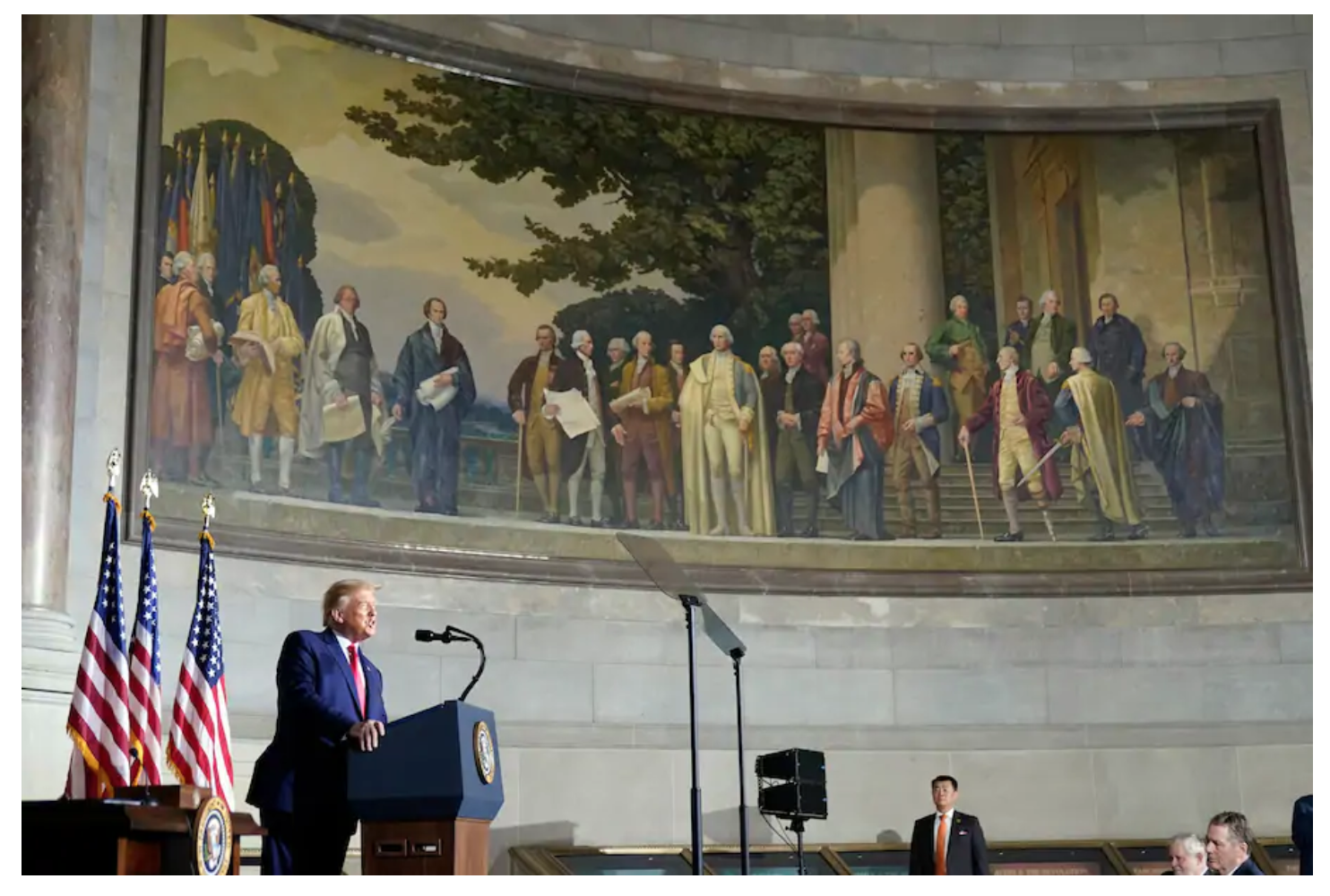
“Historians responded with dismay and anger Monday after the White House’s ‘1776 Commission’ released a report that it said would help Americans better understand the nation’s history by ‘restoring patriotic education.'”
“It’s a hack job. It’s not a work of history,” according to James Grossman, Executive Director of the American Historical Association. “It’s a work of contentious politics designed to stoke culture wars.”
The 1776 Commission was formed in September 2020 in response to The New York Times’s publication of the 1619 Project, a pedagogical unit developed by journalists and historians to foreground the history of slavery in American history.
Although some historians have criticized certain aspects of the 1619 Project, it has received generally positive feedback from many history professors and teachers.
The “1776 Report”, in contrast, is receiving nearly uniform condemnation by historians.
Sean Wilentz, Professor of History at Princeton University, sharply criticized the report, according to The Washington Post. “It reduces history to hero worship. … It’s the flip side of those polemics, presented as history, that charge the nation was founded as a slavocracy, and that slavery and white supremacy are the essential themes of American history. It’s basically a political document, not history.”
The History Graduate Student Association at Northern Illinois University is organizing its 13th annual HGSA Conference on the theme of Constructing History through the Prism of Perspective, Identity, and Memory. Due to the ongoing Covid-19 pandemic, the conference will be held as a virtual conference on 9 April 2021.
History casts a long shadow over current social and political movements, placing historians in the crosshairs of ideological contestations. The construction of History–rooted in authors’ academic, cultural, geographic, or political backgrounds–is inescapably subjective, but how does this diversity shape the narratives and discourses within the field of academic History? And how does the creation of historical memory through the prism of the authors’ identities affect its interpretation within a polarized political and social environment? This year’s annual Northern Illinois University HGSA Graduate Conference invites scholars and graduate students to question how constructing history and preserving memory through historians’ diverse backgrounds and identities shape the field of History and its reception by wider or multidisciplinary audiences.
Please send an abstract of about 300 words to niuhistorygsa@gmail.com. Include a title, your name, and your paper’s general scope by February 12, 2021.
In the aftermath of the Storming of the Capitol on 6 January 2020, political tensions and civil violence continue to grow across the United States, creating a dangerous situation that National Guard forces is now being called to address. At least 20,000 National Guard troops from the District of Columbia, Maryland, Virginia, Pennsylvania, New Jersey, and New York are already deployed in the nation’s capital and additional National Guards troops from other states have been mobilized.
Hundreds of National Guard troops hold inside the Capitol Visitor’s Center to reinforce security at the Capitol in Washington, Wednesday, Jan. 13, 2021. The House of Representatives is pursuing an article of impeachment against President Donald Trump for his role in inciting an angry mob to storm the Capitol last week. (AP Photo/J. Scott Applewhite)
The reasons for the lack of the participation of National Guard units in defending the Capitol is still under investigation at this point. It is unclear why National Guard units were not mobilized ahead of the threatened storming of the Capitol. We are still unsure exactly when and how the Capitol Police eventually requested reinforcements from National Guard units. There are investigations underway of police officers, military veterans, and active-duty military officers who may have participated in the Storming of the Capitol.
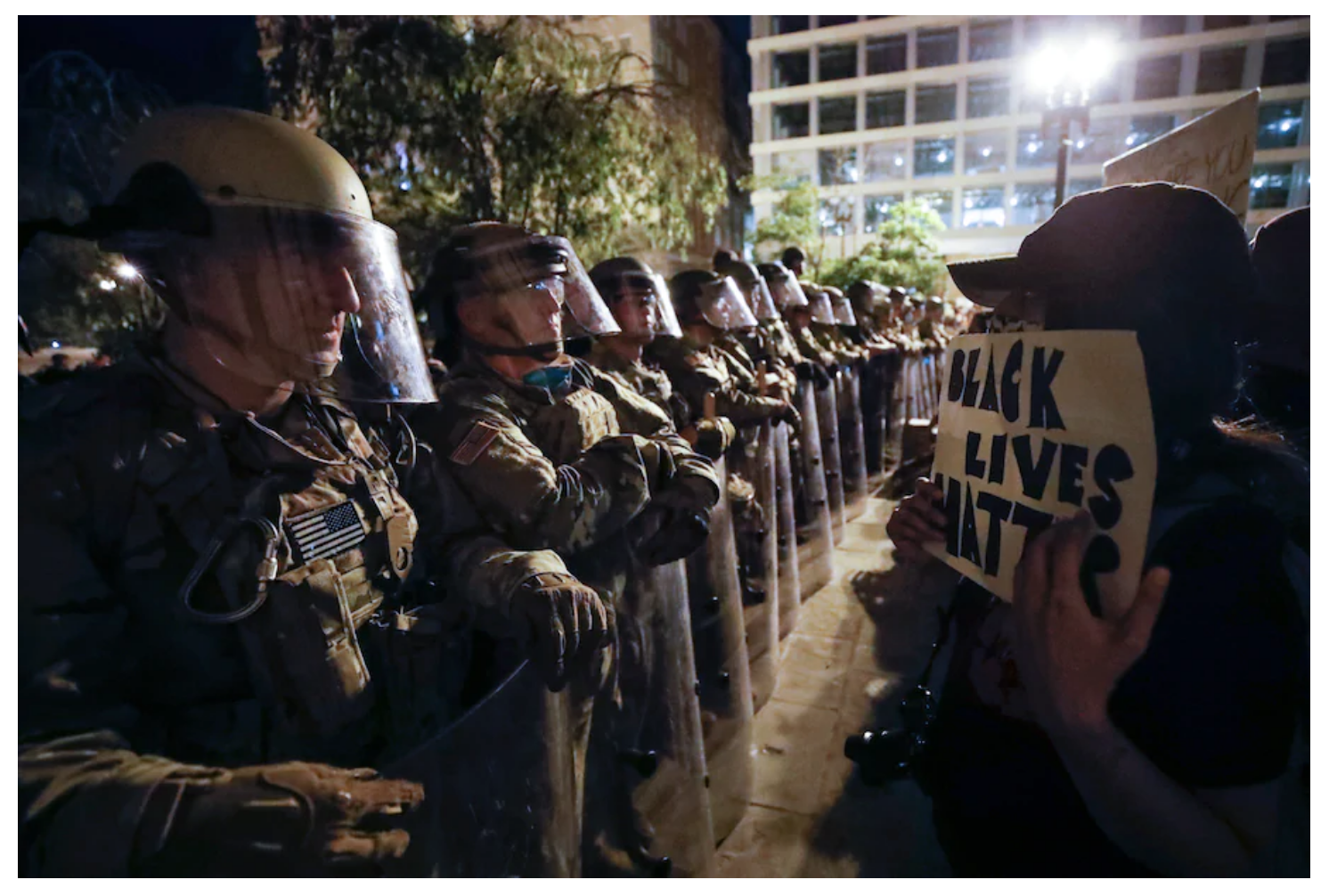
Many political leaders and journalists have rightly underlined how differently law enforcement agencies responded to the pro-Trump “Stop the Steal” extremists, in contrast to their responses to the Black Lives Matter protesters during the summer.
Heavily-armed federal police forces led by the Park Police and the D.C. National Guard charged Black Lives Matter protesters around Lafayette Square Park in Washington, D.C. on 1 June 2020, clearing a pathway for President Donald J. Trump and his advisors to walk to nearby St. John’s Church for a now infamous photo op.
The violence of the federal forces—who used tear gas, smoke canisters, pepper balls, and helicopters against protesters—shocked observers and television viewers across the nation and worldwide. The Park Police and the D.C. National Guard have faced serious criticism and a Congressional hearing.
But, the violence in Washington, D.C. in June could have been even worse.
A Washington Postinvestigative report published in October reveals an even more serious threat to American democracy. We can now see that President Trump’s mobilization of National Guard troops to oppose citizen protesters in Washington, D.C. this summer represented a dangerous abuse of presidential authority in order to create a “red-state army” of National Guard troops for partisan political purposes.
The Trump administration mobilized National Guard troops on 30 May to 1 June 2020, in response to ongoing protests in Washington, D.C. President Trump and then Secretary of Defense Mark T. Esper acted deliberately to create a politicized National Guard force, pressuring state governors in multiple phone calls to send Guard troops to the national capital. A number of National Guard commanders found this request highly unusual and worried about its implications. Democratic governors and National Guard commanders from “blue” states were reluctant to mobilize in response to this unprecedented request.
The Trump administration apparently relied on the legal statute known as 32 U.S. Code 502, which regulates funding for National Guard units’ participation in military drills and field exercises, to finance the mobilization. This seems to be a misappropriation of military training finances for partisan political purposes.
The creation of a partisan National Guard force to advance a political agenda of law and order also represents a corruption of the president’s commander-in-chief authority. President Trump reportedly pressured state governors to “get tough” on protesters during a call on 31 May 2020, and the next day he reportedly boasted that “we’re going to have total domination” in Washington, D.C.
National Guard units from eleven mostly “red” states ultimately responded to the President’s call and set out for the District of Columbia. The National Guard units that arrived by 1 June were deployed to support the D.C. National Guard and U.S. Park Police who were maintaining a security perimeter around the White House. President Trump reportedly wanted to invoke the Insurrection Act and escalate the use of force in the capital, but the Secretary Esper and the Joint Chiefs of Staff opposed this move. This resistance seems to have contributed to the President’s decision to fire Secretary Esper on 9 November 2020.
We need to recognize the potential for a politicized National Guard force to advance partisan agendas and to engage in political violence in the volatile political environment following the Storming of the Capitol. Numerous current and former police officers, military officers, and veterans are being investigated for their involvement in the MAGA crowd and several, such as Lt. Col. Larry Rendall Brock Jr. and Jacob Anthony Angeli Chansely have already been charged. At least one currently serving National Guard member from Virginia, Cpl. Jacob Fracker, has been arrested for participating in the attack on the Capitol. We have to be concerned that many other National Guard troops may be radicalized supporters of extremist politics.
The history of armed conflict and civil warfare demonstrates that politicized civic guards, militia forces, and national guards have been responsible for some of the most notorious incidents of mass violence in history.
The National Guard claims its origin in the formation of three militia units in the English colony of Massachusetts in 1636, but the colonial militias were part of a broader history of civic armed forces.
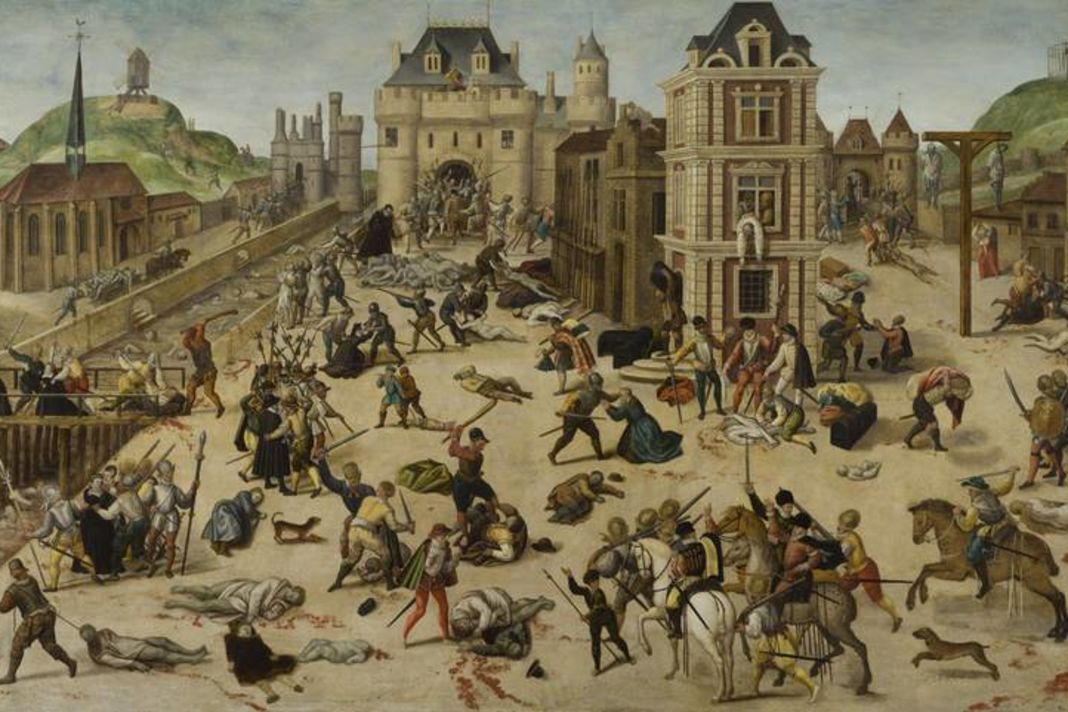
Renaissance cities organized civic guard units to keep order in urban spaces. Ultra-Catholic Parisian guards inflicted much of the horrific violence of the Saint Bartholomew’s Day Massacre of 1572 during the French Wars of Religion (1559-1629). Protestant civic guards participated in iconoclasm and urban violence in the Low Countries at the outbreak of the Dutch Revolt (1566-1648).
Peasant militias, which could be mobilized in crises, sometimes committed massacres. Political thinkers such as Niccolò Machiavelli debated the reliability of militia forces during the Italian Wars (1494-1559). Militias became auxiliaries during the Military Revolution, as states began to establish new permanent armies and military administrations. Colonial militias waged irregular warfare against indigenous peoples in the European empires in the Atlantic world and Southeast Asia.
A long history of militia forces thus existed well before the “minutemen” of the American War of Independence forged a powerful and lasting myth of armed citizen soldiers.
French patriots created a National Guard during the French Revolution of 1789, producing a new model for citizen-soldiers. While the ideal of a levée en masse (mass mobilization) of all citizens was never realized, the French National Guard participated actively in revolutionary politics and national defense. National Guard units were also involved in the violent suppression of counterrevolutionary forces during the Reign of Terror (1793-1794).
Since the French Revolutionary and Napoleonic Wars (1792-1815), nations around the world have raised National Guards composed of patriotic citizen-soldiers who can be deployed in times of war, national emergency, labor unrest, and civil conflict.
American militia units began adopting the term National Guards to honor Marie-Joseph Paul Yves Roch Gilbert du Motier, marquis de Lafayette, the former commander of the Parisian National Guard during his tour of the United States in 1824-1825. President’s Park was renamed Lafayette Square Park for the marquis when he visited Washington, D.C.
The history of Lafayette Square Park reminds us that National Guard units remain susceptible to politicization and that their deployment against civilian protesters or insurrectionists requires careful orchestration by responsible and apolitical commanders.
Fortunately, the National Guard force currently assembling at the U.S. Capitol includes troops mobilized by Democratic and Republican Governors from reliably “blue” states, solidly “red” states, and political divided “swing” states. Army General Dan Hokanson, chief of the National Guard Bureau, claims that the National Guards are “proven, prepared, and proud to do their part to ensure a peaceful and safe inauguration of our 46th commander-in-chief.”
Nonetheless, questions remain about the loyalties of some active-duty military officers and National Guard soldiers. Following the Storming of the Capitol, the Joint Chiefs of Staff have issued an unprecedented statement reminding U.S. soldiers of their oaths and legal responsibilities. NPR reports that the FBI is currently vetting National Guard troops who are deployed in Washington, D.C., to ensure their loyalties. [Update: Twelve National Guard soldiers have now been removed from inauguration duties, according to The New York Times.]
We must closely observe the National Guard’s mobilization, deployment, and command in order to ensure that the National Guard plays a neutral role in American political culture and civil-military relations.
The Storming of the Capitol of the United States of America on 6 January 2020 represented an insurrectionary act and a military operation, not a riot by a mob.
The Pro-Trump supporters who participated in the “Save America” rally and march to the Capitol came to Washington, D.C., armed and organized for storming the Capitol in order to halt the legitimate certification of the Electoral College vote. Many groups who organized the “Stop the Steal” campaign clearly aimed to coerce, take hostage, or kill targeted U.S. Representatives and Senators and their staff members that they viewed as treasonous. The Make America Great Again (MAGA) crowd also targeted Vice President Pence and members of Congress for execution as traitors.
Many journalists and politicians have referred to the Siege of the Capitol, a description that does not precisely capture the nature of the event. Nonetheless, the history of siege warfare offers an important perspective to understand the political and military violence of the Trump supporters.
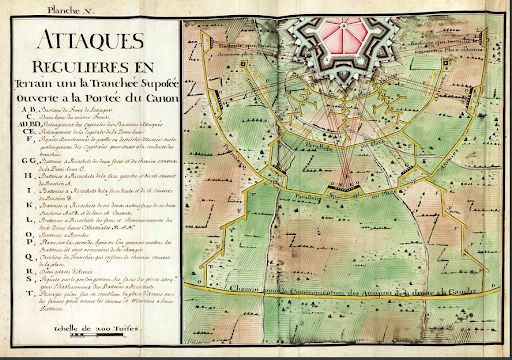
Siege warfare normally involves conventional military forces surrounding a fortress or city and blockading it, cutting off the defenders’ communication with outside support. Sieges often proceed through a progressive tightening of the blockade, a bombardment of defenses, and a methodical approach of besieging forces toward defensive lines.
Sébastian Le Prestre de Vauban, a French field marshal and siege engineer under King Louis XIV, developed elaborate methods of siegecraft in the late seventeenth century that have guided the prosecution of sieges ever since. Besieging forces methodically attack outer fortifications and defensive perimeters at key points, in order to weaken the defenders’ positions and to disrupt their defense-in-depth systems.
In the final stages of a formal siege, after achieving a breach in the main fortifications, besiegers launch assaults to storm the main defensive lines and break into the unprotected center of the fortress or city. During successful siege assaults, victorious troops often break into a killing frenzy—massacring vulnerable defenders and civilians and pillaging their belongings.
Jean Errard, La fortification desmonstrée et reduicte en art (1620).
Sometimes, army commanders choose to bypass these formal siegecraft techniques and instead launch a direct assault immediately upon arriving at a fortress or city. Direct assaults could occur during any conflict, but have historically been more common in the context of civil wars and revolutionary wars.
The Storming of the Capitol can be considered such a direct assault in the context of civil conflict.
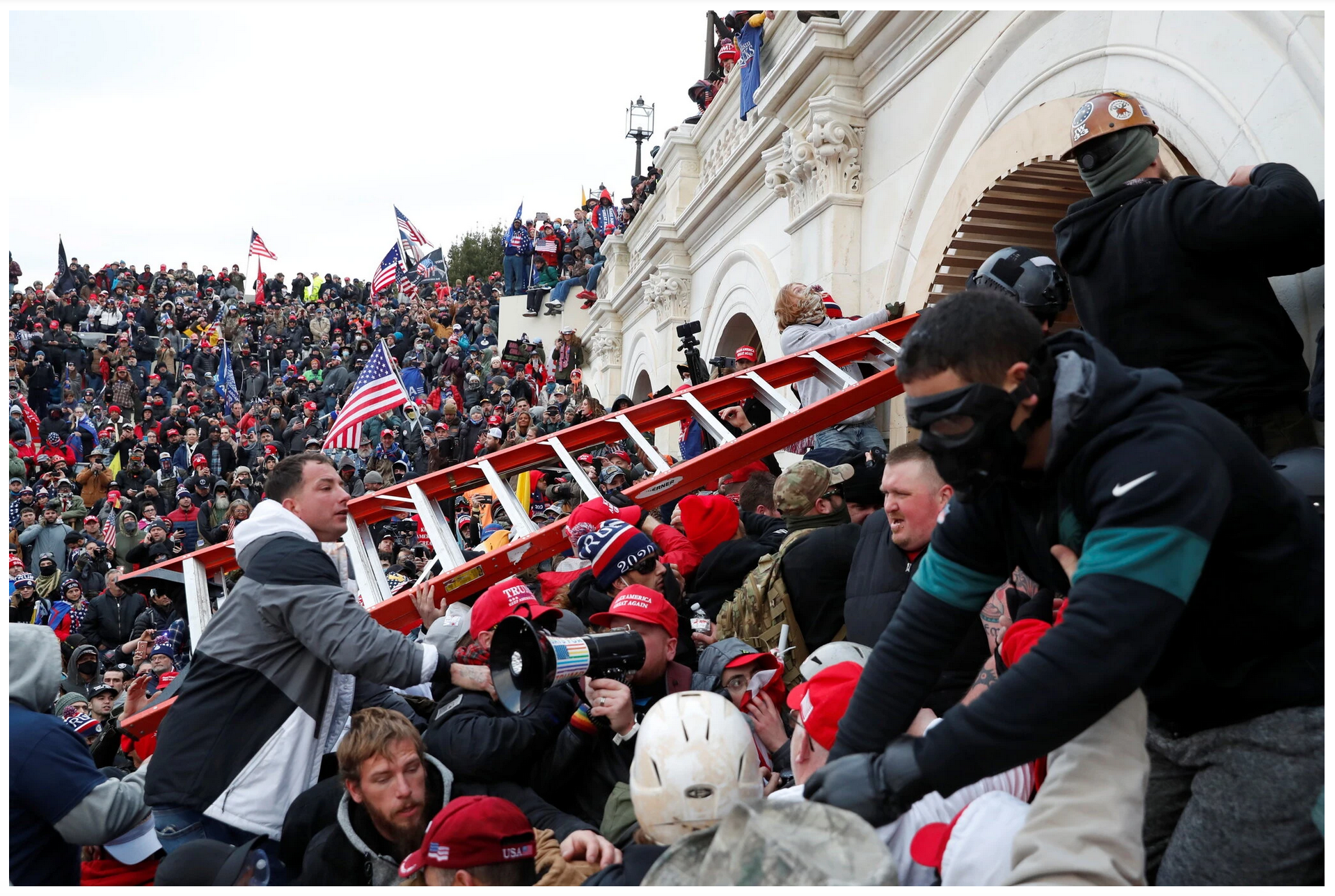
The MAGA crowd was composed of paramilitary and military groups that had organized and prepared for a direct assault on the Capitol, and substantial evidence shows that they considered their actions military in nature. The so-called militia forces and White Supremacist groups that participated in the Storming of the Capital came armed with axe handles, crowbars, ladders, and other conventional weapons used in direct assaults to overcome defensive barriers and obstacles. All of these implements are classic weapons of siege engineers. Some attackers also brought Molotov cocktails, firearms, and pipe bombs as heavy weapons for the assault.
The assault on the Capitol exhibited considerable coordination, communication, and planning. There are reports suggesting that some militia groups may have used military command and control during the assault itself.
It was no accident that organizations preparing for the “Stop the Steal” assault referred to the coming “Storm.” Although this term references “The Storm” of QAnon belief, it is not a mere rhetorical device. The New York Times reports that “the term “Storm the Capitol” was mentioned 100,000 times in the 30 days preceding Jan. 6, according to Zignal Labs, a media insights company.” The idea of storming the Capitol was much more than a symbolic rallying cry, signaling military preparations for a direct assault, or storm.
As these preparations went forward, President Trump directly incited violence by mobilizing a massive crowd of supporters for 6 January and promising that the day would be “wild.” Then, during the rally on the Ellipse of the White House, Trump directed his MAGA crowd to march on the Capitol building, which he had already targeted for storming, and implied that they should attack some members of Congress.
Many of the MAGA crowd that responded to President Trump’s call to arms included so-called militias, White Supremacist groups, and neo-fascist groups such as the Proud Boys, Three Percenters, Nationalist Social Club, and Oath Keepers. These groups represent national organizations with local units or chapters that utilize pseudo-military structures and conduct paramilitary training. Many of these organizations include veterans of the United States military, National Guard, and police forces who have extensive experience with firearms, tactics, and combat. Members of these militia groups were capable of acting leading other members of the MAGA crowd in organized attacks on barricades and rugby-style scrums to break through doorways of the Capitol.
Siege assault tactics can vary in the context of revolutions and civil conflicts, since crowds and militias become engaged in close combat. Many members of the Pro-Trump crowd brought anti-personnel weapons including batons, baseball bats, hockey sticks, and pepper spray. Revolutionary crowds often use improvised weapons, and the Pro-Trump supporters utilized flagpoles, fire extinguishers, broken furniture, and crowd-control barricades as makeshift weapons. Some members of the crowd brought zip ties, flex cuffs, and rope—perhaps intended to be used in holding members of Congress hostage.
Rebellious and revolutionary crowds use rich symbolic violence, which can reveal the motives and aims of the participants, as we can see from the storming of government buildings during the American, French, and Russian Revolutions. Armed crowds have assaulted a number of state capitols and government buildings in the United States, especially during the Reconstruction period following the American Civil War. The MAGA crowd used diverse symbols of the American Revolution, the Confederacy, neo-fascism, White Supremacy, Anti-Semitism, Holocaust Denial, and vigilante justice suggesting a blurring of overlapping motivations for their political violence.
Armed direct assaults are markedly different from occupations of government buildings by unarmed protesters in a number of ways. Such sit-ins and peaceful occupations can sometimes turn violent, but non-violent protesters do not normally have access to the weaponry or paramilitary training to carry out a direct assault or defend an occupied building. Diverse militia groups in the MAGA crowd, in contrast, planned precisely on carrying out a direct assault using the weaponry and techniques associated with siege assault.
It is vital to understand the tactics of siege assaults in addition to the motivations of the armed militia groups that are currently preparing for further violence, including a “Million Militia March” to disrupt the Inauguration of President-Elect Biden on 20 January.
The U.S. Capitol clearly needs the enhanced defenses and fences that have been erected, as well as the large reserve of National Guard forces that has been deployed in Washington, D.C. to prevent another storming of the Capitol. The Capitol Police, Secret Service, National Guard, FBI and other affiliated agencies involved in organizing security for Inauguration Day must prepare for the possibility of further military actions by far-right militia groups using direct assault tactics.
For further reading on the history of siege warfare, see:
Christopher Duffy, Siege Warfare: The Fortress in the Early Modern World, 1494-1660 (London: Routledge, 1996).
Anke Fischer-Kattner and Jamel Ostwald, eds., The World of the Siege: Representations of Early Modern Positional Warfare (Leiden: Brill, 2019), 265-287.
Jamel Ostwald, Vauban Under Siege: Engineering Efficiency and Martial Vigor in the War of the Spanish Succession (Leiden: Brill, 2007).
Geoffrey Parker, The Military Revolution: Military Innovation and the Rise of the West, 1500-1800, 2nd ed. (Cambridge: Cambridge University Press, 2016).
Martha D. Pollak, Cities at War in Early Modern Europe (Cambridge: Cambridge University Press, 2013).
Brian Sandberg, “‘His Courage Produced More Fear in His Enemies than Shame in His Soldiers’: Siege Combat and Emotional Display in the French Wars of Religion,” in Battlefield Emotions, 1500-1800: Practices, Experiences, Imaginations, ed. Erika Kuijpers and Cornelis van der Haven (London: Palgrave Macmillan, 2016), 127-148.
Brian Sandberg, “‘To Have the Pleasure of This Siege’: Envisioning Siege Warfare during the European Wars of Religion,” in Beholding Violence in Medieval and Early Modern Culture, ed. Erin Felicia Labbie and Allie Terry-Fritch (Aldershot: Ashgate, 2012), 143-162.
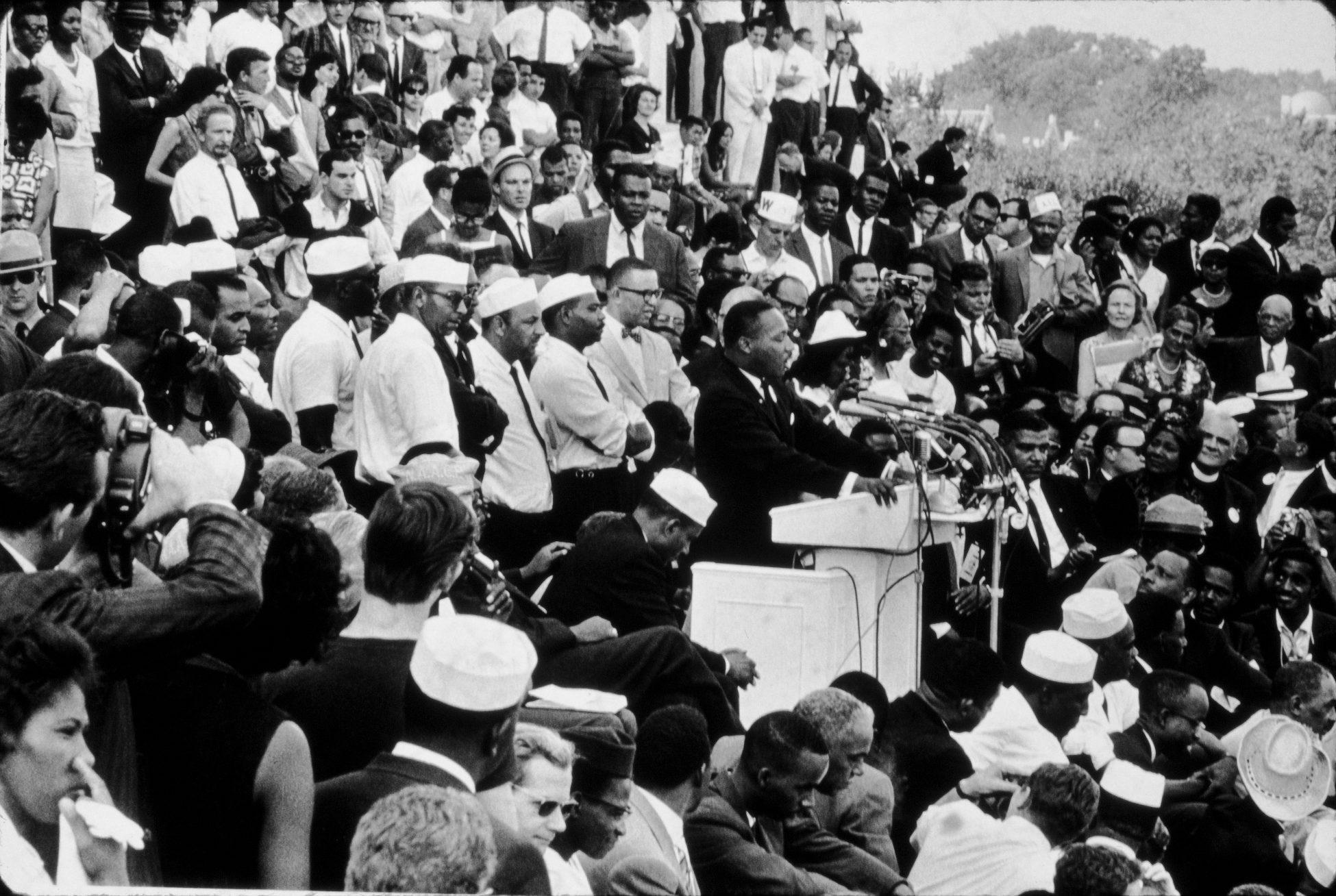
It is more important than ever to celebrate Martin Luther King, Jr. Day this year and to remember his vital work for racial equality and social justice.
The killing of George Floyd and so many other African Americans over the past year has underscored the urgent need to continue Martin Luther King’s campaign against racism and injustice. The Black Lives Matter movement continues to pursue many of MLK’s civil rights and social justice aims through non-violent protest and social activism that were at the core of his civil rights campaign in the 1960s.
Martin Luther King’s powerful speeches from the Civil Rights Movement continue to be relevant today because of continuing racism and injustice in American politics and society.
The New York Times reports that “Amid the change and upheaval, the words of Dr. King, both those celebrated and the less familiar, feel more urgent then perhaps ever before, both as a guide and a warning. From oft-quoted speeches to the words he never had a chance to deliver before his assassination, Dr. King talked about his vision of a just world, about the power of peaceful protests, and about disruption as the language of the unseen and the unheard.”
The Chicago History Museum is hosting a virtual celebration of Martin Luther King, Jr. and his leadership of the Civil Rights Movement.
The Chicago History Museum offers a exhibition on Remembering Dr. King: 1929-1968, a virtual tour of Chicago sites associated with Dr. King, podcasts, and other materials.
The museum website describes its virtual celebration: “A Baptist minister and champion of nonviolent activism, Dr. Martin Luther King Jr. was one of the most influential figures of the civil rights movement. He spent considerable time in Chicago protesting racial discrimination, particularly in housing and education. Explore ways the Chicago History Museum continues to preserve and amplify King’s legacy of action and activism in our annual family-friendly event. Take a virtual tour of the Chicago places Dr. King frequented such as the North Lawndale neighborhood and places of worship, participate in virtual storytelling, and create hands-on history art highlighting Dr. King’s messages of justice, peace, and change.”
See the Chicago History Museum website for its virtual celebration of MLK Day.
The New York Times reports on the continuing resonance of King’s speeches in an article entitled, “The Words of Martin Luther King Jr. Reverberate in a Tumultuous Time.”
The American Historical Association, the flagship professional association of historians in the United States, has issued a statement condemning the violent insurrection at the United States Capitol on 6 January 2021.
I am an active member of the American Historical Association (AHA) and endorse the organization’s statement.
American Historical Association Statement:
The American Historical Association condemns the actions of those who, on January 6, stormed the United States Capitol, the seat of the nation’s legislature, the heart of its democratic form of governance. This assault on the very principle of representative democracy received recent explicit and indirect support from the White House and from certain senators and representatives themselves. Not since 1814, when the British looted and burned the Capitol, has the United States witnessed such a blatant attack on the “People’s House.”
Everything has a history. What happened at the Capitol is part of a historical process. Over the past few years, cynical politicians have nurtured and manipulated for their own bigoted and self-interested purposes the sensibilities of the rioters. We deplore the inflammatory rhetoric of all the political leaders who have refused to accept the legitimacy of the results of the 2020 election and thereby incited the mob-and this on the day when the nation reported 3,865 COVID-19 deaths, the highest number reported in a single day since the pandemic began.
We note with dismay the iconography of the banners carried by the mob—the flag with the visage of the president emblazoned on it, as if loyalty were due an individual and not the rule of law, and the flag of the Confederacy, signaling violence and sedition. Not by coincidence, those people who attacked the Capitol have been described by the current president and his advisers as “great patriots” and “American patriots.” The rioters were neither.
A day that began with two significant “firsts”—the election of Georgia’s first African American senator and that state’s first Jewish senator—ended with Congress performing its duties according to the Constitution. Yet during the day we witnessed the unprecedented spectacle of a group of Americans desecrating the sacred space of the nation’s Capitol, and terrorizing everyone in it.
As historians, we call upon our fellow citizens and elected representatives to abide by the law and tell the truth. Our democracy demands nothing less of ourselves and of our leaders.
The Chronicle of Higher Education reports on how academic organizations have responded to the recent insurrection and political violence in the United States.
Graduate students interested in medieval history, and particularly those wanting to learn how to use Latin sources in medieval archives, may be interested in an upcoming Mediterranean Summer Skills Seminar: Introduction to the Archive of the Crown of Aragon (documents in Latin to ca. 1350).
Northern Illinois University graduate students in Medieval and Early Modern History may be able to apply for funding to participate in archival skills seminars.
Here is the announcement from the Mediterranean Seminar and CU Mediterranean Studies Group:
The Mediterranean Seminar/ CU Mediterranean Studies Group is offering a second iteration of the virtual Summer Skills Seminar, “Introduction to the Archive of the Crown of Aragon (documents in Latin to ca. 1350)” to be held via Zoom from Monday 17 May 2021 through Thursday, 21 May 2021, from 10am to noon and 1–3pm MST.
Overview The Archive of the Crown of Aragon (ACA) in Barcelona contains one of the largest and richest archival collections relating to medieval Europe, comprising hundreds of thousands of documents, most from the twelfth to fifteenth centuries, and including financial records, royal letters, administrative documents, trial records, treaties, and many other genres and types. The documentation can be used for a whole range of topics including social, economic, political, institutional, gender, diplomatic, cultural and religious history.
The territories of the Crown of Aragon included much of the Iberian Peninsula, parts of southern France, Sicily and southern Italy, parts of Tunisia and Greece, the Balearics, Sardinia and other Mediterranean islands. It had a large and diverse urban population, was highly integrated into Mediterranean and European trade systems, and had significant populations of Muslims and Jews. It developed one of the earliest and most robust chanceries of medieval Europe; the collections of which have weathered the vicissitudes of history all but intact. Much of the documentation has yet to be used by modern historians. The skills seminar will focus on the Latin-language documentation (from the eleventh to the mid-fourteenth centuries) in the archive’s collections.
This four-day intensive skills seminar will provide participants with an overview of the collections of the ACA, including access to online resources and reproductions, and focus on a hands-on introduction to reading unedited documents from a variety of the archive’s fonds.
Other topics will include: manuscript abbreviations, dating systems, place and personal names, and research resources and techniques. As much as possible the content will be catered to participants’ interests and needs. Medievalists of all disciplines, graduate students, and qualified undergraduate students, as well as library and archival professionals are encouraged to apply.
The goal is to provides attendees with a solid preparation for conducting work remotely via the PARES web portal and on-site at the ACA. This will not only aid their research but provide them with a bona fide (in the form of a certificate of completion for those who attend the full seminar), which may be advantageous in securing grants or other funding for research and travel. The ability to do archival research with unedited documents is a skill relatively few doctoral students master, and it enhances the research profile and CV of academic job-seekers.
Participants will find the skills and techniques which the course focuses on useful not only at the Archive of the Crown but at other medieval archives across Spain and Europe.
Applicants should have at least an intermediate level of reading Latin. Those wishing to bone-up on their Latin fluency in advance of the course are encouraged to read the Latin Vulgate and review declensions and conjugations.
This Summer Skills Seminar builds on the experience of earlier editions, which participants signaled as “transformative” in terms of their research, and which provided them with an opportunity to network and lay the foundations for future collaborations. For information and participant reviews of our former Skills Seminars (Ladino/Judezmo & Aljamiado) including the first edition of this course, go here.
Cost The cost of the course is: $1000 for Full Professors, Librarians, Professionals, Independent Scholars; $750 for tenured Associates; $500 for non-tenured Associates and Assistants & Graduate and Undergraduate students; $350 for Adjuncts, Lecturers & Contingent faculty. Members of supporting University of Colorado departments are eligible for a 50% discount. The cost may be tax deductible. Those who pay for the online course will be entitled to attend an in-person iteration planned for May 2021. Faculty and students from low per capita-GDP countries can apply for a bursary for partial or full remission of fees.
Program The course will be held 17-21May 2020 from 10am to noon and 1-3pm Mountain TImevia ZOOM. For further program information and for sample documents, together with transcriptions clickhere.
Faculty The course will be conducted by Prof. Brian A. Catlos (Religious Studies, CU Boulder). A graduate of the University of Toronto’s Centre for Medieval Studies (Phd, 2000) and now a historian of pre-Modern Spain and the Mediterranean, Catlos has been using the collections of the ACA since 1995, primarily for research into the social and economic history of the Crown of Aragon and Muslim-Christian-Jewish relations.
Important dates: Application deadline: 1 March 2021 Registration confirmation: 7 March 2021 Tuition deposit (50%) 15 March 2021 Tuition balance:1 May 2021
For further information or inquiries, contact Brian Catlos (brian.catlos@colorado.edu; subject: “Summer Skills Information”)
This program is organized by the CU Mediterranean Studies Group under the aegis of the Mediterranean Seminar and is made possible thanks to the support of the University of Colorado Boulder.
Historians and museum curators are already hard at work preserving the history of the Storming of the Capitol in Washington, D.C., on 6 January 2021.
“A sign that reads, ‘Off with their heads — stop the steal’ and a small handwritten poster with the words ‘Trump won, swamp stole’ are among dozens of objects and ephemera from pro-Trump rallies and the Capitol takeover Wednesday that are heading to the National Museum of American History, collected by curators from the division of political and military history,” according to The New York Times.
Photo: Frank Blazich
Curators and staff members of the National Museum of American History, a branch of the Smithsonian Institution, collected discarded signs and banners from the National Mall for inclusion in the museum’s collections and are continuing to search for political ephemera.
Anthea M. Hartig, Director of the National Museum of American History, issued a statement about the Storming of the Capitol: “For the first time since the War of 1812, the United States Capitol in Washington, D.C., was seriously breached, on Jan. 6, this time by domestic rioters (some would say insurrectionists and/or seditionists). An angry, violent mob broke up the constitutionally mandated session of Congress meeting to ratify the 2020 election results. Fraudulent claims and conspiracy theories challenging the legitimacy of the election results fueled these scenes.”
The New York Times reports that Hartig emphasized that “as an institution, we are committed to understanding how Americans make change.” Hartig stressed that “this election season has offered remarkable instances of the pain and possibility involved in that process of reckoning with the past and shaping the future.”
History students interested in archival work and public history will be interested in following the National Museum of American History’s project to collect political ephemera from the Storming of the Capitol.
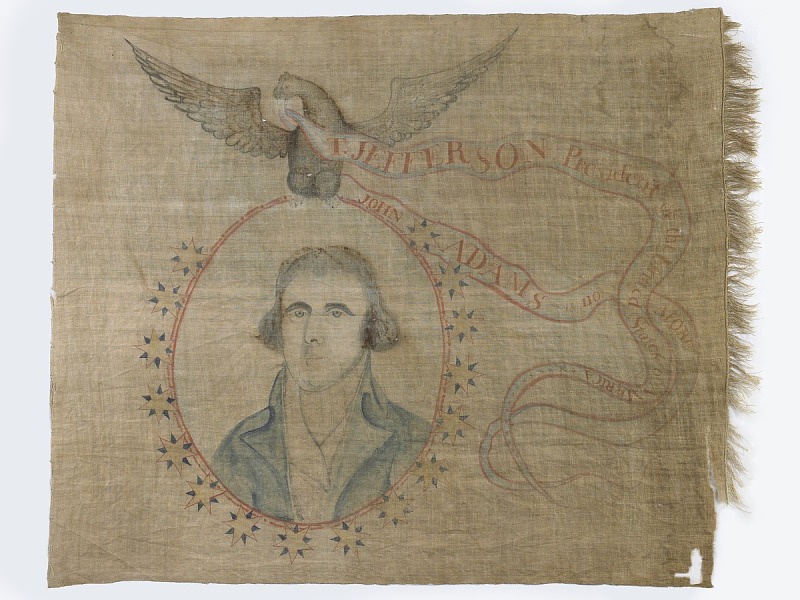
The museum houses political ephemera from throughout the history of the United States, including the famous Jefferson Banner, celebrating Thomas Jefferson’s electoral victory over John Adams in 1800.
Banner. PL*227739.1800.C01. Jefferson. National Museum of American History.
Northern Illinois University’s Department of History actively trains M.A. and Ph.D. students in historical research, archival methods, and public history. Many of our students are interested in archival collections and the construction of historical memory. So, I anticipate discussing this archiving initiative with my undergraduate and graduate students this semester.
The National Museum of American History’s website provides information on its collections and has posted a statement by Director Hartig regarding the Storming of the Capitol.
The New York Timesreports on the National Museum of American History’s collecting efforts.
I am appalled by the storming of the Capitol and the violent attack on the U.S. Congress and its members by armed insurrectionists of the pro-Trump “Stop the Steal” movement, who intended to disrupt the certification of the Electoral College vote through coercion and political violence.
Demonstrators walk through the U.S. Capitol after breaching barricades to the building during a protest outside of in Washington, D.C., U.S., on Wednesday, Jan. 6, 2021. The U.S. Capitol was placed under lockdown and Vice President Mike Pence left the floor of Congress as hundreds of protesters swarmed past barricades surrounding the building where lawmakers were debating Joe Biden’s victory in the Electoral College. Photographer: Victor J. Blue/Bloomberg
I am glad to hear that my Congressional representatives have signed on to the Articles of Impeachment against President Trump for Incitement of Insurrection and Abuse of Power. I urge members of the House of Representatives to proceed with Impeachment in order to severely censure President Trump’s illegal incitement of violence and to ban him from holding office at any point in the future.
This form of political violence represents an act of rebellion against the legitimate representative government of the United States of America and must not be allowed to stand as a precedent.
President Trump, any members of Congress who colluded with him, and the insurrectionists should all be prosecuted to the full extent of federal and state laws on treason and sedition. The culture of impunity that has encouraged and allowed these acts of political violence must end.
I appreciate the active engagement of the Senators and many Representatives of Illinois in pursuing vigorously abusers of power and violent extremists.
Kenyon College in Ohio is currently searching for an Assistant Professor of History with a specialization in Early Modern France and the French Empire.
This is a great opportunity for recent Ph.D.s in Early Modern French and Francophone History.
Here is the full ad from Kenyon College:
Assistant Professor in History of Europe and the French Empire
The History Department at Kenyon College, a highly selective, nationally-ranked liberal arts college in central Ohio, invites applications for a tenure-track position in the history of France and the Francophone world, beginning 1 July 2021. We seek applicants who are able to engage in both regional and global aspects of French history from 1600-1870. Area of specialization is open. Candidates whose research and teaching expertise include both Europe and a strong global focus are especially welcome. Candidates should be prepared to teach survey courses on the early modern period in Europe and on French history, and they must be interested in developing intermediate and upper-level seminars in their area of interest. The History Department maintains a strong honors program and there are opportunities to mentor students in these related fields.
The History Department is comprised of a dozen historians with diverse thematic and geographic specializations, and it values both excellence in undergraduate education and high-quality research. Candidates should have a record of excellent teaching and a Ph.D. in hand or be near completion by the beginning of the appointment (July 2021).
Applications should include 1) a letter of application, 2) a curriculum vitae and 3) a list of names and contact information of three (3) references. Cover letter should discuss teaching experience, with specific examples of innovative assignments and approaches; information on ways that issues and practices related to diversity, inclusion, and equity have been or will be included in teaching and advising; and candidate’s research agenda, including current and future projects. More materials-letters of recommendation, writing sample, unofficial transcript, and teaching philosophy-will be requested of candidates who advance to the review stage.
To apply, candidates should visit the online application site found at http://careers.kenyon.edu. Review of application will begin on January 21, 2021, and continue until the position is filled.
For more information, see the full job ad on H-Net.














 Brian Sandberg: Historical Perspectives