The Mental Health Benefits of Reading

Reading is often seen as an educational pursuit and an enjoyable habit. Now, neurological research suggests that reading has demonstrable benefits for mental health.

Benson-reading

A recent neurological study of 294 people found that “reading books, writing and engaging in other similar brain-stimulating activities slows down cognitive decline in old age, independent of common age-related neurodegenerative diseases. In particular, people who participated in mentally stimulating activities over their lifetimes, both in young, middle and old age, had a slower rate of decline in memory and other mental capacities than those who did not,” according to an article in Smithsonian Magazine.

Those subjects who read actively had markedly fewer memory problems, the study found. The study’s abstract concludes: “More frequent cognitive activity across the life span has an association with slower late-life cognitive decline that is independent of common neuropathologic conditions, consistent with the cognitive reserve hypothesis.”

The Smithsonian Magazine explains the mental health benefits of reading: “Reading gives our brains a workout because comprehending text requires more mental energy than, for example, processing an image on a television screen. Reading exercises our working memory, which actively processes and stores new information as it comes. Eventually, that information gets transferred into long-term memory, where our understanding of any given material deepens. Writing can be likened to practice: the more we rehearse the perfect squat, the better our form becomes, tightening all the right muscles. Writing helps us consolidate new information for the times we may need to recall it, which boosts our memory skills.”

Somehow, I imagine that Saint Augustine would not be surprised by these findings.

Botticelli-StAugustine

This study is published in Neurology (this site requires a subscription login). The Smithsonian Magazine reports on the study.
Posted in Education Policy, History of Medicine, History of Science, Humanities Education, Information Management | Leave a comment

Interviewing War Criminals

What is it like to confront evil in a face-to-face encounter? This is a question that James Dawes poses to himself frequently as he interviews war criminals.

Dawes, a professor of English and director of the Program in Human Rights and Humanitarianism at Macalester College, is a scholar of trauma studies who seeks to understand the motivations of perpetrators of war crimes.

Chukiren

“The man sitting in front of me is a mass murderer,” writes Dawes. “He is a serial rapist and a torturer. We are chatting about the weather, his family, his childhood. We are sharing drinks and exchanging gifts. The man is in his 80s now, frail and harmless, even charming. Instinctively I like him. It is hard for me to connect him to the monster he was so many decades ago. I think it must be hard for him, too.”

Dawes has written an essay on “Understanding Evil” that raises important questions about the moral dilemmas of researching atrocities and war crimes: “By representing atrocity, are we giving voice, and therefore respect, to the victims who have been silenced? Or are we sensationalizing the private stories of those who have already been violated?”

The challenges of conducting oral history interviews of war criminals are related to broader methodological questions about how societies construct the historical memory of war crimes and how historians analyze atrocities and mass violence.

Gaining insights into the dynamics of mass violence is certainly useful to contemporary societies, but investigations of past atrocities can be traumatizing for both the perpetrators and victims of that violence, as well as for the researchers who investigate war crimes.

Dawes’s essay on “Understanding Evil” is published in the Chronicle of Higher Education. The Japan Times reports on a center on the historical memory of the Chukiren. The photo above comes from this article.

Posted in Civil Conflict, Civilians and Refugees in War, Historiography and Social Theory, History in the Media, History of Violence, Human Rights, Laws of War, Museums and Historical Memory, War, Culture, and Society | Leave a comment

Continuing Egyptian Revolution

The Egyptian Revolution continues to develop, although the international news media has largely treated it as a process completed after the Arab Spring, which launched revolutionary processes in Tunisia, Egypt, Syria, Lybia, and other countries.

This week, the Egyptian military intervened decisively in the revolution, ousting President Morsi and suspending the constitution in a coup d’état. The arrests of Morsi, his advisors, and leaders of the Muslim Brotherhood have prompted massive pro-Morsi protests and violent clashes in the streets of Cairo.

cairoclashesatnight

The Washington Post and the BBC report on the escalating violence.

Khaled Fahmy, professor of History at the American University of Cairo, has published a fascinating op-ed on the Egyptian Revolution.

Fahmy concludes that “We did not launch this revolution nor risk our lives only to change the players. We wanted to change the rules of the game. That was the mandate we gave to Morsy. He has failed in this crucial task, so we no longer recognize him as a legitimate leader. He has broken the terms of the mandate. And our revolution continues.”

Historians and social scientists use concepts of revolutions and revolutionary processes to understand the dynamics of social and political revolutions. Khaled Fahmy’s piece clearly utilizes some of these concepts in examining the ongoing revolution that he himself is caught up in. The mix of historical thinking and eyewitness observation in his essay will interest historians of revolutions and civil conflicts.

CNN published Khaled Fahmy’s op-ed.

Posted in Civil Conflict, Civilians and Refugees in War, Comparative Revolutions, History of Violence, Human Rights, Mediterranean World, Religious Violence, Revolts and Revolutions, War, Culture, and Society | Leave a comment

Recreating Early Modern Medicinal Gardens

The New York Botanical Garden has recreated a sixteenth-century medicinal garden as part of its exhibit on Wild Medicine: Healing Plants Around the World.

The medicinal garden is patterned on the botanical garden that was created in 1545 for the medical school of the University of Padua. European universities began to construct elaborate medicinal botanical gardens in the sixteenth century, as plants were circulating around the world through growing global trade networks. Europeans encountered numerous herbs and medicinal plants from Asia, Africa, and the Americas, and began to examine their uses. Early printed treatises on botany and gardening also date from this period, indicating the significance of Renaissance gardens for the history of medicine.

padua-1

NPR reports on the New York Botanical Garden’s exhibition, but the article makes several errors.

The article mistakenly claims that the University of Padua’s garden was “Europe’s first botanical garden.” The Orto Botanico, or Botanical Garden, of the University of Pisa was created a year earlier in 1544 by Cosimo I de’ Medici and has long claimed to be the first university medical garden. And, of course, many monasteries had medicinal gardens for centuries prior to that.

The NPR story’s caption to one of its photos mistakenly lists the date of the founding of the Padua garden as “1645.”

The New York Botanical Garden maintains a website for their current exhibition.

Scholars and students of the history of medicine, gardens, and globalization in the early modern period will be interested in this exhibition. Mediterranean historians and historians of science have developed a sophisticated historiography on medieval and early modern botanical gardens. For an entry into this literature, see:

Londa Schiebinger and Claudia Swan, eds., Colonial Botany: Science, Commerce, and Politics in the Early Modern World (Philadelphia: University of Pennsylvania Press, 2005).

Sara Ferri and Francesca Vannozzi, eds., I Giardini dei Semplici e Gli Orti Botanici della Toscana (Perugia: Giunta Regionale Toscana and Quattroemme, 1993).

Posted in Early Modern Europe, Early Modern World, Environmental History, European History, Globalization, History of Medicine, History of Science, Mediterranean World | Leave a comment

Collection of War Letters Opens

A large private collection of American war letters is preparing to open to the public.

The collection is the result of the work of Andrew Carroll, an individual collector who became curious about wartime letters after suffering the loss of his own possessions in a fire.

Carroll assembled “collection of 90,000 wartime letters stretching from the Revolutionary War to modern-day conflicts in Iraq and Afghanistan that will be housed in a new Center for American War Letters opening this fall at Chapman University in Southern California,” according to the New York Times.

The New York Times reports on the collection. Chapman University hosts a program in War, Memory and Society, in which Carroll participates.

Northern Illinois University students in History 491 may be interested in this collection.


Posted in Archival Research, History of Violence, Museums and Historical Memory, War, Culture, and Society | Leave a comment

Fellowships at Pritzker Military Library

Deadline extended!

The Pritzker Military Library is seeking two fellowship candidates to work with its Veterans Information Center and Oral History departments. These are paid part time fellowship positions in partnership with the Mission Continues. All candidates must be OEF/OIF veterans.

Please send resumes and cover letters submitted to info@pritzkermilitarylibrary.org by July 15.

For more information, see the Pritzker Military Library website.

Northern Illinois University history students who are veterans may be interested in applying for a fellowship.

Posted in Careers in History, Graduate Work in History, Grants and Fellowships, Humanities Education, Museums and Historical Memory, Undergraduate Work in History, War, Culture, and Society | Leave a comment

Historians’ Role in DOMA Decision

Historians played a role in the Supreme Court’s recent decision to strike down the Defense of Marriage Act (DOMA).

Organizations of academic and public historians intervened directly in U.S. v. Windsor as it reached the Supreme Court. Steven Mintz points out that: “Briefs filed with the Supreme Court by the American Historical Association and the Organization of American Historians demonstrated that far from being a static institution, marriage has profoundly changed its definition, roles, and functions, and that today’s dominant marital ideal, emphasizing emotional intimacy, has nothing to do with gender.”

Over the past generation, historians of marriage, the family, and gender have investigated the long history of marriage as a social institution and a cultural practice. Early modern European historians developed some of the pioneering techniques of studying the history of marriage, in part because of the sweeping changes in marriage laws and practices during the Protestant and Catholic Reformations of the sixteenth century. American historians have investigated the changes in marriage from the colonial period through today, often using these research methods to analyze archival records of marriage in the American colonies and the United States.

Based on this research, historical organizations were able to marshal massive evidence of the changing patterns of marriage in the United States. In the briefs, “the historians showed that two broad themes characterize the shifting law of marriage in the United States. The first is the decline of coverture, the notion that a married woman’s identity is subsumed in her husband’s. A second theme is the overturning of earlier restrictions about who can marry whom.”

Mintz concludes that “Change, not continuity, has been the hallmark of the history of marriage. Even before the 20th century, marriage underwent certain profound transformations.”

This Supreme Court case demonstrates one of the ways in which historical research influences current issues and contributes to modern societies. This case also suggests that humanities educators and students can become more aware of intersections between “pure” research and “applied” research in their fields.

Steven Mintz is a Professor of History at the University of Texas at Austin and the author of several works on the history of marriage and of children in the United States. Inside Higher Ed published Mintz’s essay.

Posted in Early Modern Europe, Early Modern World, Historiography and Social Theory, History in the Media, Human Rights, Humanities Education, Political Culture, Reformation History, Religious History, Women and Gender History | Leave a comment

Refugee Shelters by IKEA

Most wars produce numerous refugees, who flee from war zones. Protracted civil conflicts often force millions of civilians to flee from their homes and to seek shelter in safe regions or in neighboring countries. Refugee camps proliferate across the borders from war-torn countries as refugees band together under the protection of a host country’s military forces.

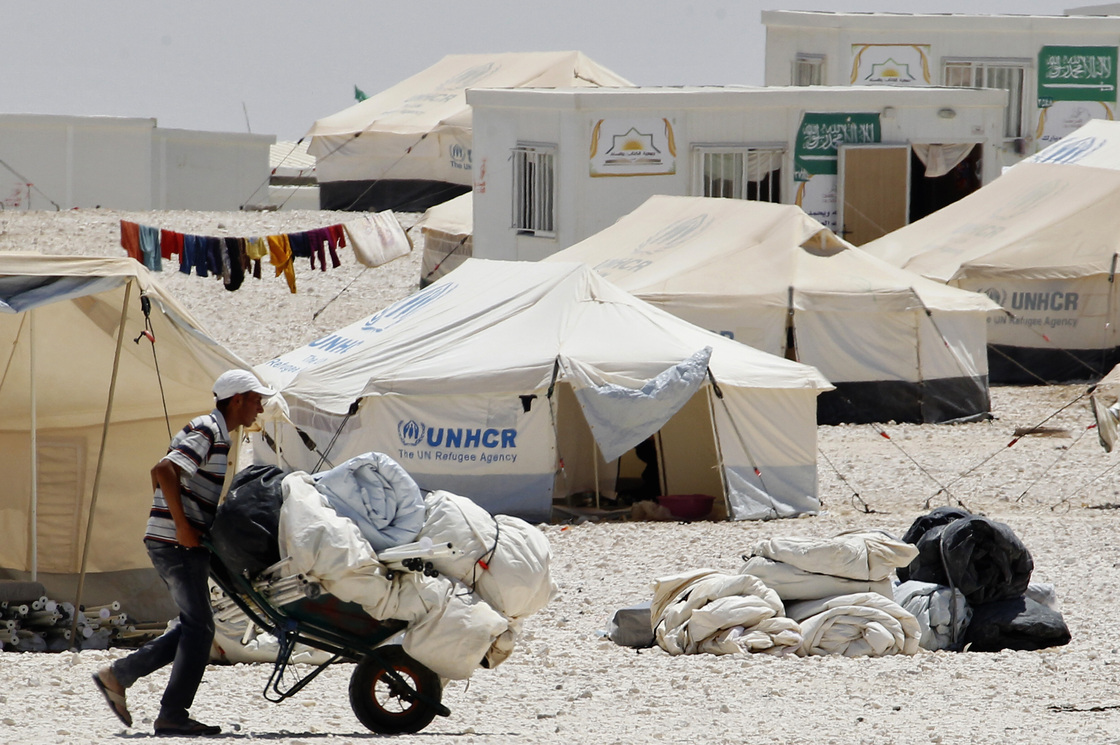
Today’s refugees often end up in refugee camps set up by the United Nations. The UNHCR manages camps around the world for millions of refugees, who often live for years in shelters provided by the organization. UNHCR has long used canvas tents as the basic shelters for refugee families, as seen in this photo of a refugee camp in Jordan:

17996881_h22833365

UNHCR is currently experimenting with new shelters, including one designed by IKEA. The new shelters would be pre-fabricated semi-permanent shelters that could be transported to sites and constructed by refugee families. UNHCR is sending prototypes of the new shelters to several refugee camps to test their effectiveness.

ikea-tent3

NPR reports on the IKEA shelters and UNHCR’s refugee camps. The UNHCR website has additional information.

Historians and other researchers working on civilians and refugees in warfare will be interested in the testing of these shelters, which may have the potential to transform refugee camp conditions worldwide.

Posted in Civil Conflict, Civilians and Refugees in War, Globalization, History of Violence, Human Rights, Laws of War, War, Culture, and Society | 1 Comment

Berlusconi Found Guilty

Italian ex-premier Silvio Berlusconi has been found guilty of engaging in sex with an underage prostitute and of abuse of power.

If the “Rubygate” conviction is upheld, Berlusconi would serve 7 years in prison and be banned from holding public office.

Rubygate

There will undoubtedly be appeals in this sensational case, but Berlusconi’s legal troubles continue to mount as he has been convicted of multiple offenses in separate cases.

BerlusconieRuby

Repubblica and the BBC report on the verdict.

Students studying Italian history and European Union politics will want to follow this developing story.

Posted in European Union, Italian History, Political Culture | Leave a comment

Sexual Assault in the US Military

Sexual assault in the United States military has recently been recognized as a serious problem, but the issue has deep roots.

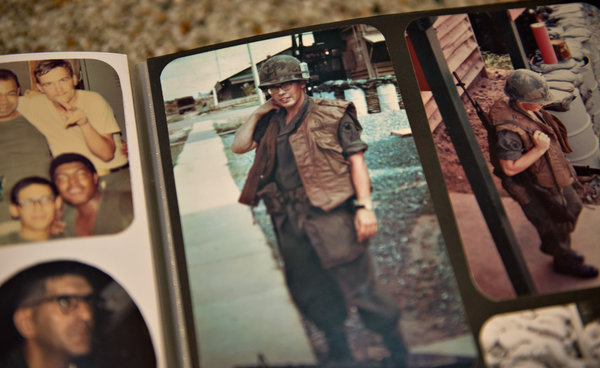
Veterans of the Vietnam War have begun to offer testimony of sexual assaults during the 1960s and 1970s. A number of these cases involve male veterans who were assaulted by other male soldiers and sailors.

militarysexualassault

These stories of male victims of rape and sexual assault suggest a broader pattern of sexual violence that is often ignored: male-on-male sexual assault.

Recent assessments of sexual violence in the US military indicate that male soldiers and sailors apparently made up the majority (c. 53%) of victims in reported incidents of sexual assault in 2012.

Gendered analyses of sexual assault need to avoid the presumption that sexual violence is “violence against women.” Males are often victims of sexual assault in military organizations. Some incidents of female-on-male sexual harassment and assault in the US military have also emerged. This should remind us that both men and women can be victims of rape and sexual violence.

The problem of sexual assault in the military thus needs to be assessed through a careful study of the violent acts and the perpetrators of those attacks.

The New York Times reports on sexual assault in the US Armed Forces.

Posted in Gender and Warfare, History of Violence, Human Rights, War, Culture, and Society, Women and Gender History | Leave a comment