Paid Newspaper Coverage

Don’t like the news stories about your organization?  Or, think that newspapers are ignoring your organization’s work?

Apparently, now you can simply pay newspapers to cover your organization and control its public image.

Several California universities recently signed contracts with the Orange County Register to publish features on their schools.

According to NPR: “earlier this year, the newspaper’s executives offered three schools a deal: Pay us $275,000, and we will give you a year’s worth of weekly sections — filled with feel-good features, smiling pictures of students and guest columns written by faculty. Chapman University, the University of California, Irvine and California State University, Fullerton all signed on.”

20121103_ocregister196

The practice of paying for newspaper coverage raises serious questions about whether news organizations can still deliver news information at all. Journalistic standards continue to deteriorate as print and online newspapers rapidly evolve.

For universities to use such methods suggests a corruption of their educational roles by marketing units within university administrations.

NPR reports on this story.
Posted in Digital Humanities, Education Policy, Globalization, History in the Media, Information Management, Political Culture | 1 Comment

Sex, Gender, and World War II

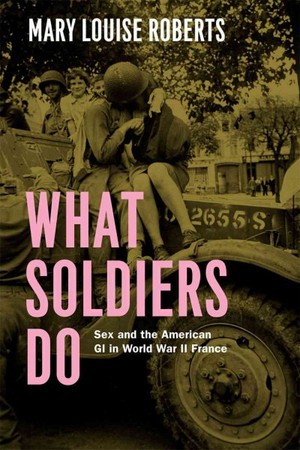
Marie Louise Roberts explores gender and sexuality among American soldiers serving in France during the Second World War in a new book entitled, What Soldiers Do: Sex and the American GI in World War II France.

WhatSolidersDo

Roberts is Professor of History at the University of Wisconsin at Madison, where she studies gender relations in modern French history.

NPR interviews Roberts about the book.

Posted in Civilians and Refugees in War, European History, French History, Gender and Warfare, History of Violence, War, Culture, and Society, Women and Gender History | Leave a comment

French Presidential Palace Auctions Wines

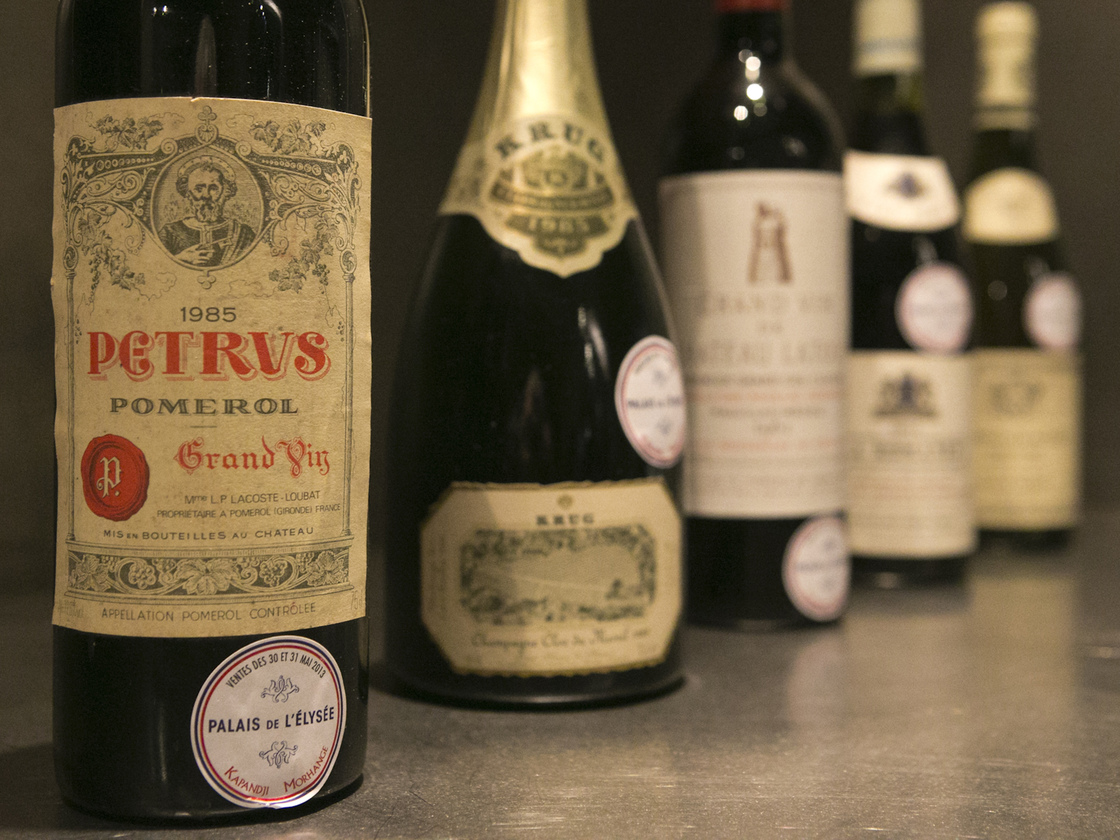
The Palais de l’Élysée, official residence of the Président de la République in France, auctioned off approximately 10 percent of its wine cellar this week.

ap123534291542

This is reportedly the first such sale by the Élysée, intended to raise money to purchase newer wines by more recent winemakers.

For more information on the wine auction, see NPR or the Palais de l’Élysée website.

Posted in European History, European Union, Food and Cuisine History, French History, Paris History | 1 Comment

Emotions in Medieval and Early Modern History

The Center for Renaissance Studies at the Newberry Library is offering a 10-week graduate seminar:

The History of Emotions, Medieval and Early Modern
Directed by Barbara Rosenwein, Loyola University Chicago
Early application deadline: Monday, June 10
2:00 – 5:00 pm Thursdays, September 26 – December 5
http://www.newberry.org/09262013-barbara-rosenwein-history-emotions-medieval-and-early-modern

Like all things human, emotions have a history, but it has not often been traced. Since we all have our own notions of “emotion,” early on in this seminar students will be introduced to current psychological theories and definitions. The group will then explore old and new narratives of emotions’ history. At the same time, participants will perform independent research in various areas of the history of emotions.

Students and the professor will explore in seminar discussions the ways emotions have been studied by historians in the past and learn new methods and approaches, including modern theories of the emotions. Emphasis will be on the emotional life of the medieval and early modern periods. Participants will also draw up a dossier of materials that work together to illuminate some aspect of emotions in history, present their findings to the seminar, and write a research paper.

Eligibility: Enrollment is limited to 12, with priority to students from Center for Renaissance Studies consortium institutions, in accordance with the consortium agreement. The course fee is waived for consortium students.

We will notify applicants whether they have been accepted by Monday, June 17. We will take later applications if space permits.

________

Center for Renaissance Studies
The Newberry Library
60 West Walton Street
Chicago, IL 60610-7324
phone: 312-255-3514

Posted in Conferences, Early Modern Europe, Early Modern World, European History, Graduate Work in History, Lectures and Seminars, Renaissance Art and History | Leave a comment

Elizabethan Privateering and Cyberwar

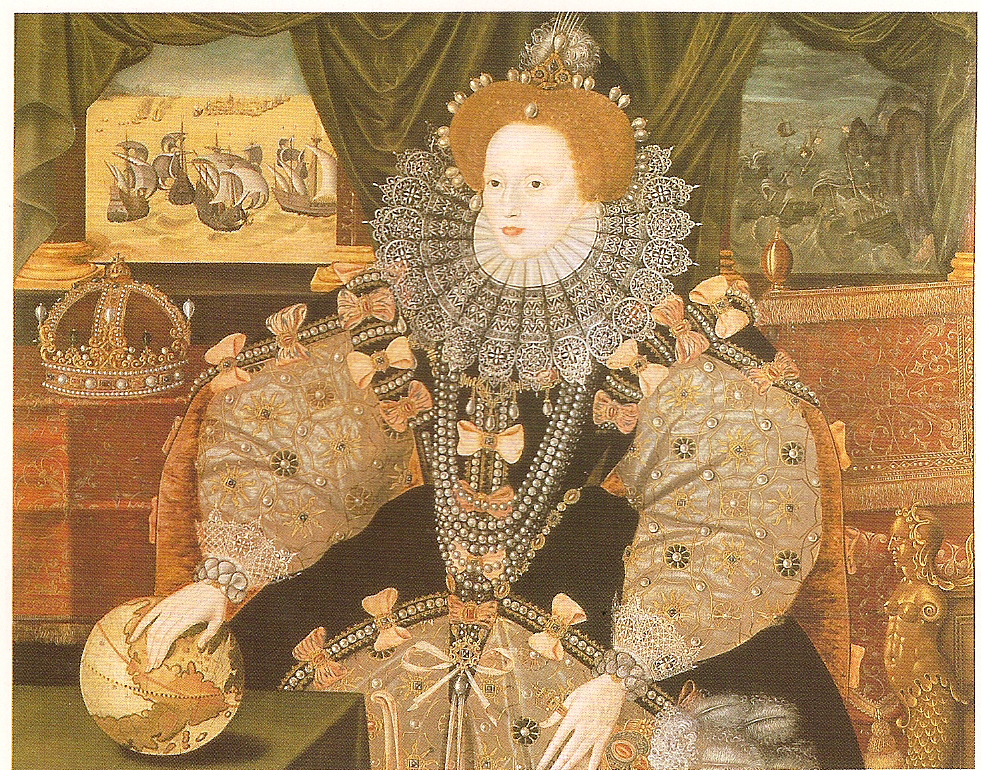
An op-ed in the New York Times compares cyberwar to the privateering conflicts of the Elizabethan period.

Jordan Chandler Hirsch and Sam Adelsberg, authors of the op-ed, argue that “In confronting today’s cyberbattles, the United States should think less about Soviets and more about pirates. Indeed, today’s cybercompetition is less like the cold war than the battle for the New World.”

“In the era after the discovery of the Americas,” Hirsch and Adelsberg contend, “European states fought for mastery over the Atlantic. Much like the Internet today, the ocean then was a primary avenue for trade and communication that no country could cordon off.”

elizabethportrait

The op-ed discusses the historical context of privateering in the Atlantic world during the late sixteenth century: “At that time, the Spanish empire boasted a fearsome navy, but it could not dominate the seas. Poorer and weaker England tested Spain’s might by encouraging and equipping would-be pirates to act on its behalf without official sanction. These semi-state-sponsored privateers robbed Spain of gold and pride as they raided ships off the coasts of the New World and Spain itself, enriching the English crown while augmenting its naval power. Spain’s inability to attribute the attacks directly to England allowed Queen Elizabeth I to level the playing field in an arena lacking laws or customs.”

For the op-ed by Jordan Chandler Hirsch and Sam Adelsberg, see the New York Times.

Posted in Early Modern Europe, Early Modern World, History of Violence, Information Management, Laws of War, Maritime History, Piracy, Reformation History, Religious Violence, Renaissance Art and History, Strategy and International Politics, War, Culture, and Society, Warfare in the Early Modern World | 1 Comment

On Accents and Class in the Film Zulu

Michael Caine’s breakout role as a film actor was in the film Zulu (1964), in which he played Lieutenant Bromhead, a young upper-class officer with a snooty accent.

Caine-Zulu

Caine recalls that, “in Zulu I was cast as a wishy-washy upper-crust Victorian officer. Now, I wasn’t in a very strong position to make radical suggestions about interpretation. I had got the part by the skin of my teeth. Originally I’d gone to audition for the part of a Cockney private, but they’d already cast that role. However, since I was tall and fair, I apparently looked like a posh Englishman, and the director, Cy Endfield, asked if I could do an upper-class accent. I switched quickly to Etonian and said, ‘Why, Mr. Endfield, I’ve been doing it for years.'” — Michael Caine, Acting in Film: An Actor’s Take on Moviemaking, 2nd ed. (1997), 99.

Michael Caine discusses how he got the part and prepared for this role in a recent interview on NPR online.

528-nysm-df-13048

In another interview on the Telegraph, Caine relates his reaction to hearing himself when Zulu was released.

Posted in European History, Historical Film, History in the Media, War in Film, War, Culture, and Society | 3 Comments

Naming Wars

Historians often face difficulties in naming events, including wars.

Although many people assume that events simply occur, historians are acutely aware that “events” are socially and culturally constructed. Historians have to grapple with the difficulties of arbitrarily determining when an “event” starts and finishes within a broader continuum of changes over time.

namingwars

Ideally, the historical emplotment of each “event” is carefully crafted, with each choice in designating an “event” justified by a careful consideration of diverse documents and perspectives. Yet, even when care is used, the construction of an “event” (whether fistfight, protest, train wreck, market day, stock market crash, court trial, or battle) is a creative act by observers and historians.

Andrew Bacevich, Professor of History at Boston University, considers the problems of naming wars in a recent piece on TomDispatch. The historical construction of wars as “events” is incredibly complicated, since wars often involve entire societies and incredibly complex social dynamics.

This piece was reposted on HNN.

Posted in Historiography and Social Theory, History of Violence, Political Culture, Strategy and International Politics, War, Culture, and Society | 1 Comment

Historical Perspectives on Climate Change

How will climate change affect human societies worldwide in the coming years?  It is difficult to envision all of the potential ramifications of climate change, but disaster planners certainly need to prepare for extreme climate events.

One of the best ways to gauge the potential consequences of climate changes is to study past periods of climate change. Climate scientists, geologists, and archaeologists have been examining the long climatic history of the earth for some time. Historians are increasingly joining in the efforts to reconstruct the “deep history” of the planet’s climate.

One of the main areas of historical work on climate change is the “Little Ice Age” of the seventeenth century, also sometimes referred to as the “General Crisis of the Seventeenth Century.” A period of global cooling, or “Little Ice Age” has been documented during the seventeenth century, and the cold temperatures contributed to significant economic and social disruptions in many regions of the globe.

GrandBanks1683

Geoffrey Parker, one of the preeminent historians of the “General Crisis of the Seventeenth Century,” recently published a new study of seventeenth-century climate change, Global Crisis: War, Climate Change and Catastrophe in the Seventeenth Century (Yale University Press, 2013). The book promises to draw together the past three decades of studies of climate change in the early modern world. Yale University Press provides a book description on its website.

Parker summarizes his argument in a piece for the Chronicle of Higher Education.

Posted in Atlantic World, Civilians and Refugees in War, Early Modern Europe, Early Modern World, Environmental History, European History, European Wars of Religion, History of Science, Maritime History, Mediterranean World, State Development Theory, Warfare in the Early Modern World | Leave a comment

First Gay Marriage Celebrated in Montpellier

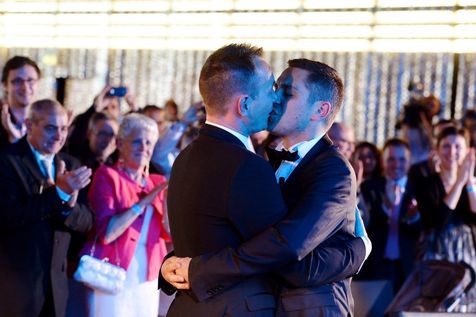
The first gay marriage in France has been celebrated in Montpellier.

Vincent Autin and Bruno Boileau married on 29 May 2013 in this southern French city— the first gay couple to be officially wedded as the new law legalizing gay marriage took effect.

VincentetBruno-oui

There have been numerous protests by Catholics and conservative groups against the gay marriage law over the past several months.

Apparently, an anonymous caller threatened to disrupt the marriage, but the ceremony went ahead despite the threat.

Libération reports on the marriage.


Posted in French History, Human Rights, Languedoc and Southern France, Religious History, Religious Politics, Women and Gender History | Leave a comment

Knife Attack on French Soldier

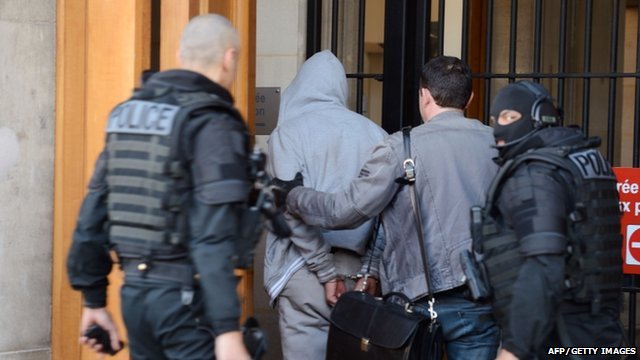
A young man assaulted a French soldier with a knife today that may have been partially patterned on the recent attack on a British soldier in Woolwich. The soldier survived the attack and his attacker has been arrested.

knifeattackinParis

Witnesses alleged that the assailant was a Muslim of North African origin. The attack is sparking fears of a widespread pattern of such individual knife attacks, motivated by Islamist politics. But, it is too early to know the precise motivations of this attacker.

French officials will need to be vigilant to prevent further attacks, but also to avoid inciting anti-Muslim reprisals by extremist groups in France.

The BBC reports on the attack.

Posted in European History, European Union, French History, History of Violence, Paris History, Terrorism | Leave a comment