Anti-Muslim Attacks in the United Kingdom

Last week, two Islamist militants brutally murdered a British soldier, Drummer Lee Rigby, in Woolwich, running over him with a car and then stabbing and hacking him to death. The shocking murder has prompted outrage in the United Kingdom and beyond.
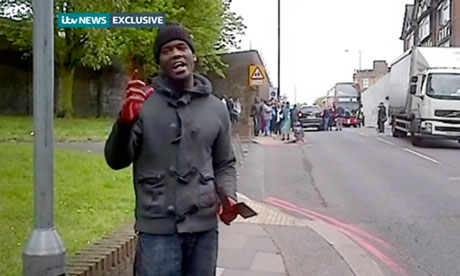
Woolwich murder suspect

The BBC and the Guardian report on the brutal murder. The Guardian discusses the identity of the soldier.

The murder has also tragically triggered a wave of anti-Muslim violence across the United Kingdom, targeting individual Muslims randomly and damaging several mosques.

The English Defense League, a right-wing anti-immigrant group, held an anti-Muslim protest in front of Downing Street in reaction to the murder of Drummer Rigby.

EnglishDefenseLeague

NPR and the Guardian report on the anti-Muslim attacks.

NIU students in HIST 740 Religious Politics and Sectarian Violence will want to examine this disturbing case of religious violence and political mobilization.
Posted in European History, European Union, History of Violence, Human Rights, Religious Politics, Religious Violence, Terrorism | Leave a comment

Corporate Deals in Online Education

Udacity has concluded a deal with Georgia Institute of Technology for an online master’s program. “Georgia Tech this month announced its plans to offer a $6,630 online master’s degree to 10,000 new students over the next three years without hiring much more than a handful of new instructors,” according to Inside Higher Ed.

The details of this deal reveal the extensive and rapidly growing influence of for-profit corporations in higher education, especially in online education and MOOCs.

Udacity and Georgia Tech both aim to generate enormous profits through their partnership. Inside Higher Ed reports that “Georgia Tech will receive 60 percent of the revenue and Udacity the rest. The money to Georgia Tech will flow through its research corporation.”

In order to generate profits, Georgia Tech intends to coopt its faculty and transform them into income generators. “Professors and the computing college both stand to gain from the effort,” Inside Higher Ed reports. “A professor will receive $20,000 for creating a course and $10,000 for delivering the content — meaning most professors will receive $30,000 per course. Professors will receive a royalty of $2,500 each time the course is offered again.”

There will be sweeping changes in educational labor with this contract. Udacity and Georgia Tech will create “two classes of educators” to work with the new master’s program. Inside Higher Ed indicates that “on Udacity’s side are company staff who will be helping students with ‘non-academic and academic tasks,’ according to the contract. On Georgia Tech’s side is a new category of personnel who will help instructors manage the massive classes but, unlike teaching assistants in traditional courses, these employees are unlikely to be graduate students.”

So, corporate workers and non-academic university staff will be managing courses, including some “academic tasks,” apparently including grading and interacting with students.

Forget about all the old worries about “degree mills” or about a consumer model of education creeping into academic life. This move represents an actual corporate takeover of higher education, and at the master’s level.

Inside Higher Ed provides a lengthy report on Udacity’s deal with Georgia Tech.

Posted in Academic Freedom, Digital Humanities, Globalization, Humanities Education, Information Management | Leave a comment

WWII Soldier who Inspired the Dirty Dozen?

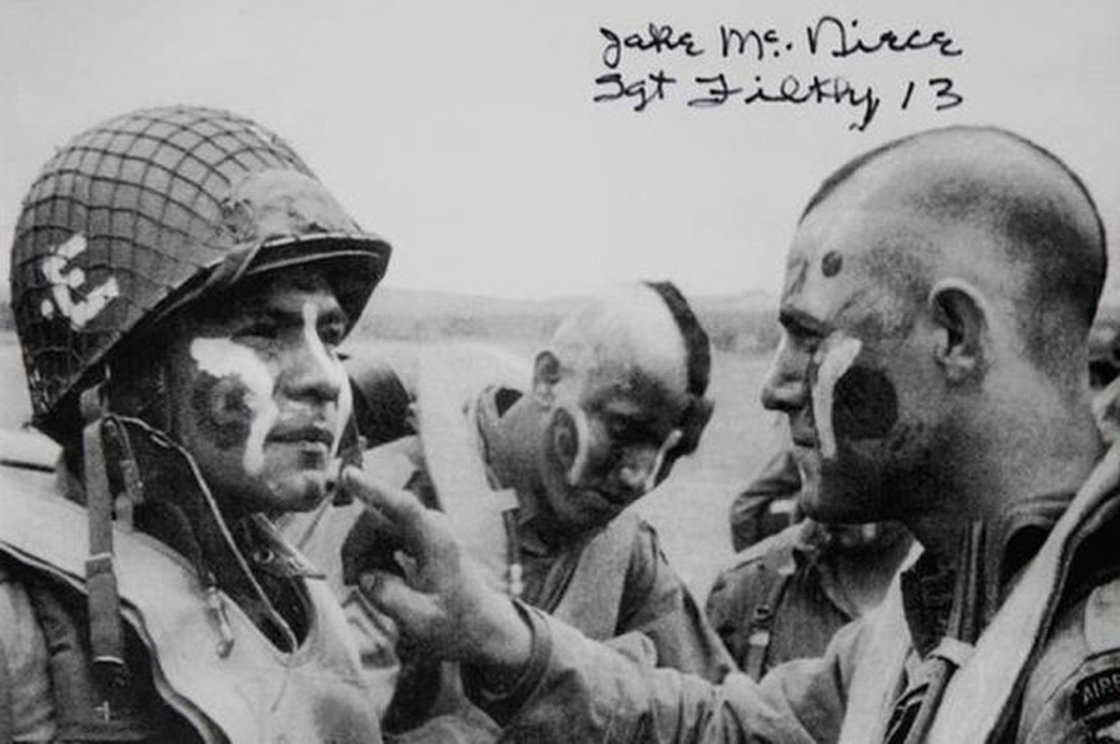
Jake McNiece, a sergeant in the U.S. 101st Airborne Division during the Second World War, died this year at the age of 93.  McNiece led a squad of paratroops who became known as the “Filthy Thirteen,” which may have become a model for the war film The Dirty Dozen (1967).

mcniece

Photo: Stars and Stripes.

McNiece famously had his paratroopers shave their heads into mohawks and don warpaint before jumping into France during the D-Day landings. Stars and Stripes photographed his unit’s preparations for battle. McNiece went on to fight at the battle of the Bulge and in numerous other combats during the Second World War.

Several books on D-Day and U.S. paratroopers in the Second World War have featured the exploits of Jake McNiece, including:

Bando, Mark. 101st Airborne: The Screaming Eagles in World War II. St. Paul, MN: Zenith Press, 2007.

Killblane, Richard, and John McNiece. The Filthy Thirteen: The True Story of the Dirty Dozen. Havertown, Pa: Casemate, 2003.

Note that these books are popular works of military history, not academic studies.

Nonetheless, students in HIST 390 War in Film may be interested in finding out more about Jake McNiece and his unit as a potential source for the film The Dirty Dozen.

E.M. Nathanson’s novel The Dirty Dozen, on which the film was based, drew on the stories and photographs of war photographer Russ Meyer, who served in the U.S. Army Signal Corps during the Second World War. Roger Ebert wrote a tribute to Meyer, who went on to direct X-rated films in the 1960s and 1970s. [I thank Darren Sapp for bringing this connection to my attention.]

NPR offers this remembrance of McNiece. PRI’s The World presents an earlier interview with McNiece from 2002.

Posted in European History, Historical Film, History of Violence, War in Film, War, Culture, and Society | Leave a comment

Machiavelli’s Il Principe at 500

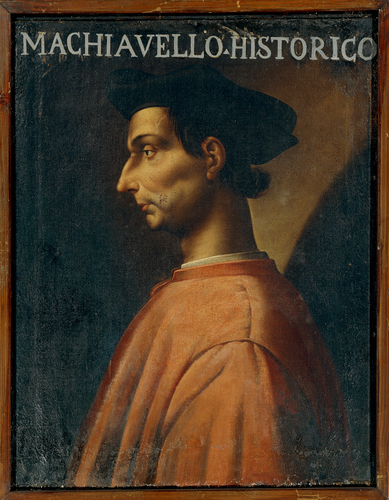
Political theorists and Italian studies scholars are celebrating the 500th anniversary of Niccolò Machiavelli’s Il Principe (The Prince), which was written in 1513 and published in 1532.

machiavelli2

Machiavelli’s Il Principe is a brief treatise on the art of governing that shocked many contemporaries and ended up on the Papal List of Prohibited Books. Early modern political theorists nonetheless debated Machiavelli’s work and wrote numerous responses to it. An entire genre of anti-Machiavellian political theories developed following its 1532 publication and remained popular through the eighteenth century. Although Il Principe was a distillation of Machiavelli’s more extended treatises, the book has remained his most read work and it continues to be used in undergraduate history and philosophy courses worldwide.

The Aspen Institute Italia and the Istituto della Enciclopedia Italiana (or Treccani Institute), are jointly sponsoring an exhibition on Niccolò Machiavelli: The Prince and his times. 1513-2013 at the Vittoriano Museum in Rome from 25 April to 16 June 2013.

NPR reports on celebrations in Italy.

Northern Illinois University students in HIST 420 The Renaissance will be interested in this story.

Posted in Early Modern Europe, European History, Italian History, Laws of War, Political Culture, Renaissance Art and History, State Development Theory, Strategy and International Politics | Leave a comment

Remembering the Lafayette Escadrille

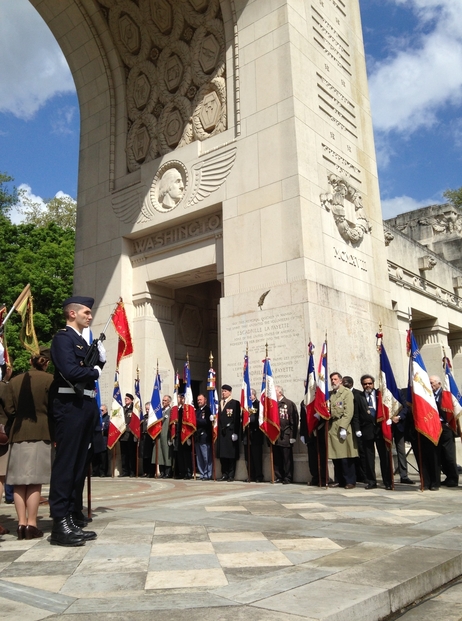
Each Memorial Day, the Escadrille Lafayette (or Lafayette Squadron, but commonly referred to in English as the Lafayette Escadrille) is honored in France. The Lafayette Escadrille was formed during the First World War, as American students in France created a fighter squadron to participate in the war prior to the American declaration of war.

beardsley

NPR reports on the Memorial Day ceremonies in France. The article erroneously describes the squadron as a “little known group of pilots,” however.

The Lafayette Escadrille is arguably one of the most famous fighter squadrons in history, with hundreds of books and articles devoted to it. The squadron is well known not only to historians of the First World War and the history of aviation, but also to wargame players and history buffs. Numerous historical films and television programs have featured the squadron, including William A. Wellman’s feature film, Lafayette Escadrille (1958), Flyboys (2006), and Against the Wind (2012). Many air museums across the United States have exhibits featuring the Lafayette Escadrille.

Posted in European History, French History, Museums and Historical Memory, War in Film, War, Culture, and Society | Leave a comment

Religious Politics and Protest in France

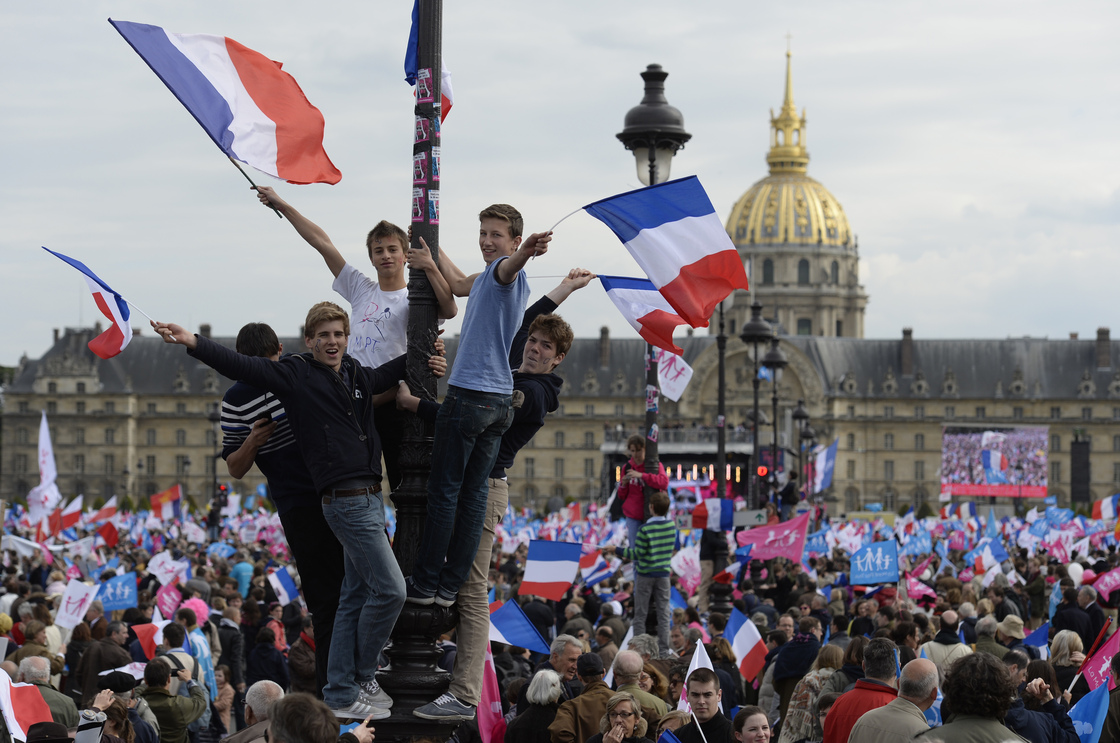
Religious political groups have mobilized against France’s new gay marriage law, organizing a massive protest in Paris yesterday, Sunday 26 May. An estimated 150,000 protesters participated in “La Manif pour tous” (the protest for everyone). This phrase is a counterattack to the slogan of the campaign for gay marriage in France, “Mariage pour tous” (marriage for all).

Manifpourtous

Catholic militants have led the charge against gay marriage in France, but conservative Muslim and Jewish groups have also participated in many protests. Religious politics has united diverse groups on this particular issue, perhaps reshaping the broader configurations of protests on human rights issues.

The protest yesterday turned violent, as some protesters clashed with French riot police after the end of the official protest.

Le Monde reports on the protest. NPR and the Guardian provide reports in English.

This protest follows the dramatic political suicide of Dominique Venner, a right-wing political figure and ex-soldier, who shot himself in front of the altar at the cathédrale de Notre-Dame de Paris on 21 May in a protest against gay marriage.

Venner

Le Monde reports on Venner’s suicide. Le Monde also reports on a counter-protest in the cathédrale de Notre-Dame de Paris the next day, in which a member of the feminist organization Femen bared her chest (with the slogan, “May Fascism Rest in Hell”) and pretended to shoot herself, mocking Venner’s suicide.

Although France is often described as a secular or post-religious society, the intensity of religious politics over gay marriage suggests that religion still plays important roles in French society.

Posted in European History, European Union, French History, Human Rights, Religious History, Religious Politics | Leave a comment

Digital Tools in Archival Research

Historians have been using digital tools in archival research for some time now, but news media are finally beginning to pay attention to digital humanities.

An article in the New York Times reports on historians’ use of digital cameras in the archives. The story discusses historians’ strategies of taking digital photos to shorten their archival trips, as well as archivists’ concerns about conserving documents that are being photographed. Nothing in this story will seem new to today’s historians, but perhaps this story will stimulate more awareness in the public of historians’ research methods.

How are historians using digital cameras and other tools in the archives?

Comment on your own methods of digitizing sources and using digital humanities resources below….

Thanks to Jennifer Wegmann-Gabb, a History student at Northern Illinois University, for sharing this article.

Posted in Archival Research, Digital Humanities, Graduate Work in History, History in the Media, Humanities Education, Information Management, Undergraduate Work in History | Leave a comment

Saving Manuscripts in Timbuktu

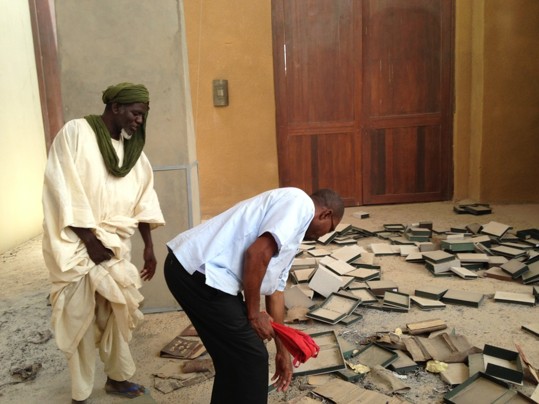
When Malian rebels and Islamist militants took control of Timbuktu last year, they targeted Sufi shrines and cultural heritage sites they viewed as idolatrous. They also aimed to destroy medieval manuscripts that they consider heretical and secular.

Most of Timbuktu’s manuscripts at the Ahmed Baba Institute and other archives were saved by intrepid Malians who took enormous risks to protect their historical heritage.

timbuktu

Photo credit: Sudarsan Raghavan, Washington Post

A new report in the Washington Post details one of the remarkable stories of saving manuscripts in Timbuktu.

Posted in Archival Research, Civil Conflict, Civilians and Refugees in War, Museums and Historical Memory, Religious Violence, Revolts and Revolutions, War, Culture, and Society | 1 Comment

Interactive ebooks

A new generation of ebooks have arrived: interactive ebooks. Readers who remember the Choose Your Own Adventure children’s books and other interactive books of the 1980s will get the idea.

An interactive ebook of The Thirty-Nine Steps, a classic spy novel, was recently launched.

London Book Fair 2013

NPR and the Guardian report on The Thirty-Nine Steps ebook.

Posted in Digital Humanities, History in the Media, History of the Book | Leave a comment

Global Tourism and Graffiti

Global tourism is putting increasing pressure on historical sites and monuments, as growing numbers of tourists visit major cultural tourist locations around the world.

High standards of living, lengthy vacations, and relatively affordable flights have allowed many Western Europeans, Canadians, Americans, and Australians to participate in global tourism since the 1950s. Mass tourism now involves large groups that are transported locally by cruise ships and buses and that can overwhelm port cities, small towns, and remote villages that have cultural sites. Latin Americans, Eastern Europeans, and Russians have become mass tourism customers since the 1990s. Increasing numbers of Indians and Chinese are now joining the expanding wave of global tourism.

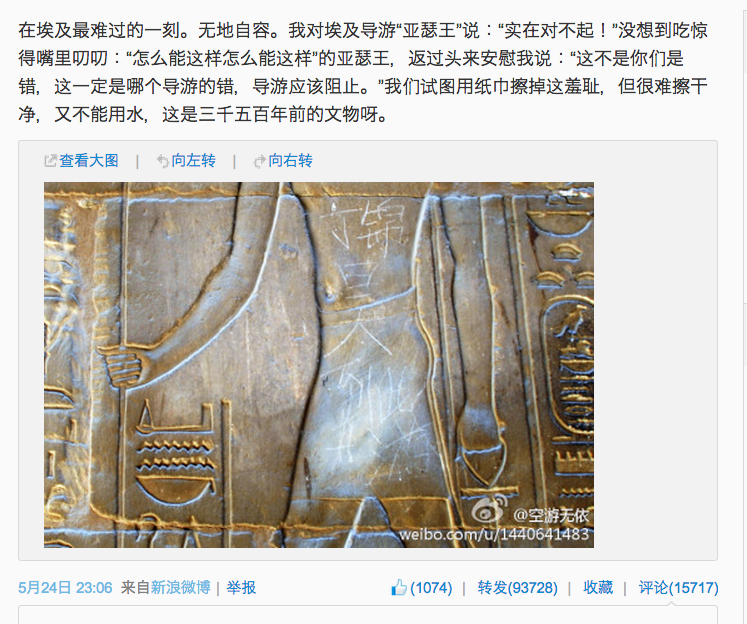
Graffiti is now one of the biggest problems associated with mass tourism. An incident of graffiti vandalism by a Chinese teenager at Luxor, Egypt, has apparently led to a debate about graffiti and tourism in China.

graffiti-Luxor

Le Monde reports on the debate in China.

Tourist graffiti has a long history, however. The early modern form of mass tourism, the noble grand tour, sometimes involved leaving graffiti on monuments visited. I have personally seen eighteenth-century graffiti at monuments in southern France and Italy.

On graffiti and tourism, see: Andrea Mubi Brighenti, ed., The Wall and the City/Il muro e la città/Le mur et la ville (2009).

Graffiti and mass tourism are major concerns in European and Mediterranean nations with historical sites that are popular tourist destinations.

Posted in Art History, Early Modern Europe, Early Modern World, European History, European Union, Globalization, Mediterranean World, Museums and Historical Memory | Leave a comment