Gender Studies Under Fire in France

The academic field of gender studies is under attack in France. The debate over gay marriage has prompted many French conservative politicians and Catholics to severely criticize gender studies for undermining family relations and traditional society. Conservative political and religious groups in France have organized massive protests against the Mariage pour tous (Marriage for All) campaign.

These critics claim that biological differences between males and females are indeed real and the gender theories of the social and cultural construction of gender categories are nothing but ideologies.

antigenre

According to Le Monde, the Union nationale inter-universitaire (UNI), a right-wing student association recently founded l’Observatoire de la théorie du genre, aiming to “ouvrir les yeux sur la théorie du genre”, which it calls an “idéologie […] qui vise à remettre en cause les fondements de nos sociétés ‘hétéro centrées’, de substituer au concept marxiste de la lutte des classes, celui de la lutte des sexes.”

Le Monde reports on the attack on gender studies in France.

I would note that based on my own experience in French universities and archives, many French academics view gender studies as an American import. Although I do not have access to statistics on this issue, professors of gender studies seem relatively few in number in French universities. The French professors of gender history I have spoken with feel marginalized within the French higher education system.

So, despite the recent legalization of gay marriage in France, religious politics continues to threaten gender studies and broader notions of academic freedom in France.

Posted in Academic Freedom, Education Policy, European History, European Union, French History, Humanities Education, Political Culture, Religious Politics, Women and Gender History | Leave a comment

A New Curator at the Biennale di Venezia

The Biennale di Venezia, one of the most famous international annual art exhibitions, has a new curator this year. Massimiliano Gioni, an Italian-born curator who is currently a director at the New Museum in New York, is curating the Biennale, which is preparing to open.

Gioni-BiennalediVenezia

The New York Times reports on Gioni and the Biennale di Venezia.

Posted in Art History, European History, European Union, Museums and Historical Memory | Leave a comment

Digital Humanities and the History of the Internet

Historians are working to study the development of the internet and the World Wide Web, as well as to preserve digital history.

Digital humanities needs to grapple with issues of digital preservation and conservation, key aspects of any notion of digital history.

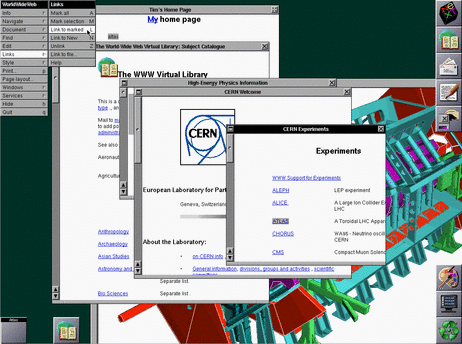
Preserving the constantly changing digital universe of the World Wide Web is an impossibility. Websites are continually updated, meaning there is no stable web universe, even for a moment.

webscreenshot1993

A more reasonable goal for digital historians is to preserve the earliest versions of the World Wide Web. Historians and computer techs are now attempting to reconstruct the earliest webpages and preserve the earliest web servers.

first-www-computer

NPR reports on these attempts.

Posted in Digital Humanities, Globalization, Humanities Education, Information Management | Leave a comment

The Political and Corporate Interest in MOOCs

The biggest proponents of Massive Open Online Courses (MOOCs) are not professors, but politicians and business leaders. These cheerleaders for MOOCs present university and college faculty members as conservative detractors of their forward-looking plans.

The agendas of the political and corporate interests who are backing MOOCs need to be examined closely. Concerned citizens do not have to look hard to find ample evidence of the agendas driving MOOC development, which is part of a broader drive to advance for-profit education.

A new article by former Florida Governor Jeb Bush and educational corporate leader Randy Best sets forth their political-corporate agenda. Their vision of education would be one of corporate training for future corporate workers. This article is part of a much broader political-corporate movement for “disruptive education” that envisions destroying research integrity, academic excellence, faculty autonomy, and curricular innovation through a corporate model of education.

For-profit universities, for-profit educational publishers, and for-profit MOOC providers have aligned in an assault on private and state universities in the United States. They claim that they will cut tuition rates, save students money, and streamline time-to-degrees (all without affecting academic standards).

Don’t believe it.

Note that many corporate leaders in this movement (such as Randy Best) present themselves as “philanthropists,” but actually still own or have investments in educational corporations that would profit from the initiatives they promote.

Politicians and their corporate allies are pushing their own agenda in a bid to transform all of higher education into a for-profit industry.

Parents of today’s middle school and high school students should be very concerned about these trends. Your sons and daughters may end up being degree-purchasing consumers instead of college students.

Inside Higher Ed publishes Jeb Bush and Randy Best’s essay.


Posted in Digital Humanities, Education Policy, Globalization, Humanities Education, Information Management, Undergraduate Work in History | Leave a comment

What MOOCs Can and Cannot Do

The intense debate about the role of Massive Open Online Courses (MOOCs) in higher education continues. Proponents and administrators tout the potential of MOOCs to transform universities, while skeptics question the benefits of these online courses and critics highlight the threats they pose to student-faculty interaction, curricular design, and faculty autonomy.

A new article in the Chronicle of Higher Education surveys reactions to MOOCs by students who have taken a number of the online courses. Although the article presents the students’ comments in terms of feedback for professors who are teaching online courses, the students’ reactions are very revealing about the real uses of MOOCs.

One of the most powerful potential of MOOCs is to reach international students who want to do introductory studies in English language. The Chronicle article cites the example of “Markus Lauer, a 32-year-old Ph.D. student at Saarland University, in Germany, who has completed more than 28 MOOCs through Coursera.”

But, this same student indicates the basic nature of the MOOC information. According to the Chronicle, “the online courses have been a great way for him to get a quick introduction to new fields in a way books usually can’t provide. But to really learn any of those subjects in depth, he says, he’d have to hit the books in a more traditional way.” MOOC students seem to believe that the courses only offer basic introductory material.

MOOCs may be able to replace formal classroom lectures. MOOC users stressed the importance of professors’ “passion” for their subject as being key to their success as MOOC instructors. I would argue that this is identical to on-campus teaching. 

Formal classroom lectures have already been abandoned except in the largest 100-level lecture courses at many universities, however. Most history and humanities professors I know stress discussion over lecture, or at least blended lecture/discussions. So, perhaps MOOCs have the potential to replace 100-level introductory survey courses, but they will have to compete simultaneously with AP courses and community college survey offerings which are already replacing 100-level offerings at many universities.

MOOCs clearly do not replace books. The Chronicle article reports that “When the only materials are lecture videos, it can be hard to go back and study for quizzes or exams, several of the students say. Since the videos aren’t searchable in most MOOCs, students aren’t sure where in the video to look for a given concept they are reviewing.” One of the students questioned commented that: “I would really love that every course have some comparative set of reading materials.”

Unfortunately, some students follow MOOCs because they seem unable or unwilling to crack the cover of a book. The Chronicle reports: “Consider Anna Nachesa, a 42-year-old single mother in a village near Amsterdam who logs on to MOOCs for several hours each night after dinner with her teenage kids. She has always found TV boring, she says, and for her, MOOCs replace reading books. She is a physicist by training, with a degree from Moscow State University, and she works as a software developer.” MOOCs here serve as an alternative to TV, simply providing intellectual evening entertainment.

MOOCs could effectively compete with educational television programming, I imagine, but their production costs would have to approach those of PBS, BBC, and other educational television producers.

MOOCs currently seem to be a form of online educational entertainment. The Chronicle article points out that “The term ‘MOOCs’ is meant to parallel the video-game acronym ‘MMOGs,’ or massively multiplayer online games—collaborative worlds, like World of Warcraft, that have attracted millions of devoted players around the world. So perhaps it is no surprise that some MOOC students are driven to win as many certificates as possible and treat online lectures as a consuming pastime that keeps them from going outside to hang out with friends.” MOOC students then would represent educational gamers.

The strongest potential of MOOCs seems to be as a platform for professors to reach this broad public audience of educational gamers and become celebrities. MOOCs can serve as extended TED talks. The Chronicle article indicates that “When the students talked about the MOOCs they’ve taken, they usually mentioned the professor first. They sometimes couldn’t remember the name of the university offering the course.”

Professors are the “stars” and their digital courses are coming soon to a gamebox near you.

The Chronicle of Higher Education reports on MOOC students’ reactions to their online courses.

Posted in Digital Humanities, Education Policy, Humanities Education, Information Management, Undergraduate Work in History | Leave a comment

Debate Over Guns on College Campuses

A growing area of the gun control debate concerns the presence of guns on college campuses. Many colleges and universities have long had bans on the possession of guns on their campuses, but pro-gun political action groups would like to change that.

collegesmajorfrontguns

Pro-gun groups claim that allowing faculty and/or students to carry concealed handguns would improve campus safety and save lives. Gun control groups dispute this, claiming that colleges and universities are safer without guns on their campuses.

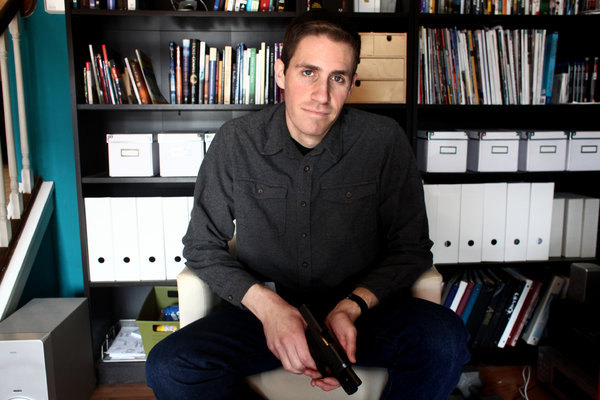
A mass shooting on 14 February 2008 on my campus at Northern Illinois University suggests the limitations of arms in protecting professors and students. When a former graduate student burst into a classroom and began shooting, there was no time for a reaction from professor and students. NIU Police, who were armed, responded immediately to the sound of gunfire, arriving within minutes.  But, the gunman had already completed his shooting spree and had shot himself.

The New York Times reports on the push by gun advocates to allow guns on campus.

Posted in Arms Control, Education Policy, History of Violence, Human Rights, Political Culture, Uncategorized | Leave a comment

Doctoral and Post-Doctoral Grants in Early Modern Iberian History

The CORPI Project (Conversion, Overlapping Religiosities, Polemics, and Interaction: Early Modern Iberia and Beyond) is currently recruiting doctoral and post-doctoral research fellows for 2013-14.

The application deadline is 31 May 2013.

The Project
This project is concerned with questions of religious change and specifically of the change brought about by forced mass conversion in late medieval/early modern Iberia. It will study adversarial relationships reconceived as dependencies, against a complex backdrop of dramatic religious change.

It departs from two convictions: Firstly, that new Converts constituted complex groups, in dialogue both among themselves and with Old Christians, and were open to the transmission and translation of ideas, images, and religious emotions. It will bring under close analysis the existence in sixteenth-century Iberia of cross-currents common to different religious groups, areas of local religiosity in which different religions overlapped, and vague or hybrid sorts of religiosity which indicate the blurring of clear ascriptions, categories, and borders including confusion, doubt, unbelief. Secondly, that the desire to eradicate difference within the majority society was always combined with the fear of infiltration and contamination, and that the disappearance of differences exacerbated the search for allegedly essential characteristics in those with Jewish and Muslim ancestors, who were generally seen by Christians as crypto-Jews or crypto-Muslims.

The project is at the same time concerned with the impact that forced conversion had on intellectual life (including the substitution of memory and re-invention of the past), and with the emergence of shifting identities and new religious attitudes. It will recalibrate the traumatic transition that led to the birth of the Inquisition and a mono-confessional Spain, and will convey the incredulous reaction of those who had to live through it, establishing what they read and what solutions they proposed.

Both aspects of overlapping and redefinition will be viewed in connection with the increasingly intense polemical engagement that was taking place in Europe, and against the backdrop of the movements of proselytization, migration, and religious conflict stimulated by the Reformation and by the Ottoman invasions. This broader framework needs to be taken into account in order properly to assess the nature of many phenomena in late-medieval/early modern Iberian intellectual and social history, and which have been exclusively attributed to the existence of Jewish and Muslim minorities in the Peninsula.

The broad framework includes the Iberian works of Islamic thought and anti-Christian polemic that were translated into European languages (Latin or vernacular), and used as a tool with which dissident elements reinforced a radical critique of Christianity and the Christian world. In the seventeenth century Islam was once more the vehicle for criticizing an intolerant Christianity, and in this process the Moriscos and their writings played a role that this project will explore.

The multi-faceted analysis of these phenomena will involve unearthing new archival material, most notably Inquisition trials, as well as numerous sixteenth- and seventeenth-century texts (both manuscripts and early modern editions) ranging from new translations of the Qur’an and other Jewish and Islamic classics (in Arabic and Hebrew) to a rich polemical literature (disputes, controversies, apologies, polemical hagiographies), as well as theological treatises on new converts, both in Latin and Spanish.

CALL: Post-doctoral Researchers
Two Post-doctoral positions for a two-year period extendable to five years. Candidates must have a doctorate in Medieval or Early Modern History or/and Arabic and Islamic or Hebrew and Jewish Studies. Knowledge of Arabic, Hebrew, Turkish or Latin is necessary. The candidate must work on a topic of research included in the general themes and objectives of the project. He/she will carry out his own project, but also participate in teamwork. He/she will contribute to the research activities of CORPI (such as conferences and seminars) supervise PhD students and be included in all aspects of the project. Working languages will be Spanish and English.

Requisites:
. Official transcript or equivalent of the title that enables the candidate to apply for the fellowship (doctorate). It will be needed only when the candidate selected will begin his/her contract.
. CV
. Research project.
. Sample of work, such as published articles or book chapters or unpublished chapter of PhD thesis.
. References. Only names and emails of the proposed referees are needed.

Post-docs. will receive, in the first two year period, 26.733,28 euros divided in 14 payments of 1.909, 52 euros. If the contract is renewed for another three years, the increase in salary will be substantial.
The call is open from 15 April 2013 to 31 May 2013. Interviews will take place at the end of June or first days of July. The positions will start from October 2013.
Applications must be sent to corpi@cchs.csic.es


CALL: Doctoral Reseachers
Four five years PhD positions. Candidates must have a Master Degree in Medieval or Early Modern History or/and Arabic and Islamic or Hebrew and Jewish Studies. Knowledge of Arabic, Hebrew, Turkish or Latin is necessary. The candidate must work on a topic of research included in the general themes and objectives of the project. Working languages will be Spanish and English.

Requisites:
. Official transcript or equivalent of the title that enables the candidate to apply for the fellowship: Spanish “licenciatura”, Master degree or equivalent in your country. It will be needed only when the candidate selected will begin his/her contract.
. Candidates which do not have a Master will have to finish one (60 credits) in the first year of the grant
.CV
. PhD project statement.
. Sample of work, such as published articles or book chapters or unpublished work, such as Master thesis.
. References. Only names and emails of the proposed referees are needed.

PhD positions will receive 22.128, 96 per year in 14 payments of 1. 580,64 euros.
The call is open from 15 April 2013 to 31 May 2013. Interviews will take place at the end of June or first days of July. The positions will start from October 2013.
Applications must be sent to corpi@cchs.csic.es

Posted in Early Modern Europe, Early Modern World, European History, Graduate Work in History, Grants and Fellowships, Human Rights, Religious History, Religious Violence, Study Abroad | Leave a comment

Archives and Gun Tracking

Historians use archives extensively in their research and are increasingly using digitized archives and other digital humanities resources.

It is surprising, then, to discover that the United States government is still using low-tech archival methods to keep track of firearms purchases and track down guns that have been used in crimes.

guntracing_03

There is no federal database of firearms purchases, so connecting firearms with criminals is apparently a painstaking task, involving sifting by hand through mountains of paper records.

NPR reports on the methods used by federal officials who search for records of guns used in crimes.

Researchers and students working on digital archives and information techniques will be interested in this story.

Posted in Archival Research, Arms Control, Digital Humanities, History of Violence, Information Management | Leave a comment

Arcimboldo’s Four Seasons in New York

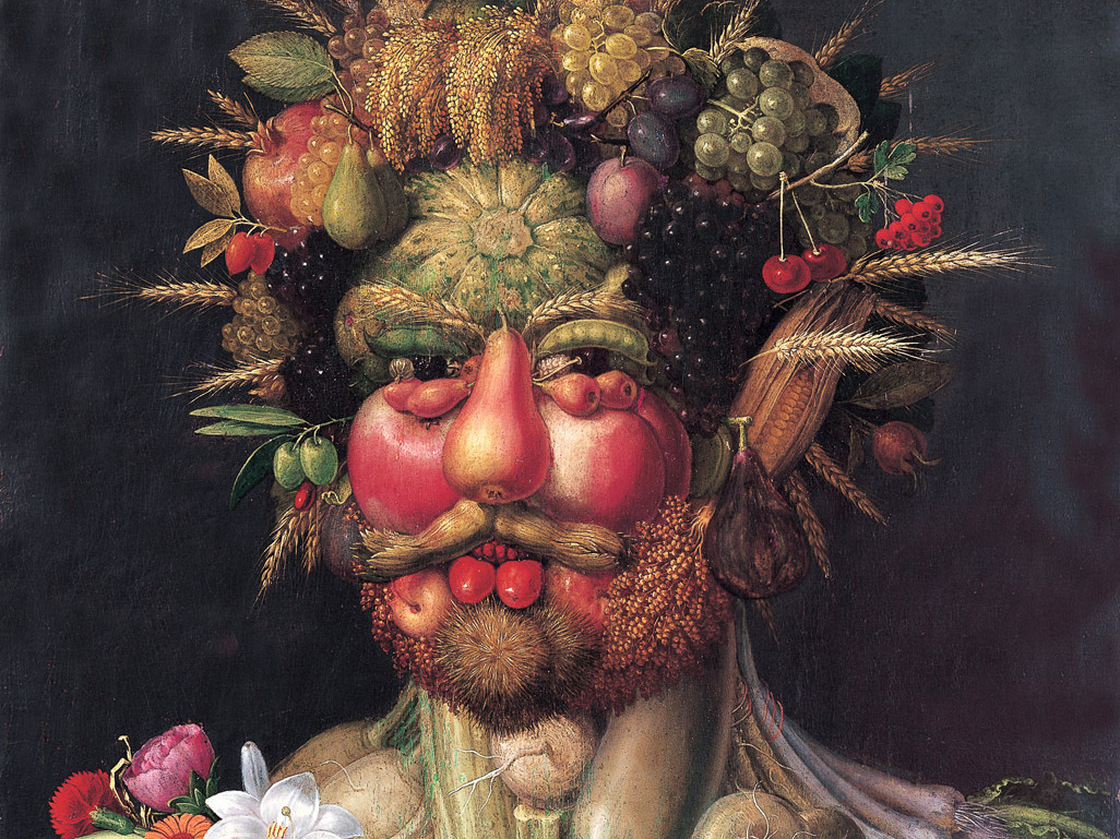
Renaissance artist Giuseppe Arcimboldo’s Four Seasons paintings have been transformed  into massive sculptures and are on display in New York. Philip Haas, a filmmaker and artist, has created a series of sculptures based on Arcimboldo’s paintings.

arcimboldovertemnus

According to NPR, “this weekend, the New York Botanical Garden opened a new exhibit featuring Haas’ giant, 15-foot-high fiberglass sculptures based on Arcimboldo’s “Four Seasons” — winter, spring, summer and fall personified as people, crafted of foods, trees and other natural elements.”

summer_ivo5588-3-

Students in HIST 420 The Renaissance will find this story curious, having discussed Renaissance food, markets, and paintings in detail.

Posted in Art History, Early Modern Europe, Early Modern World, European History, Food and Cuisine History, History in the Media, Italian History, Renaissance Art and History | Leave a comment

Teaching in English in France

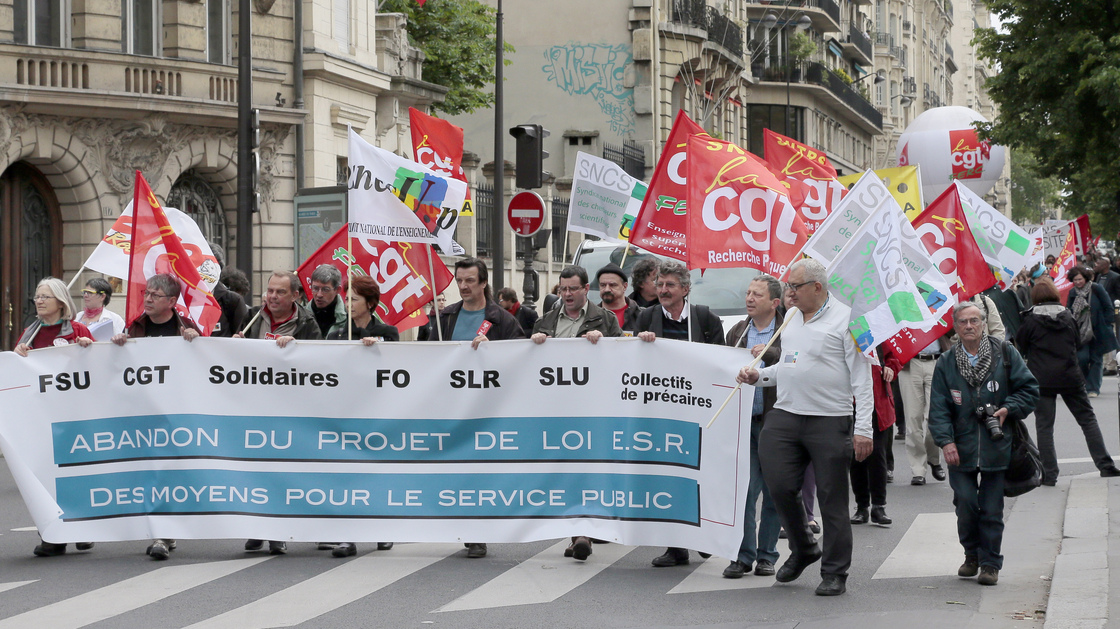
A newly proposed law in France would encourage English-language instruction at universities in France.

NPR asks “Will teaching in English at France’s universities undermine the French language? That’s up for debate in the country now, and the arguments are heated.”

protestESR

According to the Washington Post, “Higher Education Minister Genevieve Fioraso this week introduced a bill that would allow French universities to teach more courses in English, even when English is not the subject. The goal, she explained, is to attract more students from such countries as China, Brazil and India, where English is widely taught but French is reserved largely for literature lovers.”

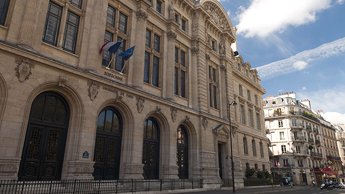
sorbonne

France has long utilized cultural patronage and official organizations such as the Alliance Française to promote French language abroad, while ensuring that educational institutions within France utilize French as their language of instruction.

The proposed law has outraged many professors and educational leaders. Jacques Attali, a cultural critic and former advisor to President Mitterand, has criticized the proposed law. Attali is quoted as arguing: “Not only would such a reform be contrary to the Constitution (which provides in its Article 2 ‘the language of the Republic is French’), but you cannot image an idea that is stupider, more counterproductive, more dangerous and more contrary to the interest of France.”

NPR and the Washington Post report on the proposed law. France 24 reports on the backlash to the proposed law.

Posted in Education Policy, European History, European Union, French History, Globalization, Humanities Education | Leave a comment