Santa Muerte and Violence in Mexico

The Vatican has launched a campaign to eradicate the cult of “Santa Muerte” (Saint Death) from Mexican Catholicism.

Vatican officials have “condemned Saint Death as an ‘infernal’ and ‘blasphemous’ figure worshiped by Mexican narcos,” according to R. Andrew Chesnut, a professor of Religious Studies at Virginia Commonwealth University. “Over the past month, the President of the Pontifical Council for Culture, Cardinal Gianfranco Ravasi, has denounced the mushrooming cult of the skeleton saint on four separate occasions.”

SantaMuertestatues

The cult of Santa Muerte raises intriguing questions about the role of religion in the atrocious violence of the drug wars in contemporary Mexico.

Chesnut argues that “theological concerns, religious competition, unprecedented Latin American influence at the Vatican, and media coverage have converged and laid the foundation for the Vatican’s condemnation of the cult of Santa Muerte as the poster child of Latin America’s ‘culture of death.'”

R. Andrew Chesnut’s article about Santa Muerte appears in the Huffington Post. He has also published a book entitled, Devoted to Death: Santa Muerte, the Skeleton Saint (2012).

Thanks to my colleague Kristin Huffine, a historian of Latin American history, for bringing this story to my attention.

NIU students in HIST 740 Religious Politics and Sectarian Violence will be interested in this story.

Posted in Civil Conflict, History of Violence, Religious History, Religious Violence, War, Culture, and Society | 2 Comments

Early Modern Historian’s Memoir

John H. Elliott, a noted historian of early modern Spain and its empire, has published a memoir of his career as a historian. His memoir is entitled History in the Making (New Haven, CT: Yale University Press, 2012).

Eliott is known above all for his landmark study of the seventeenth-century Spanish minister Olivares, who was architect of Spanish military policy during the Thirty Years’ War.

NPG 6518; Historians of 'Past and Present' by Stephen Frederick Godfrey Farthing

Elliott has long served on the editorial board of the influential historical journal, Past and Present, which is published in the United Kingdom.

A extended review of Elliott’s memoir appears in the Weekly Standard.

Posted in Careers in History, Early Modern Europe, Early Modern World, Empires and Imperialism, European History, European Wars of Religion, Historiography and Social Theory | Leave a comment

France Legalizes Gay Marriage

France has passed a law to allow gay marriages, becoming the ninth nation in Europe to legalize gay marriage. President Hollande signed the law today, 18 May, and the first legal marriages will be held on 28 May.

The French gay marriage law faced stiff opposition by the Catholic Church and by many conservative groups. Catholics and right-wing politicians held numerous anti-gay marriage rallies throughout France over the past several months.

mariagepourtous

Gay marriage advocates promoted the law with a campaign of “mariage pour tous” (marriage for all).  The law moved forward after the French Conseil constitutionnel approved the measure. Libération reports on the constitutional process.

Libération reports on the new gay marriage law. Le Monde reports on the law, calling it a “just reform.” The BBC reports in English on gay marriage in France.

VincentetBruno

Libération also reports on a gay couple in Montpellier that plans to marry as soon as the law takes effect.

Posted in European History, European Union, French History, Human Rights, Women and Gender History | Leave a comment

Buddhists and Religious Violence in Myanmar

Buddhist monks have been involved in several waves of anti-Muslim violence in Myanmar, and certain Buddhist leaders are accused of motivating and orchestrating recent attacks.

“In the Western stereotype, Buddhists are meditating pacifists who strive to keep their distance from worldly passions. But last month,” NPR reports, “more than 40 people were killed in fighting between Buddhists and Muslims in the central Burmese town of Meiktila. Witnesses say some Buddhist monks joined in the violence, while others tried to stop it.”

wirathu

NPR reports on Buddhists and religious violence in Myanmar.

The Buddhist violence in Myanmar can be examined in the context of comparative studies of Buddhist nationalism and violence in Sri Lanka, Thailand, and elsewhere by historians and anthropologists such as Stanley Tambiah.

NIU students in HIST 740 Religious Politics and Sectarian Violence will be interested in this story.

Posted in Civil Conflict, Civilians and Refugees in War, History of Violence, Religious Violence | 1 Comment

Continuing Sectarian Violence in Iraq

Sectarian violence continues in Iraq between Sunni and Shia militants. Amid a series of bombings and attacks there are some signs of connections between sectarian violence in Syria and neighboring Iraq.

sectarianismIraq

Sectarian violence became pervasive in Baghdad and other regions of Iraq during the most intensive phase of the Iraq War. Mainstream U.S. media has largely ignored sectarian conflict in Iraq since the withdrawal of American combat forces from the country, yet the violence continues.

Iraq has received a flood of refugees from the Syrian Civil War, perhaps contributing to the growing level of sectarian tensions in Iraq.

The Washington Post reports on sectarian violence in Iraq.

Posted in Civil Conflict, History of Violence, Religious Violence, War, Culture, and Society | Leave a comment

Italian Salumi in the USA!

Italian salumi are finally coming to the United States!

154740151-1-

Americans who have lived in Italy will be salivating, since the USDA is finally lifting its ban on cured meats from some regions of Italy.

“Starting May 28, a four-decades-old ban on the import of many Italian salumi,” according to a NPR article online. The NPR reporter comments: “No more stuffing your suitcases with delicacies bought in Italy, hoping the sniffer dogs at JFK or other American airports won’t detect the banned-in-the-USA foodstuffs inside your luggage,” like Sophia Loren in the film Lady Liberty (1971).

mortadella

“The U.S. Department of Agriculture has announced that the Italian regions of Lombardy, Emilia-Romagna, Veneto and Piedmont, and the provinces of Trento and Bolzano, are free of swine vesicular disease,” reports NPR. “Imports of pork products from those areas, says the USDA, present a low risk of introducing the disease into the U.S. The disease was first detected in the 1960s and can survive cooking and even long curing.”

NPR reports on this story.

Posted in European Union, Food and Cuisine History, Globalization, Italian History | Leave a comment

Salafis and Religious Activism in Egypt

Salafis are increasingly active in Egyptian politics and society. The ongoing Egyptian Revolution has opened political space for many previously suppressed and marginalized groups to engage in religious and political activism.

salafi_egypt

Although the label Arab Spring is still being used to describe a broad range of political protest movements and revolutionary actions across North Africa and the Arabian peninsula, it seems adequate only for the initial stages of protest in Tunisia, Egypt, Libya, Syria, Bahrain, and other predominantly Arab countries.

The Egyptian Revolution needs to be considered as a distinct and ongoing revolutionary processes. The continuing social demonstrations, political protests, and violent clashes suggest that the “revolutionary situation,” to use the terminology of Charles Tilly, is still developing.

The comparative history of revolutions is useful in examining the political processes at work in Egypt. Histories of the French Revolution demonstrate how fundamental legal norms and social conventions were disrupted by that revolution.

Northern Illinois University students in HIST 423 French Revolution and Napoleon, as well as students working on comparative religious violence, will be interested in this story.

NPR reports on the Egyptian Salafis and their aims.

Posted in Civil Conflict, Comparative Revolutions, Early Modern Europe, Early Modern World, European History, French Revolution and Napoleon, History of Violence, Human Rights, Religious History, Religious Violence, War, Culture, and Society | Leave a comment

Of Cannibalism and Civil Warfare

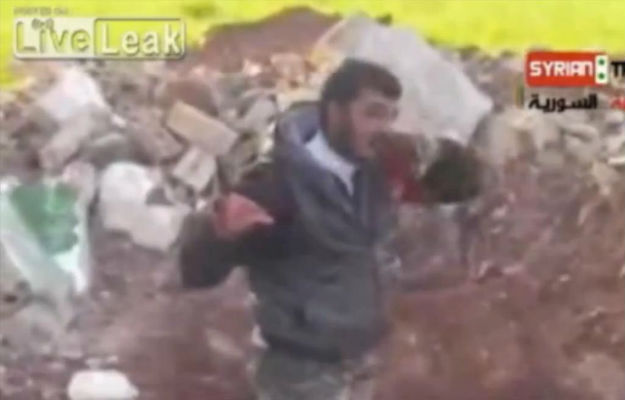
A newly released video allegedly shows a Syrian rebel commander mutilating a dead soldier’s body, removing internal organs, and biting into them.

rebeleatheart

This shocking video reveals the horrors of sectarian violence and civil warfare in Syria, where atrocities have apparently become all too common.

Reports of atrocities are sometimes difficult to verify and are always complicated to understand, yet international reporters on the ground in Syria believe that this video is indeed authentic.

The BBC reports on the video, as does Foreign Policy and the Washington Post.

Historians of early modern religious violence will be familiar with reports of mutilation and cannibalism. Sixteenth-century observers of early colonial conflict reported cannibalism in the Caribbean and South America. Witnesses to siege warfare in Europe in the sixteenth and seventeenth centuries reported numerous instances of cannibalism. Such cannibalism tales are often dismissed by cultural historians as purely imagined and symbolic narratives of violence.

This video suggests that reports of bodily mutilation and cannibalism cannot be so easily dismissed. The ongoing atrocities in Syria underline the importance of studying violence and atrocity comparatively.

Northern Illinois University students in HIST 414 Europeans Wars of Religion and HIST 740 Religious Violence in Comparative Perspective will already be familiar with the debates over atrocities and cannibalism in the context of sectarian conflicts.

Posted in Civil Conflict, Early Modern Europe, Early Modern World, European Wars of Religion, French Wars of Religion, History of Violence, Religious Violence, Revolts and Revolutions, War, Culture, and Society, Warfare in the Early Modern World | 1 Comment

Thinking Deeply about MOOCs

Once again, technology is being hailed as the solution to all our problems. Entrepreneurs of internet companies—like the advocates of radio and television before them—are touting the transformative potential of technology to educate the masses. Many politicians and pundits are touting the presumed cost-saving benefits of online education.

Massive Open Online Courses (MOOCs), these promoters suggest, will revolutionize higher education by providing cheap, efficient instruction to students worldwide.

Professors and instructors at universities and colleges around the world are beginning to realize how MOOCs could potential threaten facutly-student interaction, academic freedom, curricular design, faculty governance, university autonomy. While certain individual professors have profited greatly from developing their own online courses, sometimes even becoming online celebrities as their courses go viral, other teachers and researchers are becoming increasingly wary about the dangers of embracing MOOCs.

LaptopU

The New Yorker provides a lengthy report on many of the positive and negative aspects of the current development of MOOCs, focusing particularly on Harvard University as one of the main universities experimenting with MOOCs.

This article is especially interesting for historians, since several professors of history are interviewed. The applicability of MOOCs (or lack thereof) for history and humanities instruction is one of the key dimensions of the debate. Many humanities classrooms arguably have long been “flipped”—focusing on discussion rather than lecture.

The debate over MOOCs frequently misconstrues the discussion of “flipping” classrooms, though, suggesting that MOOCs would somehow improve lectures and open up more classroom time for discussion. MOOCs instead offer videotaped lectures or video shows (akin to television shows) for “consumption” by students. What MOOCs are really offering is an out-of-class video experience that would presumably be used as a replacement for reading texts.

So, this model of education represents a reversion to pure reception learning, rather than active student learning through faculty-student interaction in the classroom.

Often lost in the debate is the relationship between teaching and research, especially at research universities. Faculty members at research universities have to “publish or perish”: they are both researchers and teachers. When they teach, these professors ideally bring their fresh research into the classroom in many ways. My colleagues at Northern Illinois University and I frequently update the course design, readings, lectures, discussions, pedagogical methodologies, and writing assignments in our courses each time we teach them.

Instead of offering fresh reflection on new research, MOOC videos, which are costly to develop and produce, will present gleaming digital versions of the old “yellow notes” of professors of the past.

MOOCs thus threaten to ossify higher education, as professors would be encouraged to rely on previously produced video and digital materials, rather than providing access to new research directions and findings through dynamic teaching methods.

Universities and colleges need to think deeply about the complex roles that the internet now plays in research and teaching. I would advocate increased financial support for faculty members and groups who wish to develop digital tools for research and learning. As an active participant in several digital humanities initiatives, I support using technologies including the internet in education, but it is important to have faculty play the central role in deciding how, when, and where digital technologies are relevant and useful in higher education.

Unfortunately, many promoters of MOOCs are closely aligned with corporations and political interest groups aiming to marginalize professors by seizing control of curricular development and instructional methods. Higher education, we must remember, is a multi-billion dollar industry in the United States that is rapidly globalizing.

I have posted previously on the growing debate over MOOCs.  See the categories of Digital Humanities, Humanities Education, and Information Management for related stories on MOOCs.

Posted in Academic Freedom, Digital Humanities, Education Policy, History in the Media, Humanities Education, Information Management, The Past Alive: Teaching History, Undergraduate Work in History | Leave a comment

Renaissance Martyrs Canonized

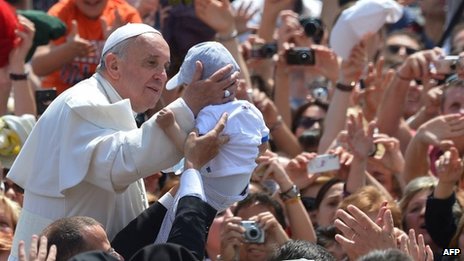
Pope Francis has canonized the 800 Martyrs of Otranto, who were supposedly executed by Ottoman forces after the southern Italian town of Otranto surrendered in 1480.

PopeFrancis

Otranto was caught up in maritime and naval conflicts during the Renaissance, as the Ottoman Empire expanded rapidly across the Mediterranean and up the Balkan peninsula after taking Constantinople (Istanbul) in 1453. An Ottoman naval and military force landed near Otranto in 1480 and besieged the town. When the garrison fell, many inhabitants of Otrantro were allegedly executed when they refused to convert to Islam. Catholic and Turkish sources disagree about the extent of the executions and whether or not an atrocity actually occurred.

The memory of the Otranto martyrs was quickly incorporated into Renaissance Christian  apocalyptic preaching. Some Latin Christian clergy cited Otranto in their calls for a crusade against the Ottoman Empire and against Islam in general.

The Otranto martyrs were placed on Pope Francis’s first list of canonizations, which also included several 20th century nuns. The BBC reports on the canonizations.

For a historical view of the siege of Otranto and its aftermath, see Nancy Bisaha, Creating East and West: Renaissance Humanists and the Ottoman Turks (Philadelphia, PA: University of Pennsylvania Press, 2004), 157-161.

Northern Illinois University students in HIST 420 The Renaissance and HIST 458 Mediterranean World, 1450-1750 will be interested in this story.

Posted in Civilians and Refugees in War, Early Modern Europe, Early Modern World, Empires and Imperialism, European History, European Union, Italian History, Mediterranean World, Religious Violence, War, Culture, and Society, Warfare in the Early Modern World | Leave a comment