Study Abroad Programs for Low-Income Students

Colleges and universities provide financial aid to assist low-income students in participating in study abroad programs. My own university offers scholarships and financial aid packages to support students who enroll in study abroad programs.

Augustana College, a liberal arts college in northwestern Illinois, reportedly targets extensive financial aid toward low-income students.

augustana-studyabroad

Many undergraduate students have access to study abroad opportunities these days. Although financial aid packages usually do not cover all of the expenses of studying abroad, they do defray the costs allowing a broader student body to experience other cultures through study abroad programs.

The Chronicle of Higher Education reports on study abroad programs at Augustana College.


Posted in Globalization, Humanities Education, Study Abroad, Undergraduate Work in History | 1 Comment

Study Abroad Teaching in Florence

Thousands of American students study in Florence, Italy, each year at more than 40 major study abroad programs and many other smaller programs.

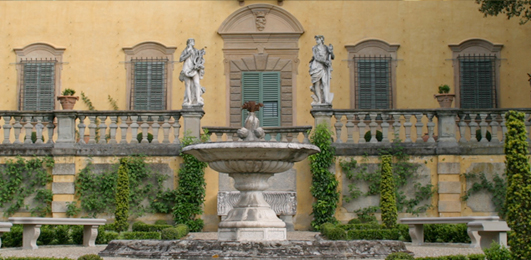
One of the largest and most prestigious American programs in Florence is New York University’s program, based at the magnificent Villa La Pietra.

VillaLaPietra

Many of the faculty at study abroad programs are local professors who teach as part-time adjuncts or full-time instructors. Italian labor law works differently than American law, leading to different arrangements in Florence than at main campuses in the United States.

According to Inside Higher Ed, “Prior to last year, NYU Florence hired its part-time professors as freelancers on term-to-term contracts, as was the norm for many other American study abroad programs in Italy. However the change in Italian law last summer required American universities and programs to enter into permanent contracts with their employees. NYU was left with a little more than a month to determine who would get permanent contracts and who would receive contracts that expire in May.”

Inside Higher Ed reports on labor disputes at the NYU Florence program.

Posted in Education Policy, European Union, Humanities Education, Italian History, Study Abroad | Tagged , , | Leave a comment

The Dark Side of The Digital

The Center for 21st Century Studies at the University of Wisconsin at Milwaukee hosted a conference last week on “The Dark Side of the Digital.”

drone

Richard Gusin, Director of the Center for 21st Century Studies, organized the conference.  According to the Chronicle of Higher Education, “Richard Grusin, a scholar of new media, worried about the potentially ‘dire’ consequences of massive open online courses, known as MOOCs. Education, Mr. Grusin said in an interview, is about teaching people how to think, how to question, how to sit in a room with someone and express a different opinion. Equating it with simple content delivery ‘denudes’ what it means to teach and learn, in his view.”

The Center for 21st Century Studies website has the conference program.

The Chronicle of Higher Education reports on the conference.

Students interested in digital humanities projects will be interested in this conference.

Posted in Conferences, Digital Humanities, Education Policy, Humanities Education, Information Management | Leave a comment

Restoring Traghetti in Venice

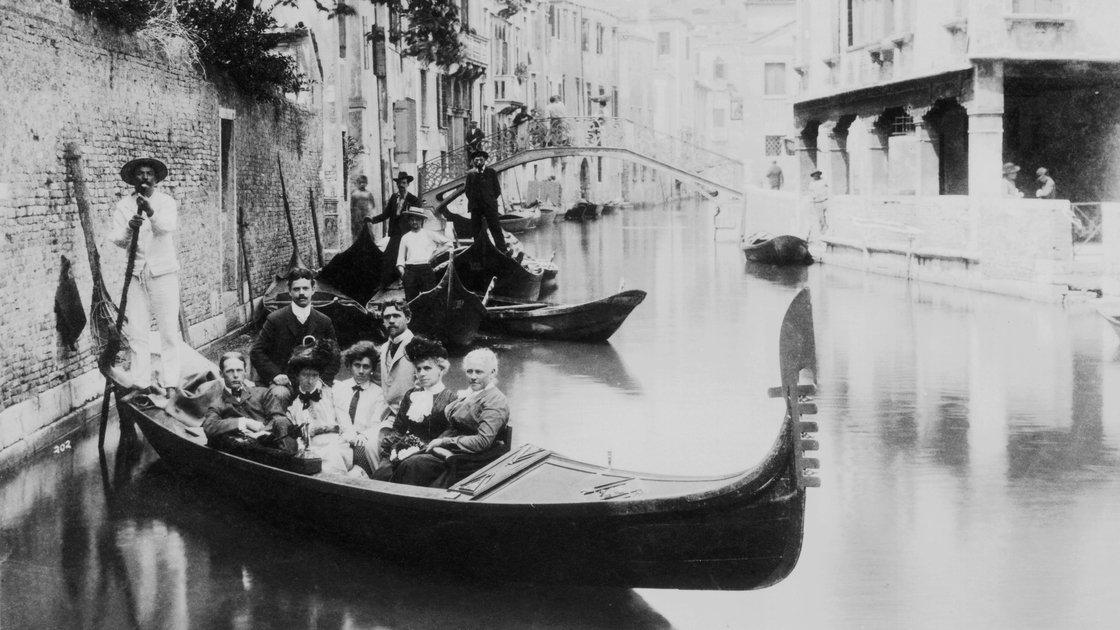
Venice is best experienced by boat, but rides on tourist gondolas are very expensive.

gondolas

The Traditional Boat Museum of Venice is working on restoring the everyday traghetti, simply gondolas that were typically used by ordinary Venetian commuters.

NPR reports on the effort to save the traghetti using crowdsourced fundraising through Buona Causa, a website similar to Kickstarter.

gondola

Students and researchers in maritime and Mediterranean World history will be interested in this story.

Posted in European History, Italian History, Maritime History, Mediterranean World | Leave a comment

Giulio Andreotti has Died

Giulio Andreotti, one of the most powerful politicians in Italy following the Second World War, has died. Andreotti headed the Italian government as Presidente del Consiglio (Prime Minister) seven times and acted as minister in many other governments throughout the post-war period.

GIULIO  ANDREOTTI

Corriere della Sera, La Repubblica, and BBC all provide extensive coverage of Andreotti’s death and legacy.

NIU History students working on Italian history topics will want to consider Andreotti’s legacy.


Posted in European History, European Union, Italian History, Political Culture | Leave a comment

Dutch Royal Coronation

The Dutch people are getting a new monarch. Willem-Alexander is being crowned King of the Netherlands in elaborate coronation ceremonies today in Amsterdam.

Willem-Alexander

Queen Beatrix abdicated in favor of her son, Willem Alexander, ensuring the continuation of rule by the Orange-Nassau dynasty.

Beatrix-abdication

The BBC reports on the coronation.

Crowds of Dutch citizens are attending the celebrations of the coronation and royal souvenirs and memorabilia are available in Dutch shops. This is a powerful reminder of the durability of monarchies, even in the 21st century.

Dutch-royalmania

NIU students in HIST 414 European Wars of Religion will be interested in this story, having read about the Dutch Revolt and William of Orange.

Posted in Early Modern Europe, Empires and Imperialism, European History, European Union, European Wars of Religion, Noble Culture and History of Elites, Political Culture | Leave a comment

Mediterranean Seminar Workshop

The University of California at Santa Cruz will be hosting the Mediterranean Seminar’s Spring Symposium and Workshop this week on 2-4 May 2013.

Print

I am excited to be attending the Symposium and participating in the Workshop this year. I am presenting a pre-circulated draft chapter, entitled “‘Moors Must Not Be Taken for Black’: Islamic / French Cultural Translations Across the Early Modern Mediterranean.” This chapter is based on a shorter conference paper that I wrote several years ago.

The Mediterranean Seminar website has the program for the Spring Symposium and Workshop.

Posted in Conferences, Early Modern World, Maritime History, Mediterranean World, Uncategorized | 1 Comment

The Cost of MOOCs

Lost in all the excitement about Massive Open Online Courses [MOOCs] is the cost of development, maintenance, and teaching the online courses.

A number of universities and colleges have already partnered with edX, Coursera, and other MOOC provider companies. Many people seem to assume that MOOCs provided by these institutions will be free and that they will necessarily save students money on tuition and fees. But, these universities and colleges are investing enormous financial resources in the MOOC provider companies.

MOOCuniverse

An article in the Chronicle of Higher Education points out that “Offering MOOCs through edX is hardly free. There are options available to institutions that want to build their own courses on the edX platform at no charge, but for partners who want help developing their courses, edX charges a base rate of $250,000 per course, then $50,000 for each additional time that course is offered; edX also takes a cut of any revenue the course generates.”

Most MOOC enthusiasts are administrators rather than faculty members and they seem to be failing to understand the costs associated with academic labor. The Chronicle of Higher Education reports that “there are also significant labor costs that come with offering MOOCs. A recent Chronicle survey found that professors typically spent 100 hours, sometimes much more, to develop their massive online courses, and then eight to 10 hours each week while the courses were in session. This commitment amounted to a major drain on their normal campus responsibilities.”

The survey cited in this quote included mostly science and mathematics courses. Professors in the humanities and social sciences probably spend well more than 8-10 hours per week in preparing courses and assessing student written work.

Of course, the most serious cost of MOOCs is the cost in learning. Numerous studies demonstrate that students learn more effectively in small classroom environments. For this reason, colleges and universities have long measured their student-to-faculty ratios, loudly advertising their low ratios whenever possible.

MOOC reverse the ratio, touting the most students “served” by single faculty members. Many MOOCs implicitly incorporate a corporate model of higher education, treating students as “customers” and “consumers” rather than as students engaged in learning.

The costs and limitations of MOOCs are not being taken seriously by tech-happy administrators and MOOC enthusiasts.

The Chronicle of Higher Education reports on some colleges’ refusals to partner with MOOC providers.

Update: A separate article reports on Duke University faculty’s recent rejection of 2U’s proposal to offer for-credit MOOCs.

Update: The Chronicle of Higher Education also reports on San José State University partnership with edX, which has prompted questions from the faculty. The Department of Philosophy at SJSU have decided not to use a Harvard professor’s course on “Justice” which is provided through edX. The letter by the faculty of the SJSU Department of Philosophy makes an important statement about the problems of MOOCs in higher education.


 

Posted in Academic Freedom, Digital Humanities, Education Policy, Humanities Education, Information Management, Undergraduate Work in History | 3 Comments

Political Violence in Italy

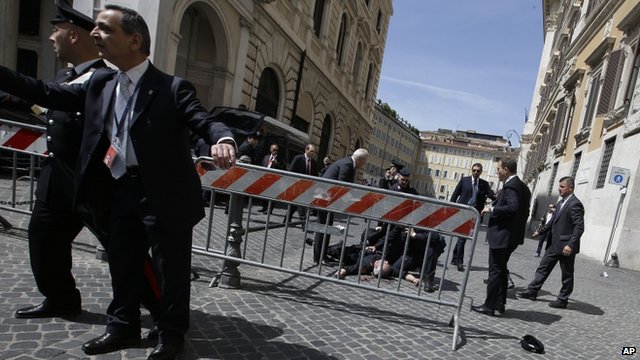
A Calabrian man attempted to shoot Italian politicians being sworn into office in Rome today. The gunman failed to reach politicians, but wounded several police officers before being apprehended.

italygunman

Italy has a long history of political turmoil related to ideological disputes and party rivalries. The anni di piombo (years of lead) of the 1970s and early 1980s involved massive political violence, including numerous shootings and bombings by right-wing and left-wing militant groups.

Over the past twenty years, there have been changes of government and constitutional crises, but little political violence.

The most recent parliamentary elections in Italy created a confused situation of heightened tensions, with no party able to form a government. This constitutional crisis was apparently resolved this week by the creation of a grand coalition government.

The violence today may be an act of desperation by a lone gunman, but the possibility of organized political violence will surely be considered by suspicious Italians and their security forces.

Repubblica and the BBC report on the shooting.

Posted in Civil Conflict, European History, European Union, History of Violence, Italian History, Terrorism | Leave a comment

Early Modern Atlantic World: Slavery, Race, Governance

The Center for African American History at Northwestern University held a conference this weekend on “The Early Modern Atlantic World: Slavery, Race, Governance.”

slaverinafrica

I was able to attend two sessions of the conference and heard some fascinating presentations by Kristin Huffine, Nancy van Deusen, Susan Deans-Smith, and other scholars. Kristin Huffine, who presented on Jesuit theories of cosmography and human origins, is one of my colleagues in the Department of History at Northern Illinois University.

Many of the papers at the conference dealt with the early modern Spanish empire, including European and Mediterranean contexts such as indios and moriscos in Iberia.

Almost all of the papers treated the concepts of race and racism in various ways. Susan Deans-Smith provided an excellent critical response in the first session on the debates over the concept of race, arguing that there are currently three main approaches to race in the early modern period (historicized race, indigenous literacies, and ethnic identities).

My Mediterraneanist colleagues would be interested in most of the papers from this conference, since they deal with categories operative in Mediterranean World studies as well as Atlantic World studies.

The conference program is available as a .pdf file on Northwestern’s website. For additional information, see the website Center for African American History.

Posted in Atlantic World, Civilians and Refugees in War, Conferences, Early Modern Europe, Early Modern World, European History, History of Violence, Human Rights, Mediterranean World, War, Culture, and Society | 1 Comment