Daughter of Dirty War

Issues of gender and violence are finally beginning to be studied through global perspectives and comparative methods, often with disturbing results.
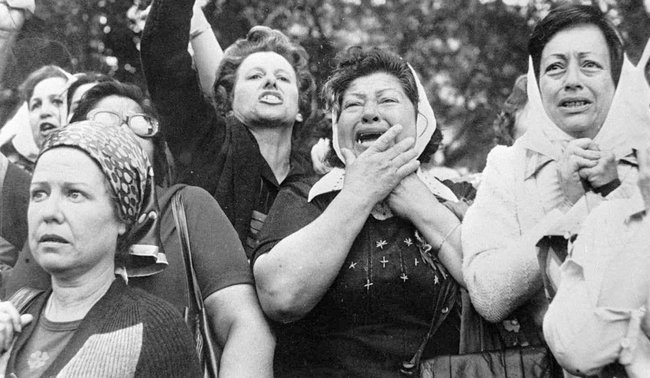
A trial in Argentina has presented evidence of abductions of the children by Argentinian military officers in order to prevent retaliation by their political enemies. An estimated 500 babies were abducted during the late 1970s and early 1980s. The stolen babies included boys but many of the victims were girls, and gendered violence seems to have been directed against the abducted babies’ mothers.

Similar cases of military abductions of children in Franco’s Spain have recently emerged. The New York Times reports on the Argentinian abductions and trial.

Students in the WOMS program at Northern Illinois University may be interested in this story and related research on gender and violence.

 

Posted in Gender and Warfare, History of Violence, Human Rights, War, Culture, and Society, Women and Gender History | Leave a comment

Leonardo da Vinci Blockbuster

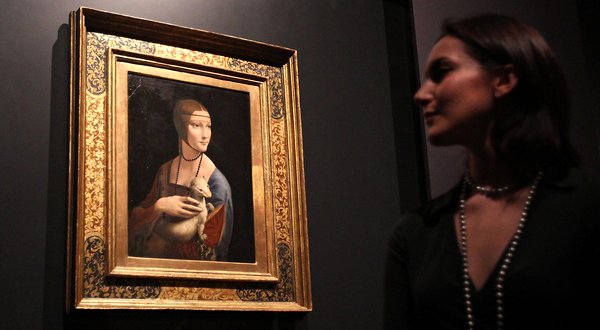
Art lovers and historians are queuing up for a Leonardo da Vinci blockbuster exhibition at the National Gallery in London. The exhibition is entitled Leonardo da Vinci: Painter at the Court of Milan and is on view until 5 February 2012. Leonardo is clearly still incredibly popular with museum goers, as anyone teaching Renaissance history would predict.

The National Gallery in London has information on the show at its website.  The New York Times reports on the crowds attending the exhibition.

Students in HIST 420 The Renaissance will be interested in the show and in the National Gallery website for the exhibition.

Posted in Art History, Early Modern Europe, Early Modern World, History in the Media, Italian History, Mediterranean World, Renaissance Art and History | Leave a comment

Book Covers and the E-Book Revolution

As the ongoing e-book revolution spreads, many authors and readers lament the possible demise of printed books.

Despite growing e-book sales, publishers seem to have found robust niche markets for printed books.  Well-designed book covers and aesthetic features in some printed books seem to appeal to many readers.

The continued market for printed books alongside e-books will not surprise historians of the “Print Revolution” and early modern printing.  The development of moveable type and the printing press created incredible new opportunities for fifteenth-century publishers.  Yet, manuscript books continued to thrive in certain markets.  Editors produced many hybrid books as art objects, incorporating hand-painted illuminations, unique leather bindings, and other elaborate features. Anthony Grafton, Lisa Jardine, Andrew Petegree, Eveyln Welch, and other scholars of Renaissance printing and material culture have greatly qualified the “revolutionary” dimensions of the “Print Revolution” by examining the production and dissemination of these hybrid books.

The New York Times reports on current strategies employed by publishers of printed books today.

Posted in Academic Publishing, Digital Humanities, Early Modern Europe, Early Modern World, History of the Book, Renaissance Art and History | Leave a comment

College Student Study Habits

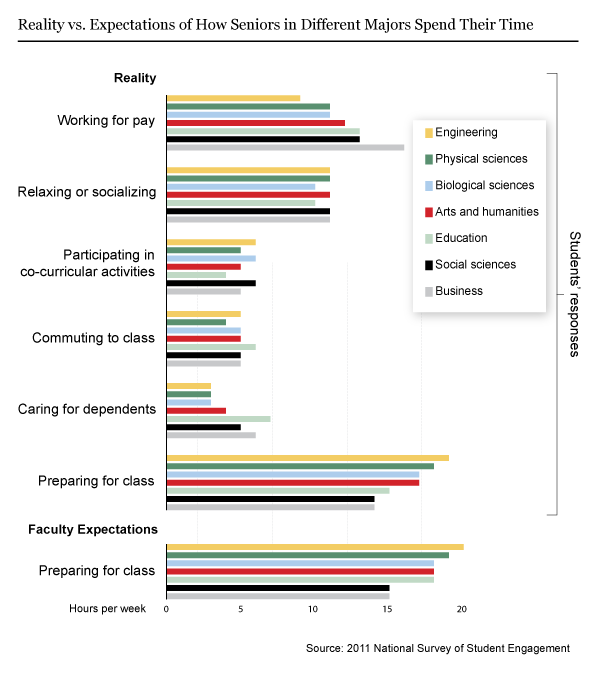
The National Survey of Student Engagement (NSSE), a new report on university and college student study habits, measures the number of hours that students spend a week in their studies and other activities.  The results provide some indication of the relative difficulties of disciplines, based on the amount of time students engage in studies.

The survey shows that Engineering students study the most, while Business students study the least.  Approximately 31 percent of Arts and Humanities seniors study more than 20 hours a week, according to the survey.

A 12 credit hour schedule per semester schedule is based on the assumption that students would study approximately 2 hours per hour spent in class hour.  Thus, a 12 credit hour schedule is considered a “full time” course load, since students are expected to spend 24 hours studying and 12 hours in classes, for a total of 36 hours of coursework (roughly the equivalent of a full-time work schedule of 40 hours).

Undergraduate students today have many competing demands on their time, however.  Many of my own students at Northern Illinois University work part-time (and some of them, full-time) jobs.  The NSSE study’s data clearly bears this out.  Arts and Humanities students (including History majors) spend an average of 17 hours preparing for classes, 12 hours working, 11 hours socializing, 5 hours commuting, 5 participating in co-curricular activities, 4 hours caring for dependents.

The NSSE study is available at the NSSE website.  The Chronicle of Higher Education reports on the NSSE survey and on criticisms of the survey’s methodologies.

Posted in Education Policy, Humanities Education | Leave a comment

Colloque Miroirs de Charles IX

I am in Paris currently, participating in an interdisciplinary conference on Miroirs de Charles IX: Images, Imaginaires, Symboliques at the Institut National de l’Histoire de l’Art.

The conference is tightly focused, with presentations by historians, art historians, and literary scholars on the imagery of Charles IX, who was king of France during the early phases of the French Wars of Religion from 1561-1574. Charles IX is best known for presiding over the Saint Bartholomew’s Day Massacre of Huguenots (French Protestants) in Paris in August 1572. The conference deals with the complex imagery of majesty, justice, piety, peace, and war utilized by the king and his councilors during his reign.

The conference was organized by Luisa Capodieci, Estelle Leutrat, and Rebecca Zorach.

The scientific committee for the conference included: Andreas Beyer, Luisa Capodieci, Olivier Christin, Philippe Desan, Marianne Grivel, Estelle Leutrat, Philippe Morel, Henri Zerner, and Rebecca Zorach.

The program is available online at the website of the Université de Paris I.

Posted in Conferences, Early Modern Europe, European Wars of Religion, French Wars of Religion, History of Violence, Religious Violence, Warfare in the Early Modern World | Leave a comment

Faculty Productivity Demonstrated

A new report demonstrates that faculty can be incredibly productive, producing much more revenue for universities than their salaries cost.

The report examines faculty at the University of Texas at Austin and was prepared by Mark A. Musick, an Assistant Dean in the university’s College of Liberal Arts.

“What the data show is that the faculty are extremely productive on average,” Musick indicated.  “Professors generate more money in terms of research funding and teaching than they’re paid, by a wide margin.”

The Texas report finds that: “University of Texas faculty members produced about $558-million in revenue, combining teaching and external grants, while the compensation they received from state dollars amounted to $257-million during the 2009-10 academic year. The teaching revenue is calculated by the money the state allocates to universities per credit-hour of teaching.”

The report also indicates that “The highest-paid faculty members generate the most money for the university. Those earning annual salaries of $175,000 or more cost the state $107-million but brought in $218-million in research grants and money from the state.”

The Chronicle of Higher Education reports on the Texas report and its wider context. The Texas report could potentially serve as a model for universities across that United States that are wanting to gauge faculty productivity, so faculty will want to become familiar with the Texas report.

Posted in Education Policy, Humanities Education | Leave a comment

Addio Berlusconi!

Italian Prime Minister Silvio Berlusconi resigned over the weekend, in the midst of a major debt crisis in Italy. Rising interest rates and a market downturn finally forced Berlusconi to step down after passing austerity measures. La Repubblica, Corriere della Sera, La Stampa, BBC, and the New York Times reported Berlusconi’s resignation and have full coverage of the political transition.

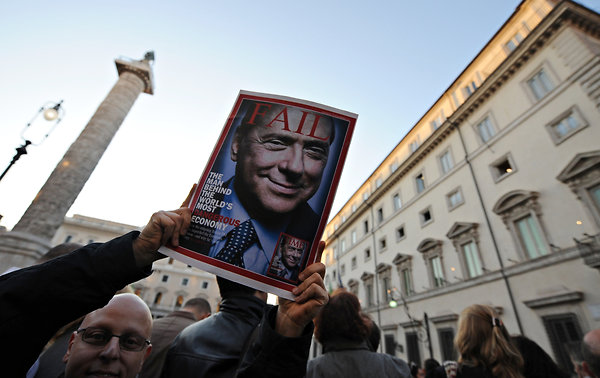
Crowds gathered in Rome and other cities across Italy to celebrate the end of Berlusconi’s government. La Repubblica reports on the celebrations, which included a performance of Handel’s “Hallelujah Chorus” and cries of “Buffone! Buffone!” directed at Berlusconi.

Mario Monti, an economist, has been appointed by Italian President Giorgio Napolitano to head a technocratic government. Sylvia Poggioli of NPR reports on Mario Monti’s attempts to form a new government. Meanwhile, columnist Beppe Severgnini, of Corriere della Sera, provides a commentary on the meaning of Berlusconi’s resignation for Italian society and politics.

Many Italians are bidding “Addio Berlusconi!” — goodbye to Silvio Berlusconi, his bunga-bunga scandals, and his corrupt politics. Italian politics remains in crisis, but new possibilities and new directions seem to be opening up.

Posted in European Union, Italian History | Leave a comment

Debate over Warrior Pursuits

A new review of my book, Warrior Pursuits, has been published by Professor Jay M. Smith in H-France Review.

The book review editor at H-France invited me to write a response to Smith’s review, which has now been published along with Smith’s review in the November issue of H-France Review online.

I hope that the review and response provoke some debate over noble culture and civil conflict in early modern France, as well as over methodological approaches for studying elites and civil violence in comparative contexts.

The full citation for the review and response is:

Brian Sandberg, Warrior Pursuits: Noble Culture and Civil Conflict in Early Modern France., Baltimore: The Johns Hopkins University Press, 2010. xxx + 393 pp. Table, illustrations, notes, bibliography, and index. $60.00 U.S. (cl). ISBN 10: 0-8018-9729-7

Review Review by Jay M. Smith, University of North Carolina at Chapel Hill.
H-France Review Vol. 11 (November 2011), No. 245

Response by Brian Sandberg, Northern Illinois University.
H-France Review Vol. 11 (November 2011), No. 246

Posted in Civil Conflict, Current Research, Early Modern Europe, European History, European Wars of Religion, French History, French Wars of Religion, History of Violence, Noble Culture and History of Elites, War, Culture, and Society, Warfare in the Early Modern World | Leave a comment

Italian Neo-Fascism and the Veneration of Il Duce

Neo-Fascism is alive and well in modern Italy, where a range of extremist groups and political parties celebrate the fascist history of Italy.

Frequent commemorations of the death of the Italian dictator Benito Mussolini, who is venerated as “Il Duce”, display the continuing fascination with fascism in Italy.

Each year, tens of thousands of visitors flock to see Mussolini’s tomb in the town of Predappio, in central Italy.  The New York Times reports on the neo-fascist commemorations at Mussolini’s tomb. In other parts of Italy, Mussolini calendars and fascist memorabila are readily available at news stands and in markets.  Neo-fascist political parties and social groups routinely organize rallies in public squares and streets.

Neo-fascist parties may be relatively small in Italy and many other European nations, but they are vocal and seem to be growing.  Mussolini commemorations and neo-fascist tourist activities suggest a disturbing acceptance of fascist conceptions of the past and present.

Posted in European History, European Union, History of Violence, Italian History, War, Culture, and Society | Leave a comment

Review of Warrior Pursuits by Frederic J. Baumgartner

A new review of Warrior Pursuits has just been published in the latest issue of the Journal of Military History.

The table of contents of this issue of JMH may be found online.  The review itself may be accessed through the EBSCO database at most major libraries.

The full citation for the review is: Warrior Pursuits: Noble Culture and Civil Conflict in Early Modern France, by Brian Sandberg, reviewed by Frederic J. Baumgartner, The Journal of Military History 75 #4 (October 2011): 1286-1287.

Posted in Civil Conflict, Early Modern Europe, European History, European Wars of Religion, French Wars of Religion, History of Violence, Noble Culture and History of Elites, Religious Violence, War, Culture, and Society, Warfare in the Early Modern World | Leave a comment