Galileo in the News

A new book about Galileo Galilei’s approach to natural philosophy and mathematics has put Galileo in the news once again.

Professor Mark A. Peterson’s Galileo’s Muse: Renaissance Mathematics and the Arts (Harvard University Press, 2011), reexamines Galileo’s method of using of ancient mathematics.

The Chronicle of Higher Education reports on the book.

I have not yet had a chance to read Peterson’s book, but will update this post once I get a hold of the book.

Posted in Early Modern Europe, Early Modern World, European History, History in the Media, History of Science, Renaissance Art and History | Leave a comment

Review of Warrior Pursuits by Robert A. Nye

A new review by Professor Robert A. Nye of my book, Warrior Pursuits: Noble Culture and Civil Conflict in Early Modern France, has just appeared in the Journal of Interdisciplinary History.

I am pleased to read Professor Nye’s critique of my book, since he has worked extensively on French nobles and masculinity. Nye’s Masculinity and Male Codes of Honor in Modern France (Oxford: Oxford University Press, 1993) is one of the earliest serious studies on noble honor to employ history of masculinity approaches.

Professor Nye’s review is available as a .pdf download, but only through individual journal subscriptions to the Journal of Interdisciplinary History or through library databases.

Posted in Civil Conflict, Current Research, Early Modern Europe, Early Modern World, European Wars of Religion, French History, French Wars of Religion, History of Violence, Languedoc and Southern France, Noble Culture and History of Elites, Religious Violence, War, Culture, and Society | Leave a comment

History of the World in 100 Objects

The British Museum offers a history of the world through some of its celebrated objects.

The museum is publishing a book entitled, A History of the World in 100 Objects, based on a BBC Radio 4 program on the same concept. The radio show constructed its history in a series of short episodes that were presented by Neil MacGregor, who is director of the British Museum.

The New York Times reports on the new book, which is being released in the United States.


Posted in Art History, Digital Humanities, Early Modern World, Globalization, History in the Media | Leave a comment

Oligarchies and Wealth Defense

The Occupy Wall Street movement has brought great attention to the problems of wealth concentration and income disparities in the United States.

An understanding of American elites has been missing from the debates over tax policies and financial reform following the 2008 financial crisis.

WBEZ’s Worldview now provides an in-depth discussion of the role that elites play in American political economy. Professor Jeffrey Winter of Northwestern University is interviewed on Worldview about his new book Oligarchy, a study of the history of oligarchies and wealth defense.

The history of elites has long been ignored by social and cultural historians, who have been more interested in studying “history from below.” A critical comparative history of elites is desperately needed in order to assess patterns of economic, military, and political domination in societies. Scholars such as Jonathan Dewald and Hamish Scott have laid a groundwork for the comparative study of nobilities and elites.  More research on elites could effectively build on this research to demonstrate the differing modes of power deployed by elites in societies around the world.

My own research deals with French noble culture in the early modern period, including their ways of mobilizing wealth and protecting their patrimonies.  Their methods seem to fit with some of the notions of “wealth defense” articulated by Winters. I have developed a course on early modern European nobilities and hope to teach it soon at Northern Illinois University.


Posted in Globalization, History in the Media, Noble Culture and History of Elites | Leave a comment

L’Histoire globale

World history and global thematic perspectives have become integral parts of European history, at least as practiced in the United States. Historians in France are now increasingly grappling with how to mesh global historical interpretations with French national history, which is often viewed as part of la patrimoine, or the French national patrimony. The problem, then, is how to consider global perspectives that sometimes clash with the powerful French concepts of citizenship and national heritage that are present in French historical writing and teaching—as well as in representations of history in French media and popular culture.

An article in Le Monde reports on how the tensions between transnational global history and national French history have emerged at the current Les Rendez-vous de l’Histoire conference being held in Blois on the theme of “L’Orient.”

Posted in Conferences, Early Modern Europe, Early Modern World, European History, French History, Globalization, Mediterranean World | Leave a comment

Braudel Revisited

My latest book review, of a collective volume entitled Braudel Revisited: The Mediterranean World, 1600-1800, has been published online in H-France Review.

Here is the full citation:

Gabriel Piterberg, Teofilo F. Ruiz, and Geoffrey Symcox, eds., Braudel Revisited: The Mediterranean World, 1600-1800, UCLA Center/Clark Series, 13. Toronto: University of Toronto Press, 2010. vii + 281 pp. Notes. $65.00 U.S. (cl). ISBN 978-1-4426-4133-4.

Review by Brian Sandberg, Northern Illinois University.
H-France Review Vol. 11 (October 2011), No. 218.

Students in HIST 458 Mediterranean World, 1450-1750 will be interested in this review, as well as the collective volume that it assesses.


Posted in Current Research, Early Modern Europe, Early Modern World, European History, Mediterranean World | Leave a comment

Early Modern Workshop at the University of Chicago

The Early Modern Workshop at the University of Chicago is an active community of researchers on early modern European and global history.

I have attended presentations at the Early Modern Workshop periodically over the past five years, since taking up my position at Northern Illinois University. I recently had a wonderful opportunity to participate in the workshop and present one of my unpublished papers, thanks to a kind invitation by co-organizers Elisa Jones and Kirsty Montgommery.  I chose a chapter-in-progress dealing with religious peacemaking and negotiation in southern France during the French Wars of Religion, entitled: “‘Put Us All in Good Peace and Union’: Religious Peacemaking in Languedoc after the Edict of Nantes.”

The workshop format involves discussion of a precirculated paper, so I was on the “hot seat” for an hour or so of intense questioning regarding my chapter. The discussion was intense and I received some fantastic criticism and feedback on my draft chapter. Now, I need to heading back to the computer to rework the chapter based on all the helpful suggestions.

The Early Modern Workshop is a great resource for early modern historians in the Chicago area and beyond.

Posted in Conferences, Early Modern Europe, Early Modern World, European History, French Wars of Religion | Leave a comment

Amazon Now Publishes Books

Publishers and editors worldwide have been adjusting to developments in e-publishing, cutbacks in library acquisitions, the spread of e-readers, the growth of online booksellers, and the decline of independent bookstores.

Now, publishers face new challenges from Amazon, which has begun to publish some books itself, cutting out authors’ need to work with publishers. This development has the potential to reshape the publishing landscape, initially in fiction publishing. Eventually, this new strategy could affect non-fiction publishing, too.

This trend is not entirely new, since Barnes and Noble has long published its own books, especially in fields that allow books to be produced cheaply, such as editions of literary classics and reprints of out-of-copyright non-fiction books.

The New York Times reports on an author’s experience with Amazon’s publishing initiative.


Posted in Academic Publishing, Digital Humanities, Humanities Education | Leave a comment

Friendship in Premodern Europe

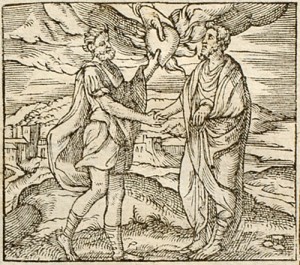
This weekend, I am participating in a conference on Friendship in Premodern Europe (1300-1700), hosted by the Centre for Reformation and Renaissance Studies (CRRS) at the University of Toronto.

This conference has been organized by historian Konrad Eisenbichler and the CRRS. The program and conference information is available online at the Friendship in Premodern Europe (1300-1700) webpage at the CRRS website.

Posted in Conferences, Early Modern Europe, Early Modern World, European History, Renaissance Art and History | 2 Comments

What’s a Poor French Noble to Do?

Poor nobles apparently abound in today’s France. There are still many nobles living in 21st-century France, and supposedly a number of them have fallen on hard times.

Luckily for these poor nobles there is a charitable association, the Association d’Entreaide de la noblesse française (ANF), dedicated to helping out young nobles who need scholarships to go to universities. This organization, known in English as the Association for the Mutual Assistance of the French Nobility, was created in the 1930s to assist French noble families and to uphold the values of nobility.

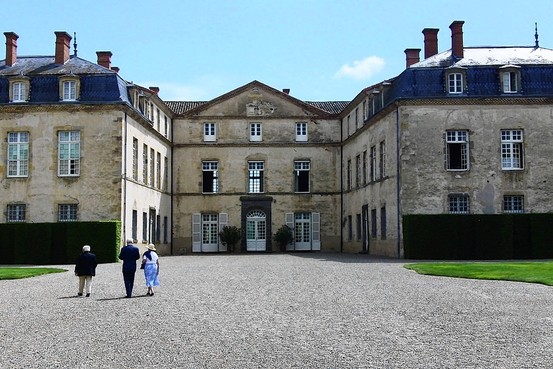
The Wall Street Journal reports on a recent meeting of a local ANF chapter in Auvergne.

The discourse of the “poor noble” has actually been employed by nobles for centuries. Early modern French nobles routinely claimed to be impoverished by their monetary contributions to royal finances, administrative offices, and military campaigns. Some of the nobles who claimed to be poor were indeed financially ruined by investments and warfare, others used the discourse of the “poor noble” instrumentally in their requests for reimbursements and gratifications from French monarchs.

The history of European nobles and social elites extends into contemporary societies, yet few historians have seriously examined the broad history of nobilities and elites.


Posted in Early Modern Europe, European History, European Union, French History, Languedoc and Southern France, Noble Culture and History of Elites, Political Culture | 1 Comment