Archivist Position in Illinois

Illinois College is hiring an Archivist and Curator.

Graduate students in History at Northern Illinois University may be interested in applying for this position.

Here is the full position announcement:

Illinois College – College Archivist and Curator of Special Collections

Illinois College invites applications for the position of Archivist and Curator.  The primary responsibilities of this position include:managing the resources of the Khalaf al Habtoor Archives, the Paul Findley Congressional Office Museum, and other special collections; working closely with students and faculty to provide meaningful research and internship opportunities; and liaising with the local community as both the City of Jacksonville and Illinois College prepare for their respective bicentennial celebrations (2025 for Jacksonville, and 2029 for the College).  The Archives resides in a spacious state-of-the-art location in the Schewe Library on the Illinois College campus and contains documents and artifacts related to the history of the College and Jacksonville.  This position is a full-time administrative appointment with faculty status.  

This position entails an educational function both on campus and beyond, as well as ensuring best practices in materials preservation, management, display, and dissemination.  This position is responsible for organizing frequent public events.  The Archivist and Curator interacts with students as teacher, research mentor, and work supervisor.  As a member of the Schewe Library team, the Archivist and Curator partners with Library staff on programming and planning.

This position requires a master’s degree in an appropriate field (Library and Information Science, Public History, or Archival Studies) and knowledge of best practices in materials management and preservation.  Strong preference for direct experience working with the public and for experience with archival collection management software and digitization.  For more information please see ic.edu/employment. 

Since 1829, Illinois College has transformed the lives of undergraduate students.  The College is focused on student success and provides many opportunities for faculty-study interaction beyond the classroom, including collaborative research projects, international study-travel, and mentoring/advising.  The College is committed to ensuring access and equity.  The College develops in its students qualities of mind and character needed for fulfilling lives of leadership and service.  The College is located in historic Jacksonville, Illinois 30 minutes west of the capital city of Springfield and 90 minutes north of St. Louis, Missouri.  

Applicants should submit the following materials in PDF format.

  • Letter of application
  • C.V.
  • A statement of educational philosophy that includes discussion of working with diverse constituencies
  • Contact information for three references and/ or three letters of reference

Review of applications will begin October 15, 2022 and will continue until the position is filled.

See the ad on H-Net.

Posted in Archival Research, Careers in History, Graduate Work in History, Illinois History and Society, Information Management, Jobs and Positions, United States History and Society | Leave a comment

Perspectives on Global and Local Military History: CFP

Western Illinois University will be hosting an academic conference on Perspectives on Global and Local Military History in April 2023.

The call for papers lays out the themes for the conference:

“Does the transnational turn in historical scholarship suggest that all warfare is actually derivative of larger global patterns, or are there local, regional, or national “ways of war” that differentiate conflict within that certain geographical space, which historians should acknowledge? The new military history of the last several decades shifted attention away from traditional narratives that focused on generalship and troop movements on the battlefield towards the perspective of ordinary soldiers, and more recently, towards even broader social and cultural perspectives on warfare. How does the transnational turn in history affect the new military history?

“This conference, which will be held in-person only, at the Quad Cities campus of Western Illinois University, April 14-16, 2023, invites paper and panel proposals that explore intersections between global and local perspectives on warfare, on and off the battlefield, including campaign histories; biographical analysis; material culture; cultural, social, and political implications; and indigenous populations.”

For more information, see the full call for papers on the website of Western Illinois University. The deadline for submitting proposals is 15 Janaury 2023.

Doctoral candidates and M.A. students in History at Northern Illinois University may be interested in participating in this conference.

Posted in Conferences, Graduate Work in History, History of Violence, War, Culture, and Society | Leave a comment

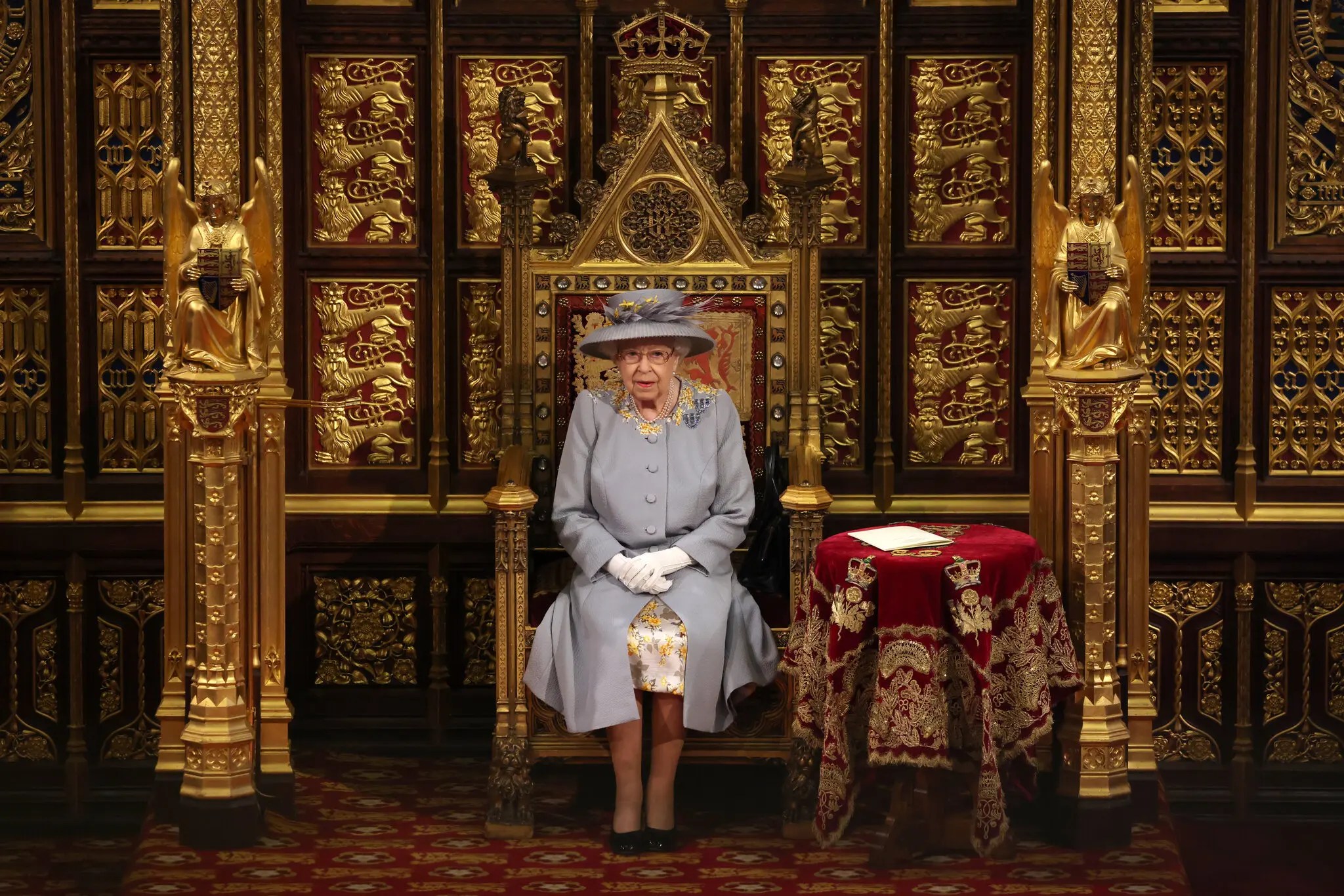
Queen Elizabeth II has Died

Queen Elizabeth II has died.

Source: New York Times

I am not a royal family watcher, but this is clearly a major historical event in British, European, and World history.

History professors, students, and researchers working on monarchy, court culture, state development, and empire will be following developments closely….

Maya Jasanoff, Professor of History at Harvard University, has published an op-ed essay today on “Mourn the Queen, Not Her Empire.”

Jasanoff writes: ““The end of an era” will become a refrain as commentators assess the record-setting reign of Queen Elizabeth II. Like all monarchs, she was both an individual and an institution.”

Certainly much of the news reporting so far celebrates Elizabeth II’s legacy in laudatory and triumphant tones.

Jasanoff warns of the troubled legacies of the British Empire, however. “Those who heralded a second Elizabethan age hoped Elizabeth II would sustain British greatness; instead, it was the era of the empire’s implosion. She will be remembered for her tireless dedication to her job, whose future she attempted to secure by stripping the disgraced Prince Andrew of his roles and resolving the question of Queen Camilla’s title. Yet it was a position so closely linked to the British Empire that even as the world transformed around her, myths of imperial benevolence persisted. The new king now has an opportunity to make a real historical impact by scaling back royal pomp and updating Britain’s monarchy to be more like those of Scandinavia. That would be an end to celebrate.”

The New York Times reports on the news of the death of Queen Elizabeth II and publishes Maya Jasanoff’s op-ed.

News reports are just breaking now. I will try to update this post later….

Posted in Court Studies, Early Modern Europe, Early Modern World, Empires and Imperialism, European History, European Studies, History in the Media, Political Culture, State Development Theory, Strategy and International Politics, World History | Leave a comment

Lightning Talks: Rethinking the Global Renaissance

Graduate students in Renaissance Studies have been working with the Renaissance Society of America to organize a series of Lightning Talks events.

Graduate students in Renaissance Studies and Early Modern History will be interested in this Lightning Talk event. I would like to encourage graduate students in my HIST 458/558 Mediterranean World course at Northern Illinois University to consider submitting a proposal.

Here is the call for papers for the upcoming Lightning Talk:

Scholars have been pushing the boundaries of the field of Renaissance Studies by rethinking how this historical period could be reimagined differently in the future. Graduate students have been playing an important role in this endeavor. The RSA Graduate Student Advisory Committee aims to bring to light the exciting and innovative research that graduate students have been doing to push the field forward. During the last Lightning Talks, which was held in February 2022, graduate students presented their research and addressed how their work enables us to rethink the Renaissance archive. Given the success of this event, we have decided to continue the series in fall 2022. For the upcoming Lightning Talks we would like to ask students to present work that allows us to “rethink the Global Renaissance.” We welcome the participation of students, from a variety of disciplines, whose research re-imagines the spatial boundaries/scale of the Renaissance world beyond Europe.

Abstracts of 150 words are due by Friday, September 30. Please submit through the google form at the end of this announcement. Participants will be notified by Friday, October 7.

Lightning talks are concise oral presentations of five minutes, which may or may not include visual aids. Presentations could be based on:

• An argument from your work (BA/MA thesis, PhD dissertation, or article)
• Initial findings from side projects, or work in progress
• Archival findings
• Pedagogical questions
• Field/experience-based observations, and/or
• Any archive-related topic that might stimulate discussion.

This event is open to all graduate students but preference will be given to RSA graduate student members. Please email the RSA with questions.

Best of luck,

RSA Graduate Student Advisory Committee
Farrah Bazzi (chair)
Esteban Crespo
Bar Leshem
Ana Beatriz Mujica
Mary Katherine Newman
Alejandro Nodarse

For questions about submissions please email Farrah Bazzi at bazzif@stanford.edu

Submit your proposals here: https://forms.gle/o6nvk5LUb2X6peLP6

Posted in Conferences, Early Modern Europe, Early Modern World, European History, Globalization, Graduate Work in History, Mediterranean World, Reformation History, Renaissance Art and History | Leave a comment

Teaching Technologies in the Early Modern Classroom

The Center for Renaissance Studies at the Newberry Library has published a new blog post about early modern teaching technologies.

This blog post focuses on the use of hornbooks in teaching basic reading.

Hornbook, Newberry Library

The post also briefly discusses early modern classrooms, using a famous printed image from the treatise, De arte grammatica, sive, De octo partibus orationi (1495).

De arte grammatica, sive, De octo partibus orationi (1495).

The Center for Renaissance Studies’ post on “Old School Classroom Technology” is available on the Newberry Library website.

Posted in Cultural History, Early Modern Europe, Early Modern World, European History, History of the Book, Intellectual History, Material Culture, Rare Books and Pamphlets, Reformation History, Renaissance Art and History, Social History | Leave a comment

Remembering the Saint Bartholomew’s Day Massacre

This week marks the 450th anniversary of the Saint Bartholomew’s Day Massacre, which began in Paris on the night of 24 August 1572.

Catholic militia and townspeople massacred thousands of Huguenots (French Calvinists) in Paris and provincial towns in one of the most notorious episodes of mass violence during the French Wars of Religion (1559-1629).

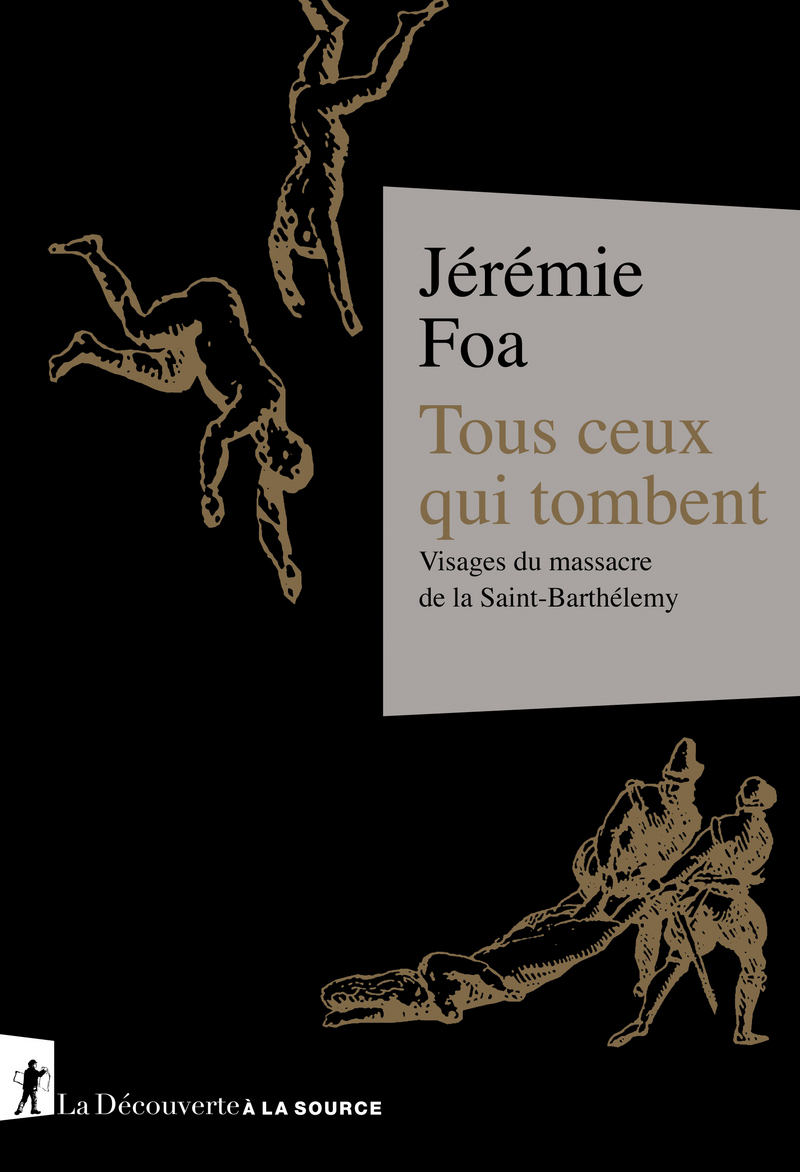
French historian Jérémie Foa has published an important new study of the killers of the Saint Bartholomew’s Day Massacre, entitled Tous ceux qui tombent. Visages du massacre de la Saint-Barthélemy (2021).

A book description is available at La Découverte.

The French periodical La Vie published an article, “Il y a 450 ans, les guerres de Religion culminaient avec le massacre de la Saint-Barthélemy,” earlier this week, with an interview with Jérémie Foa.

Jérémie Foa is a professor of history at Aix-Marseille Université and a specialist of the French Wars of Religion.

Posted in Atrocities, Civil Conflict, Civilians and Refugees in War, Early Modern Europe, Early Modern France, Early Modern World, European History, European Wars of Religion, French History, French Wars of Religion, History of Violence, Paris History, Reformation History, Religious History, Religious Politics, Religious Violence, Renaissance Art and History, Warfare in the Early Modern World | Leave a comment

Mediterranean History Position

Seattle University is advertising a professorial position in the history of the Medieval and Early Modern Mediterranean World.

Here is the position announcement:

The History Department at Seattle University invites applications for a tenure-track Assistant Professor in the Medieval and Early Modern Mediterranean World starting September 2023. 

The successful candidate will be responsible for teaching, maintaining an active program of scholarship, and performing university and college service. The ideal candidate will have a primary teaching and research field in the Medieval and Early Modern Mediterranean World (ca. 500-1600) broadly defined. There will be opportunities to teach in a variety of programs, including History, the University Core Curriculum, the Honors Program, and in Women, Gender, and Sexuality Studies or other interdisciplinary programs. A specialist in the Medieval and Early Modern Mediterranean World will support the department’s curriculum emphasizing social justice issues such as the historical roots of inequality and marginalization, and interpreting the diversity of human experience across world regions. The specialist would also help contribute to the vision of both College and University for equity, justice, and centering the margins.

The preferred candidate must have a Ph.D. in History at time of appointment. ABDs will be considered.

Founded in 1891, Seattle University is a Jesuit Catholic university located on a beautiful campus of more than 50 acres in the dynamic heart of Seattle. Our diverse and driven population is made up of more than 7,200 students enrolled in undergraduate and graduate programs within eight schools and colleges. Seattle University is an equal opportunity employer..

In support of its pursuit of academic and scholarly excellence, Seattle University is committed to creating a diverse community of students, faculty, and staff that is dedicated to the fundamental principles of equal opportunity and treatment in education and employment regardless of age, color, disability, gender identity, national origin, political ideology, race, religion, sex, sexual orientation, or veteran status. The university encourages applications from, and nominations of, individuals whose differing backgrounds, beliefs, ideas, and life experiences will further enrich the diversity of its educational community.

Applicants should submit applications online at https://www.seattleu.edu/careers/ including a cover letter, Curriculum Vitae, statement of teaching philosophy, evidence of teaching effectiveness, writing sample of scholarship, and contact information for three references (letters may be solicited upon submission of application).  Application deadline is October 1, 2022.  For further information please email the History Department Chair, Dr. Haejeong Hazel Hahn (hanhh@seatttleu.edu).

Posted in Early Modern Europe, Early Modern World, Jobs and Positions, Maritime History, Medieval History, Mediterranean World, Renaissance Art and History | Leave a comment

Women and Warfare in the Renaissance and Reformation

My bibliographic essay on “Women and Warfare” was recently published by Oxford Bibliographies in the Renaissance and Reformation subject area.

“Women and warfare is an emerging field in early modern history with a rapidly growing historiography. Art historians and cultural historians have been captivated by images of feminine martial power that deploy the figures of Athena, Minerva, Diana the Huntress, Judith, and Amazons. Much of the historical literature has focused on queens, regents, and female power in early modern royal states. Political and gender historians have examined powerful female rulers and regents such as Mary of Hungary, Margaret of Parma, and Infanta Isabella in the Habsburg Low Countries; Mary I Tudor and Elizabeth I Tudor in England; Marie de Guise and Mary Stuart in Scotland; Catherine de’ Medici, Maria de’ Medici, and Anne of Austria in France; and Amalia Elizabeth in Hesse—who all engaged in military planning and diplomacy. Historians and gender studies scholars are now setting these women warriors and powerful queens into a much broader context of women, gender, and war in early modern Europe. Noblewomen, city women, and peasant women were all swept up into the maelstrom of war in early modern Europe. This bibliographical essay brings together diverse historiographies of women’s history, gender history, history of sexuality, art history, literary history, history of violence, and war and society history. The essay includes sources on women, gender, and warfare in peasant revolts, urban revolts, noble revolts, civil wars, religious wars, and colonial wars, as well as in conventional interstate wars and coalition wars. …”

The essay considers historical studies of gender and war in the Renaissance and Reformation periods, aiming to provide guidance to advanced undergraduate and graduate students conducting research on issues of women, gender, and sexuality in the context of war and conflict in early modern Europe and the world. The essay explores the historical literature around the following themes:

General Overviews

Theoretical and Comparative Studies of Gender and War

Reference Works

Textbooks and Pedagogical Sources

Anthologies

Journals

Women, Power, and War in Early Modern Europe

Women and War in the Renaissance and Reformation (1450s-1550s)

Women and Gender in the European Wars of Religion (1550s-1650s)

Women, Gender, and Violence in Maritime Empires

Gender in Military Culture

Gender and Early Modern State Development (1640s-1700s)

Women and Atrocities in Early Modern Warfare

Here is the link to the full bibliographic essay on Oxford Bibliographies:

https://www.oxfordbibliographies.com/view/document/obo-9780195399301/obo-9780195399301-0488.xml

Posted in Cultural History, Digital Humanities, Early Modern Europe, Early Modern France, Early Modern World, European History, European Wars of Religion, French Wars of Religion, Gender and Warfare, History of Violence, Italian History, Mediterranean World, Reformation History, Renaissance Art and History, War, Culture, and Society, Warfare in the Early Modern World, Women and Gender History | Leave a comment

Fulbright Awards in France

The Fulbright Awards provide vital research funding for scholars working on international and global studies in diverse fields.

I have served as a U.S. Scholar to France and to Belgium in order to pursue archival research in Paris and Bruxelles, and found the Fulbright U.S. Scholar Program to be very rewarding.

The deadline for the next round of Fulbright awards is fast approaching and the U.S. Scholar Program has a menu of Fulbright awards in France. There are many other Fulbright awards for undergraduate and graduate students.

See the Fulbright Commission’s announcement for more information:

Fulbright U.S. Scholar Postdoctoral Opportunities in France

Competition Open! Deadline: September 15, 2022


The Fulbright U.S. Scholar Program provides fully-funded awards for U.S. citizens to teach, research  and carry out professional projects abroad.  The current competition welcomes projects for the 2023-24 academic year.
 

The Fulbright Postdoctoral Award in the Social Sciences  provides funding to conduct research in France, welcoming 9-12 month projects in a variety of disciplines. Please visit our site for important details, including eligible fields and award requirements.


Interested to learn more? We invite you to take advantage of our resources as you navigate the application process:

If you are interested in awards beyond France, please view the Catalog of Awards for opportunities in over 130 countries.  The 2023-24 Fulbright U.S. Scholar Program  accepts applications until September 15, 2022. 

Participating in the Fulbright U.S. Scholar Program provides the unique opportunity to work with global institutions while serving as cultural ambassadors for the United States  along with recognition and an experience that will serve you throughout your career. Should you choose to apply, we wish you the best of luck.

Posted in European History, European Studies, European Union, French History, Grants and Fellowships, Study Abroad | Leave a comment

Commemorating the Saint Bartholomew’s Day Massacre

A new memorial garden is being prepared to commemorate the Saint Bartholomew’s Day Massacre of 1572 in Paris.

This memorial is sponsored by the Ville de Paris and the Fédération Protestante de France and will be inaugurated on 16 September 2022.

Here is the announcement from the Fédération Protestante de France:

“Le vendredi 16 septembre 2022 à 10h45 sera inauguré le Jardin mémorial de la Saint-Barthélemy à la mémoire des milliers de protestants massacrés à Paris le 24 août 1572 et les jours suivants.

“Le jardin mémorial sera voisin de l’Eglise Saint-Germain l’Auxerrois à Paris, où dans la nuit du 23 au 24 août 1572, le son du tocsin lança la tragédie dont nous commémorons en 2022 le 450e anniversaire.

“Lors de cette cérémonie, Madame Anne Hidalgo, maire de Paris, et le pasteur Christian Krieger, Président de la Fédération protestante de France, dévoileront une plaque commémorative.”

For more information, see the website of the Fédération Protestante de France: www.protestants.org

Posted in Atrocities, Civil Conflict, Civilians and Refugees in War, Early Modern Europe, Early Modern France, European History, French History, French Wars of Religion, History of Violence, Museums and Historical Memory, Paris History, Reformation History, Religious History, Religious Politics, Religious Violence, Renaissance Art and History, Warfare in the Early Modern World | Leave a comment