I am pleased to report that my latest article, “The Means to Rebuild the Church,” has been published by Sixteenth Century Journal:
Brian Sandberg, “The Means to Rebuild the Church: Franco-Italian Networks, Lay Piety, and Religious Patronage in Counter-Reformation France,” Sixteenth Century Journal 52, 3 (2021): 667-695.
“Catholic churches throughout southern France suffered the ravages of religious violence during the French Wars of Religion (1559–1629). Around the turn of the seventeenth century, the provinces of southern France became the focus of Catholic renewal within France, and one of the most important areas of Catholic Reformation in all of Europe. The Catholic revival in southern France involved a broad transnational movement, led to a great extent by noblemen and noblewomen who provided the means to rebuild the church. This article explores the networks of Italian and French Catholic noblewomen and noble- men who promoted the Counter-Reformation movement in southern France. Tuscan-French connections in noble culture, religiosity, and religious patron- age seem particularly intriguing during the dynamic expansion of the Catholic reform in southern France during latter stages of the French Wars of Religion, from around 1588 to 1629.”
For access to the full article, consult the Sixteenth Century Journal online via the electronic SCJ website or a university library.
I enjoyed presenting my research on “Un courage viril. Le genre et la violence en France pendant les Guerres de Religion” in a seminar on Genre et Guerre at the Université Catholique de Louvain in Belgium in May.
The seminar on Genre et Guerre is organized by Professors Silvia Mostaccio and Jules Dejonckheere of UC Louvain. The seminar will present a comparative perspectives on gender and war in different historical periods. I look forward to seeing who will be presenting in future sessions of the seminar.
I was glad to be able to travel to Belgium to participate in this seminar, since my previous research trip to Belgium in Spring 2020 was disrupted by the first wave of the Covid-19 pandemic.
I just returned from an incredible five-month research stay at the Institut d’études Avancées de Aix-Marseille Université (IMéRA), a research institute located at the Observatoire de Marseille, near parc Longchamp. I was conducting archival research on crusading culture in the early modern Mediterranean at the departmental archives in Marseille.
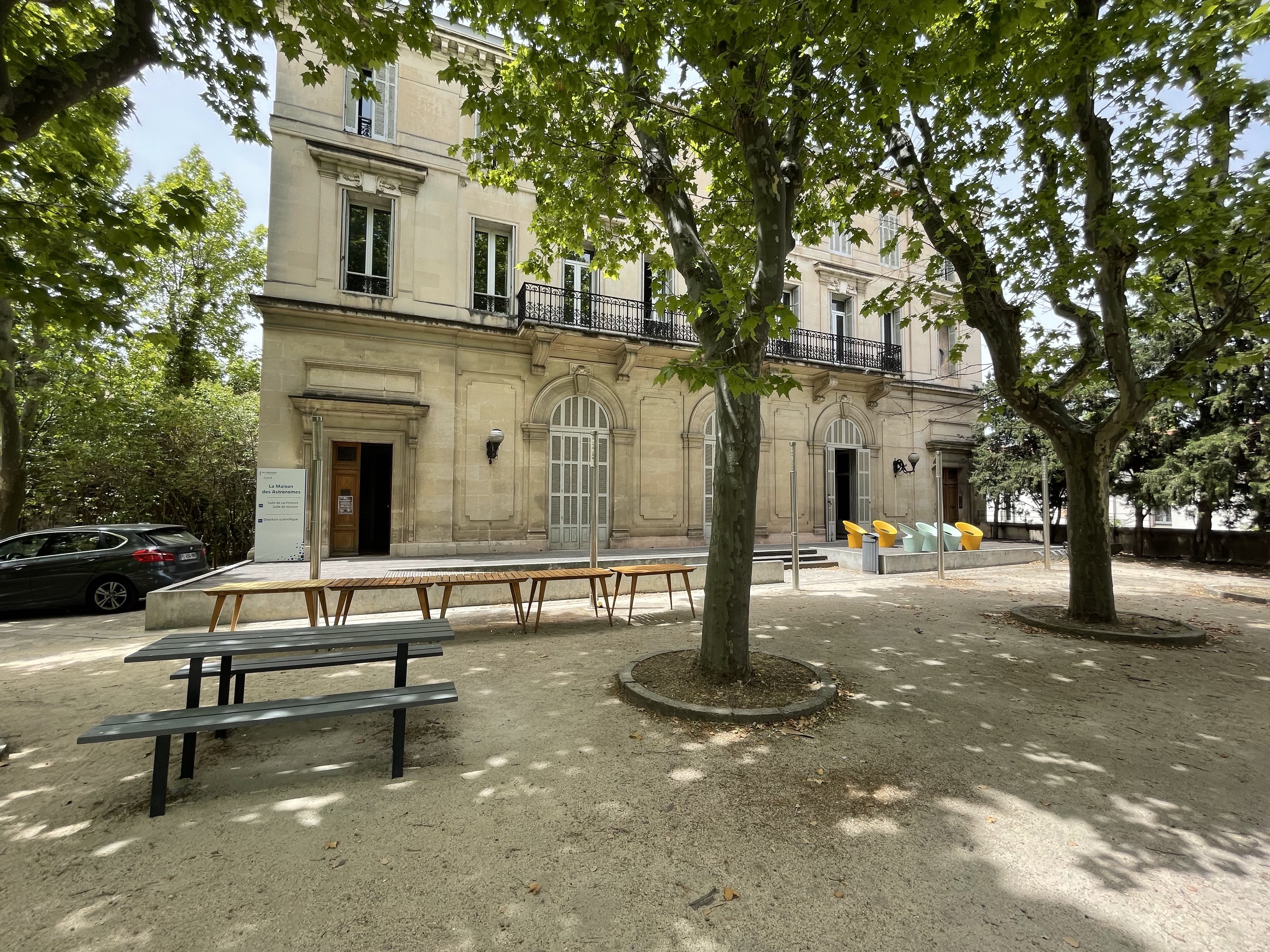
Maison des Astronomes, IMéRA, Marseille
If you are interested in conducting research and/or artistry in Marseille, consider applying for a residential fellowship at the IMéRA.
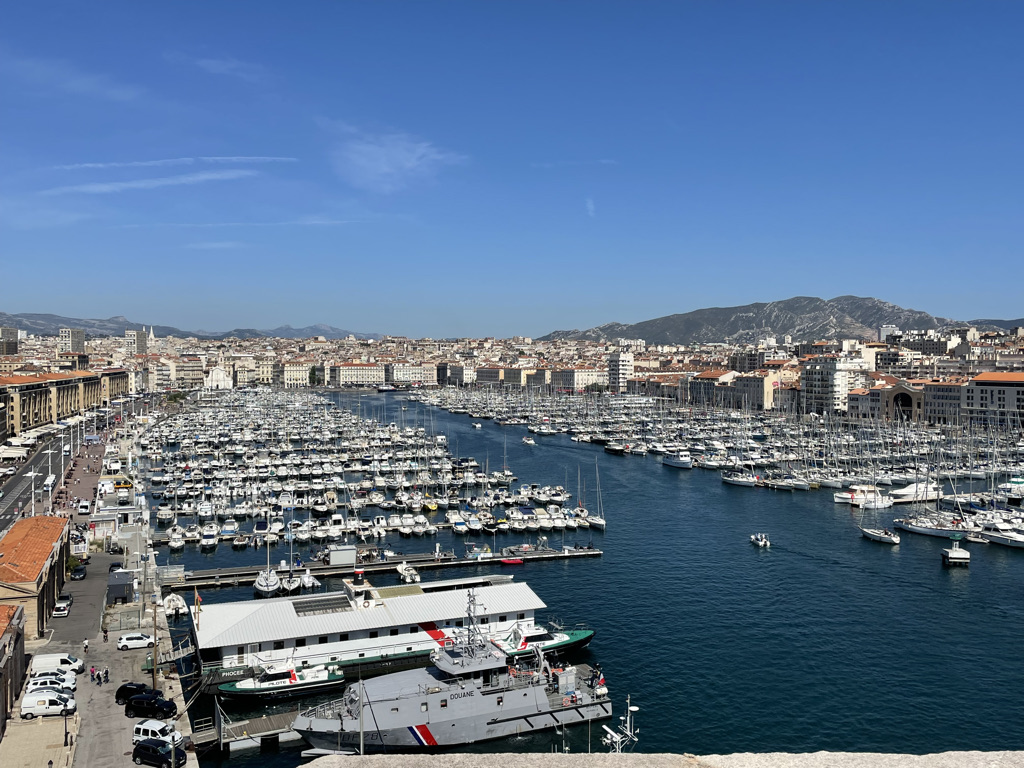
Vieux-Port in Masreille
The IMéRA has just announced their next call for applications for academic year 2023-2024.
“Pour l’année 2023-24, l’Institut d’études avancées d’Aix-Marseille (IMéRA) ouvre 11 places de résidence d’une durée de 5 ou 10 mois, dédiées aux scientifiques et/ou aux artistes. Celles-ci sont distribuées sur quatre programmes (« Arts & sciences : savoirs indisciplinés », « Explorations interdisciplinaires », « Méditerranée » et « Utopies nécessaires »).”
I am happy to report that my opinion essay on the recent French presidential election has been published by History News Network.
Here is the opening of the essay:
“On Sunday [24 April 2022], President Emmanuel Macron won re-election in the French presidential election, defeating far-right leader Marine Le Pen by an impressive margin of 58 to 42 percent. Despite this victory, French politics are once again in disarray and the nation is deeply divided.
“In the final stretch of the electoral campaign, President Macron and many political leaders had called on French citizens to rebuild a barrage républicain (republican dam) against the surging waters of the far-right movement in France. On Sunday, a majority of French voters responded by voting for Macron in order to block the far right and the republican dam seemed to hold.
“Yet, even in defeat, Le Pen and her Rassemblement National (National Rally) party claimed a historic ‘shining victory’ by scoring the highest number of votes for a far-right party in any modern election in France. Indeed, the presidential elections have demonstrated the French far-right’s growing power within French political culture and its potential to win elections in the near future. Is the republican dam now fundamentally weakened?”
To read the entire analysis, see my opinion essay on the History News Network website.
War crimes are once again headline news these days, as the Russian withdrawal from the Kyiv region has exposed numerous bodies of Ukrainian civilians allegedly executed during the Russian offensive of February – March 2022. Ukrainian President Zelensky, United States President Biden, and other political leaders have accused Russian military forces of committing war crimes in the Ukraine War.
Unfortunately, war crimes are rarely prosecuted, however. The International Criminal Court and other judicial institutions encounter many difficulties in instigating war crimes prosecutions, especially during ongoing conflicts.
Nonetheless, war crimes prosecutions do sometimes move forward. When they do, historians are often closely involved in the research to build evidence for these judicial cases.
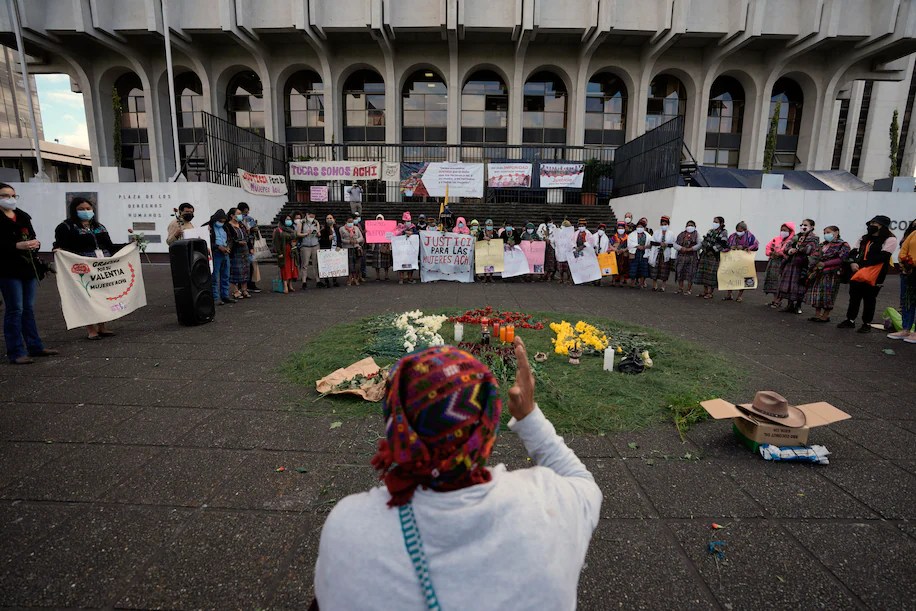
Ann Schneider, a Latin American Historian, works on war crimes with the Office for Human Rights Violators and War Crimes Center, of the U.S. Immigration and Customs Enforcement (ICE). The Center is based in Virginia and focuses on tracking down military officers and soldiers accused of war crimes in the Guatemalan Civil War, Salvadoran Civil War, and other “dirty wars.”
Photo: The Washington Post
The Washington Post reports that: “Unlike most academics, who tend who study their material with a degree of intellectual detachment, Schneider is a historian who is actively trying to right the wrongs of Latin America’s recent past. She is a bridge between those in the university world who research war crimes and federal law enforcement officials who can actually do something about them.”
Historians of civil conflict often encounter disturbing evidence of brutal rapes, killings, and massacres, but few have opportunities to pursue the perpetrators of such acts of violence against civilians.
Schneider describes her work on war crimes in Latin America: “’I think of myself as a forensic historian. … I research and write. My job is about bringing things to light and uncovering the past, through these cases.”
According to The Washington Post, “Historians of Latin America who focus on the Cold War are well-versed in the role of the United States in supporting right-wing military governments in Chile, Argentina, Brazil, El Salvador, Guatemala and elsewhere. In some cases, the State Department intentionally resettled former military officials in the United States to create better conditions for peace negotiations.”
My students in HIST 399 Communal Strife: Civil Wars in Comparative Perspective at Northern Illinois University will be interested in this piece about war crimes prosecutions, since we discuss the Salvadorian Civil War in some detail.
The article also offers undergraduate and graduate students a glimpse into the Office for Human Rights Violators and War Crimes Center and the world of government historians. NIU students sometimes pursue careers as government historians with various agencies of the U.S. federal government or state governments.
The Washington Post reports on forensic historians and war crimes prosecution.
The history of perfumes, fragrances, food, and medicines in the early modern period are closely intertwined. Early modern Europeans crafted “recipes” by experimenting with different ingredients from plants, animals, minerals, and other sources.
The DURARE research team questions: “Is it possible to reconstruct the scents of the past? Why should we try? Just as one plays music to bring historical scores to life, following historical recipes for scents connects us to the practices of the fragrance makers who left them behind. In the ArtLab of Utrecht University, we can trace a scent long dissipated while precipitating research questions for the present.”
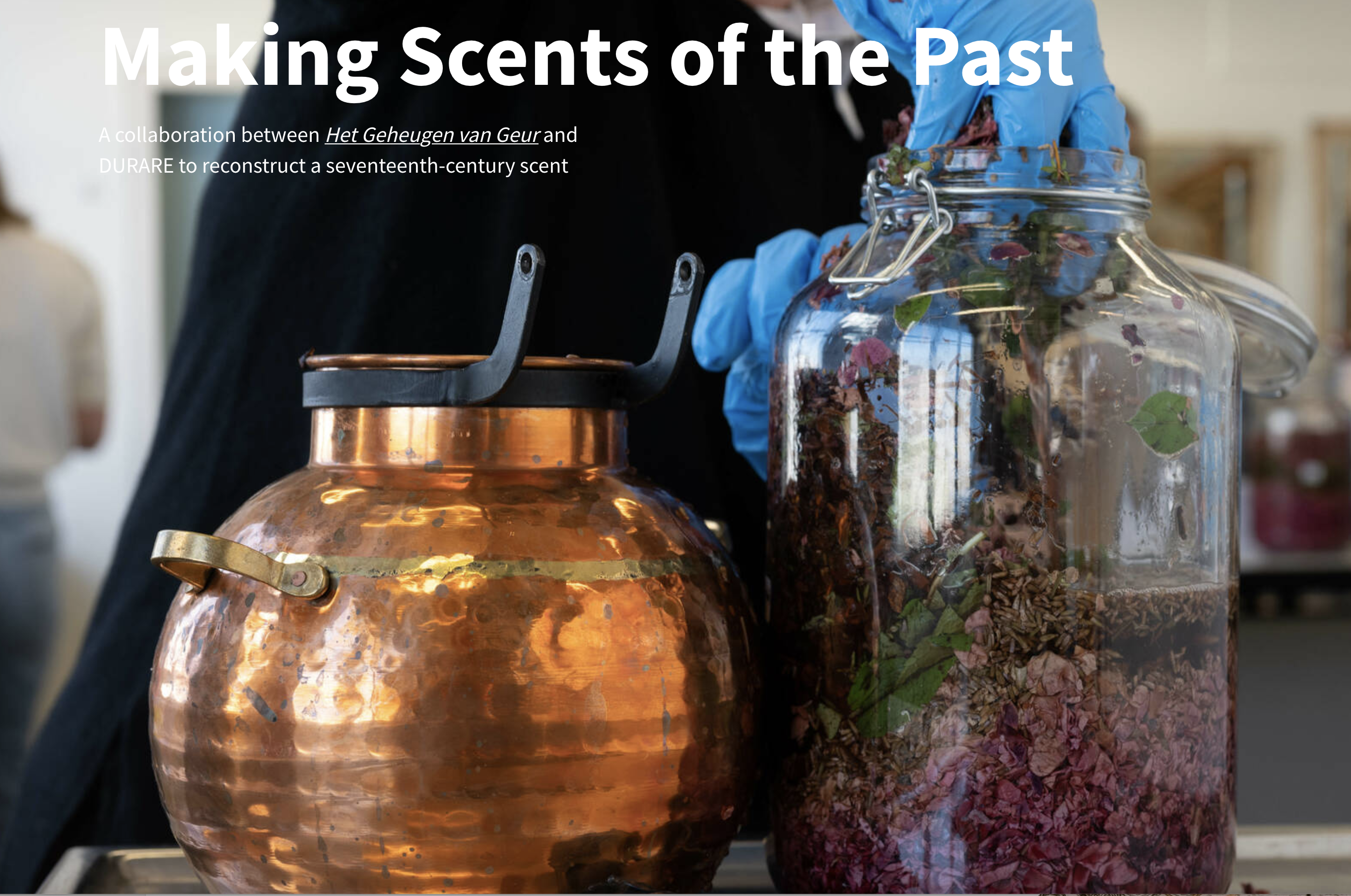
Their new research project on Making Scents of the Past is investigating the history of early modern perfumes and fragrances by combining historical, medical, and scientific approaches. This project attempts to use sixteenth- and seventeenth-century recipes to recreate fragrances, which will be available for exhibition visitors to test. The research team focuses especially on a recipe collected by Constantijn Huygens (1596-1687), who was “a Dutch diplomat, painter, poet, scientist, composer, and father to five children, one of whom grew up to be the scientist Christiaan Huygens.”
“The DURARE team collaborated with researchers from Het Geheugen van Geur to reconstruct a historical ‘fragrant water’ from a seventeenth-century recipe. We used hands-on experimentation to release the fragrance from its text. By bringing it to our noses, we open up something ephemeral for historical study.”
The team has developed a website to present their research and to accompany the planned museum exhibition.
“She said she wanted to be a part of ‘staking claim’ to what God was doing. ‘This is a Jesus movement,’ Ms. Jackson said. ‘I believe God removed Donald for a time, so the church would wake up and have confidence in itself again to take our country back.'”
I am currently gathering news reports and articles for my graduate seminar on Religious Violence in Comparative Perspective, which I offer periodically at Northern Illinois University. The course utilizes a comparative approach to religious violence, examining cases of religious conflict from 1500 to today involving many different religious systems in world history.
I always like to end the seminar with a discussion of cases of religious politics and religious violence in today’s world, focused on a series of news reports, magazine articles, and academic essays.
In this recent article, The New York Times reports on religion in American right-wing politics:
The New York Times reports on “The Growing Religious Fervor in the American Right: ‘This is a Jesus Movement'”
Are you interested to learn about new research in History? Have you considered pursuing historical studies and engaging in original historical research? Have you ever wondered what it is like to be a professional historian?
Here is an opportunity to learn about the practice of History from M.A. students and Ph.D. candidates who are pursuing original historical research on diverse periods of American and World History….
The NIU History Graduate Student Association (HGSA) Conference will be held thisFriday 1 April 2022.
All Northern Illinois University students and members of the public interested in History are invited to attend this online conference by tuning into a single panel session or the entire conference.
Graduate students in History from Northern Illinois University, University of Michigan at Ann Arbor, Rutgers University, Villanova University, Fresno State University, and Shiv Nadar University (New Delhi) will be presenting their research.
Professor James Sweet, Professor of History at the University of Wisconsin-Madison and Recent President of the American Historical Association, will deliver the keynote lecture on “Mutiny on the Black Prince: Slavery, Piracy, and the Limits of Liberty in the Revolutionary Atlantic World” at 2:30 PM.
Due to ongoing concerns with Covid-19, the conference was again moved to an online format. The conference will be conducted entirely via Zoom.
The European University Institute (EUI), a higher education institute sponsored by the European Union, is creating a special admission procedure for Ukrainian students and researchers wanting to pursue studies and/or research at the European University Institute.
The EUI seeks to assist Ukrainian refugees whose studies and/or research has been disrupted by the Ukraine War.
Here is the announcement from the European University Institute:
The military invasion of a sovereign European state is deeply shocking for a higher education institute such as the EUI, which is predicated on transcending national borders and promoting dialogue between cultures.
The EUI Community resolutely stands with the people of Ukraine at this tragic time and is working to assist those in need of protection.
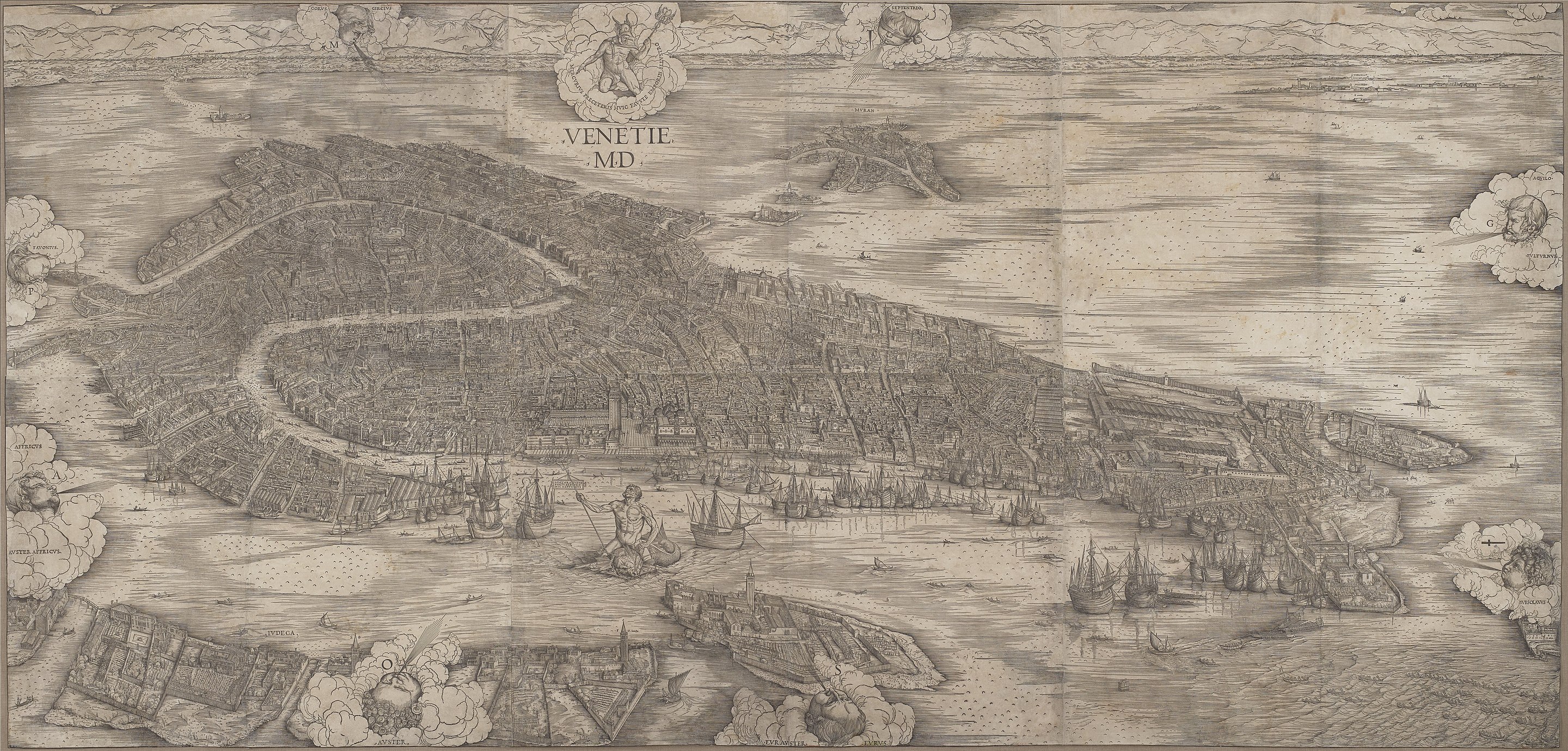
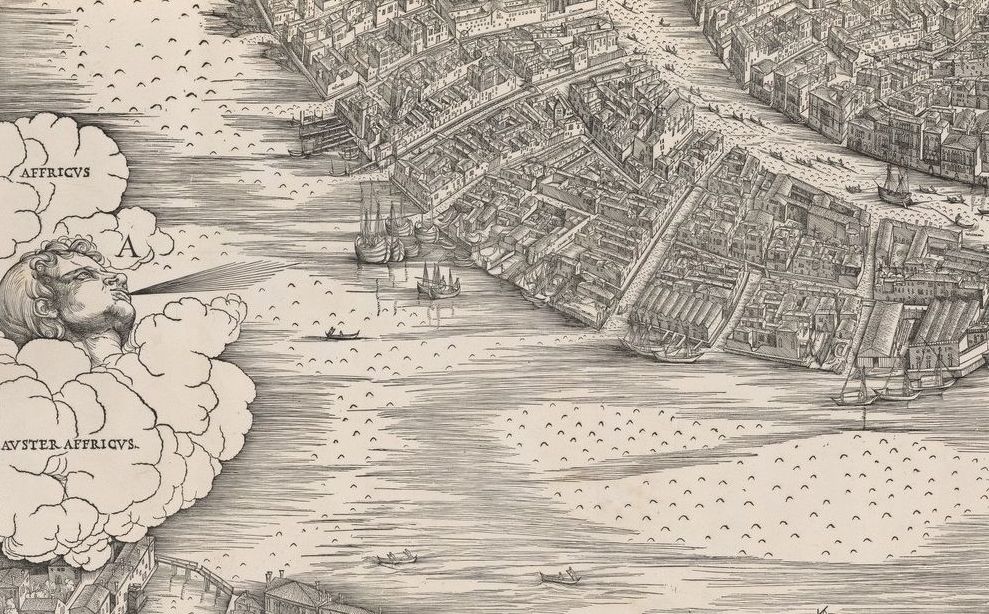
The Bibliothèque Nationale de France’s Gallica platform is celebrating early modern Venice with a digitized version of its copy of Jacopo de’ Barbari’s Venetie MD (1500).
This monumental printed city view of Venice has been closely studied using many different historical approaches.
Now, using the digitized version on Gallica, viewers can easily zoom in on all of its remarkable details using this online platform.
This is just one of many Digital Humanities projects bringing historical documents and resources to researchers, students, and citizens in new ways.
Northern Illinois Students in my courses on HIST 110 History of the Western World I, HIST 420 The Renaissance, HIST 422 Early Modern Europe, and HIST 458 Mediterranean World will be interested in this digital tool.
High School instructors who are teaching units on the Renaissance may be interested in this digital tool.
Access to the digitized copy of Jacopo de’ Barbari’s Venetie MD is available on Gallica through its blog and platform.






 Brian Sandberg: Historical Perspectives