I Quit: A Teacher’s Resignation

Another veteran history teacher has resigned.

In his letter of resignation, this high school teacher laments that “I am not leaving my profession, in truth, it has left me. It no longer exists.”

i-quit

Gerald J. Conti, a social studies teacher at Westhill High School in Syracuse, NY, for twenty-seven years, resigned recently. His letter of resignation is a condemnation of the hijacking of public education by political and business forces that are subverting its educational mission.

Conti writes that “to me, history has been so very much more than a mere job, it has truly been my life. … With regard to my profession, I have truly attempted to live John Dewey’s famous quotation (now likely cliché with me, I’ve used it so very often) that ‘Education is not preparation for life, education is life itself.'” Conti complains that “I now find that this approach to my profession is not only devalued, but denigrated and perhaps, in some quarters despised.”

What are the forces that are disrupting historical and social science education in public schools?  According to Conti: “STEM rules the day and ‘data driven’ education seeks only conformity, standardization, testing and a zombie-like adherence to the shallow and generic Common Core, along with a lockstep of oversimplified so-called Essential Learnings.”

As a result, Conti claims, “creativity, academic freedom, teacher autonomy, experimentation and innovation are being stifled in a misguided effort to fix what is not broken in our system of public education and particularly not at Westhill.”

The Washington Post published Conti’s letter of resignation. Thanks to artist Terry Swafford for sharing this link and alerting me to this story.

History majors and aspiring social science teachers should read Conti’s letter. While the letter may at first seem depressing to a future teacher, Conti’s letter can also be read as a call to action to protect humanities and social sciences in public education. As a former “normal school” and an important center for secondary education training, Northern Illinois University is closely involved in the transformations and trends in public education discussed by Conti in his resignation letter.

Posted in Careers in History, Education Policy, Humanities Education, The Past Alive: Teaching History, Undergraduate Work in History | Leave a comment

NIU Study Abroad Program in Southern France

Southern France – History and Literature in Bordeaux
IMG_1121
Register Now to Study Abroad in Southern France in Summer 2013!
Earn 6 credits in History and/or French!

Register at the Study Abroad Office
417 Williston Hall
Northern Illinois University

Registration is open for Northern Illinois University’s Study Abroad Program in Southern France, based in Bordeaux during Summer 2013.  Earn 6 credits in History and/or French Literature while experiencing Southern France!

PROGRAM OVERVIEW: This is the first year of a new collaborative study abroad program in France sponsored by the Northern Illinois University’s College of Liberal Arts and Sciences, Department of History, and Department of Foreign Languages and Literatures. The program is coordinated by NIU’s Study Abroad Office and the Division of International Programs. This program will include visits to historical and cultural sites in Bordeaux such as Cathedral Saint-André, the Grand Théâtre, the Palais de la Bourse, and Museum of Aquitaine. Participants will also make excursions in the surrounding region of Aquitaine to explore medieval castles, Renaissance châteaux, picturesque villages, and the vineyards of the Bordeaux wine country.

The program in History and Foreign Languages will be led by co-directors, professors Brian Sandberg (History) and Elizabeth Erbeznik (Foreign Languages and Literatures).

Undergraduate, Honors, and Graduate Credit is available for this Study Abroad Program.

The Program Description is available online at the NIU Study Abroad Office website.

Students may register for the program at the Study Abroad Office on campus at NIU. For further information on the program, please contact professors Elizabeth Erbeznik or Brian Sandberg (bsandberg@niu.edu) by email.

Posted in Early Modern Europe, European History, European Union, French History, Graduate Work in History, Languedoc and Southern France, Northern Illinois University, Study Abroad, Undergraduate Work in History | Leave a comment

New Digital Humanities Approaches

New digital humanities approaches are transforming the ways in which historians and other humanities scholars conduct research.

This spring, I am offering a series of workshops on “New Digital Humanities Approaches to Renaissance Studies: Manuscript Imaging and Research Outsourcing in the Florentine Archives using the Bía Platform” on behalf of the Medici Archive Project. The workshops offer a discussion of some of the new possibilities of digital humanities research through a demonstration of capabilities of the Medici Archive Project’s new Bía platform.

map-biaviewer

The Medici Archive Project describes the Bía platform on its website:

Over the past two years the IT team at the Medici Archive Project has been working on developing a new innovative digital platform, with generous support from the Andrew W. Mellon Foundation. At the 2012 Renaissance Society of America conference in Washington DC, MAP unveiled the new platform, which is called BIA. The name means “force” in in ancient Greek. We chose this name because we like to think it is representative of the power and strength that the digital humanities bring to scholarly research. white”>We also chose it because Bia was the name Cosimo I’s illegitimate daughter and the subject of one of Bronzino’s most beautiful portraits.

Now in the final stages of development, these are some of the most important elements of BIA:

  • Preservation of documents with digitized images online
  • Enhanced Research possibilities through outsourcing
  • Involving the world in scholarly discourse

The Bía platform thus offers humanities scholars working on subjects in the Renaissance and early modern periods of Italian, European, and World history a unique research tool.

The Medici Archive Project and the Mellon Foundation have asked former postdoctoral fellows with the Medici Archive Project, such as myself, to present a series of workshops across North America to showcase the possibilities of the Bía platform as a research tool and as a model for future digital humanities projects.

Workshops are being held at the Newberry Library in Chicago, the University of Michigan at Ann Arbor, the University of Wisconsin at Madison, and other midwestern universities.

A description of the workshop by the Office of Research Cyberinfrastructure at the University of Michigan shows the interest in this type of presentation for specialists in computing and internet applications, as well as humanities faculty and students.

If your research center or university is interested in hosting a digital humanities workshop, contact me at bsandberg@niu.

Posted in Archival Research, Current Research, Digital Humanities, History in the Media, Humanities Education, Information Management, Italian History, Renaissance Art and History | 2 Comments

Roger Ebert and the Art of Film Reviewing

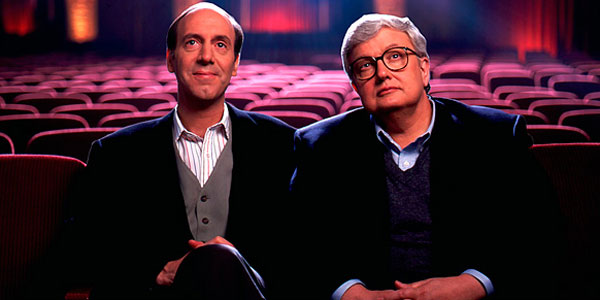
Pulitzer prize-winning film critic Roger Ebert has died following a battle with cancer. Ebert was the film critic for the Chicago Sun-Times for more than three decades, as well as co-host of the popular television show At the Movies.

Siskel-and-Ebert

Ebert got his start as a writer for the News-Gazette in Champaign-Urbana, then served as journalist and editor-in-chief of the Daily Illini while a student at University of Illinois at Urbana-Champaign in the 1960s.

A great promoter of journalism and film, Ebert later spearheaded a fundraising campaign for the Daily Illini and launched a film festival in Champaign-Urbana.

I write this post on a break from proofing my own latest book review. Although I primarily write reviews for academic journals, my own approaches to reviewing historical books and films certainly owes something to Siskel and Ebert’s film reviews.

Siskel and Ebert were sometimes criticized for simplifying their criticisms of films, especially with their trademarked thumbs up, thumbs down judgments. But, they often presented brilliant analysis and criticisms of the acting, characterization, enplotment, cinematography, and directing in independent and foreign-language films that were otherwise ignored by mainstream publications. And, refreshingly, the two critics’ analyses often diverged significantly.

Both Siskel and Ebert departed too soon, but they left behind an impressive legacy in the fields of film, criticism, and journalism.

NPR remembers Roger Ebert’s career and influence in film criticism. Chicago’s WBEZ aired a show celebrating Ebert’s life and has podcast it. The Gene Siskel Film Center in Chicago offers a remembrance of Ebert, who was Siskel’s long-time sparring partner and collaborator. The Daily Illini also provides a remembrance.

Roger Ebert delivered his own living testament on The 11th Hour on PBS. His own website at the Chicago Sun-Times provides information on all of Ebert’s journalism and activities.

Northern Illinois University students in HIST 390 History and Film may be interested in following the stories about Roger Ebert’s career as a film critic, as well as reading some of his reviews of historical films.

Posted in Academic Publishing, Historical Film, History in the Media, Humanities Education, Writing Methods | Leave a comment

Age of Christian Martyrs Questioned

New research challenges the idea of an Age of Christian Martyrs during the early centuries of Christian expansion in the Mediterranean world.

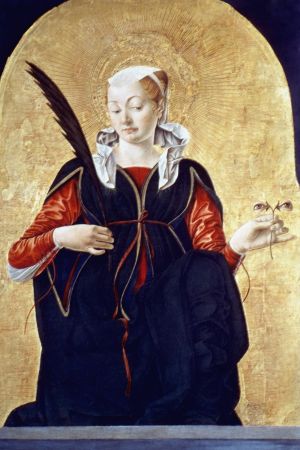
Candida Moss, Professor of New Testament and Early Christianity at the University of Notre Dame explains: “For the first three hundred years of its existence, tradition maintains, Christianity was a persecuted and suffering religion. Members were hunted down and executed, their property and books burned by crusading emperors intent on routing out the new religion. Women and children were thrown to the lions and boiled alive in caldrons, as maddened crowds bayed for blood. Jesus, Stephen, and the Apostles were only the beginning.”

SaintLucy

Moss sketches out how the notion of an Age of Christian Martyrs coalesced. “As Christianity grew, so did the ranks of martyrs,” she states. “According to the fourth-century historian Eusebius, early Christians were racked, whipped, beaten, and scourged. Tens of thousands were condemned to the amphitheaters to face wild animals, forced to fight gladiators, beheaded, strangled quietly in jail, or burned publicly as a mark of shame.”

By the end of the Fourth Century CE, stories of numerous martyred saints were circulating in Christian texts throughout the Mediterranean.

“The history of early Christianity, as we have received it, is a history of victimization and pain,” Moss indicates. “It underwrites the idea that Christians are at odds with their world, engaged in a continuing struggle between good and evil.”

However, “that narrative has very little basis in the documentary record,” she argues. “There is almost no evidence from the period before Constantine, traditionally called the Age of Martyrs, to support the idea that Christians were continuously persecuted.”

The Chronicle of Higher Education has published an article by Candida Moss that appears to be an excerpt from her forthcoming book, The Myth of Persecution: How Early Christians Invented a Story of Martyrdom (Harper Collins).

NIU students in HIST 640 Religious Violence in Comparative Perspective will be interested in this article.

Posted in European History, Gender and Warfare, History in the Media, History of Violence, Mediterranean World, Religious History, Religious Violence | Leave a comment

Rachel Maddow on the Importance of History

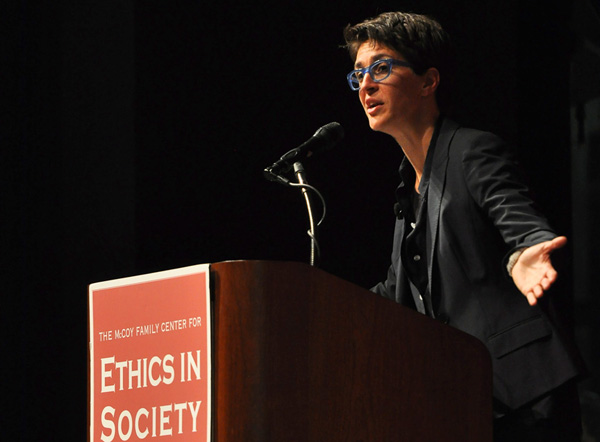
Rachel Maddow recently spoke at Stanford University. According to the Stanford Report, “Asked by students what kind of major she looks for in a successful job candidate, Rachel Maddow, the popular television host and best-selling author, did not hesitate in her answer.”

Maddow responded: “I look for people who have done mathematics. Philosophy. Languages. And really,” she emphasized, “History is kind of the king.”

maddow-stanford

It is certainly refreshing to hear a journalist and activist stressing the importance of History and the humanities in forming citizens—and job applicants—who can master argumentation and writing.

The Stanford Report indicates that only 9 percent of Stanford undergraduates currently choose a major in a humanities field, yet “Stanford alumna and MSNBC television host Rachel Maddow insists that an education in the humanities is a crucial asset in today’s job market, illustrating with her own story how the ability to make good arguments and write well powered her career in advocacy, activism and the national media.”

In making this argument, Maddow questions the stress that many politicians and business leaders place on technological education. Maddow states: “I need good writers rather than good web designers. And they are much harder to find.”

See the Stanford Report for the full story about Rachel Maddow’s on-campus visit. Stanford’s Center for Ethics in Society has posted video of Maddow’s talk on YouTube.


Posted in Careers in History, Digital Humanities, Education Policy, History in the Media, Humanities Education, Political Culture, Undergraduate Work in History | Leave a comment

Restoration Work at the château de Versailles

Louis XIV expanded the château de Versailles in the 1680s, creating a grand palace complex that became the effective administrative capital of France. Louis XIV’s royal state promoted Bourbon dynastic interests and managed the French military from Versailles during the Nine Years’ War and the War of Spanish Succession.

The château de Versailles served as the principal residence and administrative for Louis XV and Louis XVI during the eighteenth century. The palace was pillaged by crowds during the French Revolution and was later used as a site for diplomatic conferences and public ceremonies by Napoleon and subsequent French governments.

The château remains one of the most important historical sites in France and has been named a UNESCO World Heritage site. NPR reports that “With nearly 7 million visitors a year, the Chateau of Versailles in France is one of the most popular tourist attractions in the world. But one day a week, it’s closed. So what happens at Versailles on its day off? A spa day, of sorts — involving cleaning and conservation work.”

versailles-restoration1

NPR presents a fascinating story on the regular restoration work at the château de Versailles.

Posted in Art History, Early Modern Europe, French History, French Revolution and Napoleon, Museums and Historical Memory, Noble Culture and History of Elites, Political Culture, Warfare in the Early Modern World | Leave a comment

Digital Humanities Postdocs

The Council on Library and Information Resources (CLIR) is sponsoring several postdoctoral fellowships on digital humanities projects in medieval studies.

The announcement reads:

Fellowships in Data Curation for Medieval Studies

Information for Applicants

NOTE: All postdoctoral fellowship positions are contingent upon funding. Applications are accepted via CLIR’s online application system and will be accepted until all positions are filled.

The CLIR/DLF Postdoctoral Fellowship in Data Curation for Medieval Studies is an expansion of the CLIR Postdoctoral Fellowship Program in Academic Libraries. These five, fully-funded fellowships will provide recent Ph.D.s with professional development, education, and training opportunities in data curation for Medieval Studies. Through this program, CLIR seeks to raise awareness and build capacity for sound data management practice throughout the academy.

Each fellowship is two year appointment, with a $60,000 salary, plus benefits, and a yearly travel and research stipend.

Who May Apply

Recent Ph.D.s from any discipline with relevant expertise in Medieval Studies are encouraged to apply, so long as they meet the eligibility criteria for the Postdoctoral Fellowship Program.

2013 Host Institutions and Position Descriptions

Fellows will be placed at five institutions in the United States and Canada:

Questions about the application process or the program should be directed to postdoc@clir.org.

See the CLIR website for more information.

Posted in Digital Humanities, Grants and Fellowships, Information Management | Leave a comment

Renaissance Cartography and the Naming of America

The history of the naming of America is already well-established. The famous Martin Waldseemüller map of 1507 is the first known cartographical project to utilize the term America to designate the lands reported by Amerigo Vespucci. The map was collected and preserved along with other contemporary cartographical works by the German globemaker Johannes Schöner.

Waldseemullermap1507-Vespucci

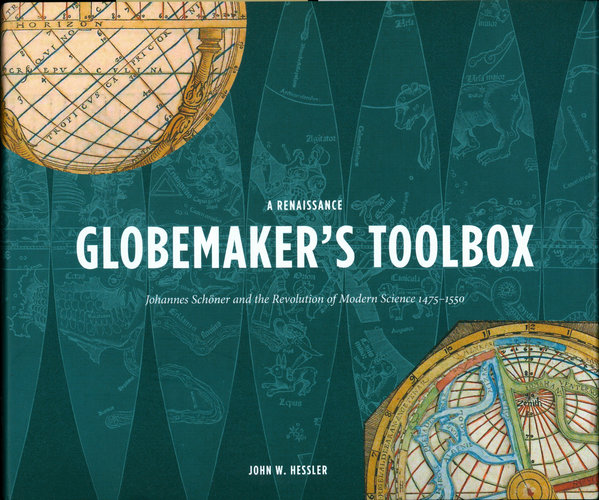
A new book by John W. Hessler reexamines Johannes Schöner and the history of Renaissance cartography.

Hessler-GlobemakersToolbox

The New York Times reports on the new book and the Waldseemüller map.

Posted in Early Modern Europe, Early Modern World, Globalization, History of the Book, Museums and Historical Memory | Leave a comment

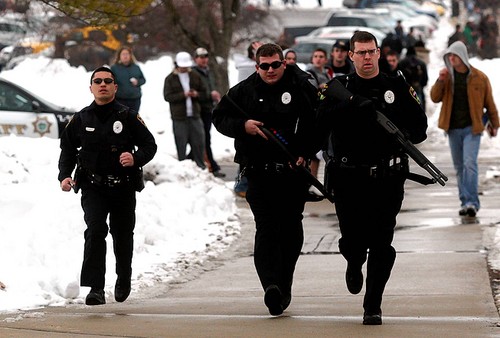
Why Professors Shouldn’t be Armed

Lucinda Roy, a Virginia Tech professor who met with Seung-Hui Cho prior to his shooting rampage in 2007, argues that university professors should not be armed.

Roy asserts that “College professors and K-12 teachers are not law enforcement officers. It’s our responsibility to notice students who are seriously troubled and bring them to the attention of professionals trained to respond in crisis situations, which is why I reported Seung Hui-Cho to various units on campus. In cases where there is no record of violence, however, even the most experienced teachers, counselors, and law enforcement personnel cannot easily predict whether or not a threat is imminent. But we can detect extreme anguish, consuming loneliness, and unbridled anger in young people and try to intervene before these become toxic.”

35672235

When my own campus, Northern Illinois University, experienced a shooting rampage in February 2008, students and faculty members from Virginia Tech reached out to support our grieving campus community. In the days immediately after the NIU shooting, some gun advocates in Illinois suggested that NIU professors should be armed.

I believe that many professors at NIU would agree with Roy that arming professors would not improve campus safety.

This educator celebrates Lucinda Roy’s courage in articulating this forceful argument against arming professors.

Inside Higher Ed published Lucinda Roy’s essay.

Posted in Arms Control, History of Violence, Human Rights, Humanities Education, Northern Illinois University, Political Culture | Leave a comment